

Melophorus mjobergi
- Scientific Name
- Melophorus mjobergi
- Tribe
- Melophorini
- Subfamily
- Formicinae
- Author
- Forel, 1915
- Distribution
- Found in 1 countries
Melophorus mjobergi Overview
Melophorus mjobergi is an ant species of the genus Melophorus. It is primarily documented in 1 countries , including Australia. Detailed taxonomic data and occurrence records can be further explored via authoritative databases such as AntWeb or the Global Biodiversity Information Facility (GBIF).
Melophorus mjobergi
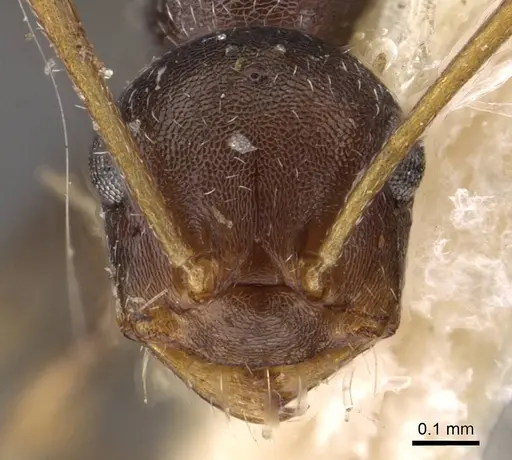
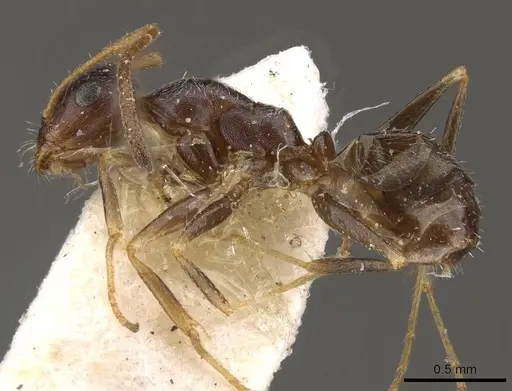
Melophorus mjobergi is a tiny ant species native to Australia, belonging to the Formicinae subfamily. Minor workers measure just 1.5mm, making them the smallest members of the Melophorus genus [1]. The species displays a light brown to olive-brown coloration with distinctive silvery pubescence covering all body surfaces, giving minor workers a noticeably fuzzy appearance [2]. Major workers are slightly larger with a more robust head structure. This ant is very common across the Pilbara and Kimberley regions of Western Australia and has been found in remarkably diverse habitats including sand plains, red clay soils, grassy woodlands, and even station rubbish dumps [3]. The species is part of the Melophorus biroi species group and is closely related to M. postlei, though it can be distinguished by its shinier appearance and more widely separated setae that do not obscure the cuticle [3].
Quick Summary
- Difficulty: Medium
- Origin & Habitat: Native to Australia (QLD, SA, WA), particularly abundant in the Pilbara and Kimberley regions of Western Australia. Found in diverse arid and semi-arid habitats including sand plains, red clay soil, grassy woodland, and disturbed areas like road verges and rubbish dumps [3].
- Colony Type: Colony structure is unconfirmed. Based on typical Melophorus patterns, likely single-queen colonies, though this has not been directly documented.
- Size & Growth:
- Queen: Undocumented in primary research, estimated 5-7mm based on genus patterns
- Worker: Minor workers: 1.5mm total length [1]. Major workers: HL 0.63-0.65mm, HW 0.56-0.58mm [3].
- Colony: Unknown, no colony size data available
- Growth: Unknown, no development timeline data available
- Development: Unconfirmed, no direct data. Based on typical Melophorus patterns in warm Australian conditions, estimated 4-8 weeks at optimal temperature. (Development timeline has not been directly studied. Estimates based on genus-level patterns for similar small ants.)
- Antkeeping:
- Temperature: Based on Australian arid habitat origins, these ants likely tolerate warm to hot conditions. Start around 24-28°C and observe colony activity. They are found in regions with extreme temperature ranges, so room temperature (22-26°C) is likely suitable.
- Humidity: Adapted to arid conditions. Keep nest substrate moderately dry to slightly moist, allow some drying between waterings. Avoid constant saturation. Think desert-dwelling, not rainforest.
- Diapause: Unknown for this specific species. Many Australian Melophorus do not require strong diapause, but a cool period (15-18°C) during winter months may benefit colonies if kept in temperate climates.
- Nesting: In nature, they nest in soil and under stones in arid habitats. For captivity, a test tube setup works well for founding colonies. Once established, a Y-tong or plaster nest with small chambers suits their tiny size. Avoid large, open spaces, they prefer tight, confined areas.
- Behavior: These are small, active foragers. Workers are covered in fine pubescence and have a fuzzy appearance. They are likely generalist foragers based on typical Melophorus diet patterns. Their very small size (1.5mm) means escape prevention is critical, they can squeeze through standard test tube barriers. Use fine mesh and tight-fitting lids. Temperament is likely mild, they are not known for aggressive behavior.
- Common Issues: tiny size means escapes are likely without fine mesh barriers, lack of specific care data means starting with genus-typical conditions and adjusting based on colony response, wild-caught colonies may carry parasites that can affect captive survival, slow growth may lead to overfeeding, offer small amounts and remove uneaten food
Housing and Nest Setup
Melophorus mjobergi is a tiny ant, so your housing must be scaled accordingly. For founding colonies, a standard test tube setup works well, the small chambers mimic the tight underground spaces they naturally prefer. The queen will seal herself in a chamber and remain there until her first workers emerge. Once the colony reaches 10-20 workers, you can continue using test tubes or transition to a small formicarium. A Y-tong (acrylic) nest with narrow chambers or a small plaster nest works best. Avoid large, open spaces, these ants feel safest in tight, confined areas. The nest should have a water chamber for humidity but keep the nesting area relatively dry. For the outworld, a small container with smooth walls prevents climbing escapes. Because of their minute size, use fine mesh on any ventilation holes and ensure all connections are sealed. A small foraging area with a sugar water station and protein source completes the setup. [2][3]
Feeding and Diet
Based on typical Melophorus genus behavior, these ants are likely generalist foragers that accept both sugar sources and protein. Offer a constant supply of sugar water (1:1 ratio with water) or honey diluted to a thin syrup. For protein, small live prey is ideal, fruit flies, pinhead crickets, or small mealworms chopped into tiny pieces. Given their minute size (1.5mm workers), prey items must be appropriately sized. Some Melophorus species are known to collect seeds, so you could experiment with offering tiny seeds or grain fragments, but protein should form the primary diet. Feed small amounts every 2-3 days and remove any uneaten food promptly to prevent mold. Fresh water should always be available. Observe what your colony accepts most readily and adjust accordingly.
Temperature and Seasonal Care
Melophorus mjobergi originates from the arid regions of Western Australia, so they are adapted to warm conditions. Maintain temperatures in the range of 24-28°C for optimal activity and brood development. A heating cable on one side of the nest can create a gentle gradient, allowing ants to self-regulate their temperature preference. Place the heating element on top of the nest, not underneath, to avoid drying out the substrate too quickly. Room temperature in most homes (22-26°C) should be acceptable. Regarding winter care, specific diapause requirements are unknown for this species. If you keep them in a temperate climate, a slight reduction to 18-22°C during winter months may simulate natural seasonal changes, but strong cooling is likely unnecessary. Monitor colony behavior, if they remain active year-round, standard room temperature is fine. Avoid temperatures below 15°C for extended periods. [3]
Handling and Colony Maintenance
These ants are very small and delicate. When moving colonies or进行检查, use gentle handling techniques, avoid shaking or sudden movements that could damage the queen or workers. Transferring a colony from a test tube to a formicarium is best done when the colony is active and workers are exploring. Simply connect the test tube to the formicarium and wait for the ants to relocate naturally. Escape prevention cannot be overstated, 1.5mm workers can squeeze through gaps that seem impossible. Use fluon (ant barrier) on container rims, fine mesh on all openings, and check connections regularly. Monitor for mold in the nest and remove any contaminated areas promptly. Because specific colony growth data is lacking, be patient, small ant species often develop more slowly than larger species. Document your observations to help build knowledge for this rarely kept species.
Frequently Asked Questions
How long does it take for Melophorus mjobergi to produce first workers?
The exact timeline is unconfirmed, but based on typical Melophorus genus patterns in warm conditions, expect first workers (nanitics) within 4-8 weeks after the queen lays eggs. This estimate applies to optimal temperatures around 24-28°C. The queen seals herself in during founding and relies on stored energy reserves until her first workers emerge.
What do Melophorus mjobergi ants eat?
Based on typical Melophorus behavior, they are generalist foragers. Offer sugar water or diluted honey as a constant energy source. For protein, provide small live prey like fruit flies, tiny crickets, or chopped mealworms. Their small size (1.5mm) means prey must be appropriately sized, very small pieces work best.
Can I keep multiple Melophorus mjobergi queens together?
Colony structure is unconfirmed for this species. Combining unrelated queens is not recommended since this has not been documented. If you capture multiple queens, house them separately until you determine their compatibility. Some Melophorus can be polygynous (multiple queens), but this varies by species.
What temperature is best for Melophorus mjobergi?
Maintain temperatures around 24-28°C. They originate from arid Australian regions and tolerate warm conditions. A heating cable on part of the nest creates a gradient. Room temperature (22-26°C) is acceptable. Avoid temperatures below 15°C for extended periods.
Are Melophorus mjobergi good for beginners?
This species is rated as Medium difficulty. While not the most challenging ant to keep, the lack of specific care data means you may need to adjust conditions based on colony response. Their tiny size requires extra attention to escape prevention. If you have experience with small ant species, this could be an interesting choice.
When should I move Melophorus mjobergi to a formicarium?
Wait until the colony has 20-30 workers and the test tube is becoming crowded. A Y-tong or small plaster nest with tight chambers works well. Connect the formicarium to the test tube and let the ants move naturally, do not force them. Ensure the new nest has appropriate humidity and a water source.
Why are my Melophorus mjobergi escaping?
Their tiny 1.5mm size allows them to squeeze through the smallest gaps. Check all connections, use fine mesh on ventilation holes, and apply fluon barrier to rims. Even standard test tube setups can have leaks at the cotton plug if not properly seated. Inspect regularly and seal any gaps immediately.
Do Melophorus mjobergi need hibernation?
Specific diapause requirements are unknown. They come from arid Australian regions where winters are mild. If kept in a temperate climate, a slight temperature reduction to 18-22°C during winter may be beneficial, but strong hibernation is likely unnecessary. Monitor colony activity, if they remain active, standard room temperature is fine.
How big do Melophorus mjobergi colonies get?
Colony size data is not available for this species. Based on their very small worker size (1.5mm), colonies are likely smaller than many other Melophorus species, possibly a few hundred workers at maximum. Growth is slow, so be patient with development.
References

This caresheet is licensed under CC BY-SA 4.0 .
CASENT0909819
View on AntWeb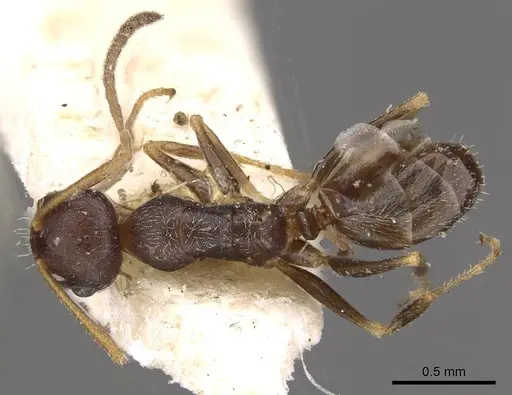
Literature
Loading...Loading products...