

Melophorus macroschismus
- Scientific Name
- Melophorus macroschismus
- Tribe
- Melophorini
- Subfamily
- Formicinae
- Author
- Heterick <i>et al.</i>, 2017
- Distribution
- Found in 1 countries
Melophorus macroschismus Overview
Melophorus macroschismus is an ant species of the genus Melophorus. It is primarily documented in 1 countries , including Australia. Detailed taxonomic data and occurrence records can be further explored via authoritative databases such as AntWeb or the Global Biodiversity Information Facility (GBIF).
Melophorus macroschismus
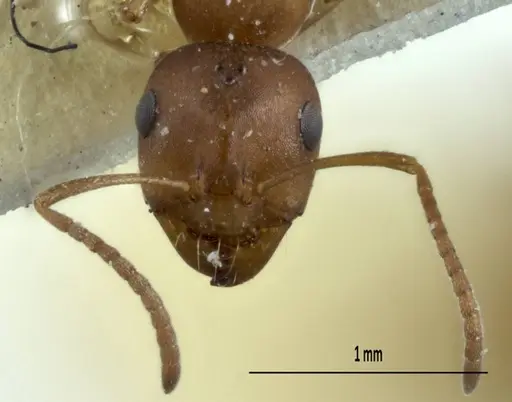
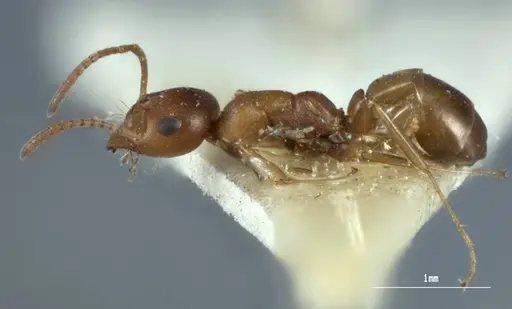
Melophorus macroschismus is a small Australian ant belonging to the potteri species group, recently described in 2017. Workers are approximately 0.68-0.79mm in head width, with a distinctive oval head capsule and matt (dull) appearance. The species is known only from minor workers, the major worker caste has not been discovered. They have a large, oblique propodeal spiracle positioned well before the declivitous face, which is a key identifying feature of this species group. Their body coloration is light tan or orange-brown on the foreparts with a brown gaster. This ant is native to inland regions of Western Australia, specifically the eastern wheatbelt and eastern goldfields areas, where it nests in salt-affected remnant bushland [1][2].
Quick Summary
- Difficulty: Unknown, this is a newly described species with limited ecological data
- Origin & Habitat: Eastern wheatbelt and eastern goldfields, Western Australia, also recorded from Wilgena Station, South Australia. Found in salt-affected remnant bushland [2][1].
- Colony Type: Likely single-queen colonies based on typical Melophorus patterns. Only minor workers known, major worker caste has not been documented [1][2].
- Size & Growth:
- Queen: Unknown, queen has not been described or collected
- Worker: Minor workers: HL 0.75-0.83mm, HW 0.68-0.79mm [2]
- Colony: Unknown, only a few specimens have been collected
- Growth: Unknown, no colony development data exists
- Development: Unknown, no direct observations. Based on related Melophorus species, estimate 6-10 weeks at optimal temperature (This is a newly described species with no published colony development data. Estimates based on genus-level patterns for potteri-group species)
- Antkeeping:
- Temperature: Based on inland Western Australian habitat, likely prefers warm conditions. Start around 24-28°C and observe colony activity. Provide a gentle temperature gradient
- Humidity: Semi-arid to moderate. Keep nest substrate moderately dry with occasional damp areas. Avoid overly humid conditions
- Diapause: Likely, most Australian Melophorus species require a winter rest period. Provide 2-3 months at 10-15°C during winter
- Nesting: Natural nesting occurs in soil in remnant bushland. In captivity, a test tube setup works well for founding colonies. For established colonies, a Y-tong or plaster nest with moderate humidity is appropriate
- Behavior: Behavior is not documented for this specific species. Based on related Melophorus potteri-group ants, they are likely generalist foragers with moderate activity levels. Escape prevention should be moderate, workers are small but not among the tiniest ants. No sting is documented for this species, though Melophorus can have functional stingers in some species. Monitor for any defensive behavior
- Common Issues: very limited species data means care recommendations are largely inferred from genus patterns rather than direct observation, no documented colony founding behavior exists, queens have never been collected or described, growth rate and development timeline are unknown, making it difficult to assess if a colony is progressing normally, as a newly described species (2017), there may be no established husbandry protocols in the antkeeping hobby, specimens collected from salt-affected areas suggest specific soil chemistry needs that may be difficult to replicate
Species Discovery and Identification
Melophorus macroschismus was only recently described in 2017,making it one of the newer additions to the ant-keeping hobby. It belongs to the Melophorus potteri species group, which is characterized by having a large, oblique propodeal spiracle positioned well before the declivitous (downward-facing) part of the propodeum. This species can be distinguished from its relatives by its palp formula of 6,4 (six segments on the maxillary palps, four on the labial palps), its dull matt appearance, oval head capsule, and the conventional five-toothed mandibles, unlike the other two species in this group which have aberrant dentition. Only minor workers have been collected, so the major worker caste and queen remain unknown to science [1][2].
Natural Habitat and Distribution
This species is known from the eastern wheatbelt and eastern goldfields regions of Western Australia, with additional records from Wilgena Station in South Australia. The only available ecological data comes from a specimen collected near Warrachuppin, Western Australia, which was found nesting in salt-affected remnant bushland. This suggests the species is adapted to semi-arid inland conditions with potentially saline soils. The inland southern Western Australian region experiences hot, dry summers and mild winters, with annual rainfall typically below 300mm. These conditions are quite different from the humid coastal areas where many other Australian ants are found [2][1].
Housing and Nesting
Since this is a newly described species with no established husbandry protocols, you'll need to rely on what works for related Melophorus species. For founding colonies, a standard test tube setup works well, fill a test tube one-third with water, plug with cotton, and place the queen in an enclosed dark space. Once workers have emerged, you can maintain them in the test tube or transfer to a small formicarium. Based on their natural habitat in salt-affected bushland, they likely prefer drier conditions than many tropical ants. A Y-tong nest or plaster formicarium with moderate humidity works as a starting point. Always provide a water source, a small dish or cotton ball with fresh water.
Feeding and Diet
The specific diet of M. macroschismus has not been documented. Like most Melophorus species, they are likely generalist omnivores that forage for nectar, honeydew, and small insects. In captivity, you can offer a standard ant diet: sugar water or honey as an energy source, and protein sources like small crickets, mealworms, or fruit flies. Based on their small size (minor workers are under 1mm), prey items should be appropriately sized. Offer sugar water constantly and protein prey 2-3 times per week. Remove any uneaten prey after 24-48 hours to prevent mold.
Temperature and Seasonal Care
Based on their inland Western Australian distribution, these ants are adapted to warm conditions. Aim for a temperature range of 24-28°C during the active season, with a slight gradient allowing workers to choose their preferred temperature. During the Australian winter (roughly May-September in the southern hemisphere), most Melophorus species enter a period of reduced activity. Provide a winter rest period of 2-3 months at 10-15°C to mimic natural conditions. This is especially important if you notice workers becoming less active in cooler months. Avoid temperatures below 10°C for extended periods.
Challenges and Considerations
This species presents unique challenges for antkeepers. First, it was only described in 2017,meaning there is virtually no established husbandry information in the antkeeping hobby. Second, only minor workers have ever been collected, the queen and major worker remain unknown to science, so you cannot obtain a wild-caught queen. Any colonies in captivity would likely need to come from existing breeding stock. Third, the limited collection data means we have no information on colony size, development time, or founding behavior. This makes it a species for experienced keepers who are comfortable adapting their care based on observation rather than established protocols. Be prepared to experiment and document your findings carefully [1][2].
Frequently Asked Questions
How do I keep Melophorus macroschismus?
Since this is a newly described species with no established care protocols, you'll need to adapt based on related Melophorus species. Use a test tube for founding, then a Y-tong or plaster nest once established. Keep at 24-28°C with moderate humidity. Offer sugar water and small protein prey. Provide a winter rest period of 2-3 months at 10-15°C.
Where does Melophorus macroschismus live?
This species is native to inland Western Australia, specifically the eastern wheatbelt and eastern goldfields regions. It has also been found in South Australia. They nest in salt-affected remnant bushland in semi-arid conditions [2][1].
What do Melophorus macroschismus ants eat?
Their specific diet is not documented, but like most Melophorus species, they likely forage for nectar, honeydew, and small insects. In captivity, offer sugar water or honey as an energy source, and small prey like fruit flies, pinhead crickets, or mealworms.
How big do Melophorus macroschismus colonies get?
Unknown, only a few minor workers have ever been collected, and no large colonies have been documented. Related Melophorus species typically reach several hundred to a few thousand workers.
How long does it take for Melophorus macroschismus to develop from egg to worker?
Unknown, no colony development data exists for this species. Based on related Melophorus potteri-group species, expect approximately 6-10 weeks from egg to first worker at optimal temperature.
Can I keep multiple Melophorus macroschismus queens together?
Unknown, colony structure has not been documented for this species. Most Melophorus are single-queen (monogyne) colonies. Do not combine unrelated queens unless you observe them accepting each other.
Do Melophorus macroschismus need hibernation?
Likely yes, based on their inland Australian distribution, they probably require a winter rest period. Provide 2-3 months at 10-15°C during the cooler months.
Is Melophorus macroschismus a good species for beginners?
No, this is not recommended for beginners. This species was only described in 2017 with almost no ecological data available. There are no established care protocols, and queens have never been collected or described. This is a species for experienced keepers willing to experiment and document their findings [1].
Where can I get a Melophorus macroschismus queen?
Very unlikely to be available, only minor workers have ever been collected, and the queen has never been described or observed. This species is not currently in the antkeeping hobby, and no wild-caught queens exist. Any availability would require established breeding stock from scientific collections [1][2].
What makes Melophorus macroschismus different from other Melophorus?
It belongs to the potteri species group, distinguished by its large oblique propodeal spiracle, matt appearance, oval head capsule, and conventional five-toothed mandibles (unlike relatives with aberrant dentition). It is only known from minor workers, the major worker and queen remain unknown to science [1].
What temperature should I keep Melophorus macroschismus at?
Based on their inland Western Australian habitat, aim for 24-28°C during the active season. Provide a temperature gradient so workers can self-regulate. During winter rest, reduce to 10-15°C.
References

This caresheet is licensed under CC BY-SA 4.0 .
ANIC32-900028
View on AntWeb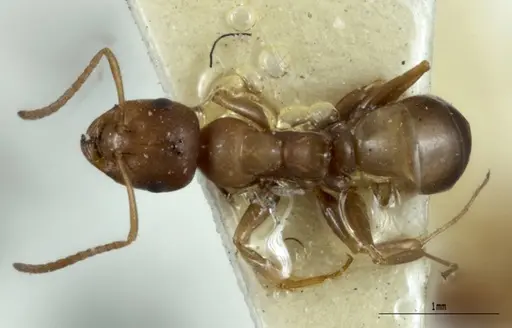
Literature
Loading...Loading products...