

Melophorus anderseni
- Scientific Name
- Melophorus anderseni
- Tribe
- Melophorini
- Subfamily
- Formicinae
- Author
- Agosti, 1998
- Distribution
- Found in 1 countries
Melophorus anderseni Overview
Melophorus anderseni is an ant species of the genus Melophorus. It is primarily documented in 1 countries , including Australia. Detailed taxonomic data and occurrence records can be further explored via authoritative databases such as AntWeb or the Global Biodiversity Information Facility (GBIF).
Melophorus anderseni
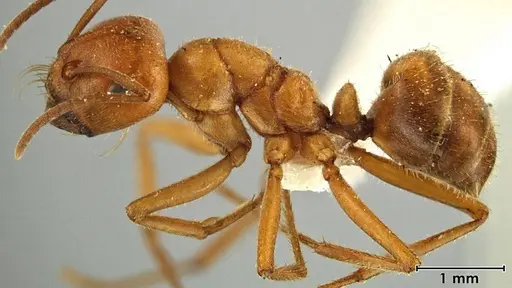
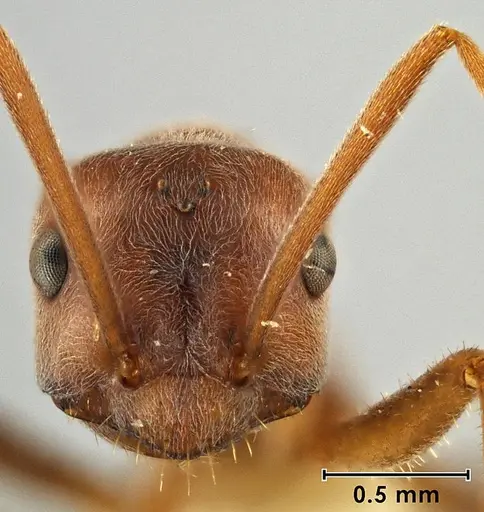
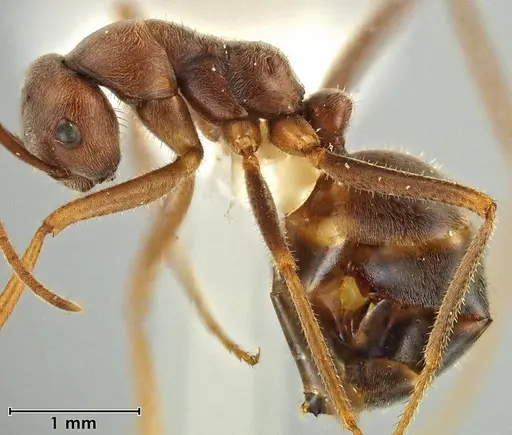
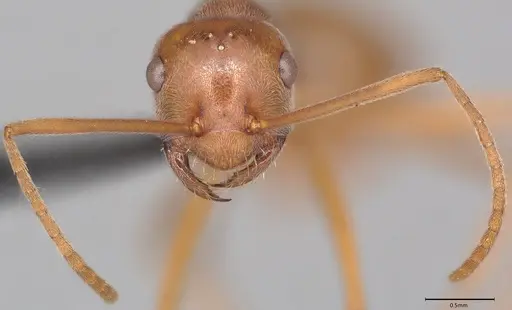
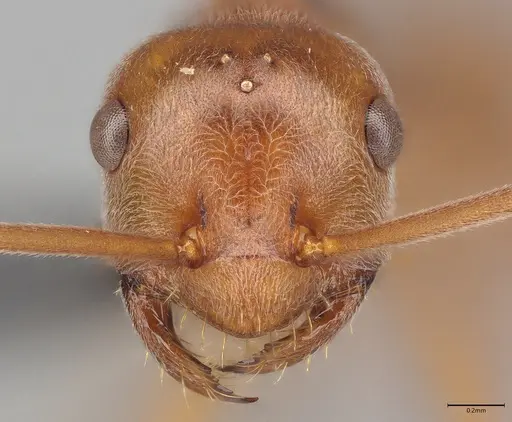
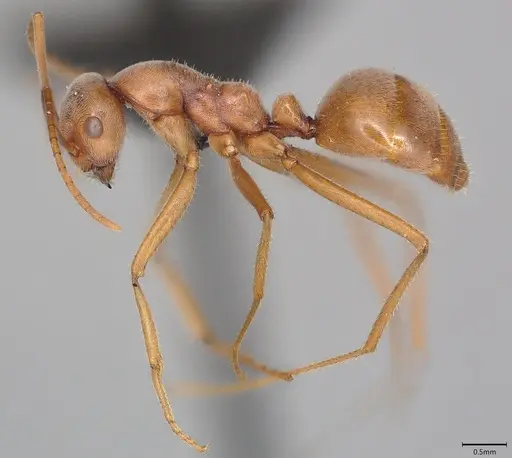
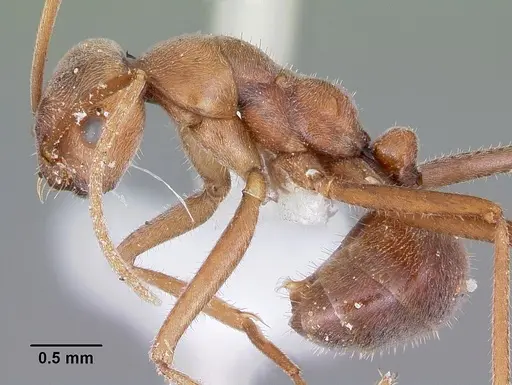
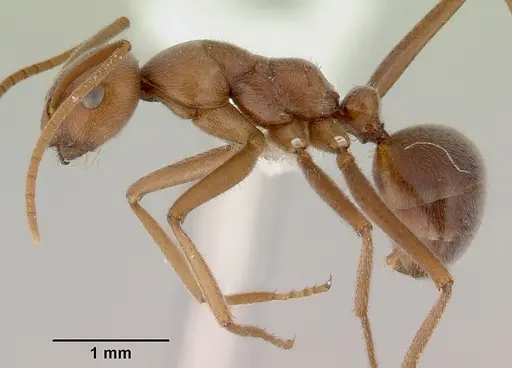
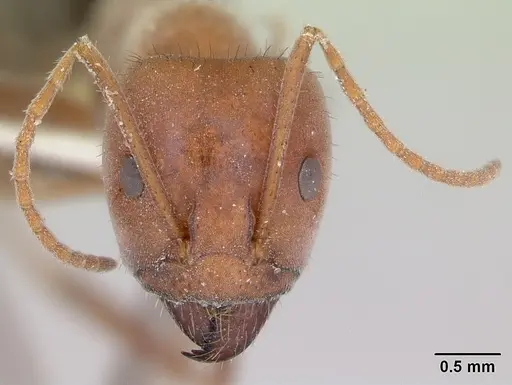
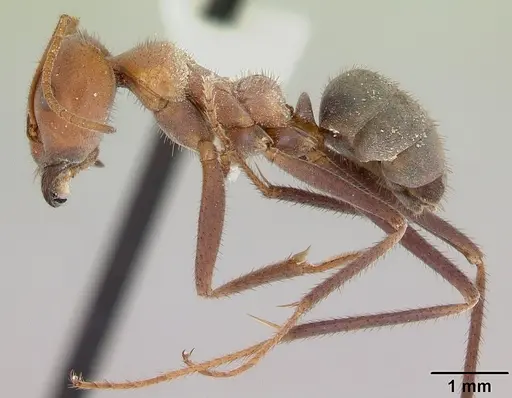
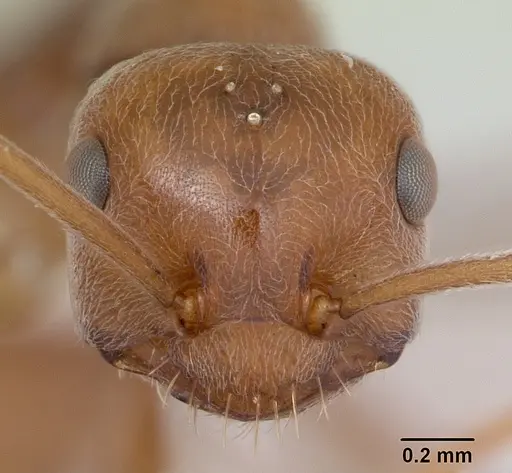
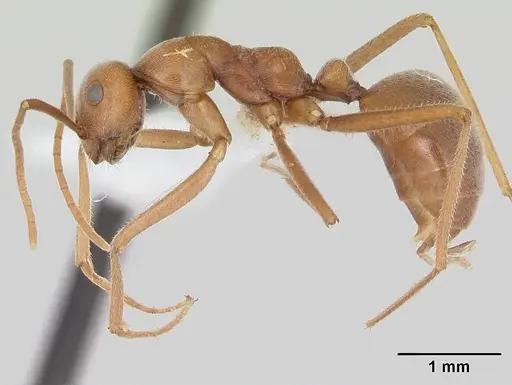
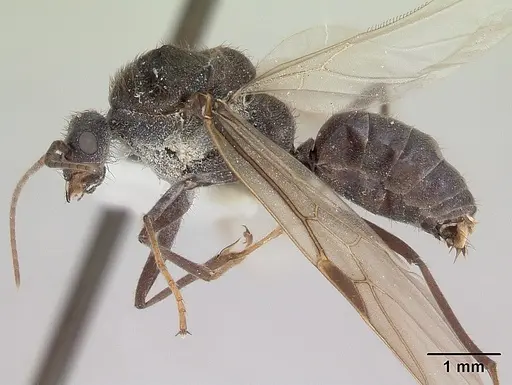
Melophorus anderseni is a small, specialized social parasite ant native to northern Australia. Workers are reddish-brown with a distinctly shaped petiolar node that is thick and rectangular in minor workers. The species belongs to the Melophorus genus, characterized by short maxillary palps and a strongly oblique mandibular margin. This ant is remarkable for its unique predatory behavior, it raids nests of the aggressive northern meat ant (Iridomyrmex sanguineus), stealing brood to raise as food. The workers acquire the host's colony scent by rubbing against meat ant foragers, allowing them to enter the nest undetected. This is one of the most specialized ant species in Australia, with a highly unusual lifestyle that makes it challenging to keep in captivity [1][2].
Quick Summary
- Difficulty: Expert
- Origin & Habitat: Northern Australia, including Darwin, Kakadu, Kidman Springs (NT), Mt Isa, and Tin Camp Creek (QLD). May also occur in the Kimberley region of WA. Found in arid to seasonal tropical habitats where its host Iridomyrmex sanguineus lives [1][3].
- Colony Type: Social parasite, obligate parasite of Iridomyrmex sanguineus. Cannot found colonies independently. Queens invade host colonies, likely kill the host queen, and use host workers to raise their own brood. The species has never been observed establishing a colony without a host [1][2].
- Queen: Socially parasitic, Temporary parasitic
- Size & Growth:
- Queen: Described in original description (Agosti 1998) but specific measurements not in available data [1].
- Worker: Minor workers: 1.04-1.65mm HW,1.06-1.45mm HL. Major workers: up to 1.65mm HW [1].
- Colony: Unknown, likely small due to parasitic lifestyle. Only a few collections have been made [1].
- Growth: Unknown
- Development: Unknown, no development data available for this species (Development is entirely dependent on host colony resources)
- Antkeeping:
- Temperature: Northern Australia species, likely prefers warm conditions similar to its arid-tropical range. No specific data available. Keep at room temperature (22-26°C) as a starting point [3].
- Humidity: Inferred from arid to seasonal tropical habitat. Likely tolerates drier conditions than many Australian ants. No specific data [3].
- Diapause: Unknown, likely reduced activity in cooler/drier seasons in its northern Australian range, but no specific documentation [3].
- Nesting: No captive nesting data available. In the wild, they likely nest near or within host Iridomyrmex colonies. Not suitable for typical ant-keeping setups [1].
- Behavior: Highly specialized predator of Iridomyrmex sanguineus brood. Workers approach meat ant foragers, which cower (as they do when facing larger competing ants). Melophorus workers then rub against the meat ants to acquire their cuticular hydrocarbons, essentially stealing their colony scent. Once 'made up' with this scent, they can enter the host nest and steal larvae and pupae, carrying them back to their own nest. This is one of the most sophisticated parasitic behaviors in ants [2][4]. Escape risk is moderate, workers are small (around 1-1.5mm) but not among the tiniest ants.
- Common Issues: This species is an obligate social parasite, it cannot survive without a host Iridomyrmex colony, making captive keeping extremely difficult, The specialized raiding behavior requires live host colonies, which are themselves difficult to maintain, Only a few wild collections exist, captive breeding has never been documented, Queens likely require host colony invasion to establish, similar to other social parasites, The apparent rarity suggests very specific ecological requirements that are difficult to replicate
Understanding Melophorus anderseni's Parasitic Lifestyle
Melophorus anderseni is one of the most specialized ants in Australia, it is an obligate social parasite that cannot survive without its host, the northern meat ant (Iridomyrmex sanguineus). Unlike typical ants that forage for food and raise their own brood, this species has evolved a remarkable predatory strategy. Workers raid host colonies to steal larvae and pupae, which they feed to their own colony's brood. This makes them essentially a specialized predator that targets ant brood as their sole food source. The apparent rarity of M. anderseni in collections may reflect both its specialized habits and the difficulty of locating these small ants amid aggressive host colonies [1][2].
The Raiding Behavior
The raiding behavior of M. anderseni is extraordinarily sophisticated. When a Melophorus worker encounters an Iridomyrmex forager, something remarkable happens, the much larger meat ant worker cowers, just as it would when facing a large competing ant species. This behavioral response gives the smaller Melophorus the opportunity it needs. The Melophorus worker presses its body against the meat ant, acquiring the host's cuticular hydrocarbons, the chemical compounds that identify nestmates. Once 'made up' with this stolen colony odor, the Melophorus worker can walk right into the Iridomyrmex nest undetected. It then grabs larvae or pupae and carries them back to its own nest to feed the parasitic colony's young. This is one of the most complex examples of chemical mimicry and social parasitism in ants [2][4][5].
Why This Species Is Not Recommended for Most Antkeepers
Melophorus anderseni is not a species you can keep in a typical formicarium. As an obligate social parasite, it requires a living host colony of Iridomyrmex sanguineus to survive. The queen cannot found a colony independently, she must invade an existing host colony, likely killing or replacing the host queen, and use host workers to raise her own offspring. Even if you could obtain both species, maintaining a functional raiding system would be extraordinarily difficult. The species has only been collected a few times in the wild, and there are no records of successful captive breeding. For antkeepers, this species represents an interesting natural history curiosity rather than a viable keeping project. If you're interested in Australian ants, consider species like Camponotus, Rhytidoponera, or Iridomyrmex itself, which are more established in the hobby [1][3].
Distribution and Habitat
Melophorus anderseni is confined to northern Australia, with collections from the Northern Territory (Darwin, Kakadu, Kidman Springs, Ranger Uranium Mine lease) and Queensland (Mt Isa, Tin Camp Creek). It may also occur in the Kimberley region of Western Australia where populations of its host Iridomyrmex sanguineus are found. The species occupies the northern arid zone and seasonal tropics of Australia. Its range overlaps with the distribution of its host species, which is widespread across northern Australia. The specialized host relationship suggests M. anderseni will only occur where Iridomyrmex sanguineus is present [1][6].
Identification and Morphology
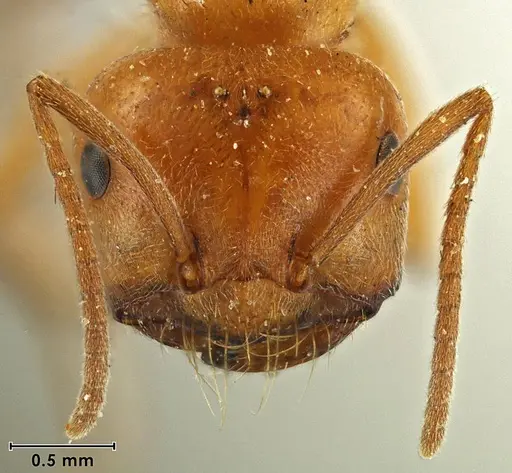
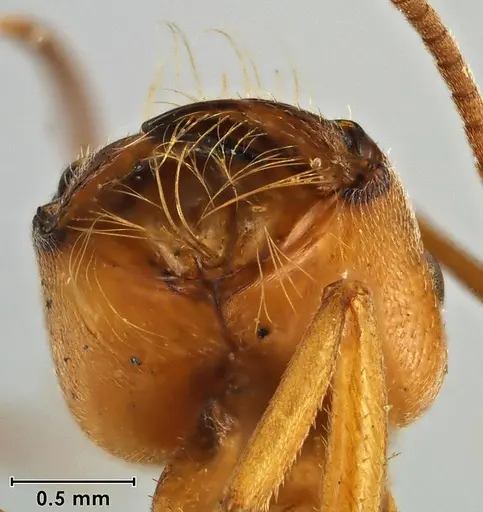
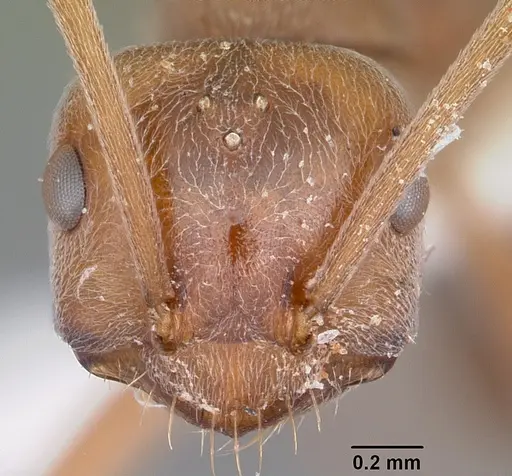
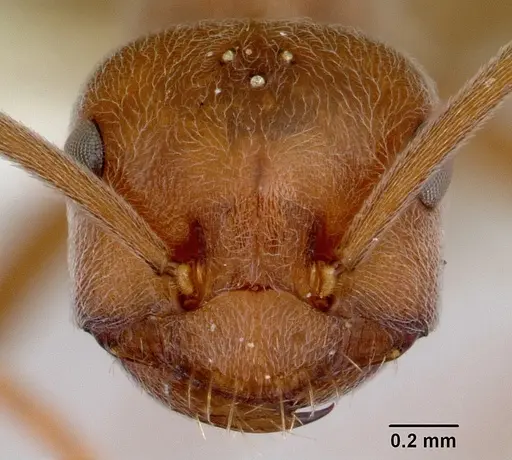
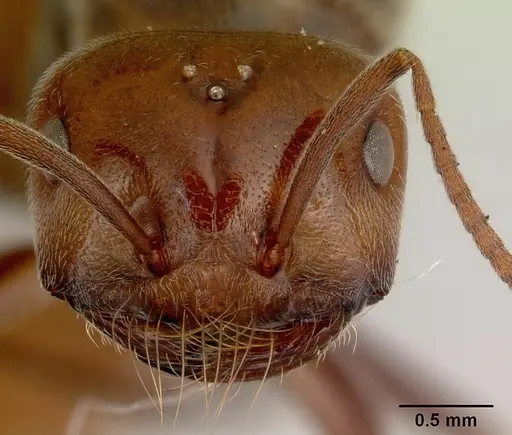
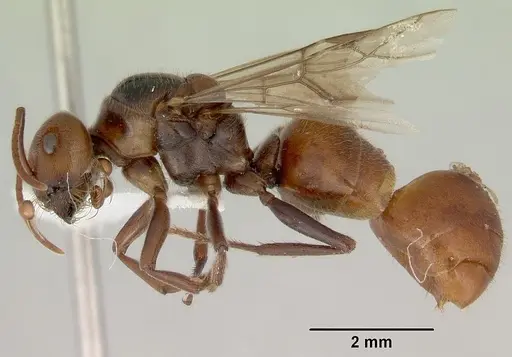
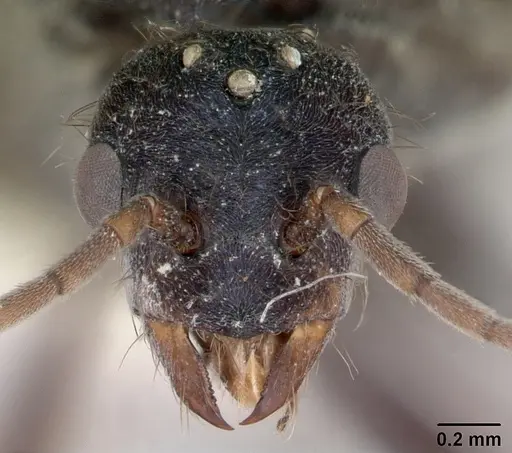
Melophorus anderseni can be identified by several distinctive features. It belongs to the M. anderseni species group, characterized by short maxillary palps that do not reach the neck (palp formula 6,4), and the absence of a metatibial apical spur. Minor workers have a thick, rectangular or quadrate petiolar node, and the anterior clypeal margin is broadly convex and protrusive. The clypeal psammophore (a brush of hairs used for carrying particles) is located below the midline of the clypeus in major workers or near the anterior margin in minor workers. The antennal scape of minor workers lacks erect setae. Color ranges from reddish-brown in minor workers to dull orange in major workers, with the gaster slightly darker in both castes [1].
Frequently Asked Questions
Can I keep Melophorus anderseni in a formicarium?
No. This species is an obligate social parasite that cannot survive without a host Iridomyrmex sanguineus colony. It cannot be kept like typical ants and has never been successfully maintained in captivity.
How does Melophorus anderseni get into host nests undetected?
Workers rub their bodies against Iridomyrmex foragers to acquire the host's cuticular hydrocarbons (colony scent). Once coated with this chemical 'disguise, ' they can enter the nest without being attacked [2].
What does Melophorus anderseni eat?
They are specialized predators of ant brood, specifically targeting the larvae and pupae of Iridomyrmex sanguineus. They steal brood from host colonies and feed it to their own larvae [2][4].
Where does Melophorus anderseni live?
Northern Australia, including the Northern Territory (Darwin, Kakadu, Kidman Springs) and Queensland (Mt Isa, Tin Camp Creek). It may also occur in Western Australia's Kimberley region [1].
Is Melophorus anderseni dangerous?
No. Workers are very small (1-1.5mm) and pose no danger to humans. Their specialized predatory behavior is directed only at their host ant species [1].
Why is Melophorus anderseni so rarely collected?
The apparent rarity is likely due to both under-collection (because of their very specialized habits) and genuinely low populations. They are small, secretive, and only occur where their specific host is present [1].
Do Melophorus anderseni queens found colonies alone?
No. As a social parasite, the queen cannot found a colony independently. She must invade a host Iridomyrmex colony, likely killing the host queen and using host workers to raise her first brood. This is similar to other temporary social parasites [1].
Are there any similar ants that are easier to keep?
Yes. If you're interested in Australian ants, consider Camponotus, Rhytidoponera, or Iridomyrmex species, which are well-established in the ant-keeping hobby and can be kept in standard setups. Melophorus in general are heat-loving Australian ants, but M. anderseni's parasitic lifestyle makes it unique and unsuitable for captivity [3].
What is the relationship between Melophorus anderseni and Iridomyrmex sanguineus?
M. anderseni is a social parasite and predator of I. sanguineus. It raids their nests to steal brood for food, and its queen likely invades host colonies to reproduce. The host is the widespread northern meat ant, one of Australia's most common and aggressive ants [2][1].
How long do Melophorus anderseni workers live?
Unknown, no specific longevity data exists for this species. Most ant workers live several months to a few years, but parasitic species may have different lifespans due to their unique biology [3].
References

This caresheet is licensed under CC BY-SA 4.0 .
ANIC32-066653
View on AntWeb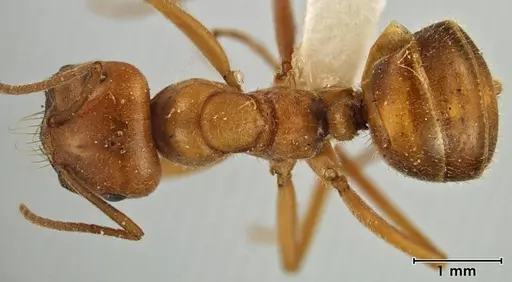
ANIC32-066666
View on AntWeb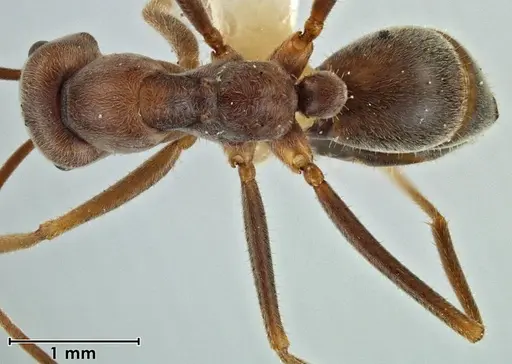
ANTWEB1053772
View on AntWeb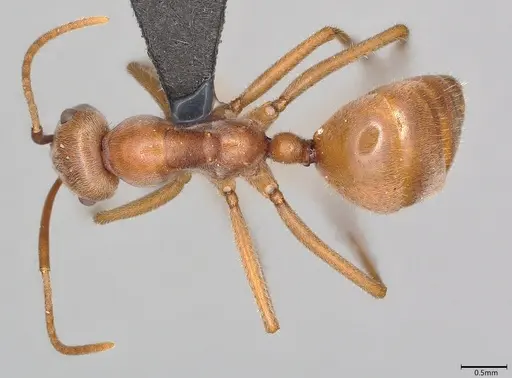
CASENT0104675
View on AntWeb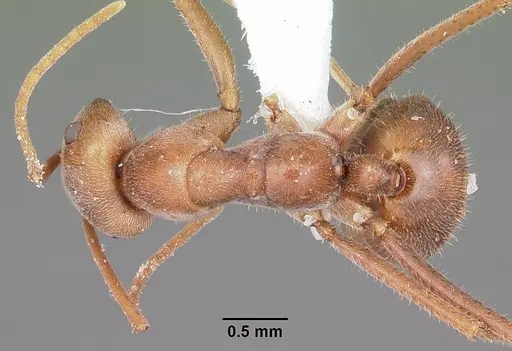
CASENT0172008
View on AntWeb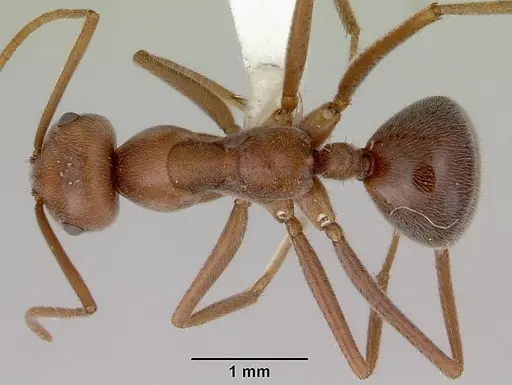
CASENT0172009
View on AntWeb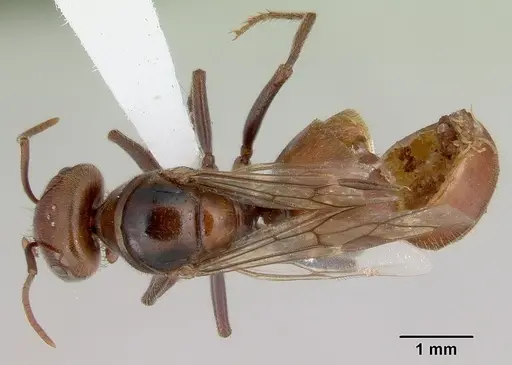
CASENT0173919
View on AntWeb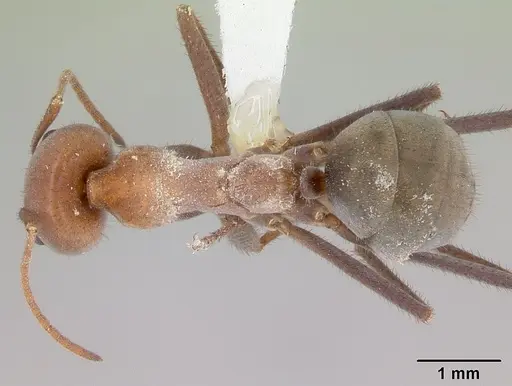
CASENT0173920
View on AntWeb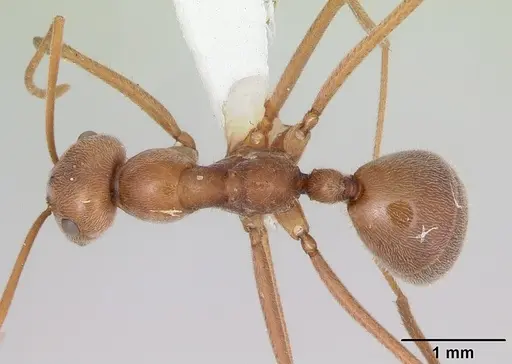
CASENT0173921
View on AntWeb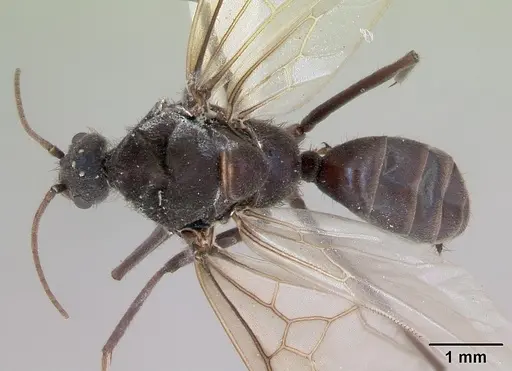
Literature
Loading...Loading products...