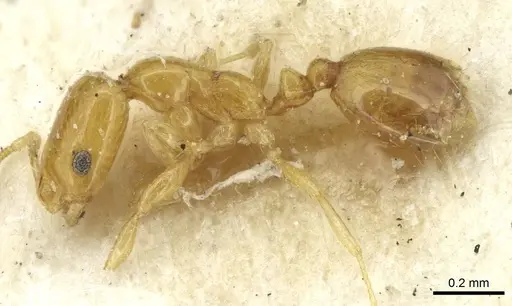
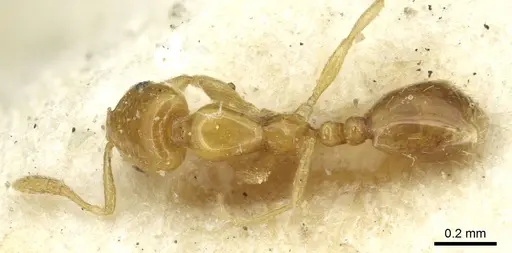
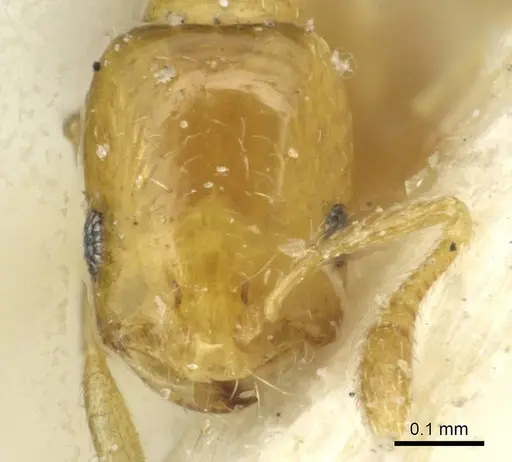
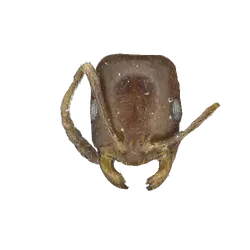
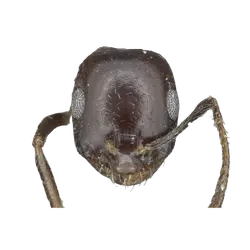
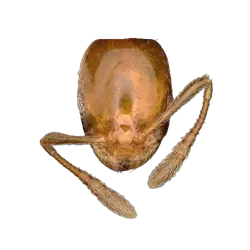
Monomorium clavicorne - "Clavicorne Thief Ant"
Monomorium clavicorne is a lesser-known ant species within the diverse Monomorium genus, often referred to as 'thief ants' due to their small size and tendency to nest near or raid the brood of other ant species. These ants are quite small, with workers exhibiting a monomorphic caste, meaning they are all roughly the same size. Their bodies are typically smooth and shining, with a distinct three-segmented antennal club and mandibles armed with four teeth. While specific details on their coloration are limited, many Monomorium species are yellowish to brownish-red. Their tiny stature and sometimes cryptic nesting habits make them somewhat elusive in the wild.
- Difficulty: Medium
- Origin & Habitat: Palaearctic Region (Israel, Oman, Tunisia, Türkiye, Egypt, Iran, Lebanon, Morocco, Saudi Arabia, Sudan, Syria, United Arab Emirates) and Afrotropical Region (Saudi Arabia, United Arab Emirates). in Cultivated areas, human settlements, agricultural landscapes, sometimes near sewage water streams or other vegetation. They nest in leaf litter, sandy and clay soils, or under rocks and bark..
- Colony Type: Polygyne (multiple queens), claustral founding.
- Size & Growth:
- Queen: Not specified
- Worker: Not specified
- Colony: Medium (thousands). Fast growth.
- Antkeeping:
- Temperature: Maintain a temperature range of 24-28°C for optimal development and activity. Consistent warmth is beneficial for brood growth..
- Humidity: Provide a humidity gradient, with higher humidity (70-80%) in the brood chambers and slightly lower (50-60%) in the foraging area. This helps prevent desiccation and mold..
- Diapause: Not required. Not specified at Not specified.
- Nesting: These ants can adapt to various artificial nest setups, including acrylic, 3D printed, grout, or Ytong/plaster nests. They appreciate small, secure spaces to feel safe. Natural setups with sand or loam are also suitable..
- Behavior: Low (towards handler, but can be competitive with other ants) aggressiveness.
- Common Issues: Escape artists (due to small size), Humidity fluctuations, Mold in nest.
Keeping Monomorium clavicorne can be a rewarding experience for antkeepers who appreciate smaller species and their unique behaviors. Given their preference for nesting in diverse environments like leaf litter, soil, and under rocks, providing a suitable habitat with a mix of substrate and some hiding spots in the outworld can encourage natural foraging and nesting activities. They are known to be opportunistic foragers, so offering a varied diet will keep your colony thriving. Ensure your nest design accounts for their tiny size, as these ants are notorious for finding the smallest gaps to escape, making escape prevention paramount for a successful setup.
This species falls into the Monomorium monomorium species-group, characterized by their very small, monomorphic workers and distinct head and antennal features. While specific details about the reproductive habits of Monomorium clavicorne are scarce, many Monomorium species are polygynous, meaning they can have multiple queens in a single colony. This trait often contributes to faster colony growth once established, as multiple queens can lay eggs, leading to a quicker expansion of the worker force. Observing how multiple queens cohabitate and contribute to the colony's development can be a fascinating aspect of their care.
Feeding Monomorium clavicorne requires a consistent supply of both sugars and proteins. Like many small ant species, they benefit greatly from a diverse diet. Honey water or sugar water can serve as primary carbohydrate sources, while various insects like small mealworms or crickets, offered in appropriate sizes, will provide the necessary protein for brood development. Some Monomorium species exhibit a 'satiation' response, meaning they might prefer different foods if continuously given the same diet, so rotating food types is a good practice to ensure balanced nutrition and continued foraging interest.
While little is specifically known about the biology of Monomorium clavicorne in the wild, closely related species in the Monomorium genus are known for their scavenging habits and adaptability. They are often found coexisting with other ant species, which hints at their potential to be opportunistic or even 'thief ant' behaviors in a captive setting, though this needs to be observed. Their widespread distribution across various regions, from the Palaearctic to Afrotropical zones, suggests a robust and adaptable nature, making them potentially more resilient than some highly specialized ant species.