

Megalomyrmex fungiraptor
- Scientific Name
- Megalomyrmex fungiraptor
- Tribe
- Solenopsidini
- Subfamily
- Myrmicinae
- Author
- Boudinot <i>et al.</i>, 2013
- Distribution
- Found in 2 countries
Megalomyrmex fungiraptor Overview
Megalomyrmex fungiraptor is an ant species of the genus Megalomyrmex. It is primarily documented in 2 countries , including Costa Rica, Nicaragua. Detailed taxonomic data and occurrence records can be further explored via authoritative databases such as AntWeb or the Global Biodiversity Information Facility (GBIF).
Megalomyrmex fungiraptor
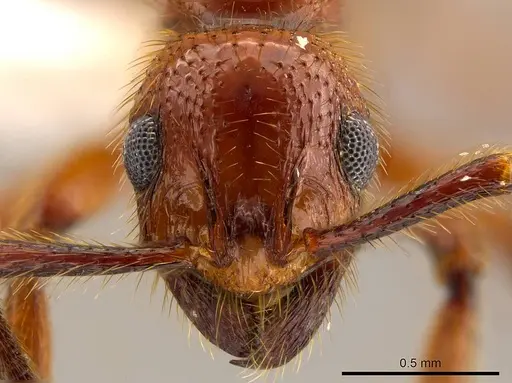
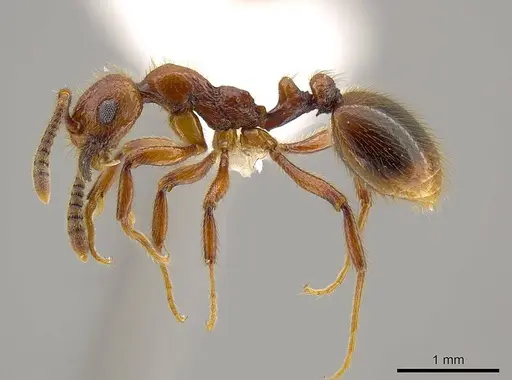
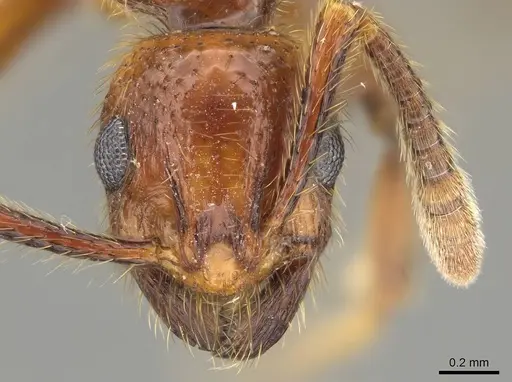
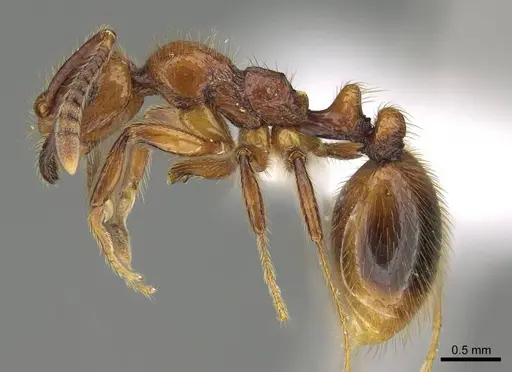
Megalomyrmex fungiraptor is a tiny ant species from Central America, measuring just 0.81-0.87mm for workers and 0.93-0.95mm for queens [1]. Workers have a distinctive deep orange body with dark brown mandibles and a wide black band wrapping around the rear portion of their abdomen. This is the most robust species within the symmetochus complex, and they feature uniquely compressed basitarsi (the foot segments) that set them apart from related species [1]. They range from Nicaragua into Costa Rica at elevations between 50-310 meters in tropical wet forest habitats [1][2]. The most fascinating aspect of this species is its likely lifestyle as a guest ant, the symmetrochus complex ants are known to associate with fungus-growing ants (Sericomyrmex and Trachymyrmex species), potentially living in their nests and foraging alongside them [1].
Quick Summary
- Difficulty: Expert
- Origin & Habitat: Nicaragua to Costa Rica, tropical wet forests at 50-310m elevation [1][2]. Found in lowland tropical rainforests.
- Colony Type: Likely guest ant (social parasite) associated with Sericomyrmex fungus-growing ants. Colony structure is unconfirmed, may be facultatively parasitic like related species M. silvestrii [1].
- Colony: Monogyne
- Queen: Socially parasitic
- Size & Growth:
- Queen: 0.93-0.95mm head width [1]
- Worker: 0.81-0.87mm head width [1]
- Colony: Unknown, likely small colonies typical of guest ants
- Growth: Unknown
- Development: Unconfirmed, no development data exists for this species (Development timeline has not been studied. Related Megalomyrmex species suggest 4-8 weeks at tropical temperatures, but this is speculative.)
- Antkeeping:
- Temperature: Keep at 24-28°C, these are lowland tropical ants from warm, humid forests [1]. A gentle heat gradient allows them to regulate temperature.
- Humidity: High humidity required, think damp tropical forest floor. Keep nest substrate consistently moist but not waterlogged. Ambient humidity around 70-80% is ideal.
- Diapause: Unlikely, being a tropical species from low elevation, they probably do not require a diapause period. However, slight seasonal slowdowns may occur during cooler months.
- Nesting: No specific nesting data exists. Based on related guest ant species, they likely nest in close association with host colonies or in small chambers near fungal gardens. In captivity, a test tube setup with moist cotton or a small acrylic nest works well. Given their tiny size, they need very small chambers and passages.
- Behavior: Behavior is unstudied, but related guest ants like M. symmetochus are known to live peacefully within host colonies. They likely forage for fungal substrates or host colony resources. Workers are small and may be able to escape through standard barriers, but are not strong climbers. Temperament is likely peaceful, guest ants typically avoid confrontation with hosts. Escape prevention should be moderate given their small size.
- Common Issues: No captive husbandry information exists, this is an extremely poorly studied species with no documented captive colonies, As a likely guest ant, they may require host colony association to thrive, keeping them independently may prove difficult, Their tiny size makes escape prevention important, use fine mesh barriers, Wild-caught colonies may carry parasites or diseases with no documented treatment, Feeding requirements are completely unknown, related species suggest they may need fungal substrates or host-provided resources
Species Identification and Discovery
Megalomyrmex fungiraptor was described in 2013 by Boudinot, Sumnicht, and Adams as part of a revision of Central American Megalomyrmex species [1]. The species name comes from Latin, meaning 'fungus thief', a reference to their likely lifestyle as guest ants associated with fungus-growing ants [1]. Workers can be uniquely identified by two key features: strongly compressed meso- and metabasitarsi (the foot segments), and a postpetiole that is about twice as wide as tall [1]. They are the most robust species in the symmetochus complex, larger than both M. symmetochus and M. adamsae. The type series was collected in Nicaragua at Cerro Saslaya National Park using bait (Keebler Pecan Sandies) at a tropical wet forest site at 320m elevation [1]. The only known queens were collected at a blacklight at La Selva Biological Station in Costa Rica [1].
Biology and Host Associations
The natural history of M. fungiraptor remains completely unknown, this is one of the least studied ant species in existence [1]. However, researchers have made educated inferences based on its placement in the symmetochus complex. Related species M. symmetochus and M. adamsae are confirmed guest ants that live in association with fungus-growing ants in the tribe Attini. M. symmetochus specifically associates with Sericomyrmex species, while M. adamsae associates with Trachymyrmex species [1]. The fact that Sericomyrmex opacus (now likely Sericomyrmex opacus) was collected at the same bait station as the M. fungiraptor type series strongly suggests this is their host species [1]. Guest ants in this group are known to live in the tunnels and chambers of their host colonies, potentially feeding on fungal substrates or being groomed by host workers, Wheeler (1925) reported that Sericomyrmex groom the tarsi of their M. symmetochus guests [1]. This species may be a facultative social parasite like M. silvestrii, meaning they can either nest independently or associate with host colonies [1].
Keeping Megalomyrmex fungiraptor
WARNING: This species is NOT recommended for antkeepers. No documented captive colonies exist, and their biology is completely unstudied. They are among the most challenging ants to keep because they likely require association with host Sericomyrmex colonies to survive and reproduce successfully. If you do attempt to keep them, you would essentially need to culture both the guest ant and its host fungus-growing ant simultaneously, an extremely difficult undertaking. Should you attempt keeping them, use a test tube setup with moist cotton at 24-28°C with high humidity around 70-80%. Feed sugar water and small insects, but acceptance is completely unconfirmed. Given their tiny size (workers under 1mm), use fine mesh barriers for escape prevention. This species is best left to professional researchers with access to proper field sites and laboratory facilities. Instead, consider keeping related but better-understood Megalomyrmex species or more established guest ants like Temnothorax that have documented care requirements. [1]
Related Species in the Hobby
While M. fungiraptor itself is not kept, understanding its relatives helps contextualize this species. The genus Megalomyrmex contains several guest ant species that associate with fungus-growing ants. M. symmetochus is perhaps the best known, living in association with Sericomyrmex amabilis in Central American leaf litter [1]. These ants have evolved specialized adaptations for living alongside host colonies, including unique morphological features like compressed basitarsi that may help them move through host tunnels more easily [1]. The symmetochus complex represents an interesting evolutionary case of social parasitism, these ants have essentially found a niche living off the resources and infrastructure of other ant species without fully taking over the colony. For antkeepers interested in guest ants, the genus Temnothorax offers better-documented alternatives, though these are also challenging to keep. Some Megalomyrmex species may be more accessible if they prove to be facultatively parasitic (able to live independently), but M. fungiraptor's specific requirements remain entirely unknown.
Frequently Asked Questions
Can I keep Megalomyrmex fungiraptor as a pet ant?
No. This species is not recommended for antkeepers. No captive husbandry information exists, and they likely require association with host Sericomyrmex ant colonies to survive. This is an extremely poorly studied species with no documented successful captive colonies.
What do Megalomyrmex fungiraptor eat?
Unknown. Based on related guest ant species, they likely feed on fungal substrates, host colony resources, or are fed by host workers. Their diet in captivity has never been documented.
How big do Megalomyrmex fungiraptor colonies get?
Unknown. Colony size has not been documented. Related guest ants typically form small colonies, but this is purely speculative for M. fungiraptor.
Where does Megalomyrmex fungiraptor live?
They range from Nicaragua to Costa Rica at elevations between 50-310 meters in tropical wet forests [1][2]. The type locality is in Nicaragua's Región Autónoma del Atlántico Norte at Cerro Saslaya.
What is the host ant for Megalomyrmex fungiraptor?
Likely Sericomyrmex species (possibly Sericomyrmex opacus). Sericomyrmex opacus was collected at the same bait station as the type series, suggesting this as the likely host [1]. However, this association is not confirmed.
How long do Megalomyrmex fungiraptor workers live?
Unknown. No lifespan data exists for this species.
Are Megalomyrmex fungiraptor good for beginners?
No. This is an expert-level species at best, and more accurately should be considered a research-only species. Their complete lack of documented captive care makes them unsuitable for any keeper.
Do Megalomyrmex fungiraptor need hibernation?
Unlikely. Being a lowland tropical species from Nicaragua and Costa Rica, they probably do not require a diapause period. However, slight seasonal slowdowns may occur.
How do I identify Megalomyrmex fungiraptor?
Workers are uniquely identified by the combination of strongly compressed meso- and metabasitarsi (flattened foot segments) and a postpetiole about twice as wide as tall [1]. They are the most robust species in the symmetochus complex, with deep orange body coloration, dark brown mandibles, and a black band on the rear of their abdomen.
References

This caresheet is licensed under CC BY-SA 4.0 .
CASENT0629661
View on AntWeb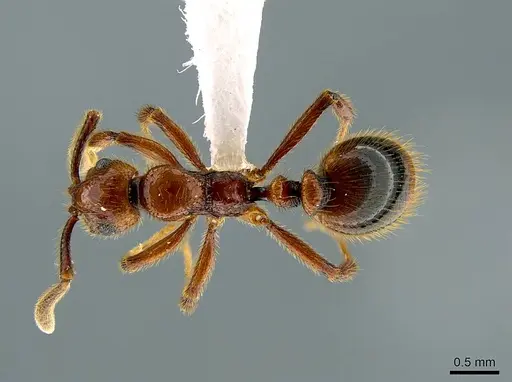
CASENT0629662
View on AntWeb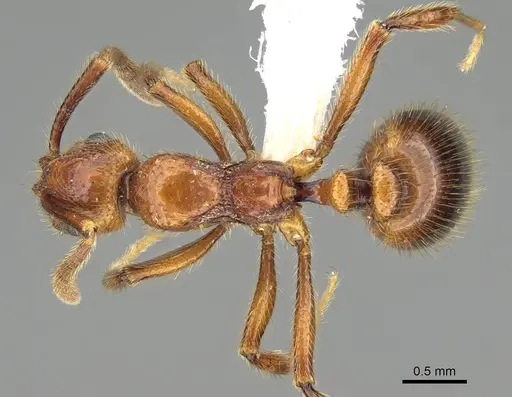
Literature
Loading...Loading products...