

Mayriella sharpi
- Scientific Name
- Mayriella sharpi
- Tribe
- Crematogastrini
- Subfamily
- Myrmicinae
- Author
- Shattuck & Barnett, 2007
- Distribution
- Found in 1 countries
Mayriella sharpi Overview
Mayriella sharpi is an ant species of the genus Mayriella. It is primarily documented in 1 countries , including Papua New Guinea. Detailed taxonomic data and occurrence records can be further explored via authoritative databases such as AntWeb or the Global Biodiversity Information Facility (GBIF).
Mayriella sharpi
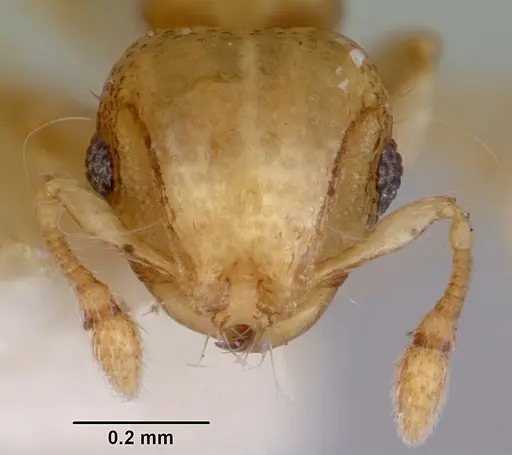
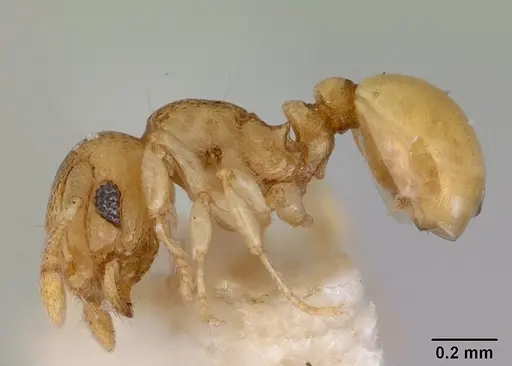
Mayriella sharpi is an extremely rare tiny ant species known only from a single specimen collected in Papua New Guinea. Workers are among the smallest ants you can keep, measuring just 0.45-0.46mm in head length, that's smaller than a grain of sand. The most distinctive feature is the sharply pointed ventrally-directed extension on each compound eye, which makes them instantly recognizable under magnification. The specimen was pale yellow and appears to be a callow (newly emerged worker), suggesting the species may have yellowish coloration in general. This is the only Mayriella species currently documented from Papua New Guinea, making it a truly unique find for antkeepers [1].
What makes this species special is its extreme rarity combined with the genus-level knowledge we have. Mayriella ants are known for living in small colonies of 50-100 workers and preferring moist rainforest environments. They nest under stones or in rotting wood, and unlike many tiny ants, they are polygynous, meaning colonies can have multiple queens working together. The challenge for keepers is that this specific species has never been kept in captivity, so everything we know about caring for them comes from studying related species in the genus [1].
Quick Summary
- Difficulty: Expert
- Origin & Habitat: Papua New Guinea (Central Province, Bisianumu near Sogeri), rainforest habitat. The genus Mayriella strongly prefers moist, forested areas with most specimens collected from rainforest or wet sclerophyll woodlands [1].
- Colony Type: Polygynous, about half of Mayriella nest series containing queens have more than one queen, suggesting the species are polygynous (multiple queens per colony). Colonies average 50-100 workers [1].
- Colony: Polygyne
- Size & Growth:
- Queen: Unknown, only worker caste has been documented [1]
- Worker: 0.45-0.46mm head length (extremely small, among the smallest ants) [1]
- Colony: Typically 50-100 workers based on genus patterns [1]
- Growth: Unknown, no captive breeding data exists
- Development: Unknown, no development data exists for this species (Based on related tiny Myrmicinae, expect several months at optimal temperature. This is a rough estimate since no direct data exists.)
- Antkeeping:
- Temperature: Unknown for this species. Based on Papua New Guinea rainforest origin, likely needs warm conditions in the mid-to-high 20s°C (25-28°C). Start around 26°C and observe colony activity.
- Humidity: High humidity required, rainforest species. Keep nest substrate consistently moist but not waterlogged. The genus shows strong preference for moist, forested areas [1].
- Diapause: Unknown, being a tropical Papua New Guinea species, may not require diapause, but this is unconfirmed.
- Nesting: Based on genus preferences: moist soil under stones, rotting logs, or arboreal cavities. For captivity, use a small test tube setup with moist substrate or a small naturalistic setup with damp soil and hiding structures. The key is maintaining constant moisture [1].
- Behavior: Mayriella ants are very small and relatively docile. Workers forage through leaf litter and are not aggressive. However, their tiny size creates significant escape risk, they can squeeze through gaps invisible to the naked eye. The genus is polygynous with multiple queens per colony. Foraging workers are most commonly collected from litter samples, suggesting they search for food throughout their environment. The sting placement in M. sharpi is unusual (forward along ventral gaster), but the function is unknown [1].
- Common Issues: escape prevention is critical, at 0.45mm, they can slip through standard test tube barriers, use fine mesh and tight-fitting lids, no captive breeding data exists, this species has never been kept in captivity, so all care is educated guesswork, humidity management is challenging, rainforest species need constant moisture but must avoid flooding, colony failure risk is high, with no established captive protocols, success is uncertain, obtaining a colony may be impossible, only a single specimen has ever been collected
Why Mayriella sharpi Is an Expert-Only Species
This is perhaps the most challenging ant you could attempt to keep. Mayriella sharpi has only ever been collected once, a single worker specimen in 1955. No queen, no colony, no breeding data, no captive husbandry records exist. Everything in this caresheet comes from studying the genus-level behavior of related Mayriella species, not from firsthand experience with this specific ant. You are essentially pioneering captive care for a species that has never been kept in captivity before. This requires extensive antkeeping experience, access to related species for comparison, and a willingness to experiment. If you're looking for a challenge, this is the ultimate one, but expect significant setbacks and accept that success is uncertain. The scientific value of establishing a captive colony of this species would be enormous, as it would be the first time anyone has observed its behavior, reproduction, and development [1].
Housing and Escape Prevention
Given their extreme tiny size (workers are under 0.5mm), standard ant keeping equipment will not contain them. Regular test tube setups may allow escapes through capillary action around cotton plugs. You will need to use fine mesh barriers, nylon stocking material or very fine cloth over any opening. Consider using small acrylic nests with chambers too small for them to traverse easily, or custom-made setups with sub-millimeter gaps. The nesting area must be kept constantly moist as they are rainforest species, but you must also ensure no standing water that could drown them. A small piece of damp cotton or sphagnum moss works well for moisture. For the outworld (foraging area), keep it simple and focused on easy cleaning since the colony will be small. The key principle is: if you can see a gap, they can probably escape through it. [1]
Temperature and Humidity Requirements
As a Papua New Guinea rainforest species, Mayriella sharpi likely requires warm, humid conditions. The genus shows strong preference for moist, forested areas with most specimens collected from rainforest or wet sclerophyll habitats. Aim for temperatures in the mid-to-high 20s°C (around 26-28°C) and humidity levels above 70%. You can achieve this using a small heat mat on one side of the setup creating a gradient, combined with regular misting or a water reservoir. The substrate should feel consistently damp but never waterlogged. Monitor closely, too dry and the colony will desiccate, too wet and mold becomes a serious problem. Given the complete lack of captive data, you will need to observe your colony's behavior and adjust accordingly [1].
Feeding and Nutrition
The diet for Mayriella sharpi is entirely speculative since no feeding observations exist for this species. However, Mayriella workers are foragers in leaf litter, where they likely hunt micro-arthropods and collect honeydew from scale insects or aphids. Given their minute size, their prey must be extremely small, think springtails, minute soil mites, or tiny fruit fly larvae. You may need to culture your own micro-prey. Sugar sources may be accepted in the form of diluted honey or sugar water, but offer these sparingly and remove uneaten portions quickly to prevent mold. Feed small amounts of protein (like crushed insects) a few times per week and provide a constant sugar source. The key is matching prey size to their tiny dimensions. [1]
Colony Structure and Social Organization
Mayriella is a polygynous genus, about half of all nest series containing queens have multiple queens, meaning colonies naturally support several reproductive females. This is unusual among ants and has implications for captive care. Your colony may accept multiple queens if you somehow obtain a founding queen. The average colony size is small, typically 50-100 workers, so don't expect the massive colonies seen in species like Formica or Camponotus. This species is known only from the worker caste, no queens or males have ever been documented. If you obtain a colony, it would be a groundbreaking discovery for ant science. The polygynous nature means colonies can be more stable and recover from worker losses more easily than single-queen species [1].
Legal and Ethical Considerations
Mayriella sharpi is known only from Papua New Guinea, and no established export or trade exists for this species. If you were to obtain specimens, they would almost certainly need to come from scientific collections or field work, not from commercial ant keepers. Before attempting to keep this species, research the legal requirements for importing and keeping exotic ant species in your country. Many nations require permits for exotic arthropods. Additionally, consider the ethical implications: this is an extremely rare species with no captive population. Establishing a thriving captive breeding program could have significant scientific value, but it requires commitment and expertise. Never release this species or any non-native ant into the wild, they could become invasive or disrupt local ecosystems [1].
Frequently Asked Questions
Can I keep Mayriella sharpi as a beginner ant keeper?
No. This species is absolutely not suitable for beginners. It has never been kept in captivity, no care protocols exist, and the workers are among the smallest ants on Earth at just 0.45mm. You would be pioneering captive care for a species that exists only as a single museum specimen. If you're new to ant keeping, start with established species like Lasius niger, Camponotus, or Messor. Wait until you have years of experience before attempting this species [1].
Where can I get a Mayriella sharpi colony?
You almost certainly cannot. Only a single worker specimen has ever been collected (in 1955), and no colonies exist in captivity. This species is known only from Papua New Guinea and has never been documented in the ant-keeping trade. Even finding a wild colony would require expert-level field work in remote Papua New Guinea rainforest. This is not a species you can purchase, it's a scientific curiosity that remains to be discovered by researchers [1].
What do Mayriella sharpi ants eat?
Unknown specifically, but based on genus behavior, they likely eat tiny micro-arthropods (springtails, mites) and honeydew. Their minute size means prey must be microscopic. In captivity, you might try offering tiny fruit fly pieces, springtails, or diluted honey/sugar water. This is entirely speculative since no feeding observations exist for this species.
How big do Mayriella sharpi colonies get?
Based on genus patterns, colonies likely reach 50-100 workers at maximum. This is a small colony size compared to most ants. The polygynous structure (multiple queens) may help the colony maintain this size consistently. No data exists for this specific species, but related Mayriella species all show this modest colony size [1].
Do Mayriella sharpi ants sting?
The specimen has an unusual sting placement (forward along the ventral surface of the gaster directed downward), but the stinging ability of this species is unknown. Given their extreme tiny size (0.45mm), any sting would likely be imperceptible to humans even if present. Most Myrmicinae have stingers, but they're often too small to penetrate human skin [1].
What temperature should I keep Mayriella sharpi at?
No specific data exists, but as a Papua New Guinea rainforest species, they likely need warm, humid conditions around 26-28°C. Start in this range and observe colony behavior, if workers seem sluggish, increase slightly, if they avoid heated areas, reduce temperature. This is educated guesswork since no captive data exists.
Do Mayriella sharpi need hibernation or diapause?
Unknown, but unlikely. As a tropical Papua New Guinea species from near the equator, they probably don't experience cold winters that would trigger diapause. However, this is completely unconfirmed, no seasonal data exists for this species. If they show reduced activity in cooler months, you might reduce temperature slightly, but don't attempt a full hibernation without evidence [1].
How do I prevent Mayriella sharpi from escaping?
With workers at 0.45mm, standard barriers won't work. Use fine mesh (nylon stocking material or very fine cloth) over all openings. Check for gaps around lid edges, if you can see light through any crack, they can probably escape. Consider custom-made acrylic nests with no gaps larger than 0.3mm. Even cotton plugs in test tubes may allow capillary action escapes. This species demands obsessive escape prevention.
Can I keep multiple Mayriella sharpi queens together?
Probably yes, Mayriella is naturally polygynous, with about half of all nests containing multiple queens. If you somehow obtained multiple founding queens, they would likely tolerate each other. However, this is entirely speculative for this specific species since no captive colonies exist. The genus pattern suggests polygyny is normal, but proceed with caution and be prepared to separate if aggression occurs [1].
Why is Mayriella sharpi so rare?
This species is known from only a single specimen collected in 1955,making it one of the rarest ants in the world. It may be genuinely rare in the wild, or it could be overlooked due to its tiny size. The Papua New Guinea rainforest where it was found is difficult to access and has not been thoroughly surveyed for ants. It's possible the species is abundant somewhere but has simply never been found again. This mystery is part of what makes it so intriguing to ant enthusiasts [1].
References

This caresheet is licensed under CC BY-SA 4.0 .
CASENT0172443
View on AntWeb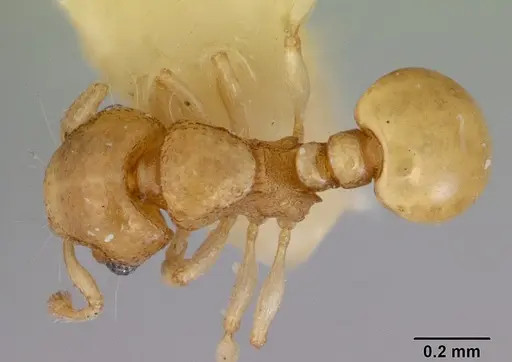
Literature
Loading...Loading products...