

Malagidris galokoa
- Scientific Name
- Malagidris galokoa
- Tribe
- Crematogastrini
- Subfamily
- Myrmicinae
- Author
- Bolton & Fisher, 2014
- Distribution
- Found in 1 countries
Malagidris galokoa Overview
Malagidris galokoa is an ant species of the genus Malagidris. It is primarily documented in 1 countries , including Madagascar. Detailed taxonomic data and occurrence records can be further explored via authoritative databases such as AntWeb or the Global Biodiversity Information Facility (GBIF).
Malagidris galokoa
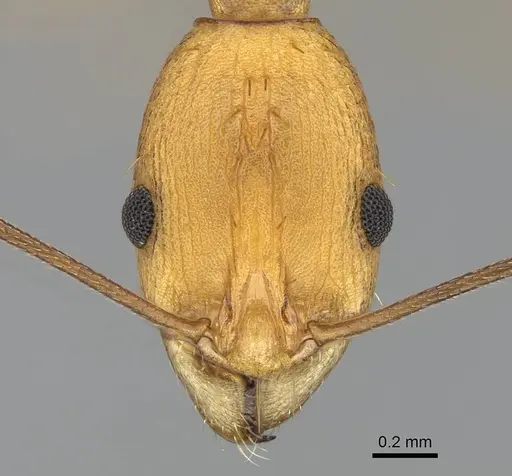
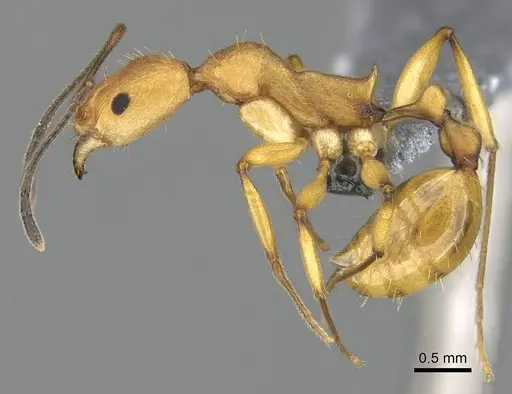
Malagidris galokoa is a small to medium-sized myrmicine ant endemic to Madagascar. Workers measure 4.8-5.3mm in total length and are yellow to yellow-brown in color [1]. This species is immediately recognizable by its extraordinarily recurved propodeal spines, the spines curve so strongly backward that their tips actually point forward (anterodorsally), a feature unique among Malagasy ants and reminiscent of the Asian genus Recurvidris [1]. The species is known only from montane forest at approximately 980m elevation in the Galoko chain of northern Madagascar [1].
This is one of the most poorly documented ant species in the hobby, with no described queen, male, or observed biology. The genus Malagidris contains several Madagascar endemic species, all of which remain poorly studied in terms of their captive care requirements.
Quick Summary
- Difficulty: Expert
- Origin & Habitat: Northern Madagascar, Galoko chain, Mont Galoko at 980m elevation in montane forest [1]. This is a highland rainforest habitat with moderate temperatures and high humidity.
- Colony Type: Unknown, only the worker caste has been described. No queen or colony structure data exists.
- Size & Growth:
- Queen: Unknown, queen has not been described
- Worker: 4.8-5.3mm [1]
- Colony: Unknown, only 12 workers known from the type series
- Growth: Unknown
- Development: Unknown, no development data exists for this species (No brood development observations have been documented. Related Malagidris species and typical Myrmicinae development patterns suggest 6-10 weeks at optimal temperature, but this is purely speculative.)
- Antkeeping:
- Temperature: Inferred from montane forest habitat, likely prefers cooler conditions than lowland tropical ants. Based on similar Madagascar montane species, aim for roughly 20-24°C with stable temperatures. Monitor colony activity and adjust accordingly.
- Humidity: Montane forest suggests high humidity needs. Keep nest substrate consistently moist but not waterlogged. Provide a gradient with slightly drier areas available.
- Diapause: Unknown, no seasonal data documented. Many Madagascar ants from high elevation may have reduced activity periods, but specific requirements are unstudied.
- Nesting: No direct data on natural nesting preferences. The genus Malagidris is related to Eutetramorium, and many Myrmicinae in Madagascar nest in soil or rotting wood. A naturalistic setup with moist substrate or a Y-tong/plaster nest would be appropriate starting points.
- Behavior: Not documented. Based on general Myrmicinae behavior, expect typical ground-nesting ant activity with workers foraging for small prey and honeydew. Escape prevention should be moderate given their 5mm size, but they are not among the smallest ants. No documented aggression levels or sting potency are available.
- Common Issues: no documented biology means all care is speculative, high risk of colony failure, queen and founding behavior completely unknown, cannot determine claustral vs semi-claustral requirements, no confirmed diet preferences, must infer from related species, hibernation or seasonal dormancy requirements entirely unknown, extremely limited availability, likely not available in the antkeeping hobby
Species Identification and Range
Malagidris galokoa was described in 2014 by Bolton and Fisher as part of a taxonomic revision of Madagascar endemic Myrmicinae genera related to Eutetramorium. The species is known only from the type locality in the Galoko chain of northern Madagascar, at approximately 980m elevation in montane forest [1]. The most distinctive identification feature is the extraordinarily recurved propodeal spines, these spines curve so strongly that their tips point anterodorsally (forward and upward), unlike any other Malagasy ant. Only Malagidris dulcis shows any spine curvature, but it is much less pronounced [1]. Workers are yellow to yellow-brown with relatively long scapes (scape index 163-170) and a mandible with 10-12 teeth [1].
Why This Species Is Not Recommended for Most Keepers
This species is one of the least suitable ants for captive keeping in the hobby. Absolutely no documented biology exists, we do not know what the queen looks like, how colonies are structured, what they eat, how they develop, or any aspect of their basic care. The species is known only from 12 worker specimens collected in 2013,and no research has ever observed living colonies. Keeping this species would require extensive experimental care with very uncertain outcomes. Additionally, the species is extremely unlikely to be available in the antkeeping hobby, as it has never been cultured and is only known from a single remote montane location in Madagascar. [1]
What We Would Need to Learn to Keep This Species
If this species were to become available, antkeepers would need to determine several critical factors through observation and experimentation. First, the queen must be described and founding behavior documented, we do not know if queens are claustral (seal themselves in and live off stored fat) or semi-claustral (must leave to hunt). Second, temperature and humidity preferences need to be established through trial and error, starting with montane forest conditions (cooler and more humid). Third, diet preferences are completely unknown, likely small live prey and sugar sources based on typical Myrmicinae, but unconfirmed. Finally, colony growth rate and maximum size are entirely unknown. Any successful keeper would essentially be pioneering the entire husbandry protocol from scratch.
Related Species and Inferences
Malagidris belongs to the tribe Crematogastrini, which includes many common ant genera. The genus is endemic to Madagascar and is related to Eutetramorium, Myrmisaraka, Royidris, and Vitsika, all of which are similarly poorly documented. While we cannot directly apply care guidelines from other species, we can make educated guesses based on the habitat. Montane forest at 980m elevation suggests cooler temperatures and higher humidity than lowland tropical conditions. The workers are moderately sized (4.8-5.3mm) with long scapes, suggesting they may be active foragers. However, these are inferences only, the actual care requirements could differ significantly. [1]
Frequently Asked Questions
Is Malagidris galokoa available in the antkeeping hobby?
No. This species is known only from a single collection in 2013 and has never been documented in the antkeeping hobby. It is extremely unlikely to be available for purchase.
What do Malagidris galokoa ants eat?
Unknown. No feeding observations exist. Based on typical Myrmicinae, they likely eat small insects and honeydew, but this is entirely speculative.
How long do Malagidris galokoa workers live?
Unknown. No lifecycle data exists for this species.
Do Malagidris galokoa ants sting?
Unknown. Most Myrmicinae have stingers, but the potency and whether they can penetrate human skin is unstudied for this species.
What temperature should I keep Malagidris galokoa at?
No documented requirements exist. Based on the montane forest habitat (980m elevation in northern Madagascar), cooler temperatures around 20-24°C are a reasonable starting guess, but this is entirely experimental.
How big do Malagidris galokoa colonies get?
Unknown. Only 12 workers are known from the type series. Colony size and structure have never been documented.
Is Malagidris galokoa a good species for beginners?
No. This species is not suitable for any level of keeper due to complete lack of documented biology. There are no established care guidelines, and keeping this ant would be entirely experimental with very high failure risk.
What does the queen of Malagidris galokoa look like?
Unknown. The queen has never been described. Only workers are known from the species description.
Do Malagidris galokoa need hibernation?
Unknown. No seasonal behavior has been documented. The montane habitat may experience cooler winters, but specific dormancy requirements are unstudied.
Can I keep multiple Malagidris galokoa queens together?
Unknown. No colony structure data exists, we do not even know what the queen looks like, let alone whether colonies are single-queen or multi-queen.
References

This caresheet is licensed under CC BY-SA 4.0 .
CASENT0344994
View on AntWeb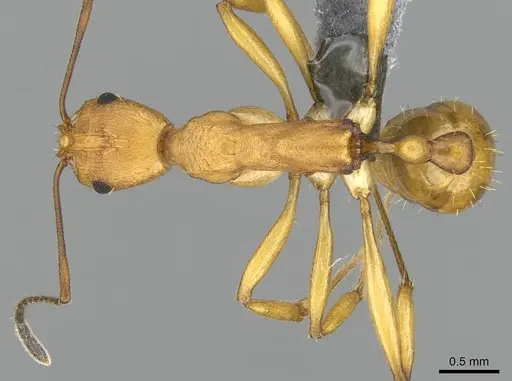
Literature
Loading...Loading products...