

Malagidris dulcis
- Scientific Name
- Malagidris dulcis
- Tribe
- Crematogastrini
- Subfamily
- Myrmicinae
- Author
- Bolton & Fisher, 2014
- Distribution
- Found in 1 countries
Malagidris dulcis Overview
Malagidris dulcis is an ant species of the genus Malagidris. It is primarily documented in 1 countries , including Madagascar. Detailed taxonomic data and occurrence records can be further explored via authoritative databases such as AntWeb or the Global Biodiversity Information Facility (GBIF).
Malagidris dulcis
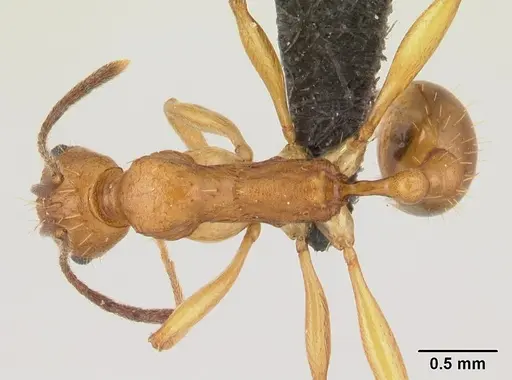
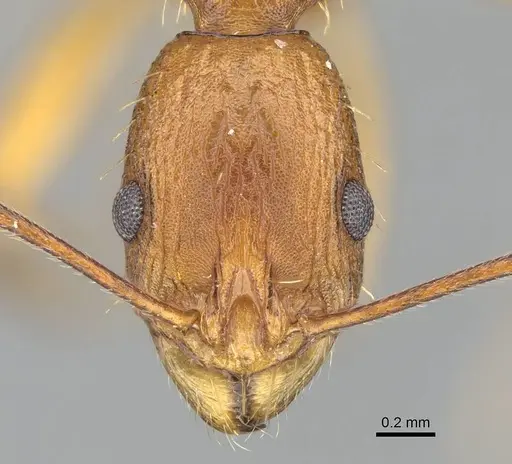
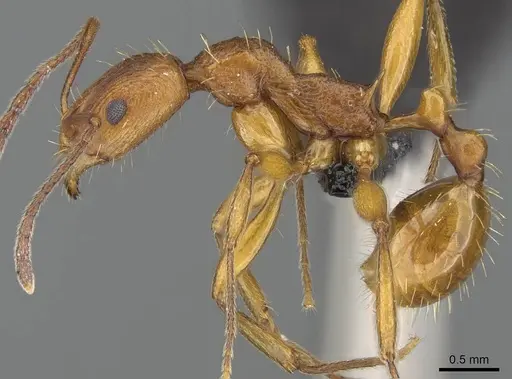
Malagidris dulcis is a small, yellow to yellow-brown ant endemic to Madagascar. Workers measure 4.7-5.4mm in total length, making them a medium-sized Myrmicine ant. They have relatively short scapes and distinctive propodeal spines that vary in length and angle between specimens. The head and mesosoma feature longitudinal rugulose sculpture, and the body is covered in numerous projecting setae. This species was formally described in 2014 by Bolton and Fisher and belongs to the Crematogastrini tribe. In the wild, these ants nest under stones and in leaf litter in rainforest environments, with additional records from littoral forest and one observation in tropical dry forest where they were foraging on the ground [1]. The genus Malagidris is endemic to Madagascar, making this species a true island endemic found nowhere else on Earth.
Quick Summary
- Difficulty: Unknown, likely Expert
- Origin & Habitat: Madagascar, endemic. Found in rainforest under stones and in leaf litter, also recorded from littoral forest and once from tropical dry forest [1].
- Colony Type: Unconfirmed colony structure. No data available on queen number or colony organization in the wild.
- Size & Growth:
- Queen: Unknown, no documented queen measurements available
- Worker: 4.7-5.4mm total length [1]
- Colony: Unknown, no colony size data available
- Growth: Unknown
- Development: Unknown, no development data available. Based on typical tropical Myrmicinae patterns, estimate 4-8 weeks at warm temperatures. (Development timeline is unconfirmed. Tropical ant species typically develop faster than temperate species.)
- Antkeeping:
- Temperature: Likely 22-28°C based on Madagascar rainforest habitat. Start in the mid-70s°F (around 24°C) and observe colony activity. Provide a temperature gradient if possible.
- Humidity: High humidity required, rainforest and littoral forest species. Keep nest substrate consistently moist but not waterlogged. Aim for 70-85% humidity in the nest area.
- Diapause: Unlikely, as a tropical Madagascar species, they probably do not require a winter diapause period. No specific data available.
- Nesting: In the wild, they nest under stones and in leaf litter. In captivity, a naturalistic setup with moist substrate (soil or plaster) and moderate chambers would likely work well. Given their small size, ensure escape prevention is adequate though they are not among the smallest ants.
- Behavior: Temperament is unconfirmed. They are ground-nesting ants that forage on the ground surface. No specific data on aggression or sting potency is available, though Myrmicinae ants typically can sting. Escape risk is moderate, they are small but not tiny enough to require extreme escape prevention measures like fluon on every connection.
- Common Issues: no established husbandry protocols, this is a newly described species with no captive breeding history, escape prevention should still be practiced despite moderate size, small gaps can allow escape, humidity management is critical, too dry and colonies will fail, too wet can cause mold issues, wild-caught colonies may have parasites or disease that are difficult to treat in captivity, obtaining this species may be difficult as it is endemic to Madagascar and rarely exported
Natural History and Distribution
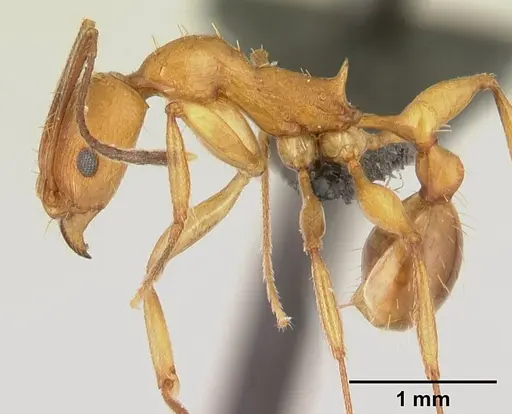
Malagidris dulcis is endemic to Madagascar, meaning it is found nowhere else on Earth. This island nation off the southeast coast of Africa is famous for its unique wildlife, and ants are no exception. The species was formally described in 2014 by Bolton and Fisher as part of a taxonomic revision of Madagascan Myrmicine ants related to Eutetramorium. The type locality is Ampombofofo in the Antsiranana region of northern Madagascar, a coastal area with littoral forest. However, the species has also been collected in rainforest environments and once in tropical dry forest. In their natural habitat, these ants are found under stones and in leaf litter samples, indicating they are ground-nesting ants that prefer moist, shaded microhabitats. The variation in propodeal spine length and angle across specimens has been noted by researchers, with some specimens having spines that are nearly vertical while others angle at about 45 degrees. One unusual specimen collected by P.S. Ward had notably longer spines (0.38 vs the typical 0.18-0.26), suggesting there may be cryptic species within what is currently classified as M. dulcis. [1]
Identification and Morphology
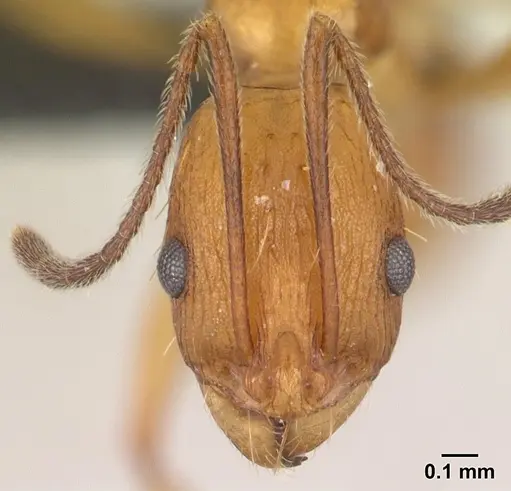
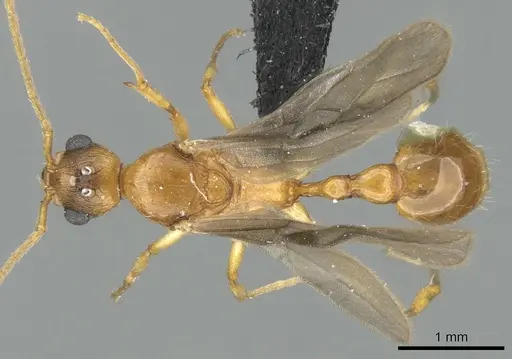
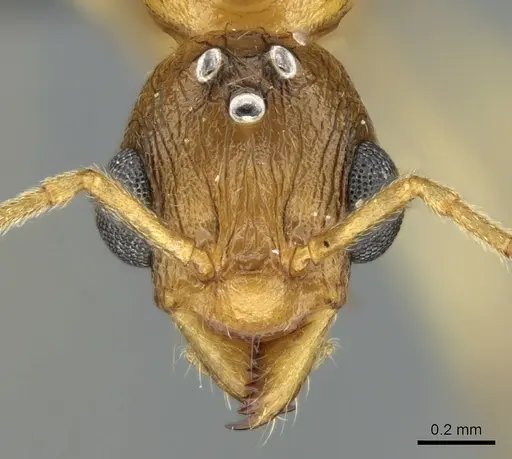
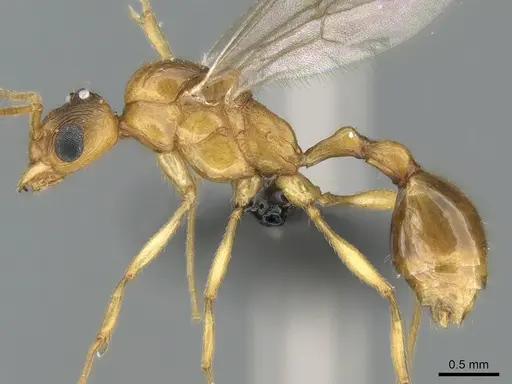
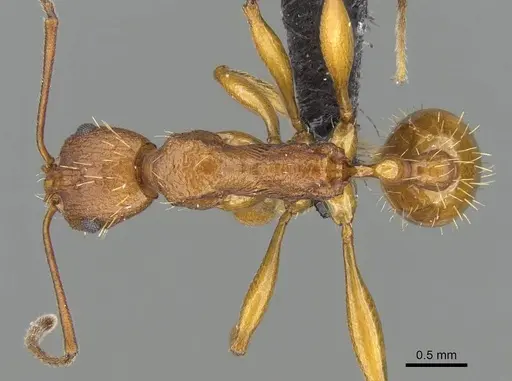
Workers of Malagidris dulcis are small ants measuring 4.7-5.4mm in total length. They are yellow to yellow-brown in color, which helps distinguish them from some related species. The head is relatively narrow (CI 68-74) with short scapes (SI 145-160) that lack standing setae but have minute pubescence. The mandibles have 10-12 teeth and denticles combined. The propodeal spines are distinctive and variable, they can be short, stout, and upcurved, or more straight and elongated. The metafemur is relatively short and deep. The petiole and postpetiole show typical Myrmicine morphology, with the postpetiole being about 1.19-1.26 times longer than high. The body is covered in numerous simple setae, with specific patterns on the head, mesosoma, and gaster. The dorsal surface of the head and mesosoma feature longitudinal rugulose sculpture. This species can be distinguished from its closest relative Malagidris belti by having a narrower head, longer scape, and shorter metafemur. [1]
Housing and Nesting Preferences
Based on field collection data, Malagidris dulcis nests under stones and in leaf litter in Madagascar's rainforest environments. This suggests they prefer moist, shaded microhabitats with access to decaying organic matter. For captive care, a naturalistic setup with a soil-based substrate would replicate their natural conditions well. The substrate should be kept consistently moist but never waterlogged. Plaster nests can also work if they are maintained at high humidity. Given their rainforest origin, humidity levels in the 70-85% range are likely appropriate. Temperature should be warm, probably in the 22-28°C range, reflecting their tropical origin. A temperature gradient allows the ants to choose their preferred zone. Since they are ground-nesting, the nest chambers should be at least several millimeters below the surface or in a dark area of the formicarium. [1]
Feeding and Diet
No specific dietary studies exist for Malagidris dulcis. However, as a member of the Myrmicinae subfamily and Crematogastrini tribe, they are likely generalist omnivores similar to most ants in this group. In the wild, they probably consume small insects, honeydew from aphids, and decaying organic matter. For captive feeding, a varied diet is recommended: protein sources like small insects (fruit flies, pinhead crickets, mealworms) should be offered regularly, along with sugar sources like honey water or sugar water. Given their small size, prey items should be appropriately sized, not larger than the ants themselves. The single observation of a worker foraging on the ground in tropical dry forest suggests they do forage for prey items. Feed protein 2-3 times per week and provide constant access to sugar water.
Temperature and Seasonal Care
As a Madagascar species from rainforest and littoral forest habitats, Malagidris dulcis is adapted to warm, humid conditions year-round. Madagascar has a tropical climate, so these ants likely do not experience cold winters or extended cool periods in their natural range. Therefore, they probably do not require a diapause or hibernation period. Keep the nest at temperatures in the low-to-mid 20s Celsius (roughly 72-77°F). A slight temperature gradient allows the colony to regulate its own conditions. Avoid temperatures below 20°C or above 30°C. Since they come from a region with consistent warmth, maintain stable temperatures throughout the year rather than cycling them seasonally. Room temperature within this range is acceptable, but a heating cable or mat may be needed in cooler environments. [1]
Challenges and Considerations
Malagidris dulcis presents significant challenges for antkeepers. First, this species is extremely rare in the antkeeping hobby, it was only formally described in 2014 and is endemic to Madagascar, making it difficult to obtain. Second, there is essentially no established husbandry information for this species, meaning keepers are largely working from inference based on related species and habitat data. Third, as a newly described species, there may be regulatory considerations regarding export from Madagascar, as the country has protections for endemic wildlife. If you do obtain this species, excellent escape prevention should still be practiced despite their moderate size. Wild-caught colonies may carry parasites or pathogens that are difficult to treat in captivity. For these reasons, this species is best suited for experienced antkeepers who have successfully kept other Myrmicinae species and who have the resources to maintain the specific humidity and temperature conditions this rainforest species requires. [1]
Related Species and Taxonomic Context
Malagidris dulcis belongs to the tribe Crematogastrini, which includes many common ant genera like Crematogaster. The genus Malagidris was created to house species previously classified in Eutetramorium that were found to be distinct based on phylogenetic analysis. The genus is endemic to Madagascar, with several described species. Malagidris belti is the closest relative and can be distinguished by its broader head, shorter scape, and shorter metafemur. The Eutetramorium group of genera, including Malagidris, represents a radiation of Myrmicine ants unique to Madagascar, having evolved in isolation on the island for millions of years. Understanding this taxonomic context helps explain why this species is so rarely encountered in captivity and why so little biological data exists, they simply have not been studied extensively due to their remote island distribution and the difficulty of conducting field research in Madagascar's rainforests. [1]
Future Research and Citizen Science
Given how little is known about Malagidris dulcis, any captive observations could be scientifically valuable. If you successfully maintain this species, documenting your observations on ant forums or through citizen science platforms could help build knowledge about their biology. Key observations that would be useful include: founding behavior (does the queen seal herself in or forage during founding?), colony development timeline (how long from egg to worker?), queen longevity, colony size at maturity, and any unique behaviors. Photography of different castes (workers, any dealate queens, males if produced) could also aid identification and study. This represents an opportunity to contribute to our understanding of a species that has barely been studied in the wild. The antkeeping community has historically contributed significantly to our knowledge of ant biology, and species like M. dulcis represent frontier opportunities for curious and dedicated keepers.
Frequently Asked Questions
How do I care for Malagidris dulcis ants?
Care for Malagidris dulcis is not well-established since this is a newly described species with no captive breeding history. Based on their Madagascar rainforest habitat, provide high humidity (70-85%), warm temperatures (22-28°C), and a moist naturalistic or plaster nest. Feed varied protein (small insects) and sugar sources. This species is best suited for experienced antkeepers given the lack of established protocols.
What do Malagidris dulcis ants eat?
No specific dietary studies exist for this species. Based on related Myrmicinae ants, they likely accept small insects, honeydew, and sugar water. Offer small live or frozen prey appropriately sized for 4-5mm workers, along with honey water or sugar water as constant sugar sources.
What size is Malagidris dulcis?
Workers measure 4.7-5.4mm in total length [1]. Queen size is unknown as no queen specimens have been documented in scientific literature.
Where is Malagidris dulcis found?
Malagidris dulcis is endemic to Madagascar, it is found nowhere else on Earth. They live in rainforest under stones and in leaf litter, with additional records from littoral forest [1].
Do Malagidris dulcis ants need hibernation?
Probably not. As a tropical species from Madagascar, they likely do not require a winter diapause. Maintain warm temperatures year-round.
How long does it take for Malagidris dulcis to develop from egg to worker?
This is unknown, no development data exists for this species. Based on typical tropical Myrmicinae patterns, estimate 4-8 weeks at warm temperatures, but this is purely speculative.
Is Malagidris dulcis good for beginners?
No. This species is not recommended for beginners. It was only described in 2014,has no established captive care protocols, is extremely rare in the hobby, and requires specific humidity and temperature conditions that are challenging to maintain. Experienced antkeepers who have kept other Myrmicinae species would be better suited for this challenge.
Can I keep multiple Malagidris dulcis queens together?
This is unknown. No data exists on colony structure or whether they are monogyne (single queen) or polygyne (multiple queens). Do not attempt combining unrelated queens without evidence they will accept each other.
Do Malagidris dulcis ants sting?
Myrmicinae ants have the ability to sting, though the potency varies by species. No specific data exists on whether M. dulcis stings or its pain level. Given their small size, any sting would likely be mild.
How big do Malagidris dulcis colonies get?
Unknown. No wild colony size data has been documented. Related Crematogastrini species typically form colonies ranging from dozens to several hundred workers.
What temperature should I keep Malagidris dulcis at?
Based on their Madagascar rainforest habitat, aim for 22-28°C (roughly 72-82°F). A temperature gradient allowing the ants to choose their preferred zone is ideal. Avoid temperatures below 20°C.
Is Malagidris dulcis available in the antkeeping hobby?
Extremely rare, if at all. This species was only described in 2014,is endemic to Madagascar, and has rarely been exported. Most antkeepers will not have access to this species. It represents a frontier species for dedicated collectors.
References

This caresheet is licensed under CC BY-SA 4.0 .
Literature
Loading...Loading products...