

Lophomyrmex longicornis
- Scientific Name
- Lophomyrmex longicornis
- Tribe
- Crematogastrini
- Subfamily
- Myrmicinae
- Author
- Rigato, 1994
- Distribution
- Found in 3 countries
Lophomyrmex longicornis Overview
Lophomyrmex longicornis is an ant species of the genus Lophomyrmex. It is primarily documented in 3 countries , including Brunei Darussalam, Indonesia, Malaysia. Detailed taxonomic data and occurrence records can be further explored via authoritative databases such as AntWeb or the Global Biodiversity Information Facility (GBIF).
Lophomyrmex longicornis
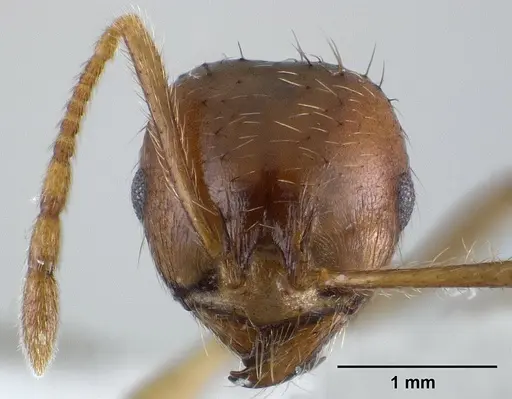
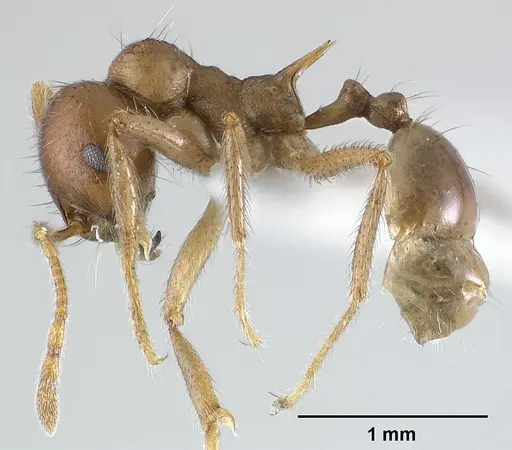
Lophomyrmex longicornis is a small but distinctive myrmicine ant native to the rainforests of Borneo, Malaysia, and Indonesia. Workers measure 3.0-3.5mm and are characterized by their very long propodeal spines, elongated antennal scapes (SI 100-110), and reduced body pilosity compared to other species in the genus. Their coloration ranges from brownish yellow to light brown. This species is a member of the Lophomyrmex bedoti group and is considered very distinct within its genus due to its unique combination of morphological features [1][2].
These ants are ground-dwelling foragers with a strong preference for ground-level habitats over arboreal spaces. They are active both during the day and at night, making them flexible foragers in the tropical rainforest ecosystem. Their diet appears to be omnivorous, with a trophic position indicating they function as secondary predators in their ecosystem, feeding on small invertebrates and likely tending aphids for honeydew [3][2][4].
Quick Summary
- Difficulty: Medium
- Origin & Habitat: Native to Borneo, Indonesia, and Malaysia in the Indomalaya region. Found in lowland rainforest leaf litter, soil cores, and in both primary and secondary forest habitats [5].
- Colony Type: Colony structure is unconfirmed. Based on typical Myrmicinae patterns, likely single-queen (monogyne) colonies, but this has not been directly documented.
- Size & Growth:
- Queen: Undocumented, estimated 5-6mm based on worker size and genus patterns
- Worker: 3.0-3.5mm [1]
- Colony: Unknown, likely small to moderate colony size typical of litter-dwelling Myrmicinae
- Growth: Unknown, likely moderate like other tropical Myrmicinae
- Development: Estimated 6-8 weeks at tropical temperatures (25-28°C) (Development timeline is not directly documented. Estimates based on typical Myrmicinae patterns in tropical conditions.)
- Antkeeping:
- Temperature: Keep at 24-28°C. As a tropical rainforest species, they need warm, stable temperatures. A heating cable on one side of the nest can create a gentle gradient if room temperature falls below this range.
- Humidity: Keep substrate consistently moist but not waterlogged. These ants live in rainforest leaf litter, so they need damp conditions. Provide a water tube as a moisture source and mist occasionally, but allow the nest to dry slightly between waterings to prevent mold.
- Diapause: No, as a tropical species, they do not require hibernation. Maintain warm temperatures year-round.
- Nesting: Use a naturalistic setup with moist substrate (like a terrarium-style formicarium) or a Y-tong/plaster nest with good moisture retention. They prefer nesting in soil or decaying wood, so include some soil or substrate they can burrow into. The nest should have narrow chambers scaled to their 3mm size.
- Behavior: These ants are active foragers that search for food both on the ground during the day and at night. They are not particularly aggressive but will defend their nest. Workers are small (3mm) so escape prevention is important, use fine mesh barriers and tight-fitting lids. They are omnivorous and will accept protein foods and sugar sources. Their long legs make them relatively fast movers [3][2].
- Common Issues: small size means escapes are likely without fine mesh barriers, tropical species may struggle in cool, dry environments, colonies may be slow to establish from founding stage, wild-caught colonies may have parasites that affect survival in captivity, overwatering can lead to mold problems in nest setups
Housing and Nest Setup
Lophomyrmex longicornis is a small ground-dwelling ant that does well in a naturalistic terrarium setup or a moisture-retaining formicarium. Since they naturally nest in leaf litter and soil, a layer of moist substrate (coco fiber, soil mix, or sand) allows them to burrow and create their own chambers. A Y-tong (acrylic) nest with narrow chambers also works well, especially if you provide a water tube for humidity. Because workers are only 3mm, ensure all connections and barriers have tight seals, these tiny ants can squeeze through surprisingly small gaps. An outworld with leaf litter, small stones, and pieces of decaying wood mimics their natural rainforest floor habitat. [3][5]
Feeding and Diet
These ants are omnivorous with a trophic position indicating secondary predator behavior. In captivity, they readily accept small protein sources like fruit flies, pinhead crickets, mealworms, and other small insects. They will also consume sugar water, honey, or honeydew. Based on their foraging patterns (active both day and night), they are generalist foragers. Offer protein prey 2-3 times per week and keep a constant sugar water source available. Remove uneaten prey after 24-48 hours to prevent mold. [4][2]
Temperature and Humidity
As a tropical rainforest species from Borneo, Lophomyrmex longicornis requires warm temperatures between 24-28°C. Room temperature is often sufficient if kept in a warm room, but a heating cable placed on one side of the nest can provide additional warmth if needed. Place the heating on top of the nest material to avoid drying it out too quickly. Humidity should be moderate to high, keep the substrate damp but not saturated. A water tube in the outworld or nest provides a permanent moisture source. Good ventilation is important to prevent stagnant air and mold while maintaining humidity. [5]
Behavior and Activity
This species shows interesting flexibility in foraging behavior, they are active both during the day and at night, which is relatively uncommon among ants. They have a statistically significant preference for ground-level habitats over arboreal foraging. Workers are relatively fast-moving due to their long legs. They are not known to be particularly aggressive toward keepers but will defend their colony if threatened. Their small size (3mm) makes them capable of escaping through tiny gaps, so excellent escape prevention is essential. Queens and colonies are likely to be reclusive during the founding stage, with workers becoming more active foragers once the colony establishes. [3][2]
Colony Establishment
The founding behavior of Lophomyrmex longicornis has not been directly documented. Based on typical Myrmicinae patterns, the queen likely seals herself in a claustral chamber and raises the first brood alone using stored fat reserves. The first workers (nanitics) will be smaller than mature workers. Founding colonies should be kept in a quiet, dark location with minimal disturbance. Provide a moist test tube setup and wait patiently, it may take 6-8 weeks or longer for the first workers to emerge. Do not feed during the founding stage unless workers have hatched.
Frequently Asked Questions
How long does it take for Lophomyrmex longicornis to produce first workers?
The exact development timeline is unconfirmed, but based on typical Myrmicinae patterns in tropical conditions, expect 6-8 weeks from egg to first worker at 25-28°C. This may be faster or slower depending on temperature and colony health.
What do Lophomyrmex longicornis ants eat?
They are omnivorous. Offer small live prey like fruit flies, pinhead crickets, or mealworms as protein sources 2-3 times per week. Also provide constant access to sugar water, honey, or honeydew. They forage actively both day and night.
Do Lophomyrmex longicornis ants sting?
As a Myrmicinae species, they have a stinger but it is very small and unlikely to penetrate human skin. They are not considered dangerous to keepers.
Are Lophomyrmex longicornis good for beginners?
This species is rated as Medium difficulty. They require tropical temperatures and humidity, which may require additional equipment. Their small size also demands good escape prevention. They are not the easiest species for complete beginners, but are manageable for those with some antkeeping experience.
Can I keep multiple Lophomyrmex longicornis queens together?
The colony structure is unconfirmed. Combining unrelated queens is not recommended as it has not been documented and could result in fighting. If you obtain a wild colony, it likely functions with a single reproductive queen.
Do Lophomyrmex longicornis need hibernation?
No. As a tropical species from Borneo, they do not require hibernation or winter cooling. Keep them warm year-round at 24-28°C.
How big do Lophomyrmex longicornis colonies get?
The maximum colony size is unknown. Based on typical litter-dwelling Myrmicinae, colonies likely reach several hundred workers at most. They are not among the largest ant species.
Why are my Lophomyrmex longicornis escaping?
Workers are only 3mm and can squeeze through tiny gaps. Use fine mesh (at least 0.5mm or smaller), ensure all lids fit tightly, and check all connections and tubing for gaps. Escape prevention is critical with this species.
Where is Lophomyrmex longicornis found in the wild?
This species is endemic to Borneo, Indonesia, and Malaysia. They live in lowland rainforest leaf litter and soil, with a strong preference for ground-level habitats over tree-dwelling.
References

This caresheet is licensed under CC BY-SA 4.0 .
CASENT0178544
View on AntWeb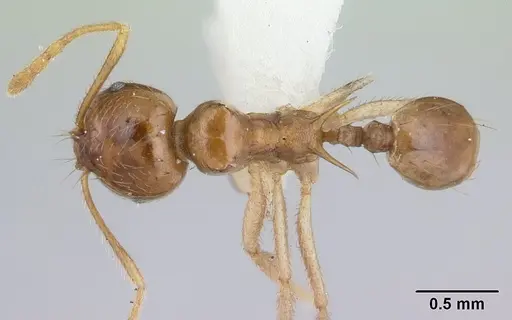
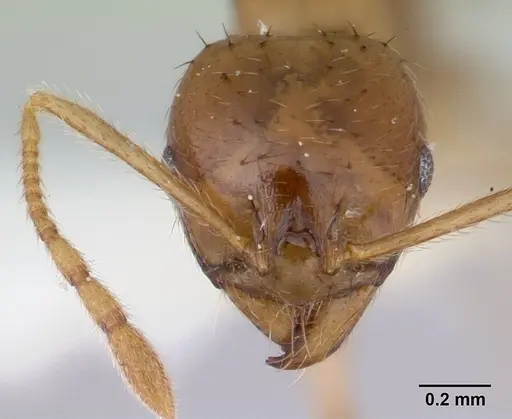
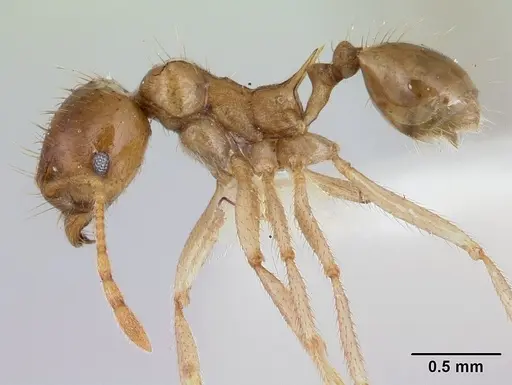
CASENT0179019
View on AntWeb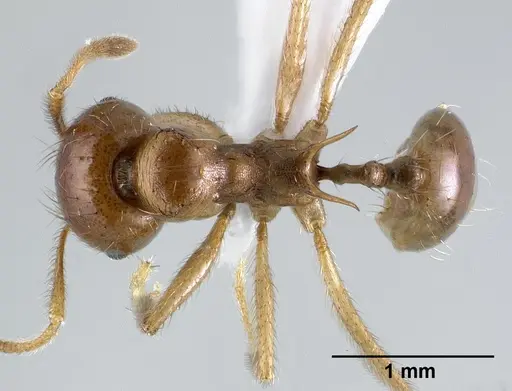
CASENT0901267
View on AntWeb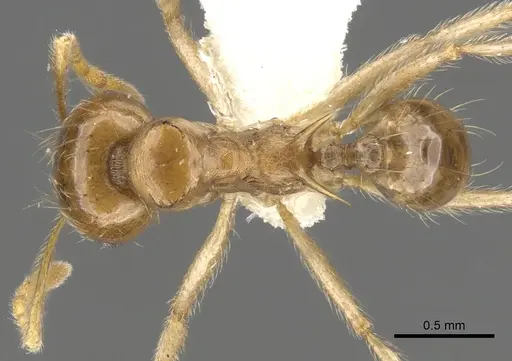
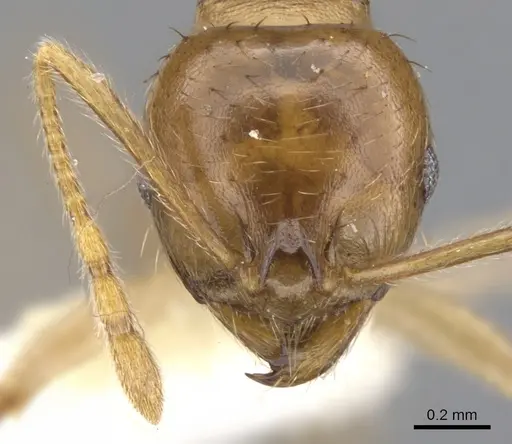
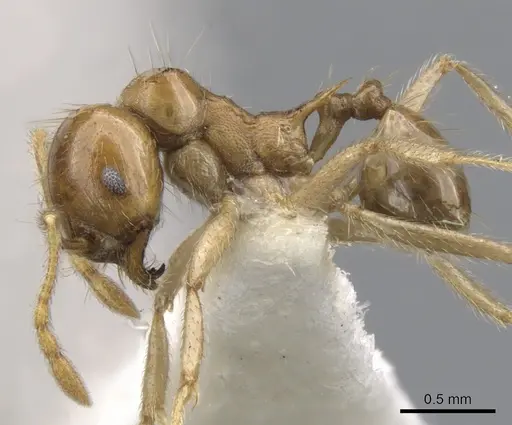
CASENT0923612
View on AntWeb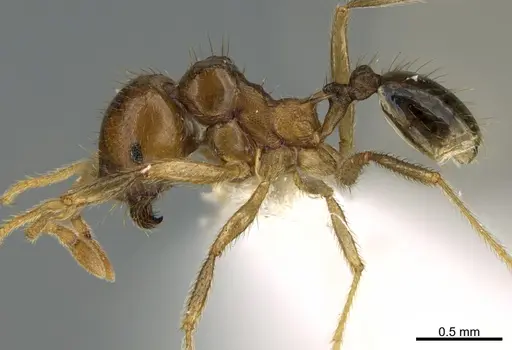
Literature
Loading...Loading products...