

Linepithema flavescens
- Scientific Name
- Linepithema flavescens
- Tribe
- Leptomyrmecini
- Subfamily
- Dolichoderinae
- Author
- Wheeler & Mann, 1914
- Distribution
- Found in 1 countries
Linepithema flavescens Overview
Linepithema flavescens is an ant species of the genus Linepithema. It is primarily documented in 1 countries , including Haiti. Detailed taxonomic data and occurrence records can be further explored via authoritative databases such as AntWeb or the Global Biodiversity Information Facility (GBIF).
Linepithema flavescens
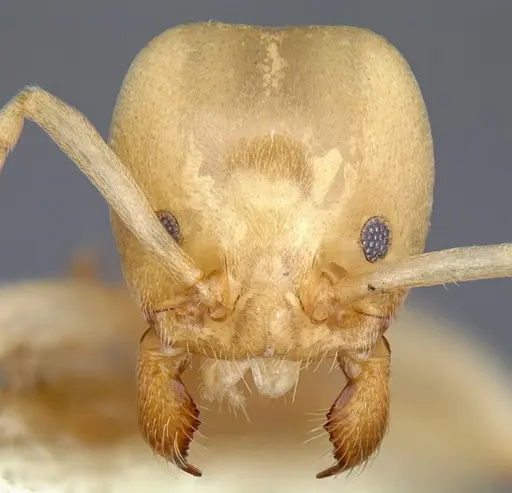
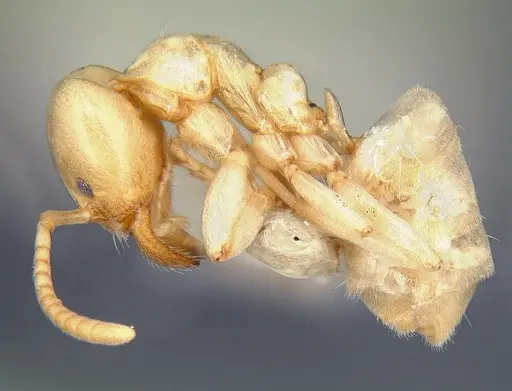
Linepithema flavescens is a tiny pale yellow ant endemic to Hispaniola (specifically Haiti). Workers measure just 2-2.3mm and have distinctive small eyes with fewer than 40 ommatidia, short antennal scapes, and a strongly convex mesonotum. The species was first described in 1914 and remains one of the most poorly known ants in the world, the queen and male have never been documented, and colonies have only been observed twice. Their pale coloration and reduced eyes strongly suggest a subterranean (underground) lifestyle, living deeper in soil rather than at the surface like many related species [1][2].
Quick Summary
- Difficulty: Expert
- Origin & Habitat: Endemic to Hispaniola (Haiti), found at elevations of 610-1,219m in the Massif de La Hotte and near Cape Haitien. They nest under stones on dry hillsides in relatively high-elevation areas [2][3].
- Colony Type: Unknown, the queen and male have never been documented, so colony structure (single-queen or multi-queen) is completely unconfirmed [1].
- Size & Growth:
- Queen: Unknown, queens have never been collected or described [1]
- Worker: 2-2.3mm [1]
- Colony: Unknown, only known from a handful of specimens
- Growth: Unknown
- Development: Unknown, development has never been studied (No data exists on development. Related Linepithema species typically develop in 4-8 weeks at warm temperatures, but this is a rough estimate only.)
- Antkeeping:
- Temperature: Unknown, no direct data. Based on elevation (610-1,219m) and Hispaniolan climate, likely prefer moderate temperatures in the low-to-mid 20s°C. Start around 22-25°C and observe colony activity.
- Humidity: Unknown, no direct data. Their subterranean lifestyle suggests they prefer stable, moderately humid conditions. Keep nest substrate consistently moist but not waterlogged.
- Diapause: Unknown, no seasonal data exists. Given their high-elevation Haitian habitat, they may experience some seasonal variation but this has not been studied.
- Nesting: In nature they nest under stones on dry hillsides. A naturalistic setup with deep substrate (at least 5-10cm) or a Y-tong/plaster nest with narrow chambers would likely suit their needs. Their small size and subterranean habit mean they should be kept in dark, quiet conditions away from vibrations.
- Behavior: Almost nothing is known about their behavior. As a Linepithema species, they are likely generalist foragers but their subterranean lifestyle suggests they may be less surface-active than related species like the invasive Argentine ant. Their tiny size (2mm) means escape prevention is critical, they can squeeze through extremely small gaps. Handle with extreme care as this is a critically endangered species with very limited range.
- Common Issues: queen and male are unknown, making captive breeding essentially impossible, extremely limited range, only known from two locations in Haiti, subterranean lifestyle means they are highly sensitive to light and disturbance, no data exists on their diet, making feeding recommendations speculative, tiny size creates significant escape risk, use fine mesh barriers, risk of extinction in the wild makes wild-collection unethical
Why This Species Is Extremely Challenging
Linepithema flavescens is one of the least-studied ant species in the world. The queen has never been collected or described, we don't even know what she looks like. Males are equally unknown. This species has only been observed twice in over a century of research, both times in Haiti. This means there is essentially no captive care information, no development data, no established protocols, and no guarantee that this species can be kept in captivity at all. Unless you are a professional myrmecologist with access to wild specimens and research facilities, this species is not recommended for antkeeping [1][2].
Natural History What We Know
This species is endemic to Hispaniola, specifically Haiti. The type series was collected from under a stone on a dry hillside at Cape Haitien. The only other specimens were collected in 1934 in the northeast hills of the Massif de La Hotte at elevations between 610-1,219 meters. Their morphological features, small eyes with fewer than 40 ommatidia, short appendages, and pale yellow coloration, strongly suggest they live a subterranean existence, spending most of their time underground rather than on the surface. This is unusual compared to many of their relatives who are more surface-active [2][3][1].
Related Species for Comparison
Linepithema flavescens is similar to Linepithema keiteli, a more common Hispaniolan endemic. Workers of L. keiteli have larger eyes (more than 40 ommatidia), longer scapes (SI greater than 90), more standing hairs on the gaster, and are generally darker in color. Both species belong to the Linepithema genus, which includes the infamous invasive Argentine ant (Linepithema humile), though L. flavescens appears to have a very different lifestyle being more subterranean. The related L. cryptobioticum from South America also has pale coloration and small eyes, suggesting this may be a general pattern for subterranean Linepithema species [1].
Legal and Ethical Considerations
This species is endemic to Haiti and known from only two widely separated locations. It appears to be extremely rare or endangered in the wild. There are no established captive populations in the antkeeping hobby. Attempting to keep this species would require wild collection from an already critically limited population, which could further threaten wild colonies. For these reasons, Linepithema flavescens should not be targeted by antkeepers. If you encounter this species in research context, consult with professional entomologists before considering any captive maintenance [2][3].
Frequently Asked Questions
Can I keep Linepithema flavescens as a pet ant?
No, this species is not recommended for antkeeping. The queen and male have never been documented, meaning captive breeding is essentially impossible. Only a handful of specimens have ever been collected, and they appear to be extremely rare or endangered in the wild.
What do Linepithema flavescens eat?
Unknown, their diet has never been studied. As a Linepithema species, they likely are generalist foragers like their relatives, but their subterranean lifestyle may mean they focus on soil micro-arthropods or other underground prey. No feeding observations have been recorded.
Where does Linepithema flavescens live?
This species is only found in Haiti, specifically at Cape Haitien and in the Massif de La Hotte mountains at elevations of 610-1,219 meters. They nest under stones on dry hillsides and appear to live subterranean existences.
How big do Linepithema flavescens colonies get?
Unknown, colonies have never been observed. Only isolated workers have been collected, so we have no data on colony size or structure.
What is the scientific classification of Linepithema flavescens?
Linepithema flavescens belongs to the subfamily Dolichoderinae (the odorous ants), tribe Leptomyrmecini. It was originally described as Linepithema keiteli var. flavescens in 1914 by Wheeler and Mann, then raised to species rank by Wild in 2007.
Are Linepithema flavescens related to Argentine ants?
Yes, they belong to the same genus Linepithema. The Argentine ant (Linepithema humile) is the most famous member of this genus due to its invasive spread globally. However, L. flavescens appears to have a very different ecology being subterranean and endemic to a tiny range in Haiti.
Why is so little known about this ant?
Linepithema flavescens has only been collected twice in over a century, once in 1914 by Mann and once in 1934 by Darlington. Both collections were from Haiti, and the species appears to be extremely localized and rare. Its subterranean lifestyle also makes it difficult to find. The queen and male remain unknown to science.
Can I find Linepithema flavescens in the United States?
No. This species is endemic to Hispaniola (Haiti) and has never been documented anywhere else. It has not been introduced to any other region.
What makes Linepithema flavescens different from other Linepithema?
Their pale yellow color, very small eyes (fewer than 40 ommatidia), and short antennal scapes distinguish them from most other Linepithema species. These features suggest a more subterranean lifestyle than their relatives. They are also one of the smallest Linepithema species at only 2-2.3mm.
References

This caresheet is licensed under CC BY-SA 4.0 .
CASENT0106977
View on AntWeb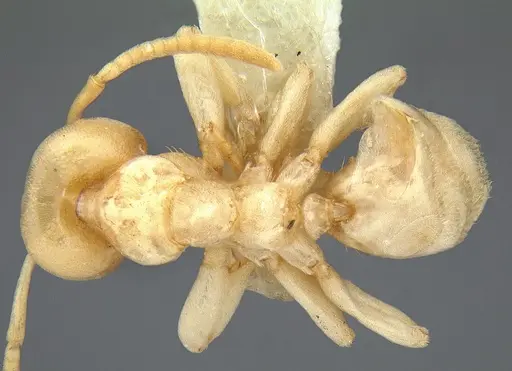
Literature
Loading...Loading products...