

Linepithema cryptobioticum
- Scientific Name
- Linepithema cryptobioticum
- Tribe
- Leptomyrmecini
- Subfamily
- Dolichoderinae
- Author
- Wild, 2007
- Distribution
- Found in 1 countries
Linepithema cryptobioticum Overview
Linepithema cryptobioticum is an ant species of the genus Linepithema. It is primarily documented in 1 countries , including Bolivia, Plurinational State of. Detailed taxonomic data and occurrence records can be further explored via authoritative databases such as AntWeb or the Global Biodiversity Information Facility (GBIF).
Linepithema cryptobioticum
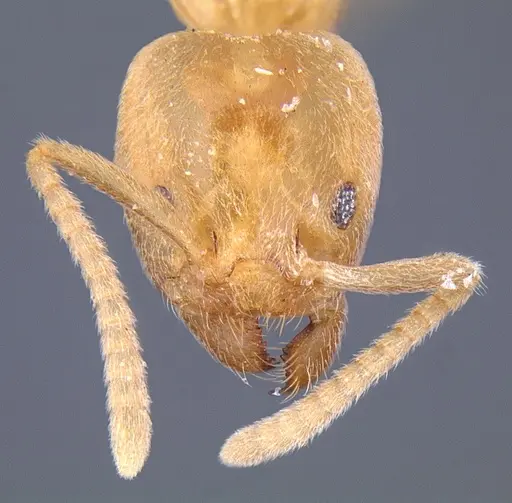
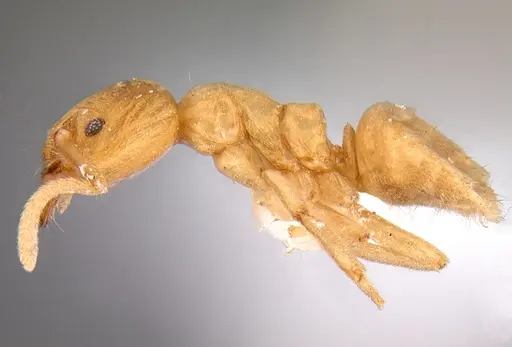
Linepithema cryptobioticum is a tiny, pale yellow ant measuring just 0.56-0.58mm in head length. It is known only from the dry chaco region of Paraguay, making it endemic to that area. The species has several unusual physical traits: very short antennae, unusually small eyes with fewer than 25 light-catching units, and an unusually tall petiolar scale (the narrow connection between the thorax and abdomen). These features, combined with its yellow color and robust body, suggest it lives underground, the name 'cryptobioticum' literally means 'hidden life' in reference to this inferred subterranean lifestyle [1][2]. The queen and males have never been described, and almost nothing is known about its colony structure or behavior in the wild [1].
Quick Summary
- Difficulty: Unknown, too little data to assess
- Origin & Habitat: Paraguayan dry chaco, specifically the Boquerón department near Enciso. This is a hot, semi-arid region with distinct wet and dry seasons. The few known specimens have come from sifted leaf litter in this dry forest habitat [1][3].
- Colony Type: Unknown, queen has never been described, so colony structure is unconfirmed. Based on related Linepithema species, likely single-queen colonies, but this is speculative.
- Size & Growth:
- Queen: Unknown, queen has never been described [1]
- Worker: 0.56-0.58mm head length,0.52-0.54mm head width [1]
- Colony: Unknown, no colony size data exists
- Growth: Unknown
- Development: Unknown, no development data exists for this species (Related Linepithema species typically develop from egg to worker in 4-8 weeks at warm temperatures, but this is a rough estimate with low confidence)
- Antkeeping:
- Temperature: Likely tolerates warm conditions given the hot Paraguayan chaco habitat. Start around 24-28°C and observe colony activity. Related Linepithema species do well in this range.
- Humidity: Probably prefers drier conditions than typical rainforest ants, the dry chaco is semi-arid. Keep substrate moderately dry with a small moist area for the nest core.
- Diapause: Unknown, no data on overwintering requirements. The Paraguayan chaco has mild winters, so a cool period may be beneficial but is not well-understood.
- Nesting: Probably nests in soil or under stones in captivity. A naturalistic setup with compact chambers or a Y-tong nest with narrow passages would likely suit their small size. Their tiny size and inferred subterranean habits suggest they prefer tight, dark spaces.
- Behavior: Almost completely unknown. Based on related Linepithema species, they are likely generalist foragers but may be less active on the surface given their presumed underground lifestyle. Their tiny size (under 1mm) means escape prevention is critical, they can squeeze through remarkably small gaps. No data on stingers, but related species do not have painful stings.
- Common Issues: virtually no captive care information exists, this is one of the least-known ant species in the hobby, queen has never been described, so finding a mated queen for captive breeding is extremely unlikely, tiny size makes escape prevention challenging, wild-caught colonies may be nearly impossible to find given their restricted range and subterranean habits, without basic biology data, providing proper care is largely guesswork
Why This Species Is So Challenging
Linepithema cryptobioticum is one of the least-known ant species in the world. The queen has never been described, males are unknown, and no one has ever documented a live colony. Every specimen ever collected came from a single location in the Paraguayan dry chaco, a remote, harsh environment that few researchers visit. This means there is essentially zero scientific data on captive care, colony structure, founding behavior, or anything else antkeepers need to keep a colony alive. Even basic questions like whether they accept sugar, what temperatures they prefer, and how fast they grow are completely unanswered. This is not a species you can realistically keep unless you happen to be a professional myrmecologist doing field research in Paraguay [1][2].
Natural History What We Know
The entire scientific knowledge of this species fits on a few pages. It was formally described in 2007 by Alexander Wild based on just six worker specimens collected from sifted leaf litter in the dry chaco. The species is part of the 'fuscum group' within Linepithema, and genetic analysis shows it is a daughter species of L. angulatum, meaning it evolved from a population that got isolated in Paraguay. Its physical features (tiny eyes, yellow color, robust build, very short antennae) are classic traits of ants that live their entire lives underground. These 'hypogaeic' ants navigate by touch and chemical signals rather than vision. The dry chaco where it lives has extreme temperatures, intense dry seasons, and sparse vegetation, this ant is adapted to harsh conditions [1][4][5].
Related Species as a Guide
While L. cryptobioticum itself is a mystery, looking at its relatives gives some clues. The most famous Linepithema is L. humile, the invasive Argentine ant, which has been kept by hobbyists for decades. That species is adaptable, accepts a wide diet, and tolerates various conditions. Other Linepithema species are generally ground-nesting, opportunistic foragers that do well in warm, moderately dry conditions. However, L. cryptobioticum's inferred subterranean lifestyle suggests it may be quite different from its surface-active cousins. It likely prefers darker, more compact spaces and may be more sensitive to humidity changes. Any captive care would be experimental at best [1][6].
Is It Even Possible to Keep?
Realistically, keeping Linepithema cryptobioticum is not feasible for hobbyists. The species has never been found in captivity, and no one has documented its queen, you cannot start a colony without a mated queen, and there are no documented queens to obtain. The type locality in the Paraguayan chaco is remote and difficult to access. Additionally, being a recently described species (2007) with such limited distribution, it has no established population in the ant-keeping hobby. Even if you visited Paraguay and searched extensively, these tiny subterranean ants would be nearly impossible to locate. This species remains in the realm of scientific curiosity rather than a viable captive species [1][2][5].
Frequently Asked Questions
Can I keep Linepithema cryptobioticum ants?
No, this species cannot be kept in captivity. The queen has never been described, no one has ever documented a live colony, and the species is only known from a handful of specimens collected in a remote region of Paraguay. There is no source for founding colonies, and no care information exists.
Where does Linepithema cryptobioticum live?
Only in the Paraguayan dry chaco, specifically the Boquerón department. It is endemic to that single location and has never been found anywhere else in the world.
What do Linepithema cryptobioticum ants look like?
They are tiny, workers are only about 0.56mm in head length. They are pale yellow with an unusually tall petiolar scale (the connection between thorax and abdomen), very short antennae, and tiny eyes with fewer than 25 ommatidia. These features suggest they live underground.
Why is it called cryptobioticum?
The name means 'hidden life' in Latin. It refers to the species' inferred subterranean lifestyle, the small eyes, yellow color, and robust build are all traits typical of ants that live their lives underground in darkness.
How big do colonies get?
Unknown, no one has ever documented a colony of this species. Even the maximum colony size in the wild is a complete mystery.
What do they eat?
Unknown, no feeding observations exist. Related Linepithema species are generalist foragers that eat honeydew, small insects, and sugary liquids. However, being potentially subterranean, L. cryptobioticum may have different dietary preferences.
Can I find them in the wild to start a colony?
Extremely unlikely. They have only been collected from a single site in the remote Paraguayan dry chaco using specialized sifting techniques. They are tiny, subterranean, and their exact nesting locations are unknown. Even professional researchers rarely encounter them.
Are Linepithema cryptobioticum invasive?
No, they are only known from a tiny area in Paraguay and have never been found anywhere else. There is no evidence of invasive behavior, and they are not listed as invasive anywhere.
Is this a good beginner ant species?
No, this is not a species for anyone, beginner or expert. There is zero captive care information, the queen is unknown to science, and the species has never been kept in captivity. It is purely a scientific curiosity.
Do they need hibernation?
Unknown, no data exists on their seasonal requirements. The Paraguayan chaco has mild winters, so they may not require a true hibernation, but this is entirely speculative.
What is the closest species I can keep instead?
Linepithema humile, the Argentine ant, is the most common Linepithema in the hobby. It is widely available, adaptable, and well-documented. However, it is invasive in many regions and should never be released. Other Linepithema species are also occasionally available from dealers.
References

This caresheet is licensed under CC BY-SA 4.0 .
CASENT0106969
View on AntWeb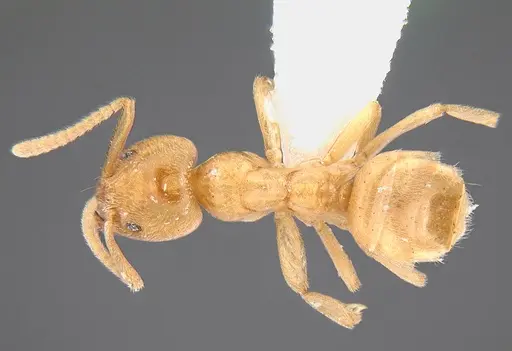
Literature
Loading...Loading products...