

Linepithema cerradense
- Scientific Name
- Linepithema cerradense
- Tribe
- Leptomyrmecini
- Subfamily
- Dolichoderinae
- Author
- Wild, 2007
- Distribution
- Found in 3 countries
Linepithema cerradense Overview
Linepithema cerradense is an ant species of the genus Linepithema. It is primarily documented in 3 countries , including Bolivia, Plurinational State of, Brazil. Detailed taxonomic data and occurrence records can be further explored via authoritative databases such as AntWeb or the Global Biodiversity Information Facility (GBIF).
Linepithema cerradense
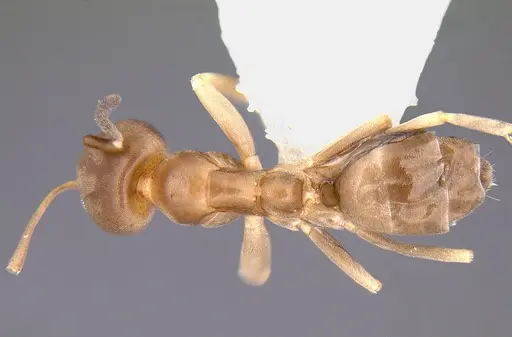
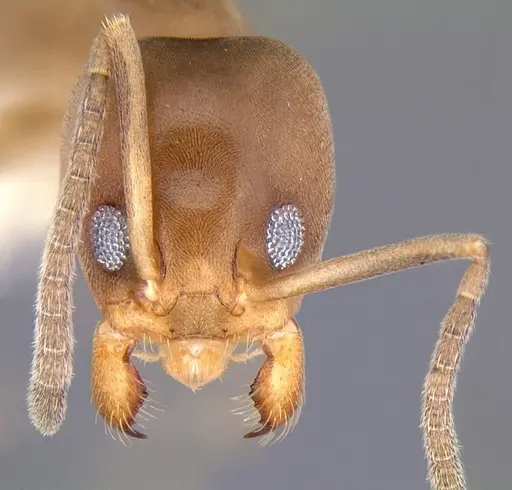
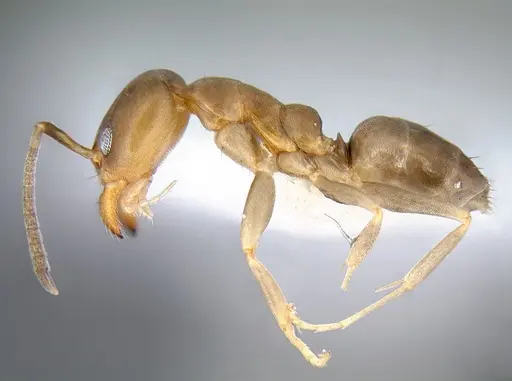
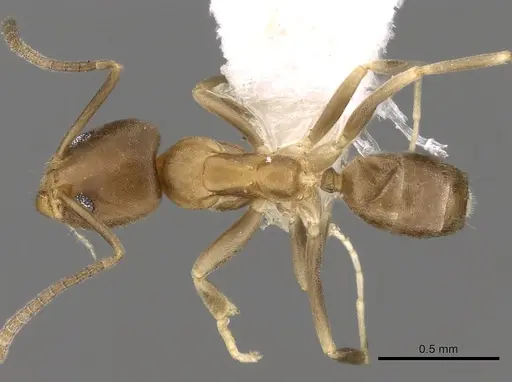
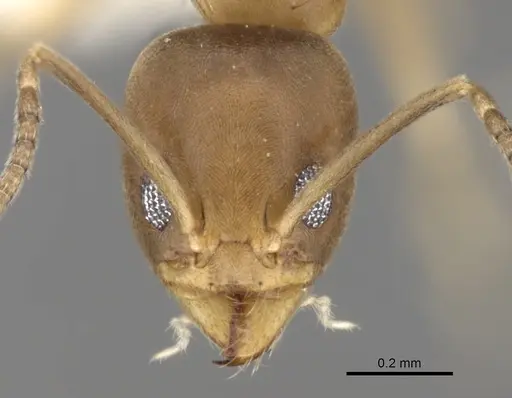
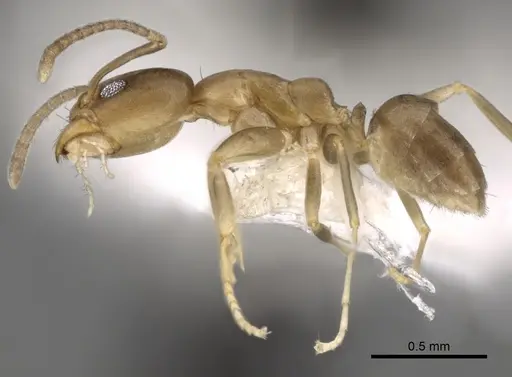
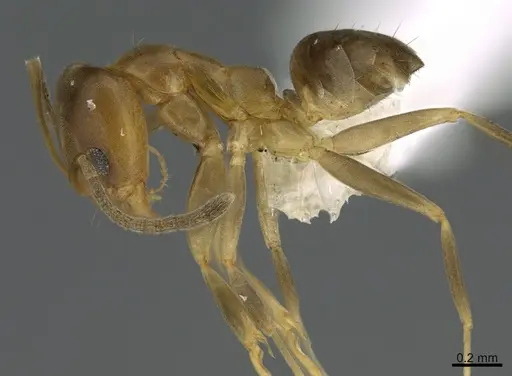
Linepithema cerradense is a tiny ant from the South American savannas, barely reaching 2-3mm in length. Workers are pale yellowish to medium brown with narrow heads and compact, somewhat flattened bodies [1]. As their name suggests, they are specialists of the cerrado, a tropical savanna ecosystem covering much of central Brazil, though they also appear along roadsides and rainforest edges [1][2]. Unlike wood-nesting ants, they excavate underground tunnels in open soil, often maintaining several small nest entrances within a single square meter [1].
What makes this species unusual is their polydomous lifestyle, meaning they spread their colony across multiple small nests rather than living in one central mound. In Paraguay's Mbaracayú Reserve, researchers found nests with entrances scarcely wider than a single ant, surrounded by tiny piles of excavated earth [1]. Workers scavenge dead insects, including carrying off dead Pheidole ants, and readily accept bait [1][3]. They forage across all forest layers from ground to canopy but remain tied to their underground nest system [4].
Quick Summary
- Difficulty: Medium
- Origin & Habitat: Cerrado savannas of Brazil, Paraguay, and Bolivia, also found in roadside edges and fragmented Amazonian landscapes [1][2][5]
- Colony Type: Unknown queen number, but wild colonies are polydomous (maintain multiple nest entrances or multiple nests across a small area) [1]
- Size & Growth:
- Queen: 1.3-1.7 mm (relatively small) [1]
- Worker: 2-3 mm (HW 0.44-0.54 mm) [1]
- Colony: Unknown, likely moderate to large based on related species in genus
- Growth: Moderate to fast (estimated)
- Development: 6-10 weeks at 25-28°C (estimated based on small body size and tropical habitat) (Timeline is not directly studied, estimate assumes warm stable temperatures typical of cerrado regions)
- Antkeeping:
- Temperature: 24-28°C (warm tropical conditions). Provide a heat gradient with a heating cable on one side of the nest [inferred from cerrado habitat]
- Humidity: Moderate humidity with damp soil substrate. Keep soil moist but not waterlogged, similar to moist garden soil, not swamp conditions [inferred from ground-dwelling cerrado habitat]
- Diapause: No. This is a tropical species that remains active year-round [inferred from Neotropical distribution]
- Nesting: Deep soil nests only. They require 10-15 cm of soil or sand substrate to excavate their characteristic deep chambers. Avoid test tubes or wood nests [1]
- Behavior: Scavenging and omnivorous, non-aggressive, forages across forest strata from soil to trees [4][1]. Extremely small size (under 3mm) makes them expert escape artists requiring fine mesh barriers and Fluon or baby powder barriers on all vertical surfaces [1].
- Common Issues: escape prevention is critical, at 2-3mm long, workers squeeze through the tiniest gaps in lids and ventilation mesh., test tubes are unsuitable, these ants need deep soil to dig natural chambers, shallow setups stress them., difficult to observe, they nest deep in soil and are very small, making it hard to see brood or queen., overfeeding causes mold, remove protein scraps quickly as moist soil promotes fungal growth., desiccation risk, cerrado has dry seasons, ensure soil doesn't become bone dry, but also avoid waterlogging.
Nest Preferences: Deep Soil and Multiple Entrances
In nature, Linepithema cerradense digs nests in open soil, not in rotting wood or under stones [1]. The entrances are inconspicuous holes barely wider than a single worker, often with small piles of excavated dirt nearby. Colonies maintain multiple entrances, sometimes several within a one-meter square, connected by faint trails across the surface [1]. The nests run deep, researchers digging near the surface found no chambers or brood, suggesting the colony lives well below ground [1].
In captivity, skip the standard test tube setup. These ants need a soil nest or a deep sand substrate that allows them to dig naturally. A naturalistic setup with 10-15 cm of soil depth works best. Provide multiple small entrance holes rather than one large opening. They will likely create several small chambers rather than one central hall. Keep the soil damp but not muddy, think moist garden soil, not swamp conditions.
Feeding: Opportunistic Scavengers
These ants are omnivorous detritivores, meaning they eat both plant and animal matter plus detritus [3]. In the wild, workers scavenge dead arthropods, they have been observed hauling off dead Pheidole workers and males [1]. They also attend baits readily [1].
In your formicarium, offer small pieces of dead insects (fruit flies, crushed mealworms) and sweet liquids like sugar water or honey water. They are not specialized predators, so they do not require live prey. Because they are small, cut food into tiny pieces they can actually carry. Remove old food before it molds.
Temperature and Care: Warm and Stable
Coming from the cerrado savanna, these ants prefer warm conditions. Keep them around 24-28°C. They do not require hibernation as they come from tropical regions with no cold season. A heating cable on one side of the nest creates a beneficial gradient. Avoid letting temperatures drop below 20°C for extended periods.
Because they nest in soil, you must balance humidity and ventilation. Stagnant air causes mold in damp soil, but too much airflow dries the substrate. Use a setup with moderate ventilation and mist the soil lightly when the surface begins to dry. [1]
Behavior and Temperament: Quiet Soil Dwellers
Linepithema cerradense shows little aggression and does not sting (typical for the genus Linepithema) [6]. They are ground-dwelling but can forage in all forest layers from soil to canopy [4]. Their foraging style involves laying down faint trails between multiple nest entrances [1].
Because of their extremely small size (workers under 3mm), they are escape artists. You must use excellent barriers like Fluon or baby powder barriers, and ensure any ventilation mesh is extremely fine. Even small gaps in lids will result in escapes. They are not explosive recruiters like their relative the Argentine ant, but they are persistent foragers.
Frequently Asked Questions
Can I keep Linepithema cerradense in a test tube?
No. These ants need to dig deep soil nests with multiple chambers. Test tubes do not provide the substrate depth or the ability to create their natural multi-entrance nest structure [1].
How long until Linepithema cerradense get their first workers?
The exact timeline is unconfirmed. Based on their small size and tropical habitat, expect roughly 6-10 weeks at 25-28°C. This is an estimate inferred from similar small tropical ants.
Do Linepithema cerradense need hibernation or diapause?
No. They come from tropical cerrado habitats in Brazil and Paraguay that do not have cold winters. Keep them warm and active year-round [1].
Can I keep multiple Linepithema cerradense queens together?
Unknown. Wild colonies use multiple nests (polydomous), but this does not necessarily mean they have multiple queens. Until documented, start with one queen per setup to avoid potential fighting.
How do I prevent Linepithema cerradense from escaping?
These workers are only 2-3mm long and can squeeze through incredibly small gaps. Use Fluon or baby powder barriers on all vertical surfaces. Ensure ventilation mesh is fine enough to block them, standard window screen is too large. Check lids daily for gaps.
What do Linepithema cerradense eat?
They are scavengers and omnivores. Offer dead insects (fruit flies, small cricket pieces) and sugar water. They are not picky and will carry dead prey back to the nest [1][3].
Are Linepithema cerradense good for beginners?
Probably not ideal for absolute beginners. While their care is straightforward, their tiny size makes escapes likely and they can be hard to observe in deep soil nests. Better for keepers with some experience handling small species.
What is the best nest type for Linepithema cerradense?
A naturalistic soil setup or deep sand nest with 10-15 cm of substrate. They need to dig deep chambers and create multiple entrances. Avoid acrylic nests with tall chambers, they prefer narrow tunnels close to their body size [1].
How big do Linepithema cerradense colonies get?
Wild colony size is unknown. Based on related Linepithema species, they may reach several thousand workers, but this is speculative. They are smaller and more specialized than the famous Argentine ant (Linepithema humile).
References

This caresheet is licensed under CC BY-SA 4.0 .
Literature
Loading...Loading products...