

Leptomyrmex varians
- Scientific Name
- Leptomyrmex varians
- Tribe
- Leptomyrmecini
- Subfamily
- Dolichoderinae
- Author
- Emery, 1895
- Distribution
- Found in 1 countries
Leptomyrmex varians Overview
Leptomyrmex varians is an ant species of the genus Leptomyrmex. It is primarily documented in 1 countries , including Australia. Detailed taxonomic data and occurrence records can be further explored via authoritative databases such as AntWeb or the Global Biodiversity Information Facility (GBIF).
Leptomyrmex varians
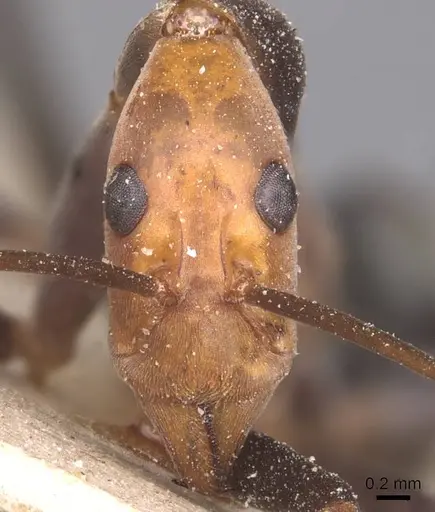
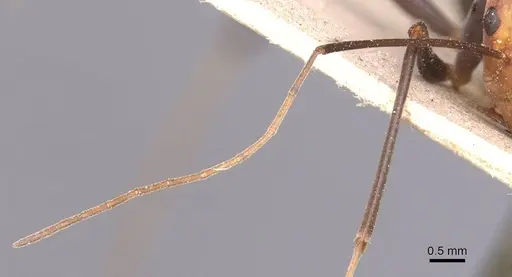
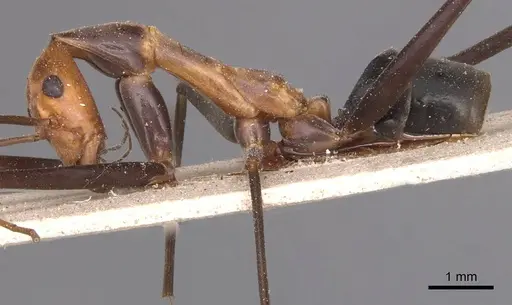
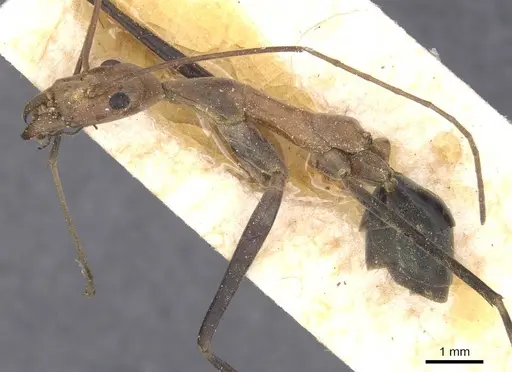
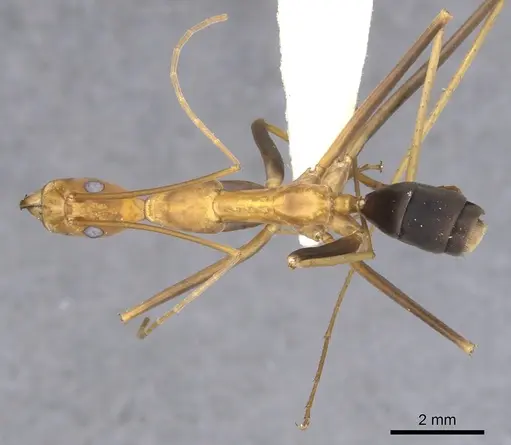
Leptomyrmex varians is a distinctly slender and elongate ant species native to southeastern and central Queensland, Australia, ranging from Brisbane to Mackay in a broad inland arc. Workers are medium-sized with an unusually narrow head nearly twice as long as broad, extremely long legs, and very long antennae that extend well beyond the head. Coloration is striking: the head, thorax, and antennae are pale orange to reddish, contrasting sharply with entirely black legs including the coxae, while the gaster is typically black. This species tolerates drier habitats than most other Leptomyrmex species, being found in dry sclerophyll and open forests dominated by Eucalyptus, Casuarina, Melaleuca, and Callitris trees. Nests are built as large or small craters in open soil or at the base of live trees. Queens have never been collected, making captive breeding challenging due to the lack of documented queen biology.
Quick Summary
- Difficulty: Medium
- Origin & Habitat: Southeastern to central Queensland, Australia (Brisbane to Mackay). Found in dry sclerophyll and Eucalyptus, Casuarina, Melaleuca, and Callitris open forests. Nests in soil craters in the open or at tree bases [1][2].
- Colony Type: Colony structure unconfirmed, queens have never been collected. Based on genus patterns, likely single-queen colonies, but this is estimated.
- Size & Growth:
- Queen: Unknown, queens have never been collected [1]. Estimated based on worker size and genus patterns.
- Worker: Workers are 1.92-2.18mm head length, with extremely long legs (4.77-5.53mm total leg length) and scapes (3.89-4.28mm) [1].
- Colony: Unknown, no colony size data available. Likely moderate-sized based on genus patterns.
- Growth: Unknown, development timeline has not been studied. Estimated based on related Dolichoderinae species.
- Development: Estimated 6-10 weeks based on typical Dolichoderinae development at optimal temperature. (No direct development data exists for this species. Estimates based on genus-level patterns for related Australian Leptomyrmex species.)
- Antkeeping:
- Temperature: Keep at room temperature, roughly 20-26°C. Being from subtropical Queensland, they can handle warmth but avoid extreme heat. A gentle gradient is ideal [1].
- Humidity: Prefers drier conditions compared to other Leptomyrmex species. Keep nest substrate moderately dry to slightly moist, not wet. Think dry sclerophyll forest floor, not rainforest [1].
- Diapause: Unknown, likely minimal or no true diapause given Queensland's mild climate. May experience reduced activity in cooler winter months.
- Nesting: In captivity, they do well in naturalistic setups with soil chambers or in Y-tong/plaster nests. They prefer nesting in soil with some dry areas. Provide a deep soil area for crater-building behavior if possible [1].
- Behavior: These ants are relatively docile and not aggressive. Workers are very active foragers with extremely long legs, giving them a distinctive spider-like appearance and gait. They are diurnal and likely forage on the ground and up into vegetation. Escape prevention should be moderate, their slender build allows them to squeeze through small gaps, but they are not tiny ants. They likely feed on nectar and small insects like other Dolichoderines.
- Common Issues: queen unavailability, queens have never been collected, making wild colony establishment impossible, lack of captive breeding data, no documented founding behavior or development timeline, escape risk, their very slender, elongate body can squeeze through small gaps in equipment, humidity sensitivity, being a dry-habitat species, they may suffer in overly humid conditions, slow colony growth, without documented development times, establishing colonies may take years
Appearance and Identification
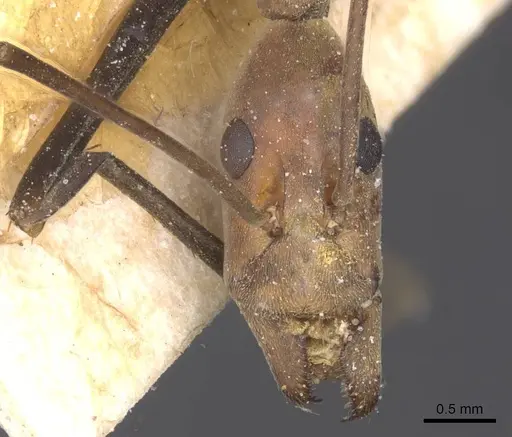
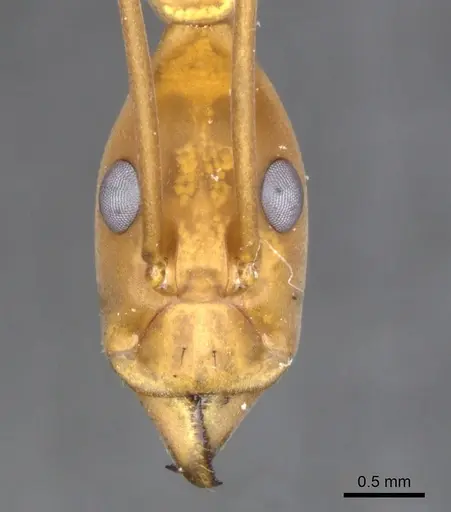
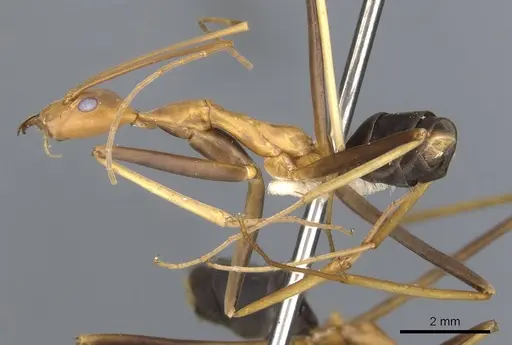
Leptomyrmex varians is one of the most distinctive spider ants due to its extremely slender, elongated body. Workers measure 1.92-2.18mm in head length but have remarkably long legs totaling 4.77-5.55mm, making them appear much larger than they are. Their most striking feature is the narrow head, nearly twice as long as broad, with nearly parallel sides that narrow into a slight 'neck' toward the rear. The antennae are incredibly long, extending beyond the head by nearly two-thirds of their length. Coloration is diagnostic: pale orange to reddish head and thorax contrast with entirely black legs (including the coxae), while the gaster is typically black with yellow tarsi. This leg coloration distinguishes them from similar species like Leptomyrmex cnemidatus (which has pale coxae) and Leptomyrmex rufipes (which has pale tibiae). Males are smaller (HL 1.53-1.58mm) with different proportions [1].
Natural Habitat and Distribution
This species is found only in southeastern to central Queensland, Australia, from Brisbane to Mackay in a broad arc that sweeps inland. It occupies a unique niche within the genus, Leptomyrmex varians tolerates significantly drier habitats than most other species in the genus, which typically prefer more humid environments. The species has been recorded in dry sclerophyll forests and open forests dominated by Eucalyptus, Casuarina, Melaleuca, and Callitris trees. Nests are constructed as either large or small craters in open soil, or at the base of live trees. This preference for drier, more open habitats makes it somewhat unusual among Leptomyrmex species, which are generally associated with humid forest environments [1][2].
Current State of Knowledge
Leptomyrmex varians represents a significant knowledge gap in antkeeping, queens have never been scientifically collected, meaning we have no direct information about their colony founding behavior, queen size, or reproductive biology. Workers are well-described, and males are known, but the reproductive caste remains a mystery. This makes captive breeding essentially impossible at present since there are no documented wild colonies that could be collected. The species is part of the macro clade within Leptomyrmex based on phylogenetic analysis, characterized by large, elongate morphology. For antkeepers, this means L. varians remains a species to appreciate from a distance, fascinating to study in the wild but not currently suitable for captive colony establishment [1][3][4].
Housing and Care in Captivity
While captive breeding is not possible without queens, understanding their care requirements helps prepare for future availability. Based on their natural habitat, Leptomyrmex varians should be kept in relatively dry conditions compared to other Leptomyrmex species, think dry sclerophyll forest floor rather than rainforest. Room temperature (20-26°C) is likely appropriate, matching Queensland's subtropical climate. In captivity, a naturalistic setup with soil chambers would best mimic their natural nesting in soil craters. A Y-tong or plaster nest with a soil section could work well. Their extremely long legs and active foraging behavior suggest they need more space than their body size would indicate. Escape prevention should be taken seriously due to their slender, elongate bodies that can squeeze through small gaps. If they follow typical Dolichoderine patterns, they would likely accept sugar water and small insects as food [1].
Related Species and Comparison
Leptomyrmex varians can be confused with two other pale-bodied congeners with which it overlaps in southeast Queensland: Leptomyrmex cnemidatus and Leptomyrmex rufipes. The key distinguishing feature is leg coloration, L. varians has entirely dark coxae, femora, and tibiae, while L. cnemidatus has pale coxae and proximal femora, and L. rufipes has pale tibiae. Additionally, the head shape differs: L. varians has a narrowed but not constricted posterior head margin, whereas L. cnemidatus has a broadly rounded margin and L. rufipes has a constricted, projecting margin. The genus Leptomyrmex is known for their spider-like appearance due to extremely long legs, but L. varians is particularly elongated even by these standards. They belong to the Dolichoderinae subfamily, which includes other common ants like the Argentine ant (Linepithema humile) [1].
Frequently Asked Questions
Can I keep Leptomyrmex varians in captivity?
No, queens have never been collected, making it impossible to establish a captive colony. This is one of the least documented Leptomyrmex species for captive keeping. You would need to find a different species to keep.
How big do Leptomyrmex varians colonies get?
Colony size is unknown, no data exists on maximum colony size for this species. Based on genus patterns, they likely reach hundreds of workers, but this is only an estimate.
What do Leptomyrmex varians eat?
Diet has not been specifically documented, but based on typical Dolichoderinae behavior, they likely feed on nectar, honeydew, and small insects. They would probably accept sugar water and small live prey in captivity.
Are Leptomyrmex varians good for beginners?
This species is not recommended for beginners or any antkeepers at present, since queens are unavailable and no captive breeding data exists. Other Leptomyrmex species with documented care requirements would be better choices.
Where is Leptomyrmex varians found?
Leptomyrmex varians is found only in southeastern to central Queensland, Australia, from Brisbane to Mackay in a broad inland arc. It is the most drought-tolerant species in its genus.
How long do Leptomyrmex varians workers live?
Worker lifespan has not been documented for this species. Typical ant workers live several months to a few years, but specific data is unavailable.
What makes Leptomyrmex varians different from other spider ants?
They are unusually slender even for spider ants, with a narrow head nearly twice as long as broad, extremely long legs, and they tolerate much drier habitats than other Leptomyrmex species. Their entirely black legs including coxae are also distinctive.
Do Leptomyrmex varians need hibernation?
Diapause requirements are unknown. Given Queensland's mild climate, they likely experience minimal winter dormancy rather than true hibernation. Room temperature year-round is probably appropriate.
Why can't I find Leptomyrmex varians queens for sale?
Queens have never been scientifically collected, this is a significant gap in our knowledge. No one has documented where or how to find their queens, making them unavailable in the antkeeping hobby.
What is the best nest type for Leptomyrmex varians?
A naturalistic setup with soil chambers would best mimic their natural nesting in soil craters. If available, a Y-tong or plaster nest with a soil section would work well. They prefer drier conditions than most Leptomyrmex.
How do I identify Leptomyrmex varians workers?
Look for their extremely slender, elongated body with a narrow head nearly twice as long as broad, very long legs and antennae, pale orange head and thorax contrasting with entirely black legs (including coxae), and black gaster with yellow tarsi.
References

This caresheet is licensed under CC BY-SA 4.0 .
CASENT0011996
View on AntWeb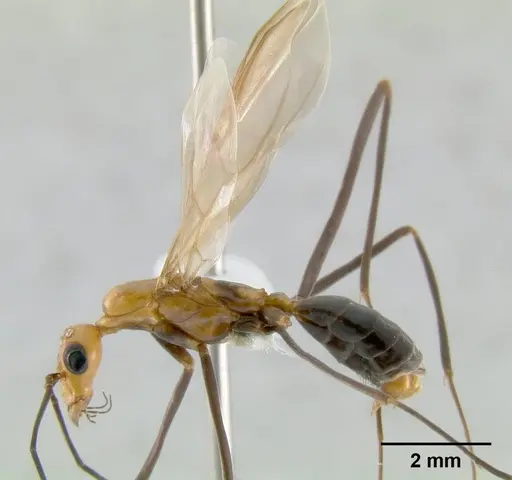
CASENT0011997
View on AntWeb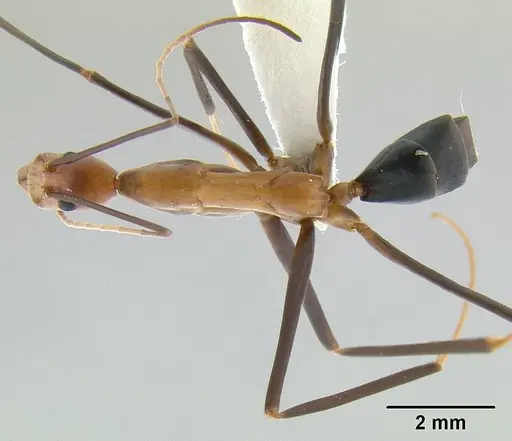
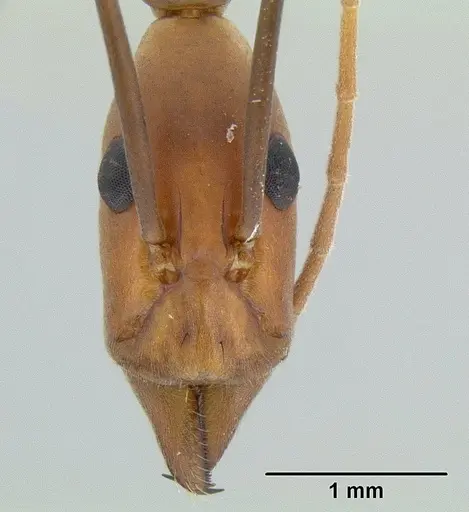
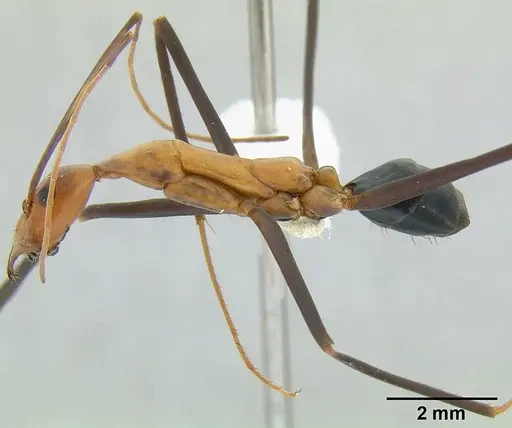
CASENT0127378
View on AntWeb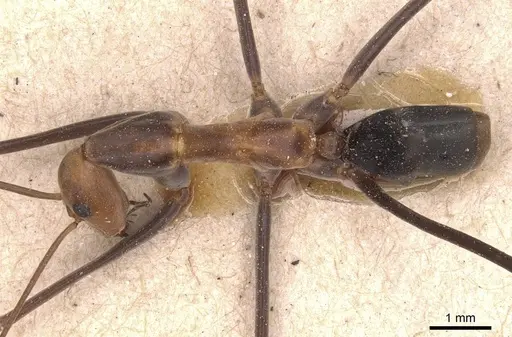
CASENT0127415
View on AntWeb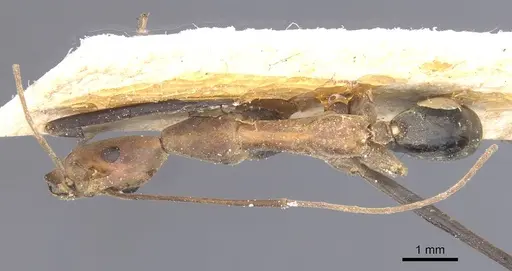
CASENT0902941
View on AntWeb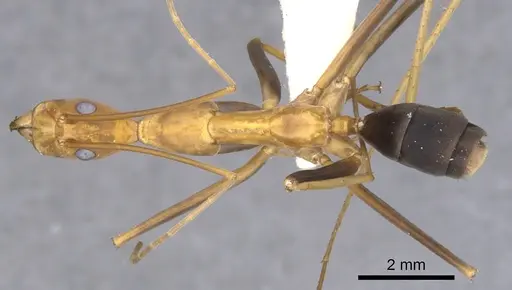
Literature
Loading...Loading products...