

Leptomyrmex ramorniensis
- Scientific Name
- Leptomyrmex ramorniensis
- Tribe
- Leptomyrmecini
- Subfamily
- Dolichoderinae
- Author
- Smith & Shattuck, 2009
- Distribution
- Found in 1 countries
Leptomyrmex ramorniensis Overview
Leptomyrmex ramorniensis is an ant species of the genus Leptomyrmex. It is primarily documented in 1 countries , including Australia. Detailed taxonomic data and occurrence records can be further explored via authoritative databases such as AntWeb or the Global Biodiversity Information Facility (GBIF).
Leptomyrmex ramorniensis
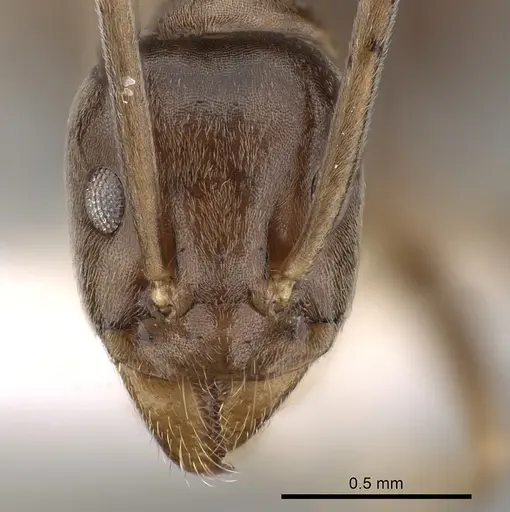
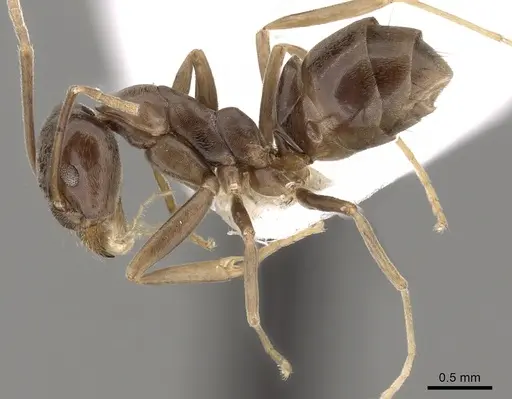
Leptomyrmex ramorniensis is an exceptionally rare, tiny ant species known only from Ramornie State Forest near Grafton in northeastern New South Wales, Australia. These are among the smallest ants in the genus Leptomyrmex, with workers measuring just 0.77-0.90mm in head length [1]. Unlike their famous relatives with bright orange coloration and long legs, these ants are uniformly brown with lighter legs and antennae, and have a distinctively short, wide head that sets them apart from other micro-Leptomyrmex species [2]. They belong to the Dolichoderinae subfamily and are informally called 'micro-Leptomyrmex' due to their tiny size, with head width under 0.80mm [3]. This species is morphologically distinct from all other known Leptomyrmex and superficially resembles ants in the genus Iridomyrmex [3].
What makes L. ramorniensis particularly interesting is its extremely limited range, it's one of the few ant species known from a single locality. The Ramornie State Forest represents the entire known distribution of this species, making it a rare find for antkeepers interested in unusual Australian species [1][2].
Quick Summary
- Difficulty: Unknown, likely Medium to Hard due to limited data and specific habitat requirements
- Origin & Habitat: Ramornie State Forest, near Grafton, northeastern New South Wales, Australia. Found in rainforest and wet sclerophyll forest habitats [3].
- Colony Type: Colony structure is unconfirmed. Based on related Leptomyrmex species, likely single-queen colonies, but this has not been documented for this specific species.
- Size & Growth:
- Queen: Unknown, queen has not been described
- Worker: 0.77-0.90mm head length,0.66-0.78mm head width [1][2]
- Colony: Unknown, no colony size data available
- Growth: Unknown, no development data available
- Development: Unconfirmed, no direct development data exists. Based on typical Leptomyrmex patterns and small size, estimate 6-10 weeks at optimal temperature. (Development timeline has not been studied. Related micro-Leptomyrmex species likely follow similar patterns to other Dolichoderinae ants.)
- Antkeeping:
- Temperature: Inferred from habitat: rainforest/wet sclerophyll forest in northeastern NSW suggests moderate temperatures (roughly 20-26°C). Start around 22-25°C and observe colony activity.
- Humidity: Inferred from habitat: wet sclerophyll and rainforest environments require high humidity. Keep nest substrate consistently moist but not waterlogged, with some drier areas available.
- Diapause: Unknown, no specific data. Northeastern NSW has mild winters, so a reduced activity period may occur but formal diapause requirements are unconfirmed.
- Nesting: No specific nesting data exists. Based on habitat (rainforest/wet sclerophyll), they likely nest in soil or rotting wood. In captivity, a moist plaster nest or test tube setup with access to a humid outworld would be appropriate.
- Behavior: Behavior is unstudied in captivity. As a Dolichoderine ant, they likely form moderate-sized colonies and are not aggressive. Their very small size means escape prevention is critical, they can squeeze through tiny gaps. Based on related species, they probably forage for honeydew and small insects and may tend aphids.
- Common Issues: Very limited range and rarity means finding colonies is extremely difficult, No captive husbandry data exists, keepers will be pioneering husbandry methods, Their tiny size makes escape prevention challenging, Specific humidity and temperature requirements are unknown and must be inferred from habitat, Queen and colony founding behavior is completely unstudied
Discovery and Rarity
Leptomyrmex ramorniensis was only described in 2009 by Smith and Shattuck, making it one of the most recently described Australian ant species [1]. It is known from a single location, Ramornie State Forest near Grafton, New South Wales. This extremely limited distribution is notable because extensive trapping surveys (NEFBS program) have been conducted throughout the region, and the closely related species Leptomyrmex aitchisoni has a wide distribution, suggesting that Ramornie State Forest truly represents the total range of this species [2]. The species is morphologically distinct from all other micro-Leptomyrmex, with the shortest and widest head of any known micro-Leptomyrmex species [2]. For antkeepers, this rarity means that L. ramorniensis is an exceptionally uncommon species in captivity, and established colonies are rarely available.
Identification and Appearance
Workers of L. ramorniensis are tiny, measuring 0.77-0.90mm in head length and 0.66-0.78mm in head width [1]. The most distinctive feature is their short, wide head (cephalic index 81-91), the shortest and widest of any micro-Leptomyrmex [2]. They have relatively short antennae that extend beyond the vertex by less than half their length, short palps that don't reach the back of the head, and notably short legs compared to other Leptomyrmex species [1]. The coloration is uniformly brown on the head, mandibles, and mesosoma, with lighter legs and antennae, and a darker gaster (abdomen) [1]. A distinctive feature is the hind tibial spurs with well-developed barbules that are longer than the width of the shaft [1][2]. The body is covered in dense white adpressed (flattened) pilosity of equal length on all surfaces [1]. This species is so unusual for Leptomyrmex that it was previously misidentified as belonging to the genus Iridomyrmex [3].
Habitat and Distribution
This species is restricted to rainforests and wet sclerophyll forests in two relatively small regions of eastern Australia, with the Ramornie population being the only known one [3]. Ramornie State Forest is located near Grafton in northeastern NSW, in a region with subtropical to temperate climate. The wet sclerophyll and rainforest habitats are characterized by high humidity, moderate temperatures, and abundant leaf litter. These forests contain decaying wood and soil that provides nesting sites. The micro-Leptomyrmex species in general lack the large size and bright orange coloration common in other Leptomyrmex, which may be an adaptation to their more shaded, forest-floor dwelling lifestyle [3]. Understanding this natural habitat is crucial for replicating appropriate conditions in captivity.
Related Species and Taxonomy
Leptomyrmex ramorniensis belongs to the genus Leptomyrmex, commonly known as 'spider ants' due to their characteristically long legs in the larger species. This genus is part of the subfamily Dolichoderinae. L. ramorniensis is informally designated as a 'micro-Leptomyrmex', a group of unusually small species with head width less than 0.80mm, compared to greater than 0.80mm in larger Leptomyrmex species [3]. It is closely related to Leptomyrmex aitchisoni, which has a much wider distribution. The species was not included in the molecular phylogeny study by Lucky (2011) because fresh material was unavailable [4]. This highlights both the rarity of the species and the importance of preserving populations for research.
Keeping Considerations
Because this species has never been kept in captivity (as far as documented), keepers will essentially be pioneering husbandry. Based on the natural habitat (rainforest/wet sclerophyll), these ants will need high humidity and moderate temperatures. A moist setup is essential, think damp forest floor conditions. Temperature should likely be in the low-to-mid 20s°C range. Given their tiny size, escape prevention must be excellent, even small gaps in standard formicaria can allow escape. Feeding would likely follow typical Dolichoderine preferences: sugar sources (honey water, sugar water) and small protein items (fruit flies, small insects). However, no specific dietary observations exist for this species. The biggest challenge for keepers will be simply obtaining a colony, as the species is known from only a single forest and is rarely collected.
Frequently Asked Questions
How big are Leptomyrmex ramorniensis workers?
Workers are extremely tiny, measuring just 0.77-0.90mm in head length and 0.66-0.78mm in head width. They are among the smallest Leptomyrmex species, classified as 'micro-Leptomyrmex'. [1][2]
Where does Leptomyrmex ramorniensis come from?
This species is known only from Ramornie State Forest near Grafton in northeastern New South Wales, Australia. It is one of the rarest Australian ant species with an extremely limited range. [1][2]
What habitat do Leptomyrmex ramorniensis ants live in?
They are found in rainforest and wet sclerophyll forests in eastern Australia. These habitats are characterized by high humidity, moderate temperatures, and abundant leaf litter and decaying wood. [3]
Are Leptomyrmex ramorniensis good for beginners?
No. This species is not recommended for beginners. It has never been documented in captive husbandry, and no care information exists. Additionally, the species is extremely rare and rarely available. Keeping this ant would be for experienced keepers interested in pioneering husbandry of an uncommon species. [5]
How do I keep Leptomyrmex ramorniensis?
Since no captive husbandry data exists, keepers must infer care from the natural habitat. Provide high humidity (rainforest conditions), moderate temperatures around 22-25°C, and moist substrate. Use excellent escape prevention due to their tiny size. Feed sugar water and small protein sources. This is essentially experimental husbandry. [5]
How long does it take for Leptomyrmex ramorniensis to develop from egg to worker?
The development timeline is unconfirmed, no research has studied their development. Based on typical Leptomyrmex patterns and their small size, estimate roughly 6-10 weeks from egg to first worker at optimal temperature. [5]
Can I keep multiple Leptomyrmex ramorniensis queens together?
The colony structure is unconfirmed for this species. No data exists on whether they are single-queen (monogyne) or multi-queen (polygyne). Until documented, combining unrelated queens is not recommended. [5]
What do Leptomyrmex ramorniensis eat?
Specific dietary observations do not exist for this species. As Dolichoderine ants, they likely feed on honeydew from aphids and scale insects, plus small insects. In captivity, offer sugar water or honey water as a constant carbohydrate source, and small protein items like fruit flies or tiny insects. [5]
Do Leptomyrmex ramorniensis need hibernation?
Diapause requirements are unknown. The species comes from northeastern NSW, which has mild winters. A reduced activity period during cooler months may be beneficial, but formal hibernation requirements have not been documented. [5]
How big do Leptomyrmex ramorniensis colonies get?
Colony size is unknown, no colony size data exists for this species. Based on related micro-Leptomyrmex, colonies are likely smaller than typical Leptomyrmex, probably under a few hundred workers. [5]
Is Leptomyrmex ramorniensis available for sale?
This is one of the rarest ant species in the antkeeping hobby. It is known from a single forest location and is rarely, if ever, available for sale. Most antkeepers will not encounter this species. [5]
References

This caresheet is licensed under CC BY-SA 4.0 .
CASENT0127283
View on AntWeb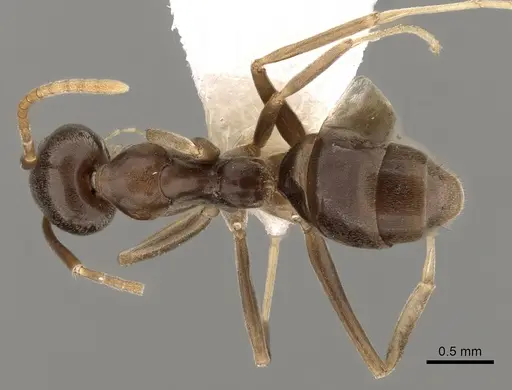
Literature
Loading...Loading products...