

Leptomyrmex flavitarsus
- Scientific Name
- Leptomyrmex flavitarsus
- Tribe
- Leptomyrmecini
- Subfamily
- Dolichoderinae
- Author
- Smith, 1859
- Distribution
- Found in 2 countries
Leptomyrmex flavitarsus Overview
Leptomyrmex flavitarsus is an ant species of the genus Leptomyrmex. It is primarily documented in 2 countries , including Indonesia, Papua New Guinea. Detailed taxonomic data and occurrence records can be further explored via authoritative databases such as AntWeb or the Global Biodiversity Information Facility (GBIF).
Leptomyrmex flavitarsus
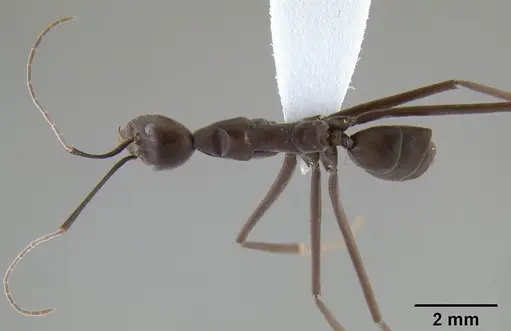
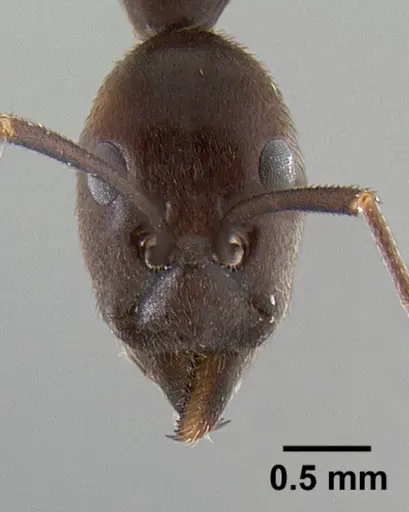
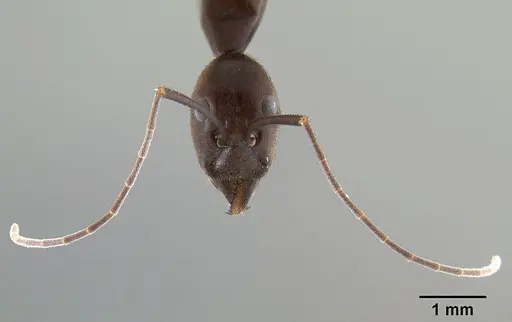
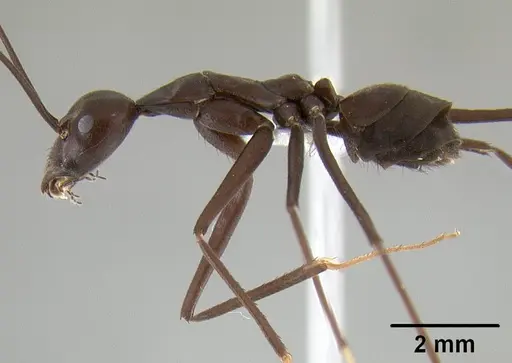
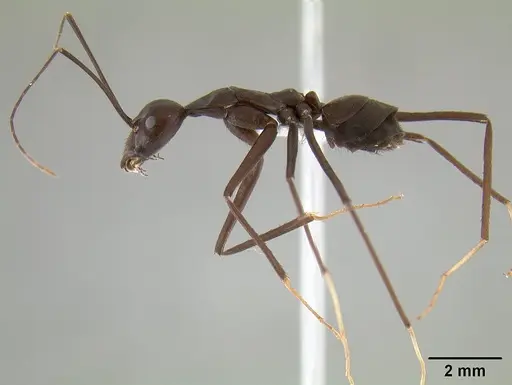
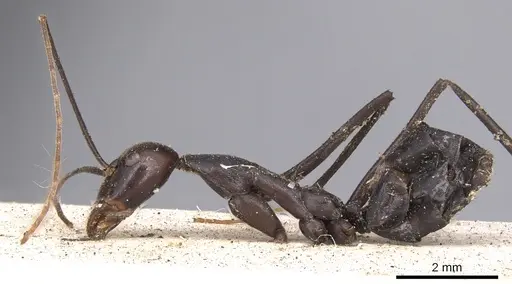
Leptomyrmex flavitarsus is a medium-sized ant native to the rainforests of New Guinea, belonging to the Dolichoderinae subfamily. Workers measure 1.18-1.45mm in head width with an exceptionally long body length of 3.25-3.68mm, giving them the characteristic 'spider ant' appearance thanks to their remarkably long legs [1]. The species is easily recognized by its dark brown to black body contrasted with distinctive yellow tarsi, femoro-tibial joints, and antennal funiculus, along with abundant brownish pubescence covering the head, pronotum, and gaster [1]. This ant is part of a genus known for their elegant, elongated morphology and is closely related to Leptomyrmex puberulus [2].
What makes L. flavitarsus particularly interesting is how little we know about its colony structure and reproduction. Queens have never been collected, meaning this species remains one of the more enigmatic ants in the hobby [1]. The genus Leptomyrmex is known for being relatively docile and non-aggressive, but the lack of queen information makes this species suitable only for experienced antkeepers who can adapt to unknown parameters.
Quick Summary
- Difficulty: Expert
- Origin & Habitat: New Guinea (Indonesia Irian Jaya and Papua New Guinea), found in lowland secondary rainforest and montane rainforest [1]
- Colony Type: Unknown colony structure, queens have never been collected [1]. Colony type cannot be confirmed.
- Size & Growth:
- Queen: Unknown, queens have never been collected [1]. This is a significant knowledge gap.
- Worker: 1.18-1.45mm head width,3.25-3.68mm body length [1]
- Colony: Unknown, no colony size data available
- Growth: Unknown, cannot estimate without queen or colony data
- Development: Unknown, no development data available due to lack of captive colonies (Without queen specimens, development timeline cannot be estimated. This is a fundamental gap in our knowledge.)
- Antkeeping:
- Temperature: Tropical species, keep at 24-28°C. Use a heating cable on one side of the nest to create a gentle gradient. Monitor colony activity to find their preferred temperature.
- Humidity: Rainforest species, maintain high humidity around 70-85%. Keep the nest substrate consistently moist but not waterlogged. Provide a water tube for drinking access.
- Diapause: Unknown, as a tropical species from New Guinea, diapause is likely not required. However, a slight reduction in temperature during 'winter' months (June-August) may be beneficial.
- Nesting: Natural nesting habits unknown. Based on rainforest habitat and related species, they likely prefer humid, dark spaces. A Y-tong (AAC) or plaster nest with good humidity retention works well. Avoid drying out the nest.
- Behavior: Leptomyrmex ants are known to be relatively docile and non-aggressive. They lack a functional stinger, relying instead on chemical defense through their metapleural gland. Workers are active foragers but not particularly aggressive toward humans. Escape prevention should be moderate, their medium size makes standard barriers sufficient, but they can climb smooth surfaces. They are likely nocturnal or crepuscular based on their large eyes, though this is not confirmed for this specific species.
- Common Issues: queen unavailability makes starting colonies extremely difficult, no documented captive breeding exists, nesting requirements are unknown, requiring experimentation with different nest types, humidity control is critical, rainforest species easily die in dry conditions, growth and development cannot be tracked without established colonies, lack of baseline data means every colony is essentially a learning experience
Appearance and Identification
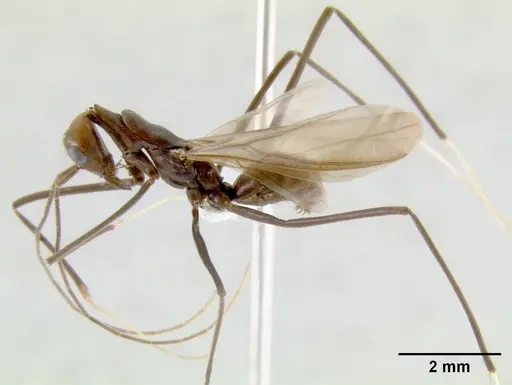
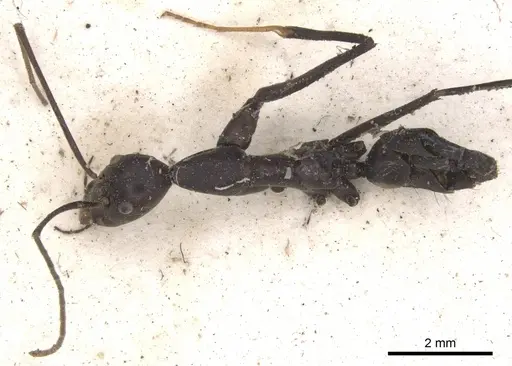
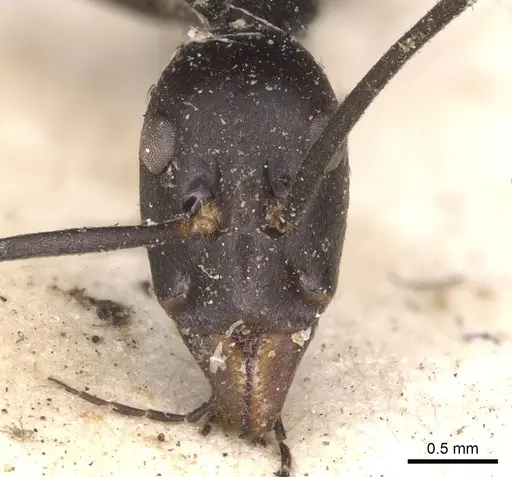
Leptomyrmex flavitarsus workers are distinctive medium-sized ants with the characteristic 'spider ant' appearance due to their exceptionally long legs. Workers measure 1.18-1.45mm in head width and 3.25-3.68mm in body length [1]. The body is generally dark brown to black, but the species gets its name from the bright yellow tarsi (foot segments), femoro-tibial joints (where the femur meets the tibia), and antennal funiculus (the antenna segments beyond the scape) [1]. The surface is shagreened and shining with a subopaque appearance. Long brownish pubescence is prominent on the head, pronotum, and gaster, with black bristle-like hairs on the clypeus, venter, and gaster [1]. The broad head (CI 0.67-0.73) is widest anterior to the eyes, and the scapes extend beyond the posterior margin of the head by three-fifths their length [1]. This species can be distinguished from similar dark Leptomyrmex species by the abundant pubescence and larger size.
Distribution and Habitat
Leptomyrmex flavitarsus is native to New Guinea, specifically found in both Indonesian Irian Jaya and Papua New Guinea [1]. The species has been recorded in rainforest environments including lowland secondary rainforest and montane rainforest [1]. This tropical habitat suggests they prefer warm, humid conditions with consistent moisture. The species forms a phylogenetic clade with Leptomyrmex puberulus, and New Guinean species are nested within a north-eastern Australian clade [2]. The elevation range likely spans from lowland areas up into montane zones, though exact preferences are not documented.
Current Knowledge Gaps
Leptomyrmex flavitarsus represents one of the least studied ant species in the hobby due to a fundamental lack of basic biological information. Most critically, queens have never been collected or described [1], which means we have no information about colony founding, queen size, egg-laying rates, or whether they are monogyne or polygyne. Nesting habits in the wild remain unknown, we don't know if they nest in soil, rotting wood, or under stones [1]. Colony size data is absent, as no established colonies have been studied. This makes L. flavitarsus an 'expert only' species not because of any particular difficulty, but because there is essentially no baseline data to guide care. Every aspect of keeping this species requires experimentation and careful observation. If you acquire workers only (which is the only documented material), you will have a fascinating display but no path to colony growth.
Housing and Nesting
Since natural nesting habits are unknown, housing recommendations must be based on inference from related species and habitat. As a rainforest species from New Guinea, they likely prefer humid, dark environments with minimal temperature fluctuation. A Y-tong (AAC) nest or plaster formicarium with good humidity retention works well as a starting point. Keep the nest substrate consistently moist but avoid waterlogging, the substrate should feel damp to the touch. Provide a water tube for drinking access, as rainforest ants often need free water. Since their natural nesting site is unknown, you may need to experiment with different setups. Some keepers have success with naturalistic setups using damp soil or cork bark. Monitor the ants' behavior, if they consistently avoid a certain area of the nest, adjust conditions accordingly.
Temperature and Humidity
As a tropical species from New Guinea, Leptomyrmex flavitarsus requires warm, humid conditions. Maintain temperatures in the range of 24-28°C. A heating cable placed on one side of the nest creates a gentle thermal gradient, allowing ants to regulate their temperature by moving between warmer and cooler areas. For humidity, aim for 70-85% relative humidity within the nest. This is higher than many common ant species require, reflecting their rainforest origin. Use a moisture meter or observe condensation levels to monitor humidity. The nest should not be allowed to dry out, mist or add water to the reservoir when condensation disappears. Since this is an estimation based on habitat rather than confirmed requirements, observe your colony's behavior and adjust accordingly.
Feeding and Diet
Feeding habits for L. flavitarsus are not documented in scientific literature. As a Dolichoderinae ant, they likely have a typical diet of nectar, honeydew, and small insects. Based on related Leptomyrmex species and general Dolichoderinae behavior, they probably accept sugar water, honey, or diluted syrup as an energy source. For protein, offer small insects like fruit flies, small crickets, or mealworms. Given their medium size, prey items should be appropriately sized. Since their natural foraging behavior is unknown, offer a variety of foods and note preferences. Fresh killed insects are typically more accepted than live prey for captive colonies. Feed sugar sources continuously and protein 2-3 times per week, removing uneaten food promptly to prevent mold.
Behavior and Temperament
Leptomyrmex ants are generally known to be docile and non-aggressive. They lack a functional stinger, belonging to the Dolichoderinae subfamily which relies on chemical defense through metapleural gland secretions rather than stinging [1]. Workers are likely active foragers, though their exact activity patterns (diurnal vs nocturnal) are not confirmed. Their relatively large eyes suggest possible crepuscular or nocturnal behavior, but this is an inference. They are not known to be escape artists at the level of tiny ants like Pheidole, but standard escape prevention measures should still be used. They can climb smooth surfaces, so fluon barriers on the rim of the outworld are recommended. Handle colonies gently as they are not suited for frequent disturbance.
Frequently Asked Questions
Can I keep Leptomyrmex flavitarsus in a test tube?
A test tube can work as a temporary setup for small groups, but given their rainforest humidity requirements and medium size, a proper formicarium (Y-tong or plaster nest) is better for long-term housing. Test tubes dry out quickly and may not provide enough space for a growing colony.
When should I move Leptomyrmex flavitarsus to a formicarium?
Since colony growth is uncertain without queens, move them when you observe they have outgrown their initial setup. However, this species is so poorly documented that establishing any stable colony is considered success.
How long until first workers in Leptomyrmex flavitarsus?
Unknown, queens have never been collected or documented, so there is no egg-to-worker timeline. Without queen information, captive breeding has not been achieved. If you obtain workers only, they will not produce new brood without a queen.
How big do Leptomyrmex flavitarsus colonies get?
Unknown, colony size data does not exist in the scientific literature. Related Leptomyrmex species can form colonies of several hundred to a few thousand workers, but specific data for L. flavitarsus is unavailable.
Can I keep multiple queens together?
Unknown, queen specimens have never been collected, so we cannot determine whether this species is monogyne, polygyne, or what their founding behavior looks like. Combining unrelated queens is not recommended due to lack of data.
Are Leptomyrmex flavitarsus good for beginners?
No, this is an expert-only species due to fundamental gaps in biological knowledge. Queens have never been documented, nesting habits are unknown, and no captive breeding has been achieved. Only experienced antkeepers should attempt this species.
What do Leptomyrmex flavitarsus eat?
Based on related species, they likely accept sugar sources (honey, sugar water) and small insects. Their exact diet preferences are not documented. Offer a variety and observe acceptance.
What temperature do Leptomyrmex flavitarsus need?
Keep at 24-28°C as a starting point. Use a heating cable on one side of the nest to create a gradient. This is an estimate based on their tropical rainforest habitat, not confirmed requirements.
Do Leptomyrmex flavitarsus need hibernation?
Unlikely, as a tropical species from New Guinea, they probably do not require a true diapause. A slight temperature reduction during winter months (5-10°C cooler) may be beneficial but is not required.
Why are my Leptomyrmex flavitarsus dying?
Without established captive colonies, mortality causes are speculative. Likely issues include: low humidity (rainforest species die quickly in dry conditions), inappropriate temperature, or lack of queen/brood. If you only have workers, their natural lifespan is the limiting factor.
References

This caresheet is licensed under CC BY-SA 4.0 .
Literature
Loading...Loading products...