

Leptogenys zhuangzii
- Scientific Name
- Leptogenys zhuangzii
- Tribe
- Ponerini
- Subfamily
- Ponerinae
- Author
- Xu, 2000
- Distribution
- Found in 0 countries
Leptogenys zhuangzii Overview
Leptogenys zhuangzii is an ant species of the genus Leptogenys. It is primarily documented in 0 countries . Detailed taxonomic data and occurrence records can be further explored via authoritative databases such as AntWeb or the Global Biodiversity Information Facility (GBIF).
Leptogenys zhuangzii
Leptogenys zhuangzii is a medium-sized predatory ant from the Ponerinae subfamily, known only from worker specimens collected in southern China's Yunnan Province. Workers measure 7.1-7.8mm in total length and have a robust, entirely black body with dense punctures giving the head, mesosoma, and petiole a matte appearance [1]. The species belongs to the Leptogenys zhuangzii group and is closely related to Leptogenys confucii, distinguished by its black coloration and the single small tooth on the masticatory margin of the mandible [1]. This ant is a habitat specialist restricted to primary forest in Xishuangbanna, Yunnan, and has not been found in secondary forest or rubber plantations [2]. The colony structure and queen of this species remain undescribed, making it one of the more mysterious Leptogenys species available for study.
Quick Summary
- Difficulty: Hard
- Origin & Habitat: Yunnan Province, China, secondary monsoon evergreen broadleaf forest at 1280m elevation [3]. This is a primary forest specialist not found in secondary forest or rubber plantations [2].
- Colony Type: Unknown, only workers have been described. No queen or male caste has been documented [3].
- Size & Growth:
- Queen: Unknown, queen has not been described [3]
- Worker: 7.1-7.8mm total length [1]
- Colony: Unknown, colony size data not available
- Growth: Unknown
- Development: Unknown, no brood development data available for this species (Based on related Leptogenys species, expect 6-10 weeks at optimal temperature, but this is an estimate)
- Antkeeping:
- Temperature: Based on Yunnan subtropical climate, aim for 22-26°C with a gentle gradient. Avoid temperatures below 18°C or above 30°C.
- Humidity: High humidity required, think damp forest floor. Keep nest substrate consistently moist but not waterlogged. Provide a humidity gradient with a moist chamber and slightly drier areas.
- Diapause: Unknown, no seasonal data available for this species. Based on Yunnan climate, a brief winter slow-down may occur but is not well documented.
- Nesting: In nature they nest in forest floor debris and rotting wood. In captivity, a naturalistic setup with moist soil/soil mix, or a Y-tong/plaster nest with high humidity works well. Provide narrow chambers and plenty of hiding spaces.
- Behavior: Leptogenys ants are predatory, using their mandibles to capture prey. Workers are likely active foragers that hunt individually or in small groups. Escape prevention should be moderate, these are medium-sized ants but can be fast. Handle with care as Ponerine ants can deliver a painful sting.
- Common Issues: only worker caste known, no established care protocols exist for this species, habitat specialist requires primary forest conditions that are difficult to replicate, predatory diet needs live prey, cannot survive on just sugar water, high humidity requirements can lead to mold problems if ventilation is poor, no hibernation data makes seasonal care uncertain
Discovery and Distribution
Leptogenys zhuangzii was described by Xu Zheng-Hui in 2000 from specimens collected in Yunnan Province, China [1]. The type specimens were collected at 1280m elevation in secondary monsoon evergreen broadleaf forest near Papo in Meng'a Town, Menghai County [3]. This species is endemic to China, specifically the Xishuangbanna region of Yunnan [4]. Notably, this ant is a habitat specialist restricted to primary forest, research in Xishuangbanna found it only in primary forest areas, with no specimens collected from secondary forest or rubber plantations [2]. This makes it particularly challenging to keep, as it has very specific habitat requirements that differ from more adaptable ant species.
Identification and Morphology
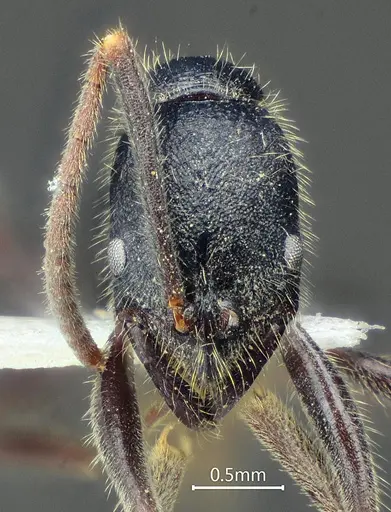
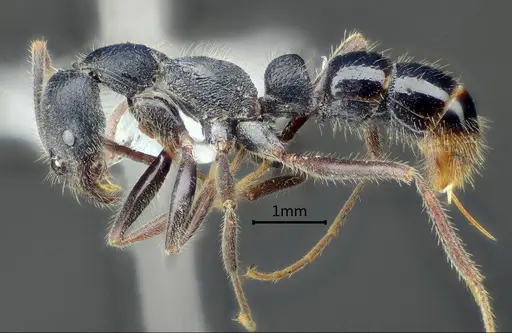
Workers of Leptogenys zhuangzii are robust ants measuring 7.1-7.8mm in total length [1]. The body is entirely black, with mandibles, antennae, legs, and the tip of the gaster being blackish brown to yellowish brown [3]. The head is rectangular and much longer than broad, with nearly parallel lateral sides [3]. The mandibles are slender, with the masticatory margin bearing one small tooth in the middle of the blade in addition to the apical tooth [5]. The petiolar node is roughly trapezoidal in profile, with the anterior face being short and slightly convex, about half as high as the posterior face [3]. The dorsal surfaces of the head, mesosoma, and petiolar node are densely punctate and opaque, while the first gastral segment is smooth and shiny [1]. These features distinguish it from the similar Leptogenys confucii, which has a different body coloration and sculpture.
Predatory Behavior and Feeding
Leptogenys belongs to the Ponerinae subfamily, which contains predatory ants that use their powerful mandibles to capture and subdue prey. While specific hunting behavior for L. zhuangzii has not been documented, Leptogenys species are known to be active hunters that forage individually or in small groups, using their acute senses to locate prey [3]. In captivity, you should provide a diet rich in protein from small live invertebrates. Suitable prey includes fruit flies, small crickets, mealworms, and other small arthropods. Unlike some ants that readily accept sugar sources, Ponerines are primarily predatory and may not show strong interest in honey or sugar water. Feed prey items 2-3 times per week, adjusting based on colony consumption. Remove uneaten prey after 24 hours to prevent mold.
Housing and Nesting
Based on the natural habitat of secondary monsoon evergreen broadleaf forest at 1280m elevation, these ants require high humidity and stable temperatures [3]. A naturalistic setup with a soil or soil-like substrate works well, allowing you to create the damp conditions they naturally inhabit. Alternatively, a Y-tong or plaster nest with a water reservoir can maintain humidity. The nest should have chambers scaled to the worker size (7-8mm ants need appropriately sized tunnels), with multiple chambers for brood storage and foraging areas. Provide a moisture gradient by keeping one end of the nest moister than the other, allowing the ants to self-regulate. Include a water source in the outworld. Use moderate escape prevention, these are medium-sized ants but active and can climb smooth surfaces.
Temperature and Seasonal Care
Since this species comes from subtropical Yunnan Province at 1280m elevation, it experiences moderate temperatures year-round with distinct wet and dry seasons [3]. Aim for temperatures in the 22-26°C range, avoiding extremes below 18°C or above 30°C. A heating cable on one side of the nest can create a gentle gradient if your room temperature runs cool. Humidity should be high, the forest floor environment they inhabit is consistently moist. Monitor substrate moisture and rehydrate when the surface begins drying. Since no diapause data exists for this species, avoid forcing a hibernation period. Instead, maintain stable conditions year-round. If your colony shows reduced activity in winter, reduce feeding frequency rather than lowering temperature dramatically.
Frequently Asked Questions
How do I keep Leptogenys zhuangzii ants?
This is a challenging species to keep because only workers have been described and no established care protocols exist. Provide high humidity (damp forest floor conditions), temperatures of 22-26°C, and a diet of small live prey. A naturalistic setup with moist soil or a Y-tong/plaster nest works well. This is an expert-level species not recommended for beginners.
What do Leptogenys zhuangzii ants eat?
Like other Ponerine ants, they are predatory and need live protein. Offer small insects like fruit flies, pinhead crickets, mealworms, and other tiny arthropods. They may not accept sugar sources, protein is the primary food. Remove uneaten prey after 24 hours.
How big do Leptogenys zhuangzii colonies get?
Unknown, colony size data is not available for this species. Only workers have been described, and no queen or colony structure has been documented.
Where is Leptogenys zhuangzii found?
This species is endemic to Yunnan Province, China, specifically the Xishuangbanna region. It has been collected in secondary monsoon evergreen broadleaf forest at 1280m elevation and is a primary forest specialist [2][4].
Does Leptogenys zhuangzii need hibernation?
Unknown, no diapause or seasonal behavior data exists for this species. Based on the subtropical Yunnan climate, a dramatic hibernation is likely not required. Maintain stable conditions year-round.
Can beginners keep Leptogenys zhuangzii?
No, this is an expert-level species. Only the worker caste has been described, there is no established captive care protocol, and they have specific habitat requirements (primary forest specialist requiring high humidity). They are not recommended for antkeepers without experience with difficult species.
How long until first workers in Leptogenys zhuangzii?
Unknown, no brood development data exists for this species. Since only workers have been described and no queen has been documented, the founding and development timeline is entirely unknown.
What temperature do Leptogenys zhuangzii ants need?
Based on their Yunnan origin, aim for 22-26°C. Avoid temperatures below 18°C or above 30°C. A gentle temperature gradient allows the ants to self-regulate.
Is Leptogenys zhuangzii a good pet ant?
No, this species is not suitable as a pet ant for most keepers. It is known only from workers, has not been kept in captivity successfully by hobbyists, and requires specific primary forest conditions that are difficult to replicate. It remains primarily a scientific curiosity.
References

This caresheet is licensed under CC BY-SA 4.0 .
ANTWEB1060509
View on AntWeb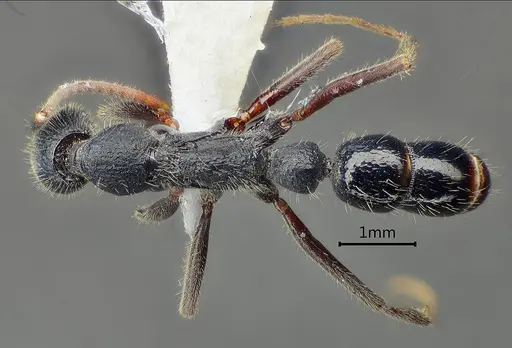
Literature
Loading...Loading products...