

Leptogenys mengzii
- Scientific Name
- Leptogenys mengzii
- Tribe
- Ponerini
- Subfamily
- Ponerinae
- Author
- Xu, 2000
- Distribution
- Found in 1 countries
Leptogenys mengzii Overview
Leptogenys mengzii is an ant species of the genus Leptogenys. It is primarily documented in 1 countries , including China. Detailed taxonomic data and occurrence records can be further explored via authoritative databases such as AntWeb or the Global Biodiversity Information Facility (GBIF).
Leptogenys mengzii
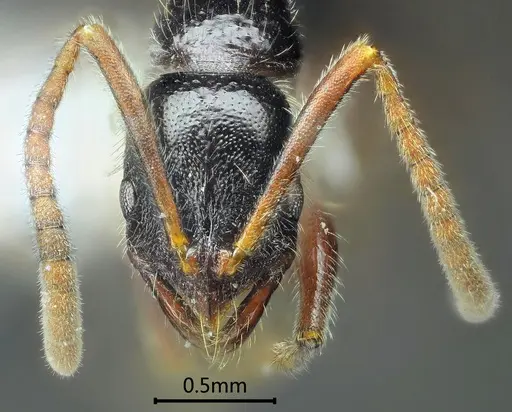
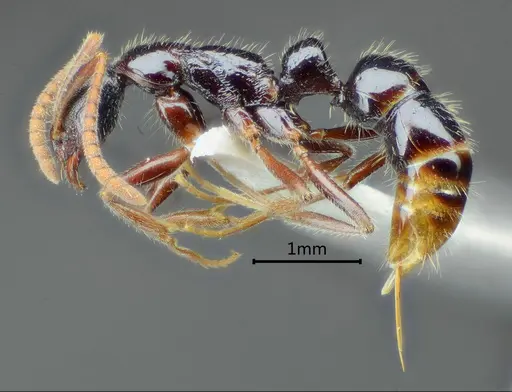
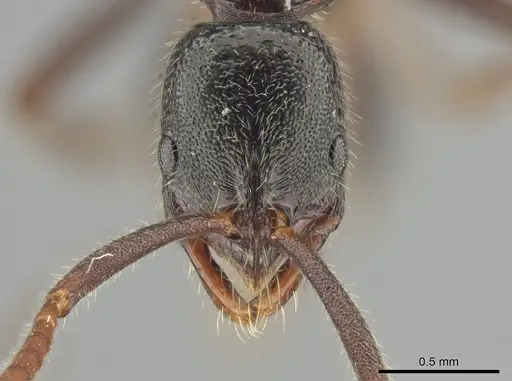
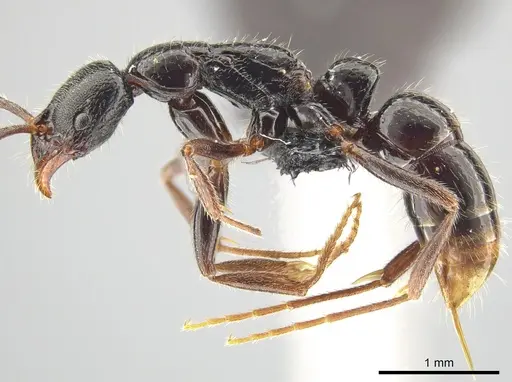
Leptogenys mengzii is a small predatory ant species from the Ponerinae subfamily, native to southern China. Workers measure 4.5-5.2mm and are black to blackish brown in color, with a distinctly long head and slender mandibles. The species belongs to the Leptogenys zhuangzii group and was described by Xu in 2000. Queens are similar in size at 4.9-5.1mm, and the species is known to produce ergatoid (wingless) queens. This ant is a habitat specialist found only in primary forest environments in Yunnan Province and Tibet, not in secondary forest or human-modified landscapes.
Quick Summary
- Difficulty: Medium
- Origin & Habitat: Endemic to China, specifically Yunnan Province and Tibet. Found in primary forest habitats including deciduous broad-leaf forest, karst monsoon forest, and mountain rain forest at elevations between 660-1600m. This is a habitat specialist restricted to primary forest and does not occur in secondary forest or rubber plantations [1][2].
- Colony Type: Colony structure is not well documented. Ergatoid (wingless) queens have been observed, suggesting the species may have replacement reproductives. Single-queen colonies are likely based on typical Leptogenys patterns, but this is unconfirmed.
- Size & Growth:
- Queen: 4.9-5.1mm [3]
- Worker: 4.5-5.2mm [4][5]
- Colony: Unknown, no colony size data available
- Growth: Unknown, no development timing data available
- Development: Unknown, no direct data available. Based on typical Ponerinae patterns, estimate 6-10 weeks at optimal temperature. (Development timeline has not been studied. Related Leptogenys species typically take 6-10 weeks from egg to worker.)
- Antkeeping:
- Temperature: No specific data available. Based on Yunnan forest habitat (tropical to subtropical), aim for warm conditions around 22-26°C. Related Leptogenys species prefer moderate to warm temperatures.
- Humidity: No specific data available. Forest-dwelling species likely require moderate to high humidity (60-80%). Keep nest substrate consistently moist but not waterlogged.
- Diapause: Unknown, no data on overwintering requirements. Yunnan has mild winters, so diapause may be optional or minimal. Monitor colony activity and reduce temperature slightly during winter months if they become less active.
- Nesting: No specific nesting data available. In captivity, typical Ponerinae setups work well, test tubes, Y-tong nests, or plaster nests with moist substrate. Provide narrow chambers scaled to their small size.
- Behavior: Leptogenys ants are active predators with well-developed hunting behavior. Workers are slender and fast-moving, with long legs adapted for pursuit. They likely use chemical trails to coordinate hunting. The genus is known for raiding behavior where workers coordinate to capture prey. Escape risk is moderate, they are small but not extremely tiny, so standard escape prevention measures should suffice.
- Common Issues: lack of available care information makes proper husbandry challenging, as a habitat specialist, wild-caught colonies may struggle with captive conditions, predatory diet requirements may be difficult to meet consistently, escape prevention is important though they are not as small as some ponerines
Housing and Nest Preferences
Leptogenys mengzii is a small predatory ant that will do well in standard Ponerinae setups. Test tube setups work well for founding colonies, while established colonies can be moved to Y-tong nests or plaster formicariums. Provide narrow chambers and passages scaled to their 4.5-5mm worker size. The nest material should retain moisture well, these forest-dwelling ants prefer humid conditions. A water reservoir connected to the nest helps maintain consistent humidity. Outworld space should allow for hunting and waste management.
Feeding and Diet
Leptogenys ants are predatory by nature, hunting small invertebrates in the wild. In captivity, offer small live prey such as fruit flies, pinhead crickets, small mealworms, and other appropriately-sized insects. Prey should be small enough for workers to subdue, aim for insects roughly 2-5mm. Feed every 2-3 days, removing uneaten prey after 24 hours. Sugar water or honey can be offered occasionally, but protein-rich prey should form the primary diet. Fresh water should always be available.
Temperature and Seasonal Care
No specific temperature requirements have been documented for this species. Based on its origin in Yunnan Province (tropical to subtropical climate), aim for temperatures in the 22-26°C range. Room temperature within this range should be suitable. If your colony becomes sluggish, a slight temperature increase may help. During winter, a minor reduction (a few degrees) may be appropriate, but active heating is likely not required given Yunnan's mild climate. Monitor your colony's activity levels and adjust accordingly.
Behavior and Colony Dynamics
Leptogenys workers are active hunters that likely coordinate prey capture through chemical communication. Workers are slender with long legs, adapted for pursuit hunting. The species produces ergatoid (wingless) queens, which serve as replacement reproductives if the primary queen dies. This is a common trait in the genus. Colonies are likely smaller than many common ant species, possibly reaching only dozens to low hundreds of workers based on typical Leptogenys patterns. Workers are not aggressive toward humans but will defend the nest if threatened.
Frequently Asked Questions
How long does it take for Leptogenys mengzii to produce first workers?
The exact development timeline has not been studied. Based on typical Ponerinae development patterns, expect 6-10 weeks from egg to first worker at optimal temperature (22-26°C). Nanitics (first workers) will be smaller than mature workers.
What do Leptogenys mengzii ants eat?
They are predatory ants that hunt small invertebrates. Feed small live prey such as fruit flies, small crickets, mealworms, and other appropriately-sized insects. Offer prey every 2-3 days and remove uneaten items. Sugar water can be offered occasionally but protein-rich prey is essential.
Are Leptogenys mengzii ants good for beginners?
This species is rated as Medium difficulty. While not the most challenging ant, there is limited care information available, which can make proper husbandry challenging. They have specific habitat requirements (primary forest specialist) and predatory dietary needs. Beginners may want to start with more common species with established care protocols.
How big do Leptogenys mengzii colonies get?
Colony size data is not available for this species. Based on typical Leptogenys patterns, colonies likely reach dozens to a few hundred workers. They are not among the largest ant species.
What temperature should I keep Leptogenys mengzii at?
Aim for 22-26°C based on their Yunnan forest habitat. Room temperature within this range should be suitable. No specific heating is required if your room stays within this range.
Do Leptogenys mengzii ants need hibernation?
Diapause requirements are unknown. Yunnan has mild winters, so a formal hibernation may not be necessary. If colony activity decreases in winter, a slight temperature reduction (a few degrees) may be appropriate.
Can I keep multiple Leptogenys mengzii queens together?
Colony structure (monogyne vs polygyne) has not been documented for this species. Combining unrelated queens is not recommended without evidence they can coexist peacefully.
Where is Leptogenys mengzii found in the wild?
This is a China endemic species found primarily in Yunnan Province. It has also been recorded in Tibet. It is a habitat specialist restricted to primary forest at elevations between 660-1600m, not found in secondary forest or rubber plantations.
References

This caresheet is licensed under CC BY-SA 4.0 .
ANTWEB1060505
View on AntWeb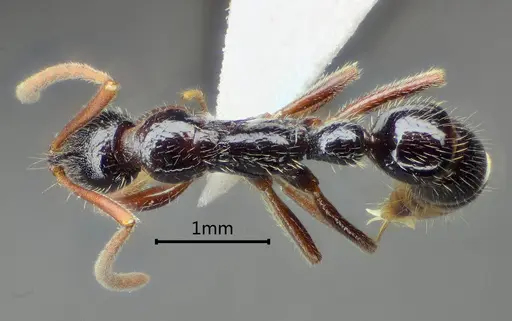
CASENT0713663
View on AntWeb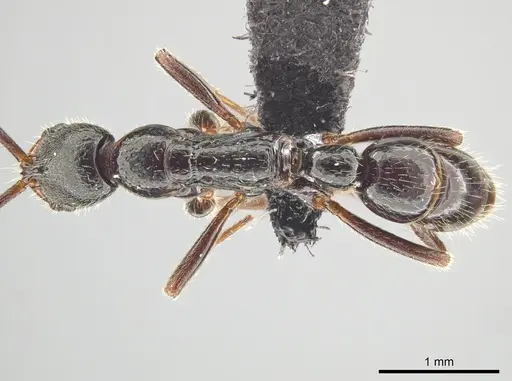
Literature
Loading...Loading products...