

Leptogenys kitteli
- Scientific Name
- Leptogenys kitteli
- Tribe
- Ponerini
- Subfamily
- Ponerinae
- Author
- Mayr, 1870
- Distribution
- Found in 7 countries
Leptogenys kitteli Overview
Leptogenys kitteli is an ant species of the genus Leptogenys. It is primarily documented in 7 countries , including China, Hong Kong, Indonesia. Detailed taxonomic data and occurrence records can be further explored via authoritative databases such as AntWeb or the Global Biodiversity Information Facility (GBIF).
Leptogenys kitteli
Leptogenys kitteli is a medium-sized predatory ant belonging to the Ponerinae subfamily, with workers measuring 7-9mm. They are widely distributed across the Indomalayan region, found in China (including Hainan, Guangxi, Yunnan, Fujian, Taiwan, Hong Kong), India, Bangladesh, Myanmar, Thailand, Vietnam, and Nepal. These ants inhabit forest floors in lowland and hilly areas, living in soil or leaf litter. Their most distinctive trait is their group hunting behavior, they function as army ants, coordinating in large groups to prey on termites and earthworms. They also communicate through stridulation (chirping sounds), producing different signals depending on whether they've found prey or are responding to disturbance at the nest.
Quick Summary
- Difficulty: Medium
- Origin & Habitat: Forests of the Indomalayan region, China (Hainan, Guangxi, Yunnan, Sichuan, Fujian, Taiwan, Hong Kong), India, Bangladesh, Myanmar, Thailand, Vietnam, Nepal. They live in soil or leaf litter in broadleaf and coniferous forests in lowland and hilly areas [1][2][3].
- Colony Type: Single-queen colonies (monogyne) with documented ergatoid replacement reproductives. Colonies reach several hundred workers and frequently relocate their nests [2][4].
- Colony: Monogyne
- Founding: Semi-claustral
- Size & Growth:
- Queen: Estimated 8-10mm based on genus patterns
- Worker: 7-9mm [5][6][4]
- Colony: Several hundred workers [2]
- Growth: Moderate
- Development: Estimated 6-10 weeks based on typical Ponerinae development patterns (Development time is inferred from related Ponerinae species, specific data for L. kitteli is not available)
- Antkeeping:
- Temperature: Based on their tropical/subtropical distribution, keep at 22-28°C. Adjust based on colony activity, they prefer warm conditions similar to their native lowland forest habitat.
- Humidity: High humidity preferred, these forest-floor ants need moist substrate conditions. Keep the nest substrate consistently damp but not waterlogged, with some drier areas available.
- Diapause: Unknown, no specific research on winter dormancy. Based on their broad distribution including subtropical regions, they may have reduced activity in cooler months but likely do not require true hibernation.
- Nesting: Soil or litter nesting species. In captivity, they do well in naturalistic setups with moist substrate or Y-tong nests with narrow chambers. They frequently move colonies, so provide options for relocation.
- Behavior: Army ant behavior, they hunt in coordinated groups and are active predators of termites and earthworms. They produce stridulatory chirps that increase dramatically when prey is detected (about 16x normal rate) or when disturbed (about 250x normal rate) [1]. Workers are moderately aggressive when defending the colony. They have a mild sting (pain rating 1) with low venom lethality [7]. Escape risk is moderate, use standard barrier methods.
- Common Issues: frequent colony relocation, they may abandon nests if conditions aren't ideal, group-hunting behavior requires space for coordinated foraging, predatory diet means they need live prey regularly, not just sugar water, wild-caught colonies may have parasites that affect survival in captivity, sensitive to dry conditions, substrate must stay moist
Housing and Nest Setup
Leptogenys kitteli is a soil-nesting species that lives in leaf litter and frequently relocates its nest. For captive care, naturalistic setups work best, a layer of moist soil or peat mixed with leaf litter gives them the substrate they need. Y-tong (acrylic) nests with narrow chambers also work well, but include a water reservoir to maintain humidity. These ants are group foragers, so they need an outworld space where they can hunt and explore. Provide multiple potential nest sites within the setup, they may choose to relocate if the first location doesn't suit them. Escape prevention is important but not extreme, standard barriers like fluon on test tube rims work adequately for these medium-sized ants. [1][2]
Feeding and Diet
As predatory army ants, L. kitteli requires a protein-rich diet of live prey. They specialize in hunting termites and earthworms in the wild [2], but in captivity they'll accept various small invertebrates. Offer live termites, small earthworms, mealworms, fruit flies, and other appropriately-sized arthropods. They are not sugar-dependent like some ant species, but they may occasionally accept honey or sugar water as supplementary energy. Feed them prey items 2-3 times per week, adjusting based on colony size and consumption. Remove uneaten prey within 24 hours to prevent mold. A well-fed colony will have workers with distended abdomens, this is normal and indicates good nutrition.
Temperature and Seasonal Care
These ants come from tropical and subtropical forests, so they prefer warm conditions. Keep the nest area at 22-28°C, this range covers their natural habitat temperatures in lowland and hilly forests. A heating cable on one side of the nest creates a gradient allowing them to choose their preferred temperature. They are active year-round in their native range, so no true hibernation is needed. However, if you're keeping a colony from a more temperate population (like those in southern China), you might observe reduced activity during winter months. Simply lowering temperatures slightly (by 3-5°C) during this period is sufficient, don't cool them dramatically or allow temperatures below 15°C. [1][2]
Behavior and Communication
One of the most fascinating aspects of L. kitteli is their stridulatory communication, they produce chirping sounds by rubbing a scraper on their postpetiole against a band of ridges on their gaster [1]. Research shows they produce different signals for different situations: during normal activity, they chirp at about 0.1 chirps per second, but when prey is detected, this jumps to about 1.7 chirps per second (a 16-fold increase). When the nest is disturbed, they produce an intense 26+ chirps per second [1]. These 'disturbance bursts' involve intervals under 10 milliseconds between chirps. This communication helps coordinate their group hunting and colony defense. When keeping them, you'll sometimes hear faint chirping, this is normal and indicates healthy, active ants.
Colony Dynamics and Growth
L. kitteli colonies grow to several hundred workers and are known for frequently relocating their nests [1][4]. This nomadic tendency is common in army ants. In captivity, this means you might notice them moving between different areas of their setup. The colony structure is monogyne (single queen), with documented ergatoid (wingless) replacement reproductives that can take over if the primary queen dies [2]. Growth is moderate, expect 6-10 weeks from egg to first worker at optimal temperatures. Once established, colonies are relatively hardy, but their predatory nature and humidity requirements make them better suited for keepers with some antkeeping experience.
Defense and Sting
Like all Ponerinae ants, L. kitteli has a functional sting. However, their sting is relatively mild, Schmidt pain rating is just 1 (on a scale where 1 = mild,4 = extreme) [7]. The venom has low lethality with an LD50 of 10 mg/kg [7]. For most keepers, a sting feels like a brief pinprick and causes minor discomfort that fades within minutes. These ants are not aggressive toward humans but will defend their nest if threatened. When working with them, move slowly and avoid disturbing the nest unnecessarily. Use standard escape prevention and you shouldn't have issues.
Field Identification Tips
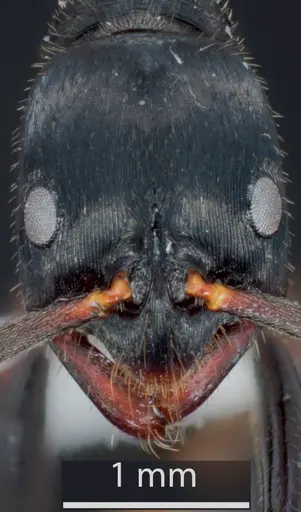
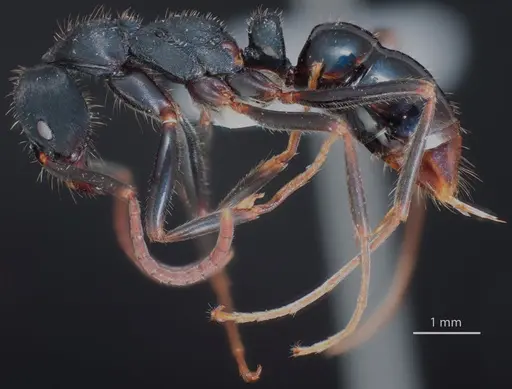
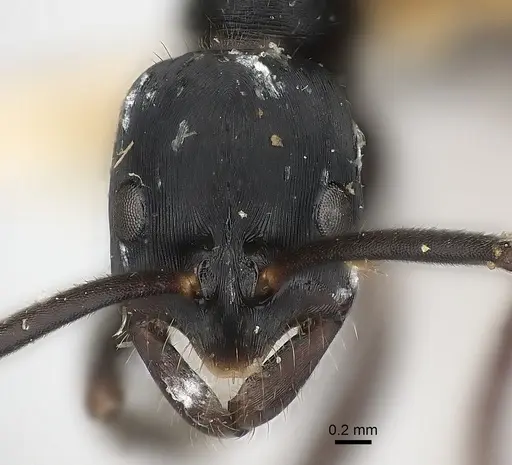
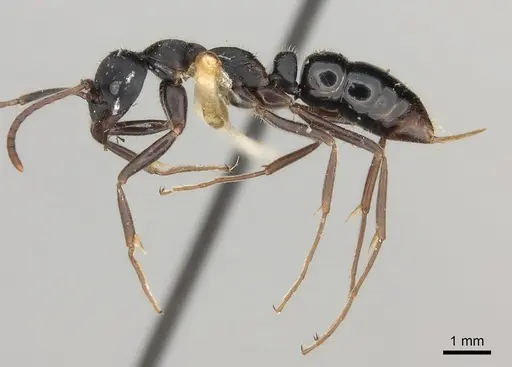
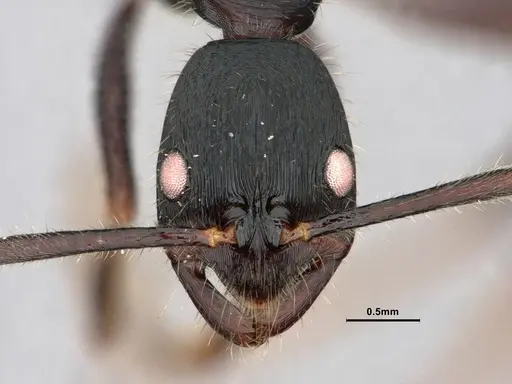
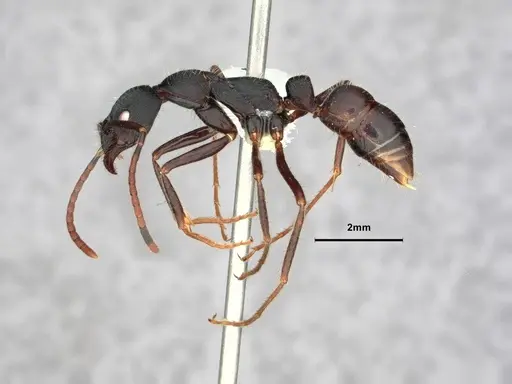
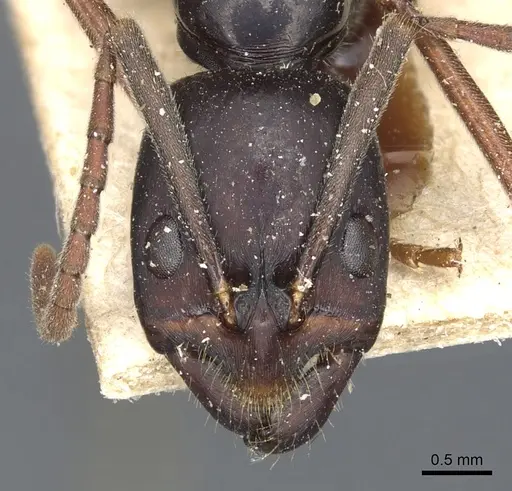
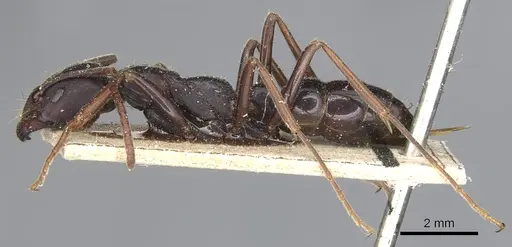
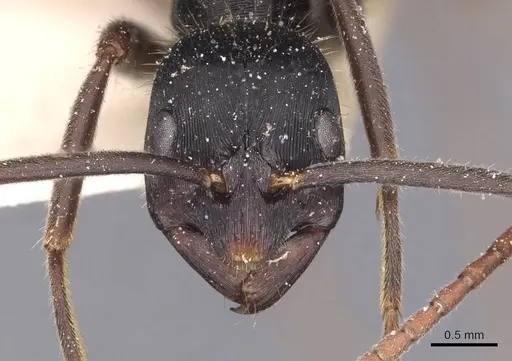
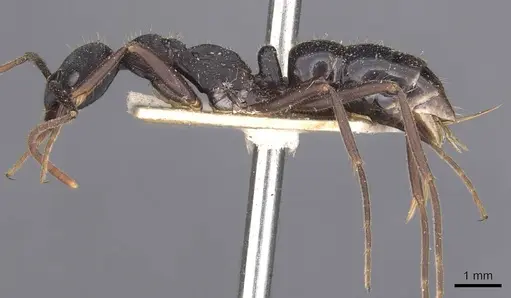
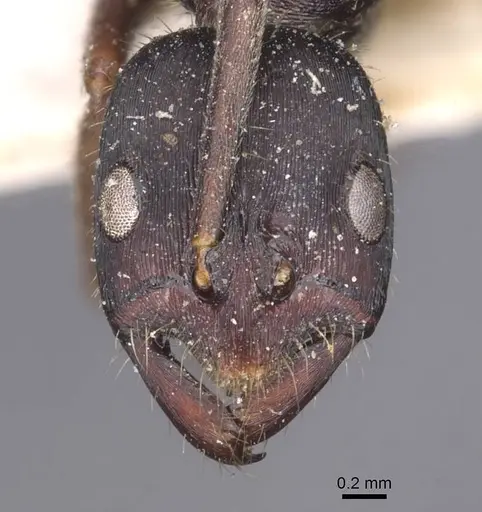
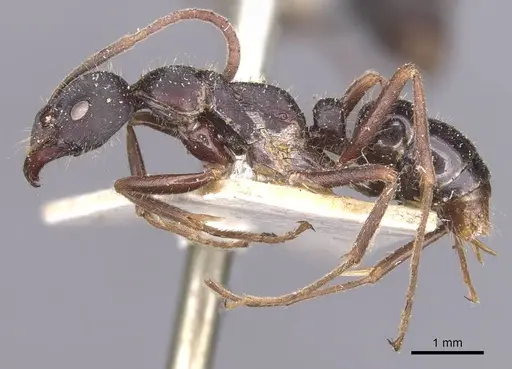
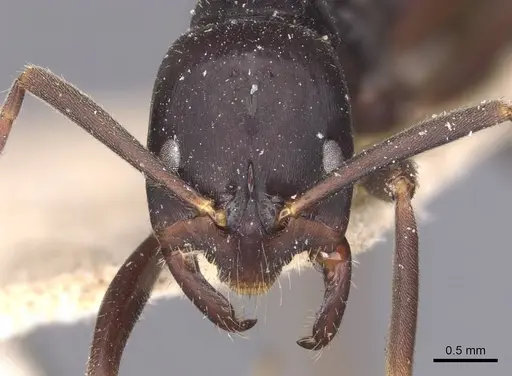
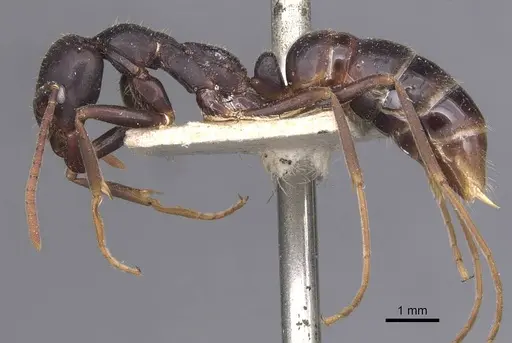
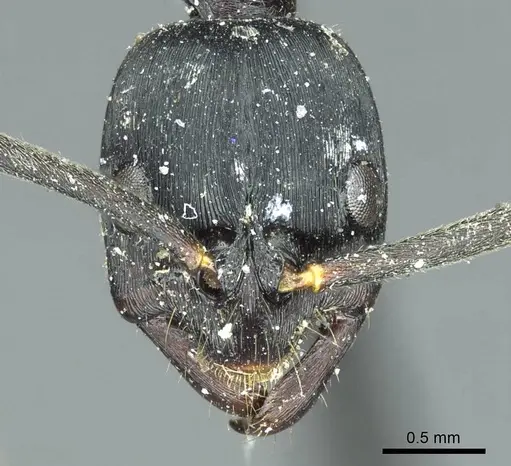
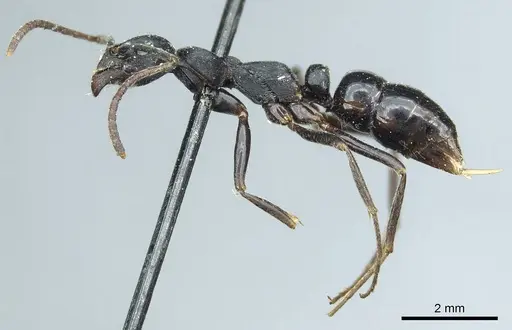
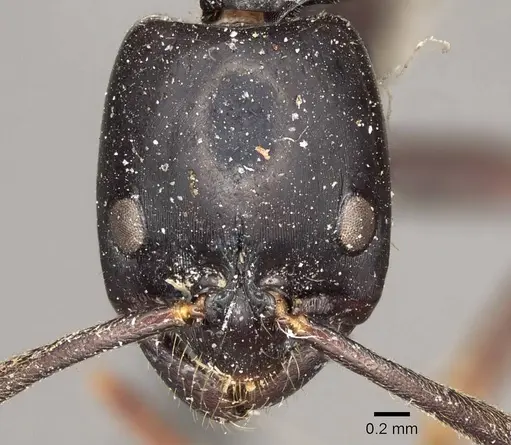
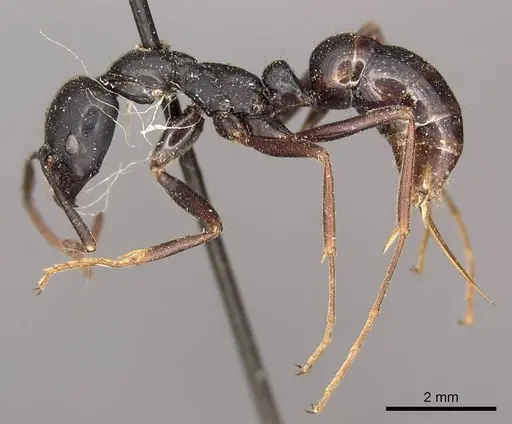
Identifying L. kitteli in the field or distinguishing them from similar species requires attention to morphology. They belong to the Leptogenys diminuta species group and are most similar to L. diminuta. Key distinguishing features: L. kitteli is distinctly larger than L. diminuta, has a longitudinally striate (ridged) pronotum, and lacks the longitudinal carinae (ridge) on the clypeal dorsum that L. diminuta shows [2]. Workers are 7-9mm with a black body, often with reddish-brown mandibles, antennae, leg joints, and gaster tip. The entire head and mesosoma have fine longitudinal striations giving a silky sheen. The petiolar node is nodiform (node-shaped) rather than compressed [8].
Frequently Asked Questions
How long does it take for Leptogenys kitteli to produce first workers?
Based on typical Ponerinae development, expect 6-10 weeks from egg to first worker at optimal temperatures (around 24-26°C). This is an estimate since specific development data for this species isn't available. Nanitics (first workers) will be smaller than mature workers but should already show the predatory behavior of the colony.
What do Leptogenys kitteli eat?
They are predatory army ants that hunt in groups. Their primary diet in the wild consists of termites and earthworms. In captivity, offer live prey like termites, small earthworms, mealworms, fruit flies, and other small arthropods. They may occasionally accept honey or sugar water as supplementary energy but do not rely on sugar sources.
How big do Leptogenys kitteli colonies get?
Colonies reach several hundred workers. They are not as large as some army ant species but maintain robust colonies. They frequently relocate their nests, which is normal behavior for this species.
What temperature do Leptogenys kitteli need?
Keep them at 22-28°C, with an ideal range around 24-26°C. They come from tropical/subtropical forests, so warmth is important. A heating cable on one side of the nest creates a gradient they can regulate themselves. Avoid temperatures below 15°C.
Are Leptogenys kitteli good for beginners?
They are rated as medium difficulty. While not the hardest species, their predatory diet (requiring live prey), humidity needs, and tendency to relocate nests make them better suited for keepers with some experience. Beginners should ensure they can provide regular live prey before getting this species.
Do Leptogenys kitteli need hibernation?
Diapause requirements are not documented for this species. Based on their tropical/subtropical distribution, they likely do not require true hibernation. You may observe reduced activity in winter months, simply lower temperatures slightly (by 3-5°C) if needed, but don't attempt dramatic cooling.
What makes Leptogenys kitteli special compared to other ants?
Their group hunting behavior (army ant lifestyle) and sophisticated stridulatory communication set them apart. They produce different chirping patterns depending on whether they've found prey or are responding to nest disturbance. They also frequently relocate their colonies, which is unusual among ant species.
Can I keep multiple Leptogenys kitteli queens together?
No. This species is monogyne (single-queen). Multiple unrelated queens will fight. Only keep one queen per colony. The species does have ergatoid (wingless) replacement reproductives that can take over if the primary queen dies, this is a natural replacement mechanism, not polygyny.
Why do my Leptogenys kitteli keep moving their nest?
This is normal behavior. L. kitteli is known for frequently relocating nests, it's part of their army ant lifestyle. In captivity, provide multiple potential nest sites and don't be alarmed if they move. Ensure humidity is adequate and conditions are stable to minimize unnecessary relocation.
What type of nest is best for Leptogenys kitteli?
Naturalistic setups with moist soil/peat substrate work best since they naturally nest in soil and leaf litter. Y-tong nests with narrow chambers and a water reservoir also work. Provide options, they may relocate if their initial nest site doesn't suit them.
Are Leptogenys kitteli invasive anywhere?
No, they are native across their entire documented range in the Indomalayan region. They have not been documented as invasive in any region. However, never release ant colonies in non-native areas, this applies to all ant species.
References

This caresheet is licensed under CC BY-SA 4.0 .
ANTWEB1048549
View on AntWeb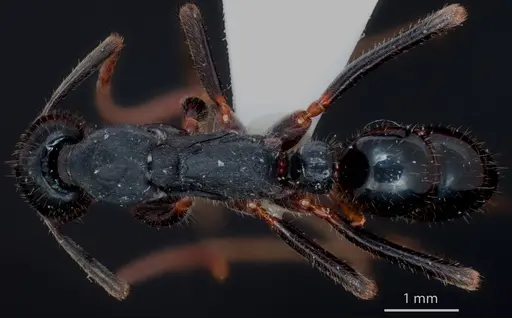
CASENT0217530
View on AntWeb
CASENT0882103
View on AntWeb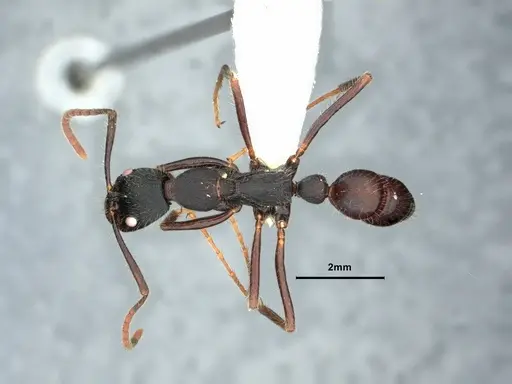
CASENT0903957
View on AntWeb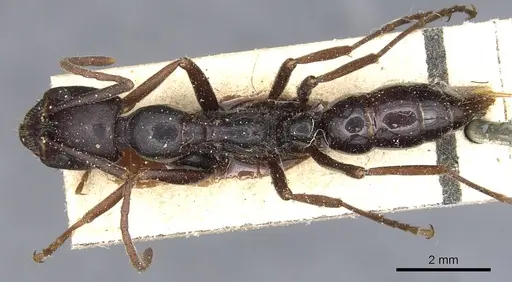
CASENT0907376
View on AntWeb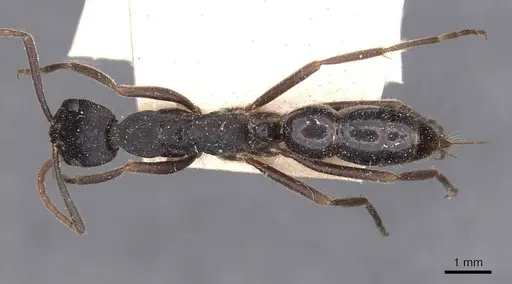
CASENT0907377
View on AntWeb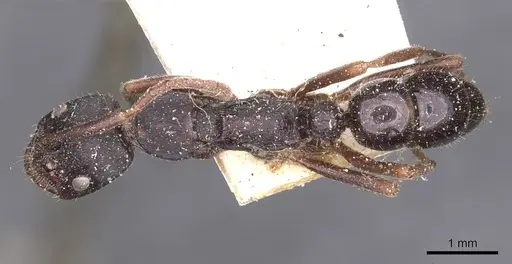
CASENT0907378
View on AntWeb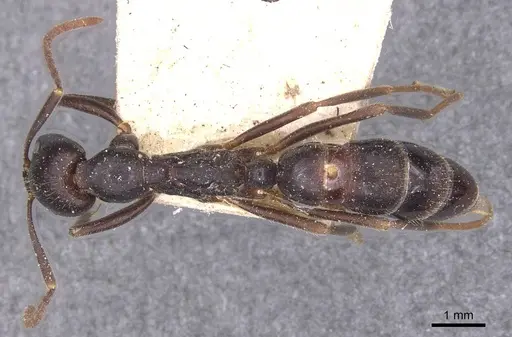
CASENT0915879
View on AntWeb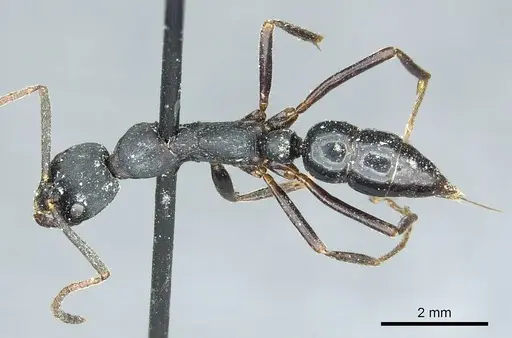
CASENT0915880
View on AntWeb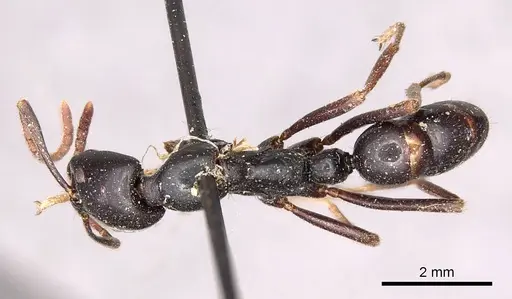
Literature
Loading...Loading products...