

Leptanilla taiwanensis
- Scientific Name
- Leptanilla taiwanensis
- Tribe
- Leptanillini
- Subfamily
- Leptanillinae
- Author
- Ogata <i>et al.</i>, 1995
- Distribution
- Found in 2 countries
Leptanilla taiwanensis Overview
Leptanilla taiwanensis is an ant species of the genus Leptanilla. It is primarily documented in 2 countries , including China, Taiwan, Province of China. Detailed taxonomic data and occurrence records can be further explored via authoritative databases such as AntWeb or the Global Biodiversity Information Facility (GBIF).
Leptanilla taiwanensis
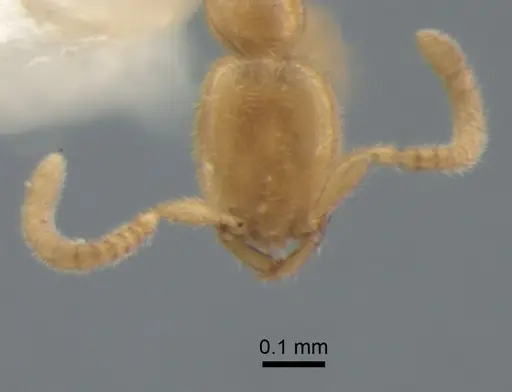
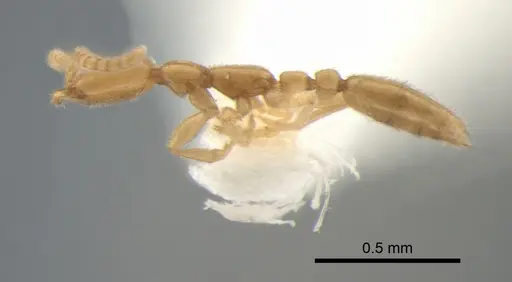
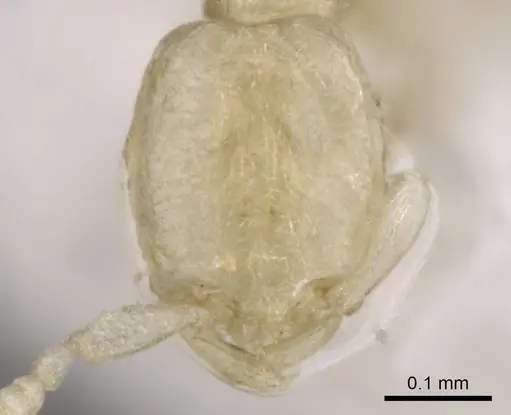
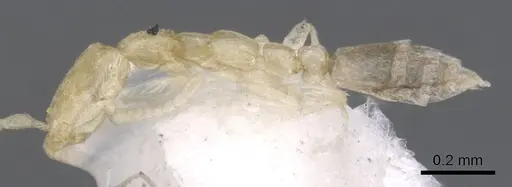
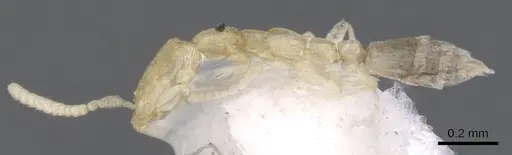
Leptanilla taiwanensis is one of the smallest ants in the world, with workers measuring just 1.06-1.34mm and queens reaching about 2mm [1]. These tiny ants are pale yellow and completely blind, with no eyes at all. They belong to the subfamily Leptanillinae, a group of rare subterranean ants that spend most of their lives underground. The species was first described from Taiwan, with more recent collections in Beijing, China, making it one of the northernmost Leptanillinae species known [2].
What makes this species remarkable is its specialized diet, Leptanilla taiwanensis larvae are obligate predators of geophilomorph centipedes, hunting and consuming these multi-legged prey that can be several centimeters long [1]. This specialized predation on centipedes has been observed both in the field and in laboratory colonies of related species, making Leptanilla ants unique among ant keepers' favorites.
Quick Summary
- Difficulty: Expert
- Origin & Habitat: Native to Taiwan and mainland China (Beijing area). In the wild, colonies nest in clay soil around 15cm deep, and more recent surveys found them 30-55cm below ground in both forested areas and urban green spaces [1][2].
- Colony Type: Colony structure is unconfirmed. Only a single colony has been directly observed (the type colony from Taiwan), which contained one queen and 145 workers. The Beijing study only collected workers, so no queen data exists from those populations.
- Size & Growth:
- Queen: 2.0mm [1]
- Worker: 1.06-1.34mm [1]
- Colony: At least 145 workers in the type colony, with 116 workers collected from a single Beijing site [1][2]
- Growth: Unknown, no captive breeding data exists
- Development: Unconfirmed, no captive development has been documented (Based on their tiny size and subterranean lifestyle, development is likely relatively fast compared to larger ants, but specific timelines are unknown)
- Antkeeping:
- Temperature: Keep cool, their native range includes temperate Beijing where temperatures fluctuate significantly. Start around 18-22°C and monitor colony activity. A slight downward gradient (cooler at the far end) may help since they're subterranean.
- Humidity: High humidity is essential. These ants live underground in clay soil and were collected from 30-55cm below ground where conditions are consistently moist [2]. Keep the nest substrate consistently damp but not waterlogged.
- Diapause: Likely yes, given their presence in temperate Beijing (northern hemisphere, similar latitude to New York), they almost certainly need a winter rest period. Plan for 2-3 months at around 10-15°C during winter.
- Nesting: Y-tong (acrylic) nests work well for their tiny size. Provide a small chamber setup with tight passages scaled to their minute size. The nest should have a water reservoir to maintain humidity. Avoid naturalistic setups with large open spaces.
- Behavior: These ants are completely blind and rely on chemical cues to navigate. Workers are extremely small and can easily escape through tiny gaps, escape prevention must be excellent. They are highly specialized predators that hunt centipedes, and workers likely coordinate to subdue prey much larger than themselves. They are not aggressive toward keepers and cannot sting effectively due to their tiny size. Foraging occurs underground in the wild, so they may be less active in the outworld than other ants.
- Common Issues: escape prevention is critical, their tiny size means they can squeeze through gaps invisible to the human eye, specialized diet makes them extremely difficult to keep, they require live geophilomorph centipedes or close substitutes, no captive breeding data exists, this species has never been successfully raised in captivity, subterranean lifestyle means they spend most of their time hidden in the nest, collecting wild colonies is difficult, they require deep soil sampling to find
Housing and Nest Setup
Leptanilla taiwanensis requires careful housing due to its extremely small size. A Y-tong (acrylic) nest with small, tight chambers works best, the passages must be scaled to their tiny 1mm workers. Standard formicarium chambers will be far too large. Use a test tube setup for founding colonies, with a small cotton ball creating a water reservoir. For established colonies, provide a nest with multiple small chambers connected by narrow tunnels.
Escape prevention is absolutely critical. These ants are among the smallest in the world and can slip through gaps that seem impossible. Use fluon on all rim edges, ensure lids fit tightly, and consider wrapping the entire setup in fine mesh if needed. Even a small gap in tubing can result in colony loss.
The nest should have access to a water source, either a built-in reservoir in acrylic nests or a connected test tube with water. Maintain high humidity by keeping the substrate consistently moist but never flooded. [1]
Feeding and Diet
This is the biggest challenge in keeping Leptanilla taiwanensis. These ants are specialized predators of geophilomorph centipedes, long, many-segmented centipedes that can reach 4cm or more [1]. In the wild colony, larvae were observed feeding on a centipede estimated at 4cm long, with multiple larvae feeding simultaneously by inserting their heads into the centipede's body through its pleura.
In captivity, you would need to provide live geophilomorph centipedes or very similar prey. This is extremely difficult since these centipedes are themselves specialized, rare, and hard to obtain. Related Leptanilla species in captivity have shown the same preference for geophilomorph centipedes [1]. Standard ant foods like mealworms, fruit flies, or sugar water are unlikely to be accepted.
Do not attempt to keep this species unless you have a reliable source of appropriate centipede prey. Without their natural food, the colony will not survive.
Temperature and Seasonal Care
Based on their distribution in temperate Beijing (similar latitude to Philadelphia/New York), Leptanilla taiwanensis almost certainly requires a winter diapause. In the wild, they live deep underground where temperatures are more stable, but the seasonal changes still affect them.
Keep the colony at room temperature (18-22°C) during the active season. During winter, reduce temperatures to around 10-15°C for 2-3 months. This can be achieved by moving the colony to an unheated room or basement. Do not feed during diapause and reduce (but don't eliminate) humidity.
Avoid overheating, these are cool-adapted subterranean ants. Room temperature is likely ideal, with no additional heating needed unless your home is very cold. [2]
Behavior and Observation
Leptanilla taiwanensis is blind, like all Leptanillinae ants. Workers navigate and communicate purely through chemical signals (pheromones). This makes them less visually interesting than other ants, you won't see them exploring or interacting with the outworld in obvious ways.
Their subterranean lifestyle means most activity happens hidden in the nest. You may see workers carrying prey (if you manage to provide it) or tending to larvae, but they won't form visible foraging trails. The colony will spend most of its time in the nest chambers.
When you do observe them, expect slow, deliberate movements. They are not frantic foragers like some ants. Workers likely hunt in small groups to subdue their centipede prey, using coordinated attacks rather than individual hunting. [1]
Frequently Asked Questions
Can I keep Leptanilla taiwanensis as a beginner ant keeper?
No. This species is absolutely not recommended for beginners. They have never been successfully kept in captivity, require extremely specialized live prey (geophilomorph centipedes), are impossibly small, and need specific conditions we don't fully understand. Start with easier species like Lasius niger, Camponotus, or Messor first.
What do Leptanilla taiwanensis eat?
They eat geophilomorph centipedes, long, many-segmented centipedes that can be several centimeters long. The larvae are specialized predators that hunt and consume these centipedes. Captive feeding is extremely difficult since this specific prey type is hard to obtain. Standard ant foods are unlikely to be accepted.
How big do Leptanilla taiwanensis colonies get?
The only observed colony had around 145 workers. The Beijing study collected 116 workers from a single site, suggesting colonies can reach at least this size. The maximum colony size is unknown.
Do Leptanilla taiwanensis ants sting?
They have a small sting but due to their tiny size (1mm workers), it cannot penetrate human skin. They pose no danger to keepers.
How do I find Leptanilla taiwanensis in the wild?
You would need to dig or use subterranean pitfall traps. The Beijing study found them 30-55cm below ground using specialized traps. They are found in both forested areas and urban green spaces. Finding them requires significant effort and expertise.
Can I keep multiple Leptanilla taiwanensis queens together?
This has never been documented. The single observed colony had one queen, but we don't know if they are monogyne or polygyne. Do not attempt combining unrelated queens, this has not been studied and could result in fighting.
Do Leptanilla taiwanensis need hibernation?
Likely yes. Their distribution includes temperate Beijing, and related species from similar climates require winter rest. Provide 2-3 months at 10-15°C during winter.
Why are my Leptanilla taiwanensis dying?
Without knowing your setup, common causes include: lack of appropriate live centipede prey (most likely), escape through tiny gaps, incorrect humidity (too dry), temperature stress (too hot), or stress from excessive disturbance. This species has never been successfully kept long-term in captivity.
How long does it take for Leptanilla taiwanensis to develop from egg to worker?
This has never been documented. No captive breeding of this species has been reported, so we have no development timeline data. Based on their tiny size, development may be relatively fast compared to larger ants, but this is purely speculative.
Are Leptanilla taiwanensis dangerous or aggressive?
No. They are completely harmless to humans. Workers are tiny, blind, and cannot sting effectively. They are specialized predators of centipedes and pose no threat to keepers.
Where does Leptanilla taiwanensis live in the wild?
They are found in Taiwan (type locality) and mainland China (Beijing area). Colonies nest in clay soil at depths of 15-55cm below ground. They have been found in both mountainous forested areas and urban parks, showing some tolerance for human-disturbed environments.
References

This caresheet is licensed under CC BY-SA 4.0 .
CASENT0842811
View on AntWeb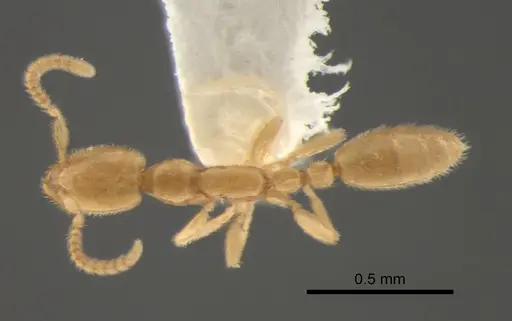
CASENT0902777
View on AntWeb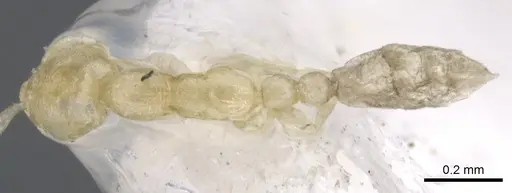
Literature
Loading...Loading products...