

Leptanilla kubotai
- Scientific Name
- Leptanilla kubotai
- Tribe
- Leptanillini
- Subfamily
- Leptanillinae
- Author
- Baroni Urbani, 1977
- Distribution
- Found in 1 countries
Leptanilla kubotai Overview
Leptanilla kubotai is an ant species of the genus Leptanilla. It is primarily documented in 1 countries , including Japan. Detailed taxonomic data and occurrence records can be further explored via authoritative databases such as AntWeb or the Global Biodiversity Information Facility (GBIF).
Leptanilla kubotai
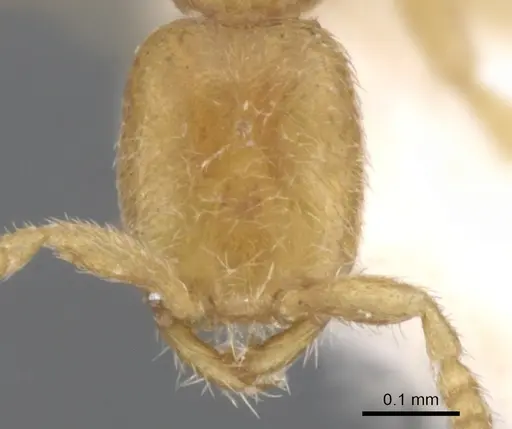
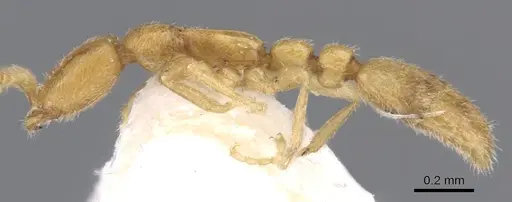
Leptanilla kubotai is one of the rarest and most unusual ant species in Japan. These tiny ants measure just 1.6mm for workers, making them the largest Leptanilla species in Japan, while queens reach 2.6mm [1]. They have a distinctive light yellow body color and 3-toothed mandibles [2]. Found only on Shikoku Island in Kochi Prefecture, these ants live in small soil cavities deep underground, typically 15-30cm below the surface in well-compacted, moist soil within evergreen broad-leaved forests [2][1]. What makes this species extraordinary is its specialized diet, it exclusively hunts and feeds on geophilomorph centipedes, using potent stingers to paralyze prey before carrying it back to feed larvae [1].
Quick Summary
- Difficulty: Expert
- Origin & Habitat: Shikoku Island, Japan, evergreen broad-leaved forests with well-compacted, moist soil [2][1]
- Colony Type: Single-queen colonies (monogyne) with documented ergatoid replacement reproductives. Colonies contain one dichthadiiform queen and typically 90-450+ workers [2][1].
- Colony: Monogyne
- Size & Growth:
- Queen: 2.6 mm [1]
- Worker: 1.6 mm [1]
- Colony: Up to 453+ workers documented [1]
- Growth: Slow, no pupae observed in study colonies, suggesting long development [1]
- Development: Unknown, not directly studied. Based on related Leptanilla species and lack of pupae in study colonies, development likely takes several months [1][2] (Egg production appears synchronized with larval development, similar to Leptanilla japonica [2]. Larvae are highly mobile and can feed themselves on prey.)
- Antkeeping:
- Temperature: Keep around 20-24°C. This species inhabits temperate forest floor in Japan, so moderate temperatures are appropriate. A slight gradient allows ants to self-regulate.
- Humidity: Requires high humidity, nest in well-compacted, moist soil. Keep substrate consistently damp but not waterlogged. The natural habitat is moist forest soil 15-30cm deep [1].
- Diapause: Likely required. As a temperate Japanese species, expect a winter rest period around 10-15°C for 2-3 months during winter months.
- Nesting: Deep soil nests are essential, 15-30cm depth in nature. A naturalistic setup with deep, compact soil or a custom deep formicarium works best. They need tight chambers and narrow passages scaled to their tiny 1.6mm size. Test tubes are too shallow, they require a deep soil chamber system.
- Behavior: These ants are specialized centipede predators and will ignore other prey types entirely [1]. Workers recruit in tandem lines when prey is discovered, with first attackers performing antennation to recruit nearby workers [1]. They possess potent stingers capable of paralyzing centipedes in 25-65 seconds [1]. The queen has unusual behaviors, she remains on the larval pile, only moving to defecate or perform larval hemolymph feeding, and her gaster pulsates at regular intervals [1]. Escape risk is moderate due to their tiny size, but they are not strong climbers. They are docile toward keepers and rarely show aggression outside of hunting.
- Common Issues: specialized diet makes feeding extremely difficult, they only accept live geophilomorph centipedes, deep nesting requirement means standard test tubes and shallow formicariums are unsuitable, slow growth and long development may frustrate beginners, queen requires larval hemolymph feeding which is unusual husbandry, tiny 1.6mm size requires fine mesh barriers to prevent escapes
Housing and Nesting
Leptanilla kubotai presents unique housing challenges due to their specific natural history. In the wild, they nest 15-30cm deep in well-compacted, moist soil within evergreen broad-leaved forests, typically under stones [2][1]. Standard ant-keeping setups like test tubes and shallow formicariums will not work, they need a deep soil chamber system that mimics their natural underground nests. A naturalistic setup with a deep soil layer (at least 20cm) in a terrarium-style enclosure works best. The substrate should be well-compacted and kept consistently moist but never waterlogged. Because workers are only 1.6mm, the nest chambers should be small and tight-fitting. Escape prevention is important, use fine mesh barriers and ensure all connections are sealed, as these tiny ants can squeeze through surprisingly small gaps.
Feeding and Diet - The Centipede Challenge
This is the most critical and challenging aspect of keeping Leptanilla kubotai. Research clearly shows they are obligate specialists on geophilomorph centipedes, workers did not attempt to touch, bite, or sting any other prey types in controlled tests [1]. When presented with centipedes, foraging workers promptly stung them, recruiting others through antennation behavior. Prey is paralyzed in 25-65 seconds, then carried to the brood chamber by 5-10 workers where it's chewed open for larvae to feed on [1]. For keepers, this means you must be able to provide a steady supply of small live centipedes. Other ant species' food (sugar water, mealworms, fruit flies) will be completely ignored. This specialized diet makes this species suitable only for experienced keepers who can reliably source live centipede prey.
Queen Behavior and Colony Dynamics
The queen of Leptanilla kubotai exhibits fascinating and unusual behaviors. She is dichthadiiform, meaning she has a massively enlarged gaster for egg production, with 88 ovarioles total [1]. Unlike most ants, she does not become physogastric (egg-bound) during the study period and egg production appears synchronized with larval development [2][1]. Most remarkably, the queen performs larval hemolymph feeding (LHF), she pinches larvae with her mandibles to access their hemolymph, with an average duration of 29 seconds per feeding event [1]. She remains on the larval pile almost constantly, only descending to defecate or perform LHF. The queen's gaster pulsates at regular intervals of about 12.5 seconds [1]. She never grooms workers and trophallaxis (mouth-to-mouth food sharing) has never been observed, she only receives allo-grooming from workers [1]. This unusual queen behavior means the colony is highly dependent on larvae for the queen's nutrition.
Larval Development and Behavior
Leptanilla kubotai larvae are remarkably mobile and active compared to most ant species. They possess specialized structures including a pair of hemolymph feeding taps (clogged with hemolymph), a ventral hooked claw on the prothorax for being carried by workers, and rows of teeth on external mandible margins [1]. In the absence of prey, larvae form a single flat-topped pile. When prey becomes available, larvae show remarkable mobility, moving over 5mm on their own to reach and feed on prey [1]. They insert their heads into wounds made by workers and feed on soft tissues. Workers carry larvae by connecting their mouthparts to the ventral hooked claw on the larval prothorax, not using mandibles [1]. This unusual larval mobility and self-feeding behavior is quite different from most ant species where larvae are completely dependent on workers.
Temperature and Seasonal Care
As a temperate species from Shikoku Island, Japan, Leptanilla kubotai requires seasonal temperature variation. Keep the nest at moderate temperatures around 20-24°C during the active season. A heating cable on one side of the nest creates a temperature gradient allowing self-regulation. During winter (roughly November-February), a diapause period at 10-15°C is likely required, mimicking their natural seasonal cycle in Japanese forests. The colony should be kept cooler during this period with minimal disturbance. Humidity must remain high year-round, the natural habitat is consistently moist soil deep underground. Monitor substrate moisture carefully, as drying out is likely fatal for these moisture-dependent ants. [2][1]
Hunting and Recruitment Behavior
The hunting behavior of Leptanilla kubotai is a remarkable spectacle. When workers discover a centipede in the foraging area, the first attacking workers perform antennation (antenna-touching) toward nearby workers to recruit them [1]. Workers then form a line from the brood chamber to the prey, in observations,55 workers were in the arena within 10 seconds, growing to 80 workers within 30 seconds [1]. Multiple workers sting the centipede simultaneously, with paralysis achieved in 25-65 seconds depending on prey size. For a 3.5cm centipede, about 25 workers were needed to achieve complete paralysis in 35 seconds [1]. Once paralyzed,5-10 workers carry the prey into the brood chamber while the number of workers in the foraging arena drops from ~50 to ~20. This coordinated group hunting and recruitment is fascinating to observe but requires live centipede prey.
Frequently Asked Questions
Can I keep Leptanilla kubotai in a test tube?
No. Test tubes are completely unsuitable. In the wild, these ants nest 15-30cm deep in well-compacted soil. You need a deep naturalistic setup or custom deep formicarium with at least 20cm of compact, moist soil substrate.
What do Leptanilla kubotai eat?
They are obligate centipede specialists. Workers only accept live geophilomorph centipedes and will ignore all other prey. You must be able to provide a steady supply of small live centipedes, this is the biggest challenge in keeping this species.
How long until first workers appear?
The exact development timeline is unknown. Based on the lack of pupae in study colonies and related species patterns, development likely takes several months. This is a slow-growing species.
Are Leptanilla kubotai good for beginners?
No. This is an expert-level species due to their specialized centipede-only diet, deep nesting requirements, unusual queen behavior requiring larval hemolymph feeding, and slow growth. Only experienced antkeepers with access to live centipede prey should attempt this species.
Do Leptanilla kubotai queens need special care?
Yes. The queen performs larval hemolymph feeding, she feeds on hemolymph directly from larvae. She remains on the larval pile almost constantly and only moves to defecate or feed. She also has a pulsating gaster and receives allogrooming from workers but does not groom them or engage in trophallaxis.
Can I keep multiple queens together?
No. This is a monogyne (single-queen) species. Documented colonies have only one queen. Combining unrelated queens has not been studied and is not recommended.
Do Leptanilla kubotai ants sting?
Yes, they have potent stingers capable of paralyzing centipedes in 25-65 seconds. However, at 1.6mm, they are too small to penetrate human skin effectively. They are not aggressive toward keepers.
What temperature do Leptanilla kubotai need?
Keep them at moderate temperatures around 20-24°C during the active season with a slight gradient. They require a winter diapause period at 10-15°C for 2-3 months, as they are a temperate Japanese species.
How big do colonies get?
The largest documented colony had 453 workers with 663 larvae [1]. Smaller colonies with around 92 workers have also been observed. They are likely slow to reach these sizes.
Why are my Leptanilla kubotai dying?
The most likely causes are: lack of live centipede prey (they will starve despite ignoring other food), improper nesting depth (they need 15-30cm deep soil), incorrect humidity (they need consistently moist substrate), or stress from too much disturbance. This species is extremely specialized and not forgiving of husbandry errors.
References

This caresheet is licensed under CC BY-SA 4.0 .
CASENT0902776
View on AntWeb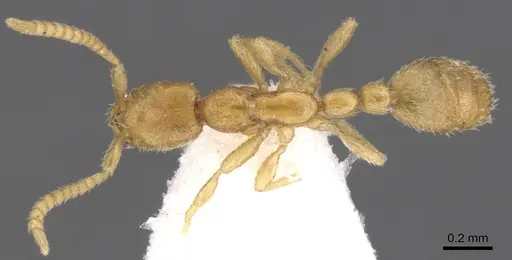
Literature
Loading...Loading products...