

Lepisiota dolabellae
- Scientific Name
- Lepisiota dolabellae
- Tribe
- Plagiolepidini
- Subfamily
- Formicinae
- Author
- Forel, 1911
- Distribution
- Found in 2 countries
Lepisiota dolabellae Overview
Lepisiota dolabellae is an ant species of the genus Lepisiota. It is primarily documented in 2 countries , including Iran, Islamic Republic of, Türkiye. Detailed taxonomic data and occurrence records can be further explored via authoritative databases such as AntWeb or the Global Biodiversity Information Facility (GBIF).
Lepisiota dolabellae
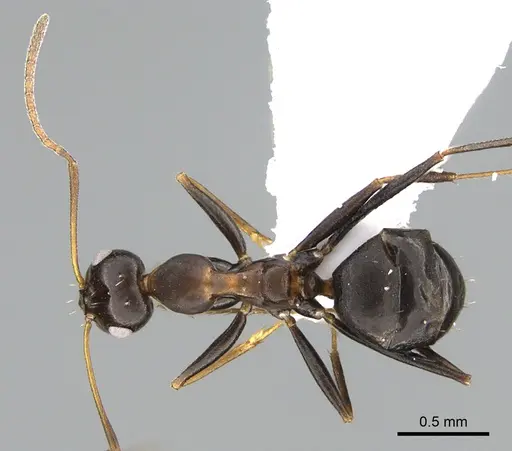
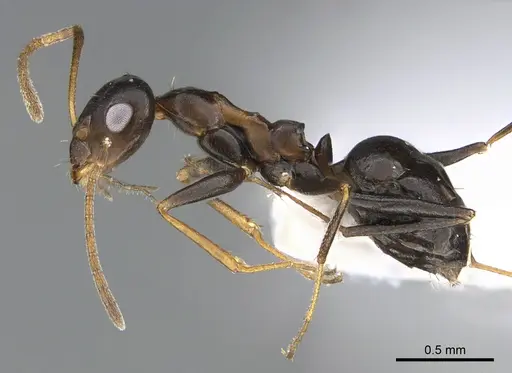
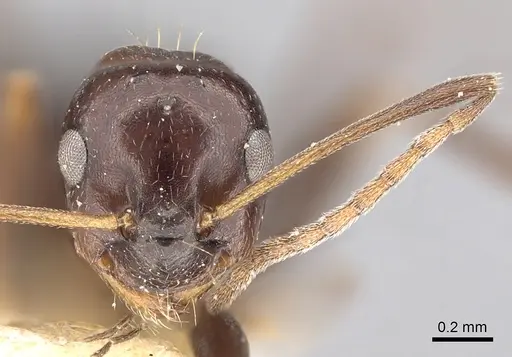
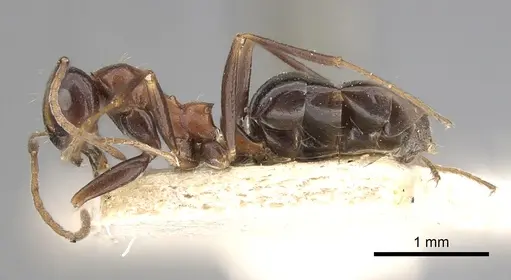
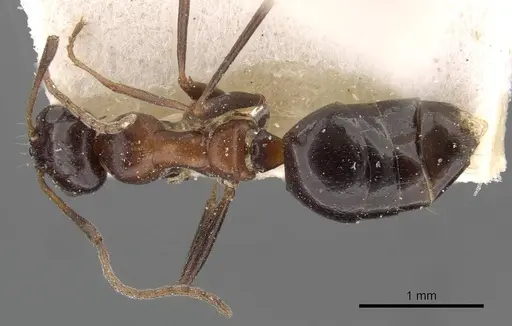
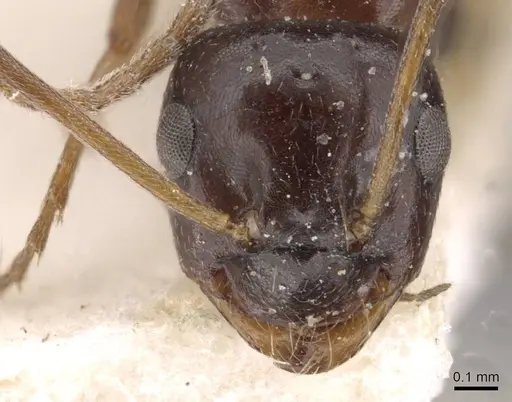
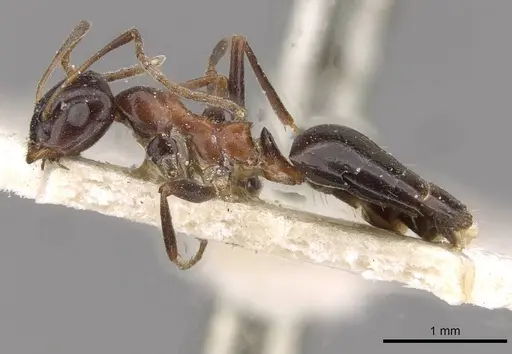
Lepisiota dolabellae is a small to medium-sized ant native to the eastern Mediterranean and Middle East. Workers have a distinctive bicolored appearance with a dark brown head, petiole, and gaster contrasting against a reddish mesosoma (the middle body section). The propodeal and petiolar spines are characteristically blunt. This species shows remarkable adaptability, being found across diverse climates from northern Iran with humid conditions to central Iran with drier conditions, and from Turkey to Israel and Saudi Arabia [1][2]. They are frequently associated with aphids, tending them for honeydew, which makes them a common sight in agricultural areas where they farm aphid colonies [3][4].
Quick Summary
- Difficulty: Medium
- Origin & Habitat: Native to the eastern Mediterranean region (Turkey, Greece, Israel) and extending into the Middle East (Iran, Saudi Arabia). Found in moderate rainfall areas and urban environments. The Crete population appears to be introduced, as it was only found in urban areas [5][1].
- Colony Type: Colony structure is not well documented in scientific literature. Based on typical Lepisiota genus patterns, likely forms single-queen colonies, though this requires confirmation.
- Size & Growth:
- Queen: Estimated 5-7mm based on genus-level inference from related Lepisiota species [2][6]
- Worker: Estimated 3-4mm based on genus patterns, direct measurements not available
- Colony: Unknown from direct studies. Likely moderate-sized colonies based on genus typical patterns
- Growth: Moderate, inferred from typical Lepisiota development patterns
- Development: Estimated 6-10 weeks based on related Formicinae species at optimal temperature [4][7] (Development time is estimated, no direct species-specific data available. Temperature-dependent, with warmer conditions generally speeding development)
- Antkeeping:
- Temperature: Keep at 22-26°C as a starting range. This species shows high adaptability to different climates in the wild, from humid northern Iran to drier central regions [8]. A gentle temperature gradient allows ants to self-regulate. Room temperature within this range is likely suitable.
- Humidity: Moderate humidity preferred. In the wild they inhabit areas with moderate rainfall, but also tolerate drier conditions [1]. Keep nest substrate lightly moist but allow some drying between waterings. Avoid both waterlogged and completely dry conditions.
- Diapause: Likely requires a winter rest period (diapause) given their Palearctic distribution. Reduce temperature to 10-15°C for 2-3 months during winter months, mimicking natural seasonal cycles [2][1].
- Nesting: Natural nesting occurs on the ground in soil. In captivity, standard test tubes work well for founding colonies. For established colonies, a Y-tong (AAC) nest or plaster nest with moderate moisture retention suits their needs. They do not require elaborate nesting structures.
- Behavior: Workers are active foragers that actively tend aphid colonies for honeydew [3][4]. Based on typical genus behavior, they are moderately aggressive when defending their territory but not particularly large or dangerous. They have a functional stinger but are too small to cause meaningful pain to humans. Escape risk is moderate, standard barrier methods (Fluon, talcum powder) are sufficient. They are ground-nesting and likely create shallow underground chambers.
- Common Issues: colonies may fail if kept too cold during winter, proper diapause at reduced temperatures is essential, overwatering can lead to mold issues in nest setups, allow substrate to dry partially between waterings, wild-caught colonies may carry parasites that can devastate captive colonies, slow growth compared to tropical species may lead to overfeeding by impatient keepers, their small size means they can escape through standard barrier setups if not careful
Natural History and Distribution
Lepisiota dolabellae originates from Turkey, which is its type locality [1]. From there, its range extends east through Iran, south to Israel and Saudi Arabia, and west to Greece (Crete) [9][4]. The species demonstrates remarkable ecological flexibility, being found in northern Iran with very humid climate and dense vegetation, in central Iran with drier conditions, and in moderate Mediterranean climates like Crete [8]. The Crete population is particularly interesting because it was only found in urban areas, suggesting it may have been accidentally introduced by human activity rather than natural dispersal [5]. In Iran, this species is one of the dominant ant species, particularly in central regions where it was collected at 12 different sites with varying climates and vegetation covers [8]. This adaptability suggests they can tolerate a range of conditions in captivity.
Appearance and Identification
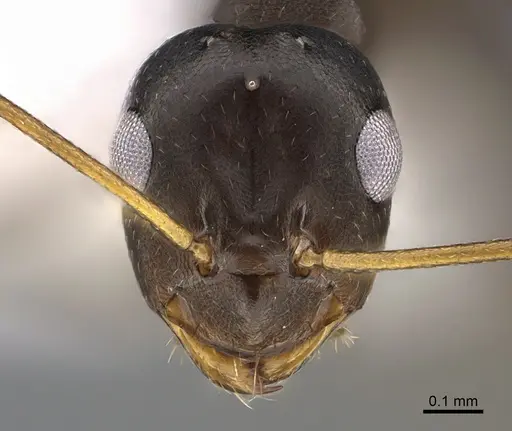
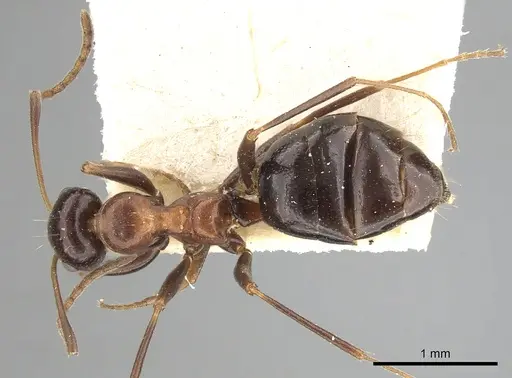
Workers of Lepisiota dolabellae have a distinctive bicolored appearance that helps distinguish them from other ants. The head, petiole (the narrow waist segment), and gaster (the abdomen) are dark brown, while the mesosoma (the middle body section including the thorax) is reddish in color [2][6]. The mesonotum (top of the middle thorax) is characteristically rectangular when viewed from above, which is a useful identification feature. The propodeal spines (spines on the rear of the mesosoma) and petiolar spines are both blunt, not sharp or pointed [2]. Workers are small, likely in the 3-4mm range based on genus patterns, though exact measurements for this species are not documented. Queens are larger, estimated at 5-7mm, which is typical for Lepisiota species.
Feeding and Diet
In the wild, Lepisiota dolabellae shows a strong association with aphids, which they tend for honeydew. They have been documented tending three aphid species: Acyrthosiphon pisum (the pea aphid), Brachycaudus tragopogonis, and Cinara sp. [3][4]. This places them in the tribe Plagiolepidini, which has the maximum number of associations with aphids among all ant subfamilies (66.84% of all aphid-ant mutualistic relationships) [3]. For captive care, offer sugar water or honey as a constant energy source, and provide protein through small insects like fruit flies, pinhead crickets, or mealworms. Their aphid-tending behavior suggests they will readily accept sugar sources. Feed protein 2-3 times per week and keep a sugar source available at all times.
Temperature and Seasonal Care
Given their broad distribution across the Palearctic region from Turkey to Iran, these ants experience seasonal temperature variations in the wild. They are found in areas with moderate rainfall in Iran and have been collected in various climates from very humid northern regions to drier central areas [1][8]. For captive care, maintain temperatures in the 22-26°C range as a baseline. Their adaptability suggests they can tolerate some variation. During winter (roughly November through February in the Northern Hemisphere), reduce temperatures to 10-15°C to provide a proper diapause period. This winter rest is important for colony health and may trigger reproductive behavior in spring. Do not keep them warm year-round as this can stress the colony.
Nesting and Housing
In the wild, Lepisiota dolabellae is a ground-nesting species found on the ground in soil [1]. They do not appear to be arboreal or to nest in wood. For captive colonies, standard test tube setups work well for founding queens and small colonies. The test tube should have a water reservoir (filled about 1/3 to 1/2) with a cotton plug creating a water source, and the ants will nest in the dry portion. For larger, established colonies, a Y-tong (AAC) nest or plaster formicarium provides appropriate housing. Keep the nest substrate lightly moist, damp but not waterlogged. They prefer tight, enclosed spaces for their nest chambers. The outworld (foraging area) should be simple with standard escape prevention barriers.
Behavior and Temperament
Workers are active foragers that readily search for food both on the ground and on vegetation, particularly when tending aphids [3][4]. They are not among the most aggressive ant species but will defend their nest and food sources if threatened. Their small size (around 3-4mm) means they pose minimal threat to humans, they have a stinger but are too small to penetrate skin meaningfully. They are not known for being particularly escape-prone compared to some tiny ant species, but standard barrier methods like Fluon on container edges or talcum powder barriers are still recommended. Workers are fast-moving and alert, making them interesting to observe. They establish well-defined foraging trails when food sources are discovered.
Frequently Asked Questions
How long does it take for Lepisiota dolabellae to produce first workers?
The exact egg-to-worker timeline has not been directly studied for this species. Based on related Formicinae ants, expect approximately 6-10 weeks from egg to first nanitic (initial small worker) at optimal temperatures around 24°C. Development is temperature-dependent, warmer conditions speed development while cooler temperatures slow it.
What do Lepisiota dolabellae ants eat?
They are generalist feeders with a strong preference for sugar. In captivity, provide constant access to sugar water or honey. For protein, offer small insects like fruit flies, small crickets, or mealworms 2-3 times per week. Their wild association with aphids confirms they readily accept honeydew, so sugar sources are essential for their diet.
Can I keep multiple Lepisiota dolabellae queens together?
The colony structure (monogyne vs polygyne) has not been directly studied for this species. Based on typical Lepisiota genus patterns, single-queen colonies are most common. Combining unrelated foundress queens is not recommended as they would likely fight, though pleometrosis (multiple queens founding together) may occur naturally in some situations.
Do Lepisiota dolabellae need hibernation?
Yes, likely required. As a Palearctic species found in Turkey, Iran, and Israel, they naturally experience winter temperatures. Provide a diapause period of 2-3 months during winter (roughly November-February) with reduced temperatures around 10-15°C. This mimics their natural seasonal cycle and is important for colony health.
Are Lepisiota dolabellae good for beginners?
They are rated as Medium difficulty. They are more adaptable than some species but require proper winter diapause and have specific humidity needs. Their aphid-tending behavior is interesting to observe. They are not as forgiving as common beginner species like Lasius niger, but not difficult once basic temperature and seasonal requirements are understood.
How big do Lepisiota dolabellae colonies get?
Exact maximum colony size is not documented in scientific literature. Based on typical Lepisiota genus patterns, colonies likely reach several hundred to a few thousand workers. They are not among the largest ant species. Growth is moderate, expect several months to a year to reach 50+ workers from a founding colony.
What temperature is best for Lepisiota dolabellae?
Aim for 22-26°C as a baseline. This species shows high adaptability in the wild, being found in both humid and drier climates across their range. A temperature gradient allowing the ants to choose their preferred zone is ideal. Room temperature within this range is typically suitable. Reduce to 10-15°C during winter diapause.
When should I move my colony to a formicarium?
Keep them in a test tube setup until the colony reaches roughly 30-50 workers or the test tube becomes crowded. This species nests in soil in the wild, so a Y-tong or plaster nest with some substrate works well. Moving too early can stress the colony. Ensure the formicarium provides appropriate moisture levels and dark nesting chambers.
Why are my Lepisiota dolabellae dying?
Common causes include: improper diapause (no winter rest or temperatures too warm), incorrect humidity (too wet causing mold or too dry causing desiccation), stress from moving/transport, parasites from wild-caught colonies, or starvation. Review temperature, humidity, and feeding schedules. Wild-caught colonies often carry parasites that can wipe out captive colonies, consider treating with anti-parasite solutions available from ant suppliers.
References

This caresheet is licensed under CC BY-SA 4.0 .
Literature
Loading...Loading products...