

Lasius wittmeri
- Scientific Name
- Lasius wittmeri
- Tribe
- Lasiini
- Subfamily
- Formicinae
- Author
- Seifert, 1992
- Distribution
- Found in 1 countries
Lasius wittmeri Overview
Lasius wittmeri is an ant species of the genus Lasius. It is primarily documented in 1 countries , including India. Detailed taxonomic data and occurrence records can be further explored via authoritative databases such as AntWeb or the Global Biodiversity Information Facility (GBIF).
Lasius wittmeri
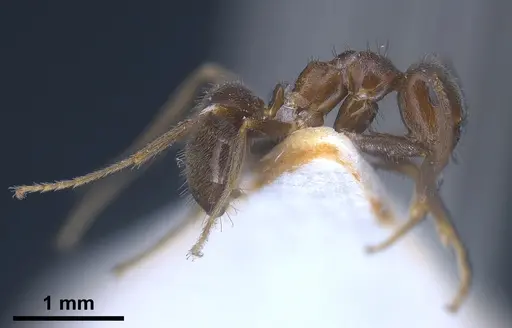
Lasius wittmeri is a small, dark brown ant species native to the high-altitude Himalayan region. Workers measure approximately 3-4mm in total length, with a distinctive long head and relatively long scapes compared to similar species. Their coloration ranges from yellowish-reddish brown to medium-dark brown depending on the population. This species is known only from two locations in the southwestern Himalayas at elevations of 2400-2650 meters, making it one of the more geographically restricted Lasius species. The species was formally described by Bernhard Seifert in 1992 and is closely related to Lasius lawarai, from which it differs in eye size, scape length, and setae characteristics. These ants inhabit montane forest zones in the Himalayas, a region with distinct seasonal temperature variations.
Quick Summary
- Difficulty: Unknown, limited data available
- Origin & Habitat: High-altitude Himalayas (2200-3100m elevation) in Kashmir region, southwestern flank at 34.90°N,73.75°E (Pakistan) and 34.04°N,75.33°E (India). Inhabits montane forest zones in the Indomalaya Region [1][2][3].
- Colony Type: Unconfirmed, likely single-queen colonies like most Lasius species, but no specific documentation exists for this species.
- Size & Growth:
- Queen: Not documented in available literature. Estimated 6-8mm based on typical Lasius queen size range.
- Worker: Approximately 3-4mm total length. Head length (HL) 868.4 ± 39.7 μm, cephalic size (CS) 830 ± 36 μm [4][2].
- Colony: Unknown, no colony size data available for this species.
- Growth: Unknown, no development timing data available for this species.
- Development: Estimated 6-10 weeks based on typical Lasius genus patterns at optimal temperature (around 20-24°C). No direct measurements exist for this species. (Development timeline is estimated from related Lasius species. Temperature-dependent development typical of temperate ants.)
- Antkeeping:
- Temperature: Keep at room temperature around 20-24°C. Given their high-altitude Himalayan origin, they likely tolerate cooler conditions than typical lowland Lasius. Provide a temperature gradient allowing workers to choose their preferred zone.
- Humidity: Standard room humidity (40-60%) should suffice. As a montane species, they likely prefer moderately humid conditions but not wet substrates. Keep nest substrate slightly moist but not waterlogged.
- Diapause: Yes, as a Himalayan temperate species, they require a winter dormancy period. Provide 3-4 months of hibernation at 5-10°C during winter months, mimicking their natural high-altitude seasonal cycle.
- Nesting: No specific nesting data exists. Based on typical Lasius behavior, they likely prefer soil-based nests with moderate moisture. Test tubes and Y-tong style nests work well for Lasius species. Provide a chambered nest with space for brood development.
- Behavior: No specific behavioral studies exist for this species. Based on genus patterns, workers are likely active foragers that tend honeydew-producing insects and scavenge small insects. They are probably not aggressive but will defend their nest. Escape risk is moderate, their small size (3-4mm) means standard escape prevention measures should be used.
- Common Issues: limited data makes care recommendations uncertain, much is inferred from genus patterns, no documented colony founding behavior exists, unknown if claustral or semi-claustral, hibernation requirements are assumed but not specifically documented for this species, no information on queen founding success rates or typical colony founding duration, diet preferences are not documented, must rely on typical Lasius feeding patterns
Species Overview and Identification
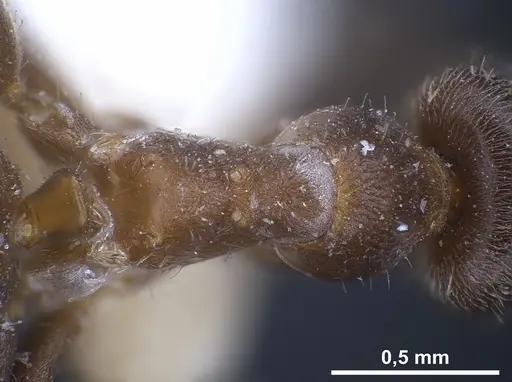
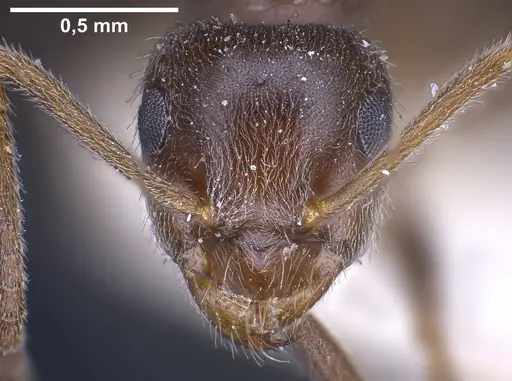
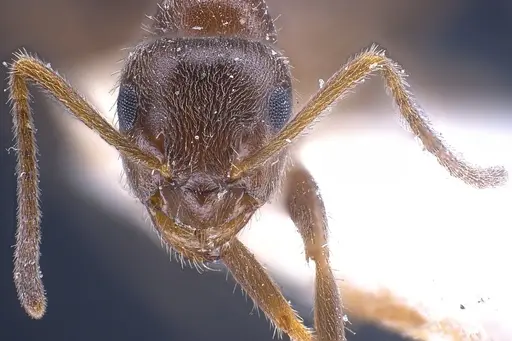
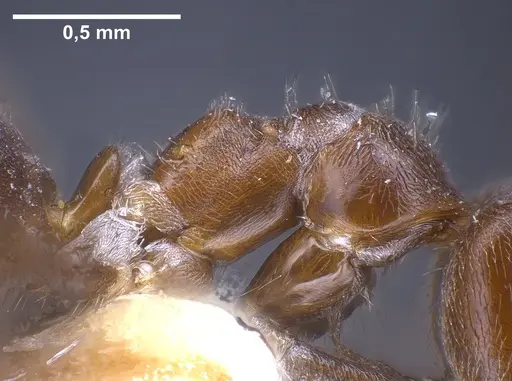
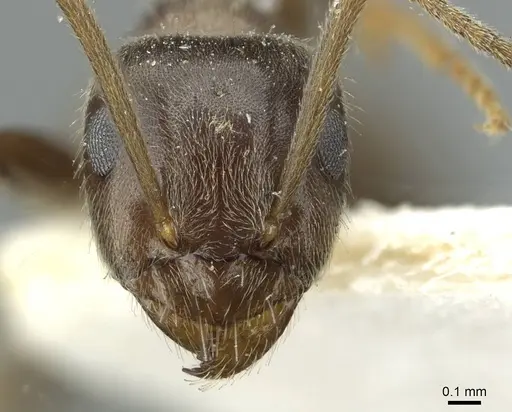
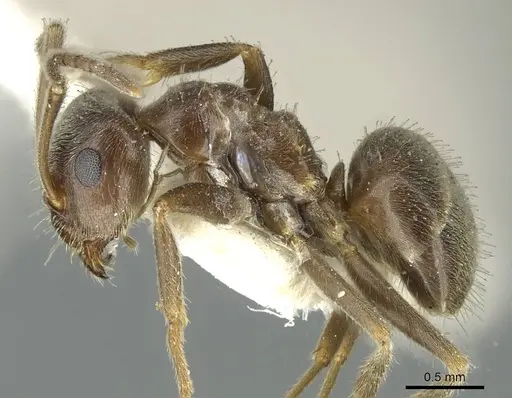
Lasius wittmeri is a small ant species described by Seifert in 1992 from the Himalayan region. Workers are approximately 3-4mm in length with a distinctive long head (HL/HW ratio of 1.097) and relatively long scapes (SL/HL of 0.944). The species can be identified by its larger eyes compared to the similar Lasius lawarai, smaller postocular index, longer scape, and the presence of distinct erect to suberect setae on the hind tibia that are clearly differentiated from neighboring pubescence hairs. Coloration varies from concolorous yellowish-reddish brown in some populations to medium-dark brown with yellowish tinges on the head and mesosoma in others. The posteroventral sides of the pronotum are notably without pubescence and appear brilliantly shining. This species is known only from high-altitude sites in the Kashmir region of the Himalayas, making it one of the more range-restricted Lasius species in Asia. [4][2][3]
Natural Habitat and Distribution
Lasius wittmeri is endemic to the southwestern Himalayas, known from just two collection sites at elevations between 2400-2650 meters above sea level. One population occurs in the Naran region of Pakistan's Kagan Valley at approximately 2400m elevation, while the other is found near Pahalgam in Jammu & Kashmir, India at 2650m elevation. The overall altitudinal range documented is 2200-3100m. This high-altitude montane distribution suggests the species is adapted to cooler temperatures and seasonal weather patterns typical of Himalayan forest zones. The region experiences distinct seasons with cold winters and moderate summers, which likely influences their annual activity cycle and hibernation requirements. [4][1][2][3]
Housing and Nesting
Since no specific nesting data exists for Lasius wittmeri, housing recommendations must be based on typical Lasius genus preferences. These ants do well in standard test tube setups for founding colonies, transitioning to Y-tong or formicarium nests as the colony grows. Provide a nest chamber sized appropriately for their small worker size (3-4mm). The nest should have a water reservoir to maintain moderate humidity, but avoid overly wet conditions. A small outworld for foraging and feeding will complete the setup. Because of their small size, use standard escape prevention measures, while not as tiny as some species, they can still escape through small gaps.
Temperature and Seasonal Care
Based on their high-altitude Himalayan origin, Lasius wittmeri likely prefers cooler temperatures than many lowland Lasius species. Keep the nest at room temperature (20-24°C) with a slight gradient if possible. During the active season, normal room temperature is likely suitable. As a temperate Himalayan species, they require an annual hibernation period. Provide 3-4 months of cold dormancy at 5-10°C during winter months (typically November through February in the Northern Hemisphere). This hibernation period is essential for colony health and likely triggers reproductive cycles. Do not attempt to keep them active year-round. [1]
Feeding and Diet
No specific dietary studies exist for Lasius wittmeri. Based on typical Lasius behavior, they likely feed on honeydew from aphids and scale insects, and supplement their diet with small insects and arthropods. In captivity, offer sugar water or honey water as a constant energy source, along with small protein sources like fruit flies, small mealworms, or other appropriately-sized insects. Feed protein sources 2-3 times per week, and replace uneaten food within 24-48 hours to prevent mold. Fresh water should always be available.
Colony Development and Growth
No specific development data exists for Lasius wittmeri. Based on typical Lasius genus patterns, claustral founding is expected, the queen seals herself in a chamber and raises the first brood alone using stored fat reserves. First workers (nanitics) typically emerge 6-10 weeks after founding, depending on temperature. Development is temperature-dependent, with cooler temperatures slowing development. The colony will grow gradually through the first year, potentially reaching several dozen workers by the end of the first season. As a high-altitude species, growth rates may be slower than lowland relatives due to the cooler natural conditions.
Frequently Asked Questions
How long does it take for Lasius wittmeri to produce first workers?
The exact timeline is not documented for this species. Based on typical Lasius development patterns, expect 6-10 weeks from egg to first worker at optimal room temperature (around 20-24°C). Cooler temperatures will slow development.
What temperature is best for Lasius wittmeri?
Keep them at room temperature around 20-24°C. As a high-altitude Himalayan species, they likely tolerate cooler conditions than typical lowland Lasius. A temperature gradient allowing workers to choose their preferred zone is ideal.
Do Lasius wittmeri need hibernation?
Yes, hibernation is likely required. As a Himalayan species from 2200-3100m elevation, they are adapted to distinct seasonal cycles. Provide 3-4 months of cold dormancy at 5-10°C during winter.
What do Lasius wittmeri eat?
No specific dietary data exists, but they likely accept standard Lasius fare: sugar water or honey water, plus small insects like fruit flies or small mealworms. Offer protein 2-3 times weekly and sugar constantly.
How big do Lasius wittmeri colonies get?
Colony size is not documented for this species. Based on typical Lasius patterns, colonies likely reach several hundred to a few thousand workers over several years.
Is Lasius wittmeri suitable for beginners?
This species is not well-documented in antkeeping, making it a poor choice for beginners. Limited care information exists, and much must be inferred from genus patterns. Consider starting with more established species like Lasius niger or Lasius flavus.
Can I keep multiple Lasius wittmeri queens together?
No documentation exists for multi-queen founding in this species. Based on typical Lasius behavior, single-queen colonies are most likely. Do not attempt to combine unrelated foundress queens.
What is the queen size of Lasius wittmeri?
Queen measurements are not documented in available literature. Based on typical Lasius queen size range, they are likely 6-8mm.
References

This caresheet is licensed under CC BY-SA 4.0 .
ANTWEB1041278
View on AntWeb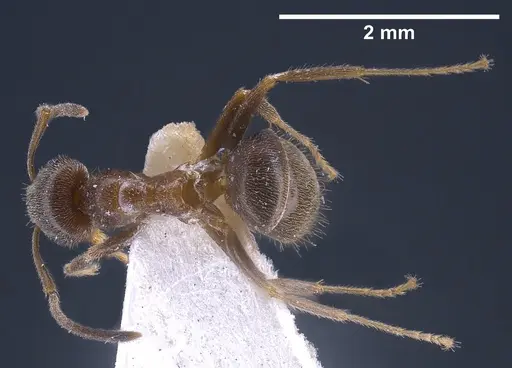
CASENT0912298
View on AntWeb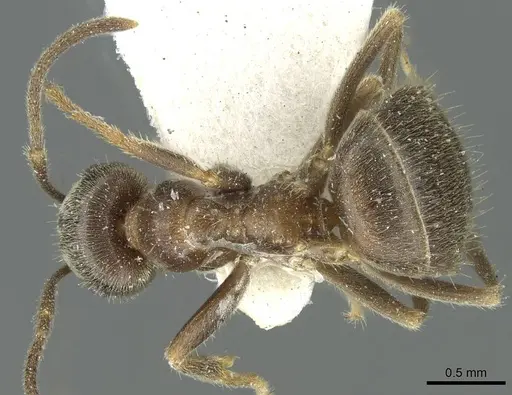
Literature
Loading...Loading products...