

Lasius nipponensis
- Scientific Name
- Lasius nipponensis
- Tribe
- Lasiini
- Subfamily
- Formicinae
- Author
- Forel, 1912
- Distribution
- Found in 1 countries
Lasius nipponensis Overview
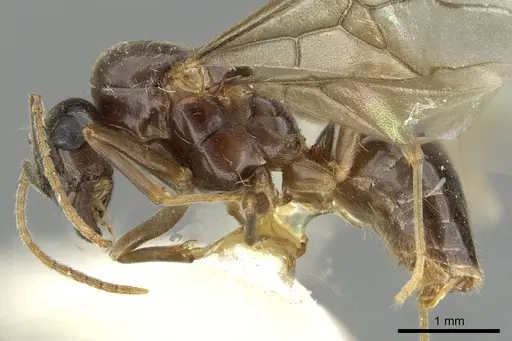
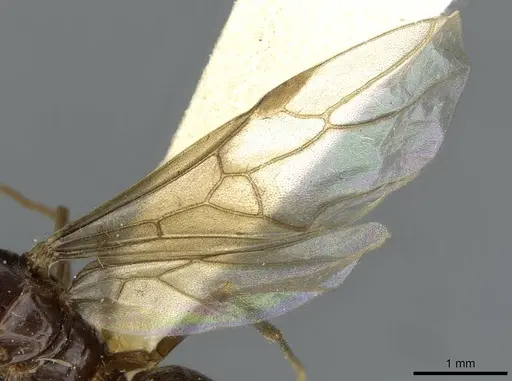
Lasius nipponensis is an ant species of the genus Lasius. It is primarily documented in 1 countries , including Japan. Detailed taxonomic data and occurrence records can be further explored via authoritative databases such as AntWeb or the Global Biodiversity Information Facility (GBIF).
Lasius nipponensis
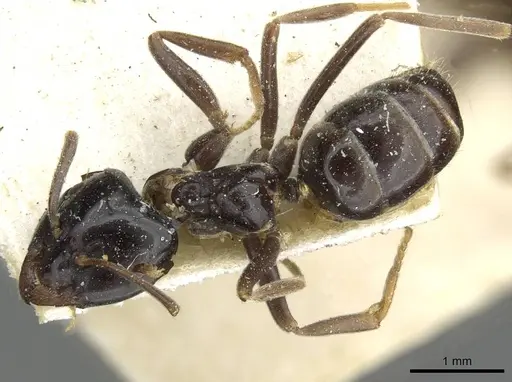
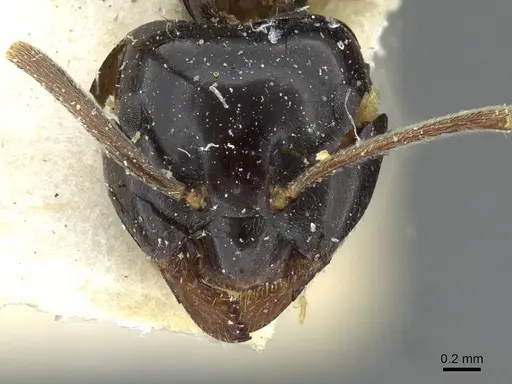
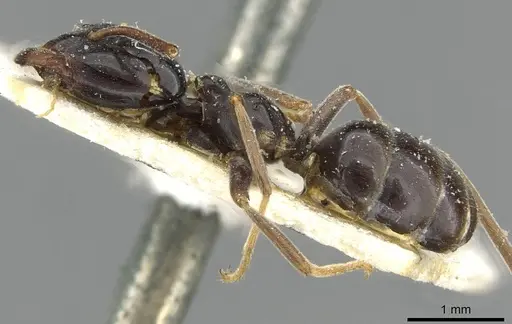
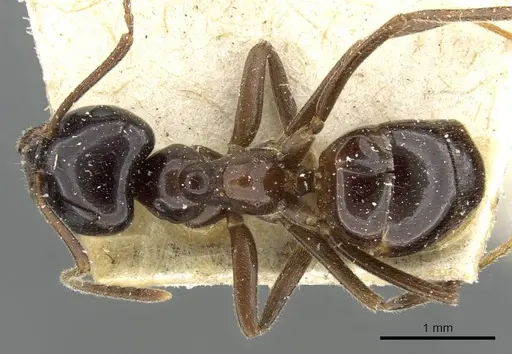
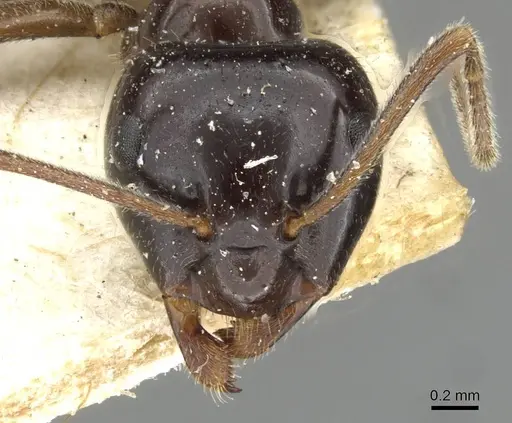
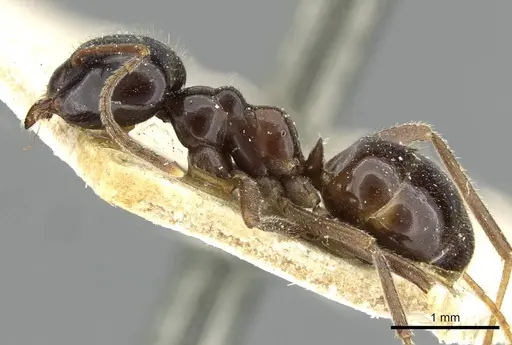
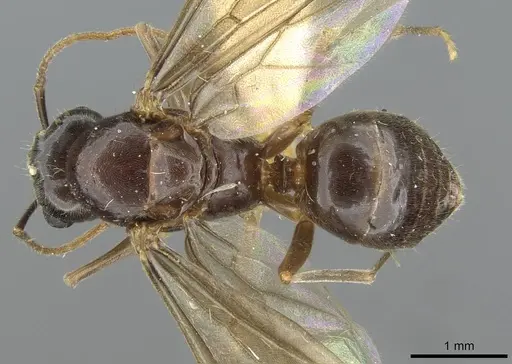
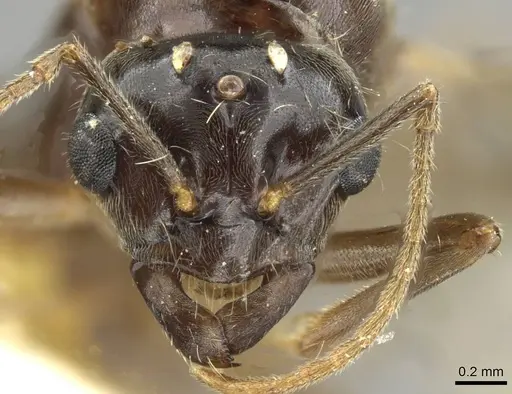
Lasius nipponensis is a small to medium-sized ant native to East Asia, recognizable by its jet black coloration and distinctive petiole shape. Workers measure 4-5mm with a characteristic inverted U-shaped petiolar profile and a median notch on the dorsal margin when viewed from above [1]. This species belongs to the Dendrolasius subgenus within the Lasius genus and is found across Japan (Hokkaido, Honshu, Shikoku), the Korean Peninsula, Russian Far East, Taiwan, and southern China [2][3].
What makes this species particularly interesting is its lifestyle as a temporary social parasite. Unlike most ants that found colonies independently, Lasius nipponensis queens must invade and parasitize colonies of other Lasius species (specifically those in the subgenus Chthonolasius) to establish their own colonies [1]. This means you cannot start a colony from a lone queen, you will need a host colony to introduce her to.
Quick Summary
- Difficulty: Expert
- Origin & Habitat: Native to East Asia including Japan, Korean Peninsula, Russian Far East, Taiwan, and southern China. Found in forests and urban areas where host Lasius species are present [2][3].
- Colony Type: Temporary social parasite, queens must invade and kill the queen of host Lasius (subgenus Chthonolasius) colonies to establish their own. The parasite queen uses host workers to raise her first brood until her own workers emerge.
- Colony: Monogyne
- Queen: Socially parasitic, Temporary parasitic
- Size & Growth:
- Queen: Estimated 6-8mm based on related Lasius species
- Worker: 4-5mm [1]
- Colony: Unknown for this species, but likely similar to related Lasius fuliginosus which reaches several thousand workers
- Growth: Moderate, depends on host colony integration
- Development: Unknown for this species, estimated 6-10 weeks based on related Lasius species at optimal temperature (Development occurs within the host colony after the parasite queen kills the host queen)
- Antkeeping:
- Temperature: Keep at room temperature around 20-24°C. Avoid temperature extremes as this species is adapted to temperate conditions.
- Humidity: Standard ant keeping humidity, moderate levels around 50-60%. They do well in standard test tube or formicarium setups.
- Diapause: Yes, this species likely requires a winter dormancy period similar to other Lasius species in temperate regions. Reduce temperature to 5-10°C for 2-3 months during winter.
- Nesting: This is a parasitic species, you cannot keep it in a standard setup. You need a host colony of Lasius species from the Chthonolasius subgenus (such as Lasius japonicus or related species). The parasite queen must be introduced to an established host colony.
- Behavior: Workers are jet black and relatively active. They are known to tend aphids on trees in their native range, particularly in the Kanto district of Japan [1]. As a temporary social parasite, the colony dynamics are complex, the parasite queen takes over the host colony. Workers are not particularly aggressive but the colony structure is unique. Escape risk is moderate, standard barrier methods work well for 4-5mm ants.
- Common Issues: The biggest challenge is obtaining a suitable host colony, you need Lasius species from the Chthonolasius subgenus, Parasite queen introduction can fail, host workers may reject or kill the invading queen, Colony failure is common if the host colony is too small or unhealthy, This species cannot be started from a founding queen alone like most ants, Limited availability makes this species difficult for most antkeepers
Understanding Temporary Social Parasitism
Lasius nipponensis is a temporary social parasite, which means its entire colony establishment strategy is fundamentally different from most ant species. Unlike typical ants where a queen seals herself in a chamber and raises her first workers alone (claustral founding), Lasius nipponensis queens cannot found colonies independently. Instead, a newly mated queen must find and invade an established colony of a host Lasius species from the subgenus Chthonolasius. She enters the host nest, locates the host queen, and kills her. The host workers, now without their own queen, accept the parasite queen and raise her brood. Over time, the parasite queen's own workers replace the host workers, and the colony becomes independent [1].
This has massive implications for antkeeping: you cannot start a Lasius nipponensis colony from a single queen like you would with most species. You absolutely need a host colony to make this work. The host colony should be from a Lasius species in the Chthonolasius subgenus, in Japan, this typically means Lasius japonicus or similar species. Introducing a parasite queen to a host colony is delicate and often fails, even for experienced keepers.
Housing and Colony Establishment
Housing Lasius nipponensis is challenging because you need two things simultaneously: a healthy host colony and a parasite queen to introduce to it. The host colony should be established with a healthy queen and good worker population, at least 50-100 workers gives the best chance of acceptance. The parasite queen introduction should be done carefully, typically by placing her near the colony's entrance or in a introduction setup where workers can gradually acclimate to her presence.
Once established, the colony can be kept in standard Lasius setups, test tubes for founding, transitioning to formicariums as the colony grows. However, remember that the colony will initially consist of host workers, and over time these will be replaced by the parasite species' workers. This transition can take many months. The nest should provide moderate humidity and be kept at room temperature.
Feeding and Nutrition
In their natural habitat, Lasius nipponensis workers frequently tend aphids on trees in the Kanto district of Japan [1]. This suggests they have a sweet tooth and will readily consume honeydew, the sugary liquid aphids produce. In captivity, offer sugar water or honey regularly, along with protein sources like small insects.
The feeding requirements are otherwise similar to other Lasius species, they need a balance of sugars for energy and protein for brood development. Since they integrate with a host colony initially, they will benefit from whatever the host colony was already accepting. Offer a varied diet and remove uneaten food promptly to prevent mold.
Seasonal Care and Overwintering
As a species native to temperate regions including Japan, Korea, and Russian Far East, Lasius nipponensis requires a winter dormancy period. During autumn, reduce the temperature gradually to around 5-10°C and maintain this for 2-3 months. This mimics the natural seasonal cycle and is important for colony health and reproduction.
Nuptial flights occur during June and July in their native range [1], so if you maintain a healthy colony through proper seasonal care, you may observe mating flights during these months. The colony should be kept at normal room temperature (around 20-24°C) during the active season, with the winter cooling period from roughly November through February depending on your location.
References

This caresheet is licensed under CC BY-SA 4.0 .
Literature
Loading...Loading products...