

Lasius illyricus
- Scientific Name
- Lasius illyricus
- Tribe
- Lasiini
- Subfamily
- Formicinae
- Author
- Zimmermann, 1935
- Distribution
- Found in 9 countries
Lasius illyricus Overview
Lasius illyricus is an ant species of the genus Lasius. It is primarily documented in 9 countries , including Azerbaijan, Bulgaria, Greece. Detailed taxonomic data and occurrence records can be further explored via authoritative databases such as AntWeb or the Global Biodiversity Information Facility (GBIF).
Lasius illyricus
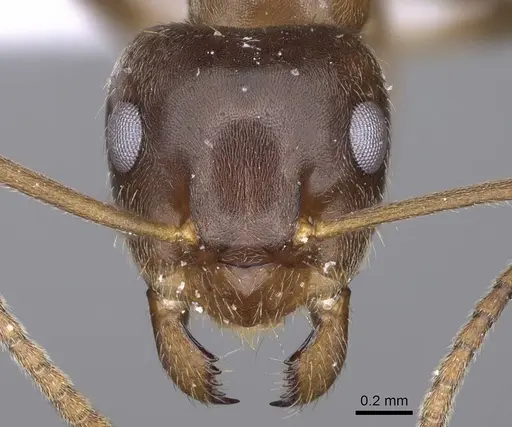
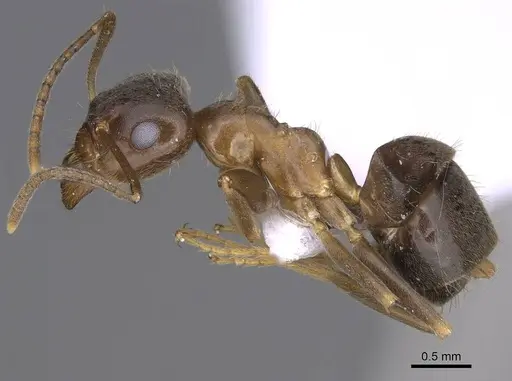
Lasius illyricus is a large, bicolored ant native to the eastern Mediterranean and surrounding regions. Workers are relatively large for a Lasius species, measuring around 4-5mm, with a distinctive color pattern featuring a reddish or yellowish-red thorax that contrasts with the darker head and abdomen [1][2]. This species was previously considered a synonym of the closely related Lasius emarginatus but was restored as a valid species in 2013 [1]. It nests in soil, under stones, in rotten logs, or under moss, often building a brown carton structure in the nest core [2]. The species shows two distinct morphotypes in Greece, a larger, bicolored form preferring warmer, open forest areas and a smaller, uniformly brown form found in darker, more humid microhabitats like deep gorges and stream banks [3]. Lasius illyricus is more flexible in its habitat choices than L. emarginatus, occurring in everything from deciduous forests to olive plantations and urban gardens [1][2].
Quick Summary
- Difficulty: Easy
- Origin & Habitat: Eastern Mediterranean species found across the Balkans, southern Ukraine, Caucasus, and Asia Minor. It prefers warm deciduous forests and mediterranean bushes but is more adaptable than its close relative L. emarginatus, also inhabiting fir forests, mountain pastures, stream valleys, and urban areas [1][2][4]. Altitudinal range extends from sea level up to 1900m [2].
- Colony Type: Single-queen colonies (monogyne). Like other Lasius species, founding is claustral, the queen seals herself in and raises the first workers alone using stored fat reserves [5].
- Colony: Monogyne
- Founding: Claustral
- Size & Growth:
- Queen: Approximately 7-9mm, queens are significantly larger than workers [1][6]
- Worker: Approximately 4-5mm (CS ~991µm) [2][1]
- Colony: Colonies can reach several thousand workers based on related Lasius species patterns [3]
- Growth: Moderate, typical for Lasius genus
- Development: Approximately 6-8 weeks at optimal temperature based on typical Lasius development (Development time follows standard Lasius patterns, claustral founding means queens raise first brood without foraging)
- Antkeeping:
- Temperature: Keep at room temperature, ideally 20-24°C. This is a Mediterranean species that tolerates warmth but does well at standard indoor temperatures. A slight gradient allowing warmer and cooler areas is beneficial [2][4].
- Humidity: Moderate humidity around 50-60%. Provide a water tube as a moisture source. The species is adaptable, morphotype 2 naturally occurs in more humid microhabitats while morphotype 1 prefers drier conditions [3].
- Diapause: Yes, as a temperate/Mediterranean species, colonies benefit from a winter rest period of 8-12 weeks at 5-10°C. This mimics natural seasonal cycles and supports colony health.
- Nesting: Y-tong (acrylic) nests or plaster nests work well. In the wild, they nest under stones, in soil, and in rotten logs with carton material [2]. Provide a nest chamber with some soil or substrate that can hold slight moisture. Test tubes with a dirt setup are also suitable for founding colonies.
- Behavior: Generally calm and non-aggressive. Workers are active foragers that readily accept sugar water and protein foods. They lack the peculiar odor characteristic of L. emarginatus [2]. Escape risk is moderate, standard test tube setups and formicarium barriers are sufficient. They are not known to be particularly escape-prone compared to other Lasius species.
- Common Issues: colonies may fail if kept too dry, provide consistent moisture access, winter diapause is important for long-term colony health, don't skip the hibernation period, wild-caught colonies may contain parasites that can devastate captive colonies, confusion with L. emarginatus is common, verify species identification using scape setation (L. illyricus has fewer erect setae), founding colonies are vulnerable, ensure queen is undisturbed during claustral period
Housing and Nest Setup
Lasius illyricus adapts well to various captive setups. For founding colonies, a simple test tube setup with a water reservoir works perfectly, the claustral queen will seal herself in and raise her first nanitic workers without needing additional space. Once the colony reaches 20-30 workers, you can transition to a Y-tong (acrylic) nest or a plaster formicarium. The species naturally builds carton structures in the wild, so they do well with some soil or substrate in the outworld that they can manipulate. Provide a water tube for humidity and ensure the nest area stays moderately moist but not waterlogged. Because they tolerate a range of conditions, you don't need elaborate humidity control, just ensure the nest material doesn't dry out completely [2][3].
Feeding and Diet
Like other Lasius species, L. illyricus is omnivorous with a strong preference for sugary liquids. Offer sugar water or honey water as a constant food source, they'll readily take it. For protein, provide small insects like fruit flies, small crickets, or mealworms. In the wild, they forage for honeydew from aphids and tend scale insects, so sugar sources are particularly important. They are not specialized predators, so standard ant foods work well. Feed protein 2-3 times per week and keep sugar water available at all times. Remove uneaten prey after 24 hours to prevent mold.
Temperature and Seasonal Care
This Mediterranean species does well at standard room temperature, ideally between 20-24°C. They can tolerate warmer conditions (up to around 28°C) but growth slows at temperature extremes. Unlike some tropical ants, they don't require heating cables, room temperature is usually sufficient. However, a gentle temperature gradient allowing workers to choose their preferred warmth can encourage activity. During winter, provide an 8-12 week diapause period at 5-10°C, such as in an unheated garage or basement. This mimics their natural seasonal cycle and helps maintain colony health long-term. Do not feed during diapause, the colony will be mostly dormant [2][4].
Colony Development and Growth
Lasius illyricus follows typical claustral founding, the queen seals herself in a small chamber and survives entirely on her stored fat reserves while raising the first brood. This founding phase typically takes 4-6 weeks before eggs appear, followed by 6-8 weeks for eggs to develop into workers at optimal temperature. The first workers (nanitics) are usually smaller than mature workers but will quickly begin foraging once the colony is established. Growth rate is moderate, expect the colony to reach a few hundred workers within the first year under good conditions. Unlike some ant species, all Lasius species on Crete (including this one) show independent colony foundation, meaning each new colony starts from a single founding queen rather than colony budding [5].
Identifying Lasius illyricus
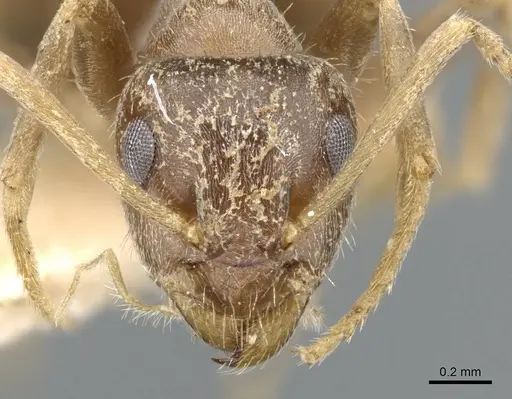
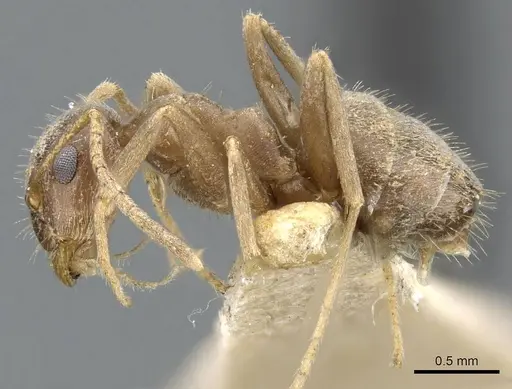
This species is frequently confused with the closely related Lasius emarginatus, but there are clear distinguishing features. L. illyricus has significantly fewer erect setae (hairs) on the scape (antenna), typically 0-3 on the anterior surface, occasionally up to 11 in large specimens, compared to 15-20 (up to 34) in L. emarginatus. The hind tibia also has fewer erect setae: 6-18 (mean 13) versus 13-27 (mean 21) in L. emarginatus [1][6]. Color-wise, L. illyricus tends to be more contrasting with a reddish thorax that is distinctly paler than the head and abdomen, similar to the light morph of L. emarginatus but often more pronounced. In Greece, two distinct morphotypes exist, a larger bicolored form and a smaller uniformly brown form [1][3].
Frequently Asked Questions
Is Lasius illyricus a good ant for beginners?
Yes, this species is beginner-friendly. It's adaptable to various conditions, tolerates standard room temperature, and isn't particularly aggressive or difficult to care for. The main requirements are providing sugar water, occasional protein, and a winter diapause period.
How long does it take for Lasius illyricus to produce first workers?
From founding, expect 6-8 weeks at optimal temperature (around 20-24°C) for eggs to develop into workers. The claustral queen seals herself in and raises the first brood alone using stored fat reserves.
Do Lasius illyricus ants need hibernation?
Yes, they benefit from an 8-12 week winter rest period at 5-10°C. This diapause mimics their natural seasonal cycle in the Mediterranean and helps maintain long-term colony health.
What do Lasius illyricus ants eat?
They readily accept sugar water or honey as a constant food source. For protein, offer small insects like fruit flies, small crickets, or mealworms. They are omnivorous like other Lasius species.
How big do Lasius illyricus colonies get?
Based on related species, colonies can reach several thousand workers over several years. They are a moderately large Lasius species with workers around 4-5mm.
Can I keep multiple Lasius illyricus queens together?
No, this is a monogyne (single-queen) species. Unlike some ants that can form multi-queen colonies, L. illyricus colonies are founded by a single queen who becomes the sole reproductive.
What's the difference between Lasius illyricus and Lasius emarginatus?
L. illyricus has fewer erect setae (hairs) on the antenna scape and hind tibia compared to L. emarginatus. It also tends to have more contrasting coloration with a reddish thorax. L. illyricus is more adaptable to different habitats and prefers more open, drier localities.
What temperature is best for Lasius illyricus?
Keep them at 20-24°C, standard room temperature works well. They can tolerate warmer conditions but growth slows at temperature extremes. No additional heating is typically required.
When should I move my colony to a formicarium?
You can keep a founding colony in a test tube setup until it reaches 30-50 workers. Once the colony outgrows the test tube or you see workers spending significant time in the outworld, transition to a Y-tong or plaster nest.
References

This caresheet is licensed under CC BY-SA 4.0 .
CASENT0905686
View on AntWeb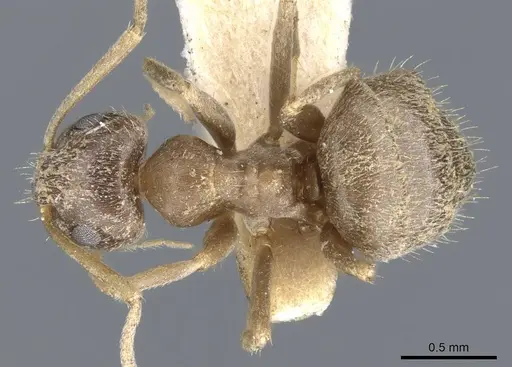
CASENT0914255
View on AntWeb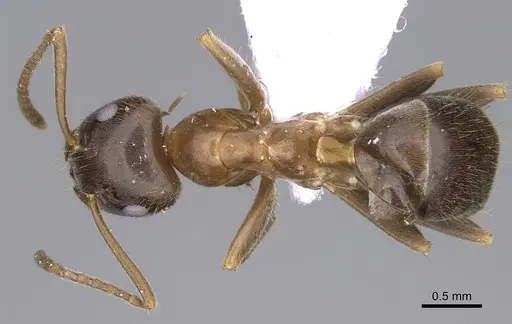
Literature
Loading...Loading products...