

Labidus curvipes
- Scientific Name
- Labidus curvipes
- Subfamily
- Dorylinae
- Author
- Emery, 1900
- Distribution
- Found in 3 countries
Labidus curvipes Overview
Labidus curvipes is an ant species of the genus Labidus. It is primarily documented in 3 countries , including Costa Rica, Nicaragua, Panama. Detailed taxonomic data and occurrence records can be further explored via authoritative databases such as AntWeb or the Global Biodiversity Information Facility (GBIF).
Labidus curvipes
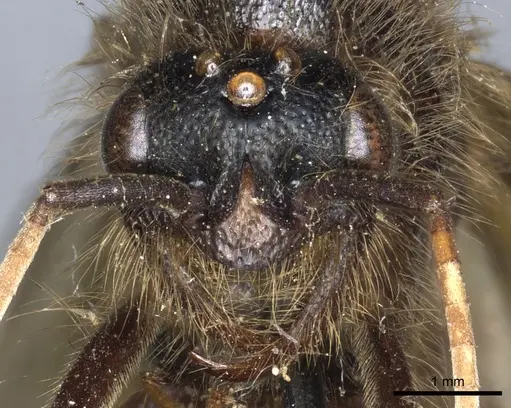
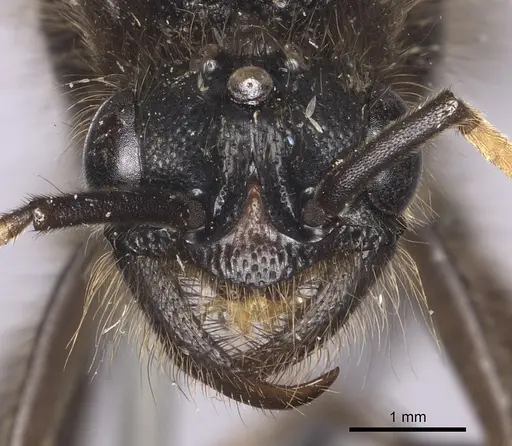
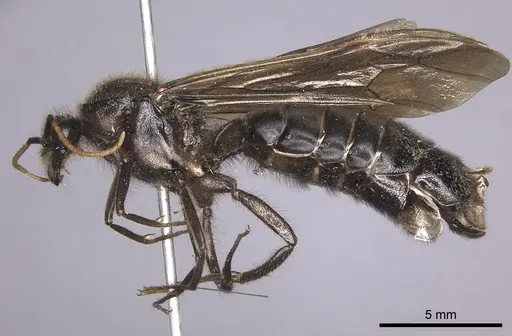
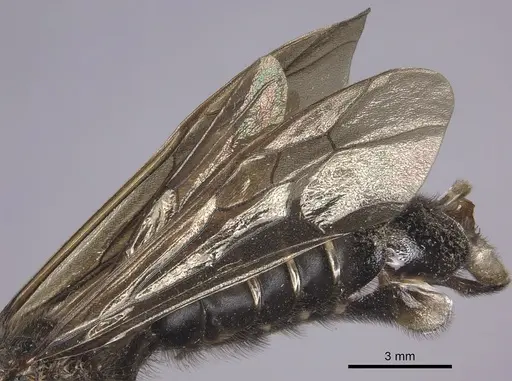
Labidus curvipes is a Neotropical army ant known only from male specimens collected in Costa Rica, Colombia (Caldas department), and Ecuador [1]. The species was originally described as Labidus curvipes by Emery in 1900,with the current classification in the genus Labidus established by Borgmeier in 1953 [1]. The male can be identified by its mandibles with an acute apex and a notably convex middle portion of the anterior clypeal margin [1]. This species represents a significant knowledge gap in ant biology, only males have ever been collected, meaning the queen caste, worker caste, and entire colony structure remain completely unknown. Based on taxonomic position, it belongs to the Dorylinae subfamily (army ants), which are typically predatory and form large colonies with complex foraging behaviors.
Quick Summary
- Difficulty: Expert
- Origin & Habitat: Neotropical region, specifically Costa Rica, Colombia (Caldas department), and Ecuador [1]. The exact habitat type is unconfirmed, but Neotropical army ants typically inhabit humid forest environments.
- Colony Type: Unknown, only males have ever been collected, making colony structure completely unconfirmed. The genus Labidus follows typical army ant patterns with single-queen colonies, but this cannot be verified for L. curvipes specifically.
- Size & Growth:
- Queen: Unknown, queens have never been described [2]
- Worker: Unknown, workers have never been described [2]
- Colony: Unknown, colony size has not been documented [2]
- Growth: Unknown
- Development: Unknown, no development data exists for this species (Development timeline cannot be estimated due to complete absence of colony observations)
- Antkeeping:
- Temperature: Unknown, no thermal studies exist for this species. Based on Neotropical distribution, likely requires warm conditions (24-28°C), but this is entirely speculative.
- Humidity: Unknown, no humidity data exists. Neotropical army ants typically require high humidity (70-80%), but this is inferred from related species.
- Diapause: Unknown, no seasonal data exists for this species
- Nesting: Unknown, natural nesting behavior has not been documented
- Behavior: Behavior is unconfirmed. As a Dorylinae member, likely exhibits typical army ant behaviors including group foraging and potential nomadism, but this is entirely inferred from genus-level patterns [2]. Escape risk cannot be assessed without worker descriptions.
- Common Issues: This species is essentially unkeepable, only males have ever been collected, meaning we don't know what the queen or workers look like, No identification guide exists for finding or collecting this species in the wild, The complete life cycle is unknown, making captive reproduction impossible, Army ant colonies have complex requirements that cannot be replicated without knowing the species-specific needs, Even if workers were found, there is no way to confirm they belong to L. curvipes without the male specimen for comparison
Why This Species Cannot Be Kept in Captivity
Labidus curvipes represents one of the most challenging cases in ant keeping because the species is known only from male specimens. The original description by Emery in 1900 was based on a single male collected in Costa Rica, and subsequent records from Colombia and Ecuador are also males [1]. This means the queen caste, worker caste, and indeed the entire colony structure remain completely unknown to science. Without workers, there is no way to identify this species in the field, you cannot collect what you cannot identify. Even if by some chance a collector found a colony, there would be no morphological characters to match workers to the known male description. This makes L. curvipes essentially unkeepable in captivity until such time as the queen and workers are discovered and described.
Taxonomic History and Nomenclature
The species was originally described as Labidus curvipes by Carlo Emery in 1900,based on a male specimen collected in Costa Rica (Chirripó, May 1896) [1]. It was later transferred to the genus Labidus by Borgmeier in 1953 [1]. The taxonomic confusion around this species is compounded by the fact that Jack Longino noted that 'by a process of elimination and geographic correspondence, Labidus curvipes, a species known only from males, must be the male of Labidus spininodis' [2]. This suggests the two names may represent the same species, with L. spininodis being the name applied to the worker caste. However, this has not been formally resolved, adding another layer of uncertainty to an already problematic species.
What We Know About the Genus Labidus
While L. curvipes specifically is poorly known, the genus Labidus provides context for what this ant might be like if workers were ever discovered. Labidus is a genus of New World army ants (subfamily Dorylinae) found throughout the Neotropics [2]. Army ants are known for their predatory lifestyle, hunting in large groups called raids, and many species exhibit cyclical colony behaviors with alternating stationary (statary) and nomadic phases. Colonies are typically large, with single queens (monogyne), and queens are claustral, they seal themselves in to found new colonies and live off stored fat until their first workers emerge. However, these are genus-level patterns and may not apply to L. curvipes specifically until the species is properly documented.
Distribution and Collection Records
Labidus curvipes has been recorded from three countries in the Neotropical region: Costa Rica (the type locality), Colombia (specifically the Caldas department), and Ecuador [1][3]. The INBio collection in Costa Rica has specimens, and the species has been included in various regional ant catalogues [2]. However, all specimens are males, and there are no worker or queen records. The exact elevational range, habitat preferences, and seasonal activity patterns remain completely unknown. This limited distribution in cloud forest regions suggests the species may have specific microhabitat requirements, but without more specimens, this remains speculative.
Frequently Asked Questions
Can I keep Labidus curvipes in captivity?
No. Labidus curvipes cannot be kept in captivity because only males have ever been collected, we do not know what the queen or workers look like, and there is no way to identify or collect this species in the field. Even if you found a colony that might be this species, you could not confirm the identification.
Why are only males known for Labidus curvipes?
This is simply a gap in scientific knowledge. Males are often more commonly collected because they are the reproductive caste that leaves the nest for mating flights, while queens and workers remain hidden within the colony. For many rare or cryptic ant species, only males are known until researchers specifically target the colony-finding stage.
What does Labidus curvipes look like?
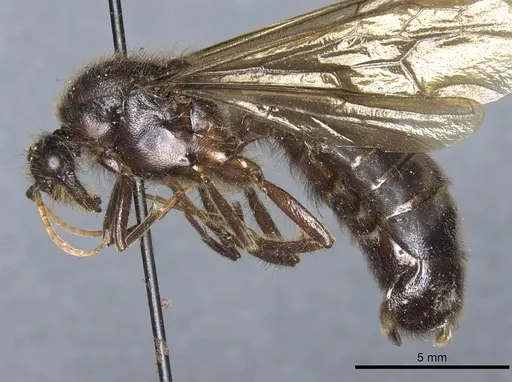
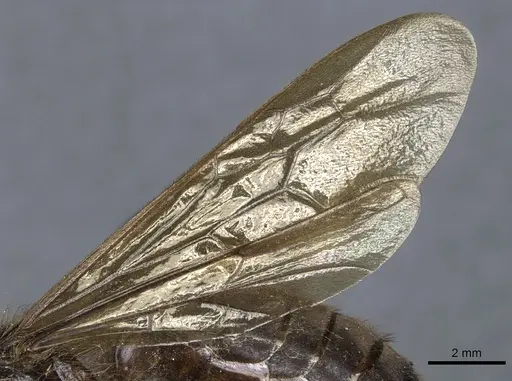
Only the male is known. The male has mandibles with an acute (sharp) apex and a notably convex middle portion of the anterior clypeal margin (the front edge of the face between the mandibles) [1]. The full measurements and coloration are documented in Borgmeier's 1955 redescription.
Is Labidus curvipes the same as Labidus spininodis?
Jack Longino suggested that through geographic correspondence and process of elimination, L. curvipes must be the male of L. spininodis [2]. However, this has not been formally resolved. If true, then L. spininodis would represent the worker/queen caste of the same species. This taxonomic uncertainty further complicates any attempt to keep or study this species.
Where does Labidus curvipes live?
The species has been recorded from Costa Rica, Colombia (Caldas department), and Ecuador [1]. Based on the limited collection data from cloud forest regions, it likely inhabits humid Neotropical forest environments, but the exact habitat requirements are unknown.
What do Labidus ants eat?
As army ants (Dorylinae), Labidus species are predatory and hunt invertebrates, particularly other ants and soft-bodied insects. However, specific diet preferences for L. curvipes are unknown since the species has never been observed in life.
How big do Labidus colonies get?
Army ant colonies are typically large, often reaching tens of thousands of workers. However, colony size for L. curvipes specifically is completely unknown since no colony has ever been documented.
Can I find Labidus curvipes in the wild?
Extremely unlikely. Even professional myrmecologists have only collected males, and without worker specimens for comparison, there is no way to identify this species in the field. The collection records are sparse and scattered across three countries.
What is the difficulty level for keeping Labidus curvipes?
Expert/Impossible. This species cannot be kept because the queen and worker castes have never been described or collected. There is no biological information available to guide captive care, and no way to reliably identify the species if you did find a colony.
References

This caresheet is licensed under CC BY-SA 4.0 .
CASENT0903723
View on AntWeb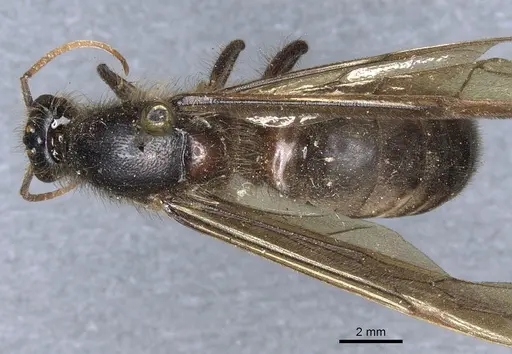
INB0003240567
View on AntWeb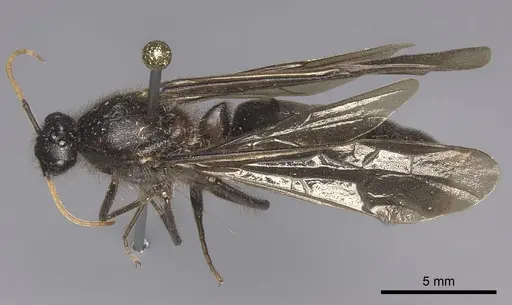
Literature
Loading...Loading products...