

Iridomyrmex gibbus
- Scientific Name
- Iridomyrmex gibbus
- Tribe
- Leptomyrmecini
- Subfamily
- Dolichoderinae
- Author
- Heterick & Shattuck, 2011
- Distribution
- Found in 1 countries
Iridomyrmex gibbus Overview
Iridomyrmex gibbus is an ant species of the genus Iridomyrmex. It is primarily documented in 1 countries , including Australia. Detailed taxonomic data and occurrence records can be further explored via authoritative databases such as AntWeb or the Global Biodiversity Information Facility (GBIF).
Iridomyrmex gibbus
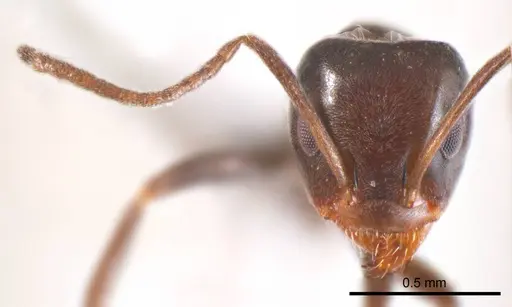
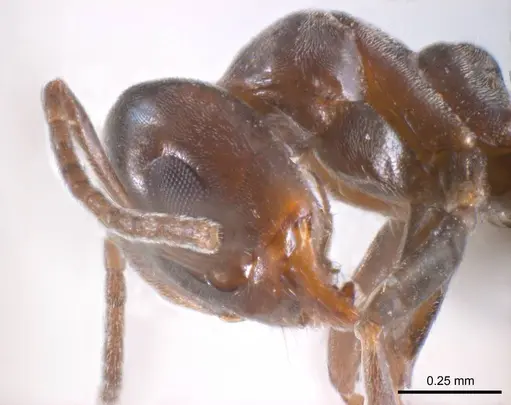
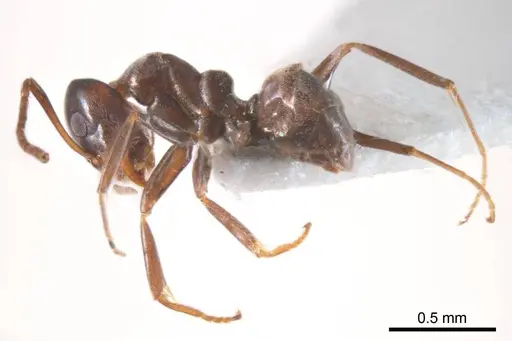
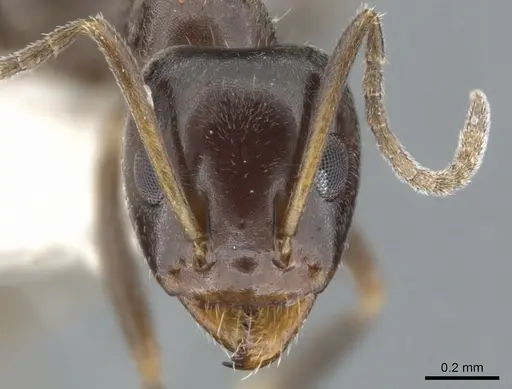
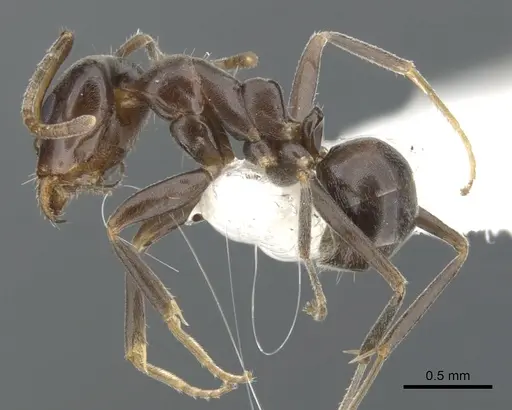
Iridomyrmex gibbus is a small, compact ant native to northern Australia. Workers measure just 0.60-0.72mm in head length, making them one of the smaller Iridomyrmex species [1]. They are uniformly dull brown in color with yellowish-brown erect setae, and get their scientific name 'gibbus' (Latin for 'humpbacked') from their distinctive humped pronotum that rises at approximately 45° before descending in a steep, symmetrical curve [2][1]. This species is easily confused with the related Iridomyrmex chasei, but can be distinguished by its less concave head margin, fewer pronotal setae (typically 6 versus 10+ in I. chasei), and consistently plain brown coloration [1].
What makes I. gibbus interesting is how recently it was described, it was formally identified as a separate species in 2011 [3]. Before that, it was lumped with I. chasei, and its true distribution is still being worked out. Records exist from Barrow Island, the Northern Territory, and Queensland, though confusion with I. chasei means the full range isn't fully mapped yet [1]. Colonies appear to be smaller than those of I. chasei, and they are ground foragers [4].
Quick Summary
- Difficulty: Unknown, likely Medium
- Origin & Habitat: Northern Australia including Barrow Island, Northern Territory, and Queensland. They are ground foragers found in arid to semi-arid regions [4][1].
- Colony Type: Colony structure is not well documented. Based on related species, likely monogyne (single queen) with smaller colony sizes than the closely related I. chasei [4].
- Size & Growth:
- Queen: Approximately 6-7mm (estimated based on genus patterns, not directly measured)
- Worker: 0.60-0.72mm head length,0.67-0.72mm total length [1]
- Colony: Likely a few hundred workers at most, colonies appear smaller than I. chasei [4]
- Growth: Unknown, likely moderate based on genus patterns
- Development: Unknown, estimated 6-10 weeks based on related Iridomyrmex species (Direct development data not available for this species. Estimates based on typical Iridomyrmex genus patterns at optimal Australian temperatures (around 25-30°C).)
- Antkeeping:
- Temperature: Likely 25-32°C based on Australian tropical distribution. Provide a warm area around 28°C with a gradient.
- Humidity: Low to moderate, arid to semi-arid species. Keep nest substrate moderately dry with a small water tube for drinking access.
- Diapause: Unlikely, Australian species from warm regions do not typically require hibernation.
- Nesting: Ground-nesting species. A naturalistic setup with soil or a Y-tong/plaster nest works well. Provide some dry areas as they prefer arid conditions.
- Behavior: Active ground foragers that search for food along the substrate surface. Likely aggressive when defending territory like other Iridomyrmex species. Escape risk is moderate due to small size, use standard barrier methods [4].
- Common Issues: colonies are small and slow to grow, beginners may lose patience, species identification is difficult, you may actually have I. chasei which has different care needs, limited availability in the antkeeping hobby since it was only described in 2011, ground-foraging behavior means they need more horizontal space than vertical nest space, wild-caught colonies may have parasites given limited captive breeding data
Nest Preferences and Housing
Iridomyrmex gibbus is a ground-nesting species that forages along the soil surface. In captivity, they do well in naturalistic setups with a soil chamber or in Y-tong/plaster nests that allow them to create their own tunnels. Since they are small ants, standard acrylic nests with appropriately sized chambers work well. The key is providing a balance of a humid nest area and a drier outworld where they can forage. A small water tube should be provided for drinking access, but avoid over-wetting the substrate since they come from arid regions of Australia. Some keepers recommend adding a layer of sand or soil at least 1-2cm deep in part of the setup to allow natural tunneling behavior.
Feeding and Diet
Like other Iridomyrmex species, I. gibbus is likely an omnivore that accepts both sugar sources and protein. In the wild, they probably forage for honeydew from sap-sucking insects and hunt small invertebrates. In captivity, offer sugar water or honey water as a constant energy source. For protein, provide small insects like fruit flies, small mealworms, or cricket pieces. Since they are small ants, prey items should be appropriately sized, tiny insects or pre-killed cricket pieces work well. Feed protein every 2-3 days and keep sugar water available at all times. Remove uneaten prey within 24 hours to prevent mold.
Temperature and Heating
Being an Australian species from northern regions, I. gibbus prefers warm conditions. Aim for temperatures in the range of 25-32°C, with the nest area around 28°C being ideal. A heating cable or mat on one side of the nest can create the necessary gradient. Place the heating element on top of the nest to avoid drying out the substrate too quickly. Since they come from arid regions, they can tolerate higher temperatures than many ants, but avoid extreme heat above 35°C. Room temperature may be too cool for optimal growth, supplemental heating is recommended, especially in cooler climates.
Behavior and Colony Dynamics
Iridomyrmex gibbus is an active ground forager that searches for food along the substrate surface rather than climbing extensively. Colonies appear to be smaller than those of the related I. chasei, which is one of the distinguishing characteristics noted in the scientific literature [4]. Workers are likely aggressive when defending their territory or brood, as is typical for the genus. They probably use chemical trails to recruit nestmates to food sources, similar to other Iridomyrmex species. The small colony size means you won't see the massive worker swarms seen in some other ant species, this is a more modest, intimate colony. Workers are uniformly brown and quite small, so observe them closely to appreciate their subtle beauty.
Frequently Asked Questions
How long does it take for Iridomyrmex gibbus to produce first workers?
The exact timeline is unknown since this species hasn't been studied in captivity. Based on related Iridomyrmex species, expect 6-10 weeks from egg to first worker at optimal temperatures around 28°C. Be patient, colonies grow slowly and stay smaller than many other ant species.
What do Iridomyrmex gibbus ants eat?
They are omnivores like other Iridomyrmex species. Offer sugar water or honey water as a constant energy source, and protein every few days in the form of small insects like fruit flies, pinhead crickets, or small mealworms. Pre-kill larger prey to prevent escapes.
Can I keep multiple Iridomyrmex gibbus queens together?
This has not been documented. Based on typical Iridomyrmex behavior, it is not recommended to combine unrelated foundress queens. Start with a single queen colony for best success.
Do Iridomyrmex gibbus ants need hibernation?
No, they come from northern Australia and do not require hibernation. Keep them warm year-round at 25-32°C. They are active throughout the year in their natural habitat.
How big do Iridomyrmex gibbus colonies get?
Colonies appear to stay relatively small, likely a few hundred workers at most. They are notably smaller than the related I. chasei, which forms more populous colonies [4].
What temperature should I keep Iridomyrmex gibbus at?
Keep them warm at 25-32°C, with the nest area around 28°C. Supplemental heating is recommended since room temperature is often too cool for optimal growth and development.
Are Iridomyrmex gibbus good for beginners?
This species is not well-documented in the antkeeping hobby, making it challenging for beginners. The closely related and more common Iridomyrmex species like I. chasei or I. rufoniger may be better choices for those new to keeping Australian ants.
How do I identify Iridomyrmex gibbus?
I. gibbus is uniformly dull brown with yellowish-brown setae, has a distinctive humped pronotum, and typically has fewer pronotal setae (around 6) compared to the similar I. chasei (usually 10+). However, identification is difficult and they are easily confused, many 'gibbus' in collections may actually be I. chasei [1].
When will Iridomyrmex gibbus alates (reproductives) appear?
This is not documented. Based on typical Iridomyrmex patterns, alates may appear after the colony reaches several hundred workers, but exact timing is unknown. Given the small colony size, this may take over a year.
References

This caresheet is licensed under CC BY-SA 4.0 .
ANTWEB1008645
View on AntWeb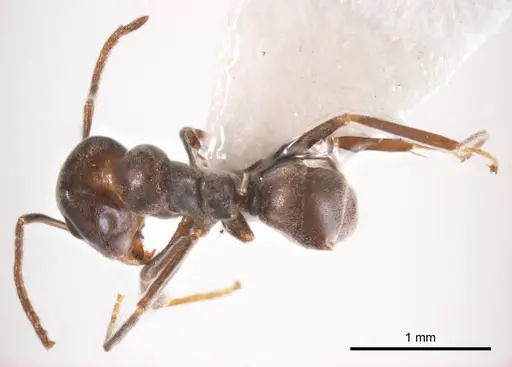
CASENT0903104
View on AntWeb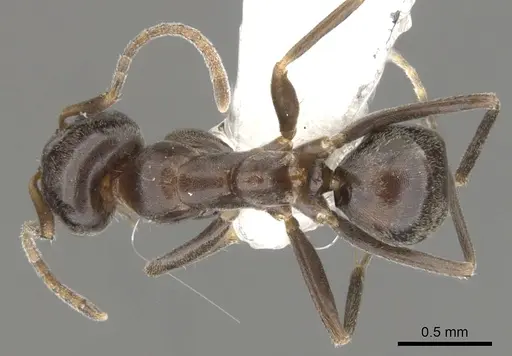
Literature
Loading...Loading products...