

Iridomyrmex fulgens
- Scientific Name
- Iridomyrmex fulgens
- Tribe
- Leptomyrmecini
- Subfamily
- Dolichoderinae
- Author
- Heterick & Shattuck, 2011
- Distribution
- Found in 1 countries
Iridomyrmex fulgens Overview
Iridomyrmex fulgens is an ant species of the genus Iridomyrmex. It is primarily documented in 1 countries , including Australia. Detailed taxonomic data and occurrence records can be further explored via authoritative databases such as AntWeb or the Global Biodiversity Information Facility (GBIF).
Iridomyrmex fulgens
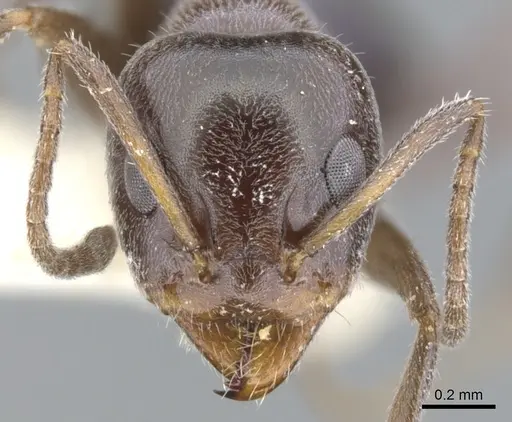
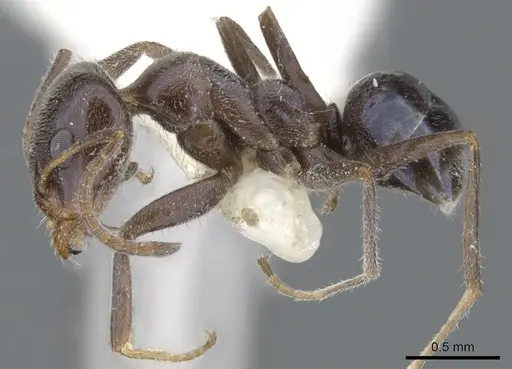
Iridomyrmex fulgens is a small to medium-sized ant native to the drier inland regions of eastern Australia. Workers measure 0.68-0.79mm in head width, making them relatively compact ants [1]. They have a distinctive appearance with a brown-to-dark-brown, shiny body and a gaster that displays a striking greenish-yellow to bluish iridescence, hence the species name 'fulgens' meaning 'brilliant' or 'splendid' in Latin [1][2]. The combination of erect whitish-yellow setae on the antennal scape and hind leg, along with the mostly smooth sides of the head capsule, makes this species uniquely identifiable among Australian ants [1].
This species is closely related to Iridomyrmex rufoniger and is primarily found in Queensland, New South Wales, and South Australia, with most specimens collected from South Australia [1][2]. Ecological data is extremely limited, they've been collected in pitfall traps and one specimen was found under emu dung, suggesting they forage on the ground in open, arid habitats [1]. As with most Iridomyrmex species, they are likely generalist foragers, but specific colony structure, founding behavior, and detailed care requirements remain poorly documented in scientific literature.
Quick Summary
- Difficulty: Medium
- Origin & Habitat: Native to arid inland areas of eastern Australia, primarily Queensland, New South Wales, and South Australia. Found in dry, open habitats [1][2].
- Colony Type: Colony structure is unconfirmed. Most Iridomyrmex species are polygynous (multiple queens), but specific data for I. fulgens is lacking.
- Size & Growth:
- Queen: Undocumented, estimated 6-8mm based on genus patterns
- Worker: 0.68-0.79mm head width,0.75-0.85mm head length [1]
- Colony: Unknown, no colony size data available
- Growth: Unknown, estimated moderate based on genus patterns
- Development: 6-10 weeks, estimated based on typical Dolichoderinae development (Development timeline is not directly studied for this species. Estimates based on related Iridomyrmex species patterns.)
- Antkeeping:
- Temperature: Keep at 24-28°C. Based on their arid inland Australian distribution, they prefer warm conditions. A heating cable on one side of the nest creates a suitable gradient.
- Humidity: Low to moderate. These are dryland ants, keep substrate moderately dry, not waterlogged. Allow areas to dry out between rehydrations.
- Diapause: Likely, Australian ants from temperate regions typically require a winter rest period. Reduce temperature to 15-18°C for 2-3 months during winter.
- Nesting: Y-tong (AAC) or plaster nests work well for this species. They prefer干燥 conditions. Provide narrow chambers scaled to their small worker size.
- Behavior: Iridomyrmex ants are typically fast-moving, active foragers. Workers are likely generalist omnivores, foraging for nectar, honeydew, and small insects. They are not aggressive toward humans but may defend their nest. Escape prevention should be good, while not tiny, they can fit through small gaps. Their iridescent gaster makes them visually striking in the outworld.
- Common Issues: limited data means care is based on genus patterns rather than species-specific research, escape prevention is important despite medium size, they remain small ants, winter diapause is likely required but timing and duration are uncertain, wild-caught colonies may have parasites since ecological data is minimal, slow colony growth may frustrate beginners expecting rapid development
Appearance and Identification
Iridomyrmex fulgens workers are distinctive little ants. Their body is brown to dark brown and notably shiny, with the gaster (the rear portion of the ant) displaying a beautiful greenish-yellow to bluish iridescence that catches the light [1][2]. Workers measure 0.68-0.79mm in head width and 0.75-0.85mm in head length, making them relatively small but not tiny [1]. The most reliable identification features are the erect whitish-yellow setae (bristles) on the antennal scape and hind leg, combined with the mostly smooth sides of the head capsule when viewed head-on [1]. This combination is unique among Australian Iridomyrmex species. The name 'fulgens' comes from Latin meaning 'brilliant' or 'splendid', perfectly describing their iridescent appearance [1].
Natural Habitat and Distribution
This species is native to the drier inland regions of eastern Australia. Records come primarily from Queensland, New South Wales, and South Australia, with South Australia having the most specimens collected [1][2]. They inhabit arid to semi-arid open habitats, as evidenced by collection data showing specimens caught in pitfall traps and one specimen found under emu dung [1]. This suggests they are ground-nesting ants that forage in open, relatively dry areas. The species was formally described in 2011 by Heterick and Shattuck, which explains why ecological data is so limited, it's a recently described species that hasn't received much research attention since its discovery [1][3].
Feeding and Diet
While specific dietary studies for Iridomyrmex fulgens don't exist, Iridomyrmex ants are generally omnivorous foragers. They likely collect nectar, honeydew from sap-sucking insects, and small insects they can overpower. In captivity, you should offer a varied diet: sugar water or honey as a constant energy source, and protein-rich foods like small crickets, mealworms, or fruit flies twice weekly. Their small worker size means prey items should be appropriately sized, not larger than the ants themselves. Unlike some specialized ants, they are likely generalists that will accept most offered foods. Observe your colony's preferences and adjust feeding frequency accordingly. Always remove uneaten prey within 24-48 hours to prevent mold.
Temperature and Heating
Based on their distribution in arid inland Australia, Iridomyrmex fulgens prefers warm conditions. Aim for a nest temperature of 24-28°C during the active season. You can achieve this using a heating cable placed on top of the nest (never underneath, as it can dry out the nest too quickly). Create a temperature gradient so workers can choose their preferred spot, warm on one end, cooler on the other. During winter, reduce temperatures to 15-18°C for 2-3 months to simulate their natural seasonal cycle. This winter rest period is likely important for colony health, though exact requirements are not documented. Room temperature may be too cold for optimal development, monitor colony activity and adjust heating accordingly.
Nesting and Humidity
Iridomyrmex fulgens is a dryland species. Keep nesting material moderately dry rather than damp. Y-tong (AAC) nests or plaster nests work well, both allow you to control humidity while providing appropriate chamber sizes. The substrate should feel dry to the touch, with only occasional light misting if needed. Avoid waterlogged conditions which can kill these ants. Provide a water tube for drinking access, but don't over-wet the nest. Their small size means chambers and passages should be appropriately scaled, not too large or open. In the outworld, they will use any available space, so provide enrichment like stones or small decorations.
Colony Structure and Development
Specific colony data for Iridomyrmex fulgens is not available. Most Iridomyrmex species form colonies with multiple queens (polygynous), but this varies by species. The genus is known for relatively fast colony development once established, with queens typically sealing themselves in to found colonies claustrally (living off stored fat until first workers hatch). Worker emergence typically takes 6-10 weeks in related species at warm temperatures. First workers (nanitics) are usually smaller than mature workers. Colonies likely reach several hundred workers over time, though exact maximum sizes are unknown. Given the limited species-specific data, observe your colony's behavior and growth patterns to understand its specific needs.
Frequently Asked Questions
How long does it take for Iridomyrmex fulgens to produce first workers?
The exact timeline is unconfirmed for this species, but based on related Iridomyrmex species, expect first workers (nanitics) in approximately 6-10 weeks at optimal warm temperatures (24-28°C). Development is faster at warmer temperatures within this range.
What do Iridomyrmex fulgens ants eat?
They are generalist omnivores. Offer sugar water or honey as a constant energy source, and protein (small crickets, mealworms, fruit flies) twice weekly. Remove uneaten prey after 24-48 hours to prevent mold.
What temperature do Iridomyrmex fulgens need?
Keep nest temperatures at 24-28°C. Use a heating cable on top of the nest to create a gradient. Reduce to 15-18°C during winter for a 2-3 month rest period.
Are Iridomyrmex fulgens good for beginners?
They are rated Medium difficulty. While not the hardest species, the limited species-specific data means you may need to adjust care based on colony behavior. Their small size requires attention to escape prevention.
Do Iridomyrmex fulgens need hibernation?
Yes, a winter rest period is likely required. Reduce temperatures to 15-18°C for 2-3 months during winter. This simulates their natural seasonal cycle in temperate Australia.
How big do Iridomyrmex fulgens colonies get?
Colony size is not documented for this species. Based on related Iridomyrmex species, colonies likely reach several hundred to a few thousand workers over time.
Can I keep multiple Iridomyrmex fulgens queens together?
Colony structure is unconfirmed for this specific species. Most Iridomyrmex species are polygynous (multiple queens), but combining unrelated foundress queens is not recommended unless you observe them accepting each other. Monitor closely for aggression.
What type of nest is best for Iridomyrmex fulgens?
Y-tong (AAC) or plaster nests work well. They prefer dry conditions with appropriately sized chambers for their small worker size (0.68-0.79mm).
Where is Iridomyrmex fulgens native to?
They are native to arid inland areas of eastern Australia, primarily Queensland, New South Wales, and South Australia. They were formally described in 2011.
Why is this ant called Iridomyrmex fulgens?
The species name 'fulgens' comes from Latin meaning 'brilliant' or 'splendid'. This refers to their shiny brown body and the striking greenish-yellow to bluish iridescence on their gaster [1].
Is Iridomyrmex fulgens invasive anywhere?
There is no documentation of this species being invasive. It is native only to Australia and has not been introduced to other regions.
References

This caresheet is licensed under CC BY-SA 4.0 .
CASENT0903103
View on AntWeb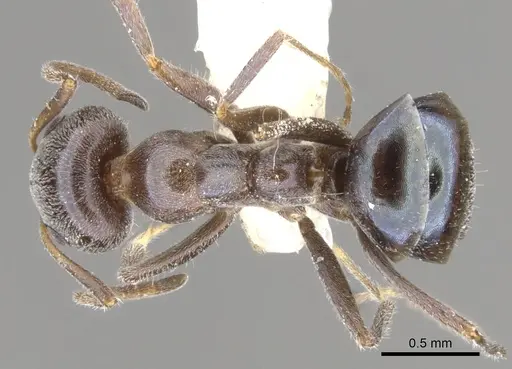
Literature
Loading...Loading products...