

Iridomyrmex dromus
- Scientific Name
- Iridomyrmex dromus
- Tribe
- Leptomyrmecini
- Subfamily
- Dolichoderinae
- Author
- Clark, 1938
- Distribution
- Found in 1 countries
Iridomyrmex dromus Overview
Iridomyrmex dromus is an ant species of the genus Iridomyrmex. It is primarily documented in 1 countries , including Australia. Detailed taxonomic data and occurrence records can be further explored via authoritative databases such as AntWeb or the Global Biodiversity Information Facility (GBIF).
Iridomyrmex dromus
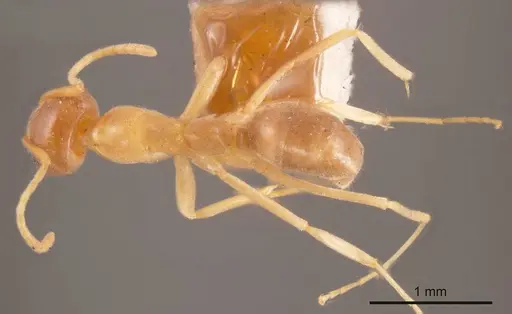
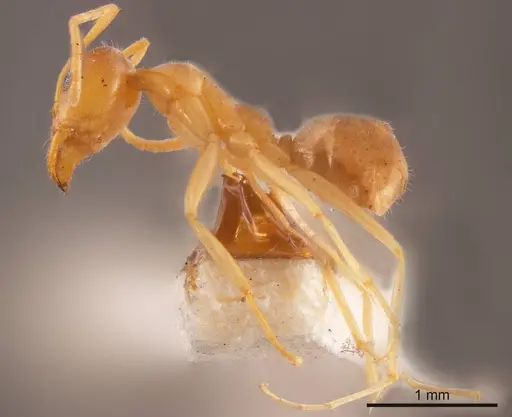
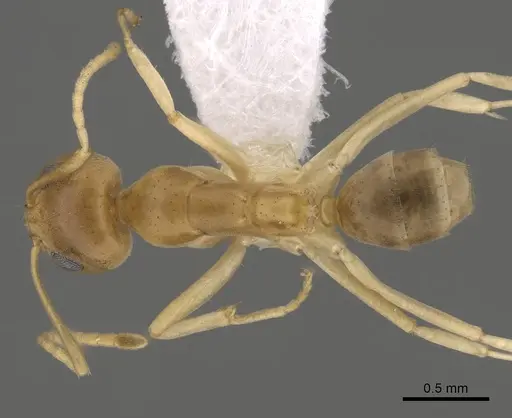
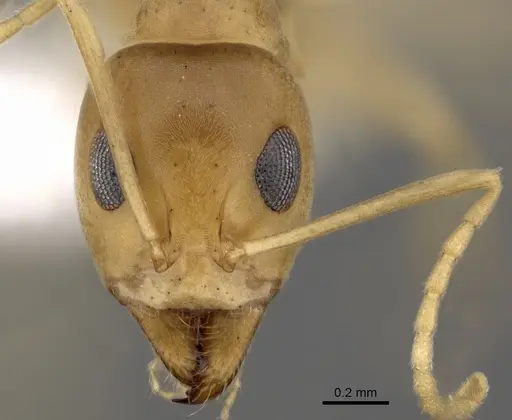
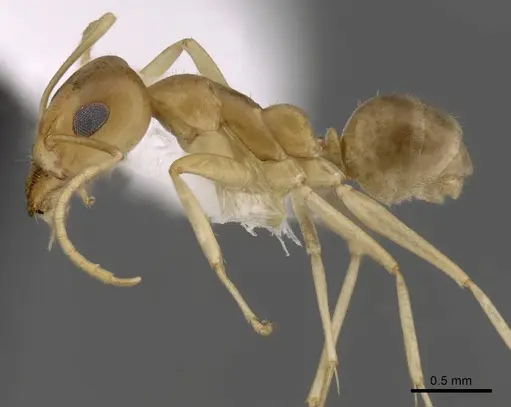
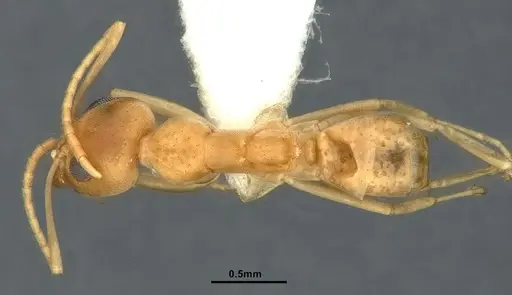
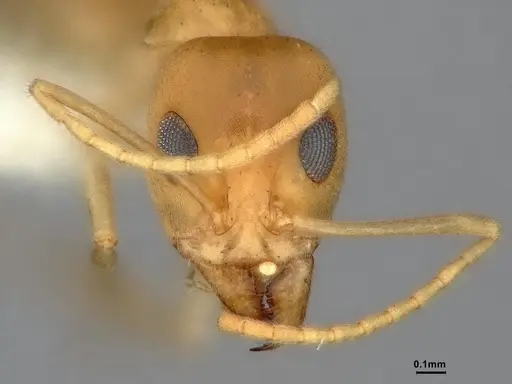
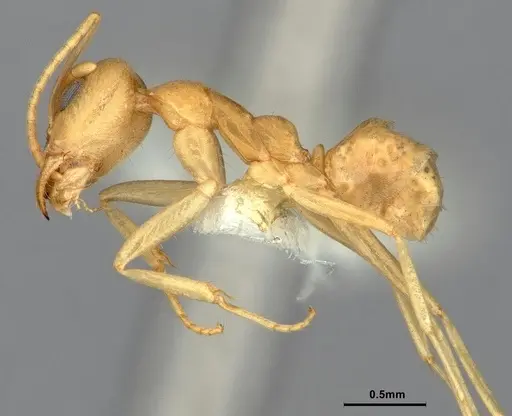
Iridomyrmex dromus is a highly variable Australian ant that has caused headaches for taxonomists due to its wide range of morphologies. Workers range from pale depigmented yellow to nearly black, with considerable differences in eye size, antennal scape length, and body shape depending on the population [1]. They are small to medium ants, with workers measuring 0.49-0.95mm in head width and 0.63-1.20mm in antennal scape length [1]. The most distinctive features are their asymmetrical eyes placed near the margin of the head and the oblique angle between the dorsal and declivitous propodeal surfaces [1]. This species is mainly nocturnal and forms loose columns when foraging on the soil surface [1].
Quick Summary
- Difficulty: Medium
- Origin & Habitat: Australia, found across the continent from desert and dry sclerophyll to rainforest litter in Tasmania, though absent from the northern tropics [1][2]
- Colony Type: Colony structure is not well documented in scientific literature. Most Iridomyrmex species are single-queen colonies, but this has not been specifically confirmed for I. dromus.
- Size & Growth:
- Queen: Estimated 5-7mm based on genus patterns, direct measurements not available
- Worker: 0.49-0.95mm head width,0.63-1.20mm antennal scape length [1]
- Colony: Unknown, likely moderate-sized colonies based on typical Iridomyrmex patterns
- Growth: Moderate, inferred from genus patterns
- Development: Estimated 6-8 weeks based on related Dolichoderinae species at optimal temperature (Direct development data unavailable, estimate based on genus-level patterns for Iridomyrmex)
- Antkeeping:
- Temperature: Keep at room temperature around 22-26°C. This species tolerates a wide range of conditions given its distribution from desert to rainforest [1]. A gentle gradient allows ants to self-regulate.
- Humidity: Moderate humidity around 50-70%. Provide a water tube and allow the nest to dry partially between rehydrations. Their natural range includes both dry and humid habitats.
- Diapause: Likely required, Australian ants typically need a winter rest period. Reduce temperature to 10-15°C for 2-3 months during winter.
- Nesting: Y-tong (AAC) nests work well for this species. They nest in soil in the wild and will accept standard formicarium setups. Provide moist substrate for brood chambers.
- Behavior: These ants are nocturnal and timorous (shy/nervous). Workers move in loose columns over the soil surface when foraging [1]. They are not aggressive and will flee rather than engage. Escape prevention should be moderate, they are small but not particularly known for escaping. They are generalist foragers, likely feeding on honeydew and small insects.
- Common Issues: Limited availability, this species is not commonly available in the antkeeping hobby, Color variation may cause confusion, wild-caught specimens can look dramatically different from each other, Timorous nature means they may be stressed by excessive disturbance, Nocturnal activity pattern means you may not see much during daylight hours, Colony structure and development specifics are poorly documented
Appearance and Identification
Iridomyrmex dromus is one of the most variable ant species in Australia, making identification challenging even for experts. Workers can range from pale depigmented yellow to nearly black, with some populations being tawny yellow or brown while others are dark brown or black [1][2]. The most reliable identifying features are the asymmetrical eyes (the inner margin curves more pronouncedly than the outer margin) placed near the margin of the head in full-face view, and the oblique angle between the dorsal and declivitous propodeal surfaces [1]. Unlike similar species, I. dromus lacks erect setae on the hind tibiae. Worker size varies considerably: head width 0.49-0.95mm and antennal scape length 0.63-1.20mm [1]. This variation is not just geographic, even workers within the same nest can show allometric differences [1].
Natural History and Distribution
This species has one of the widest distributions of any Australian ant, found across the continent from desert environments through dry sclerophyll forest to rainforest litter in Tasmania [1]. However, it is notably absent from the northern tropics, where its niche is filled by Iridomyrmex pallidus [1]. Workers are mainly nocturnal and forage in loose columns over the soil surface [1]. They are timorous (shy) and will retreat rather than engage when threatened. While some workers have been collected from vegetation, most foraging is terrestrial, and pitfall trapping has been the primary method of specimen collection [1]. The species is morphologically very similar to Iridomyrmex exsanguis but has different nest structure and behavior around the nest [3].
Housing and Nest Preferences
Iridomyrmex dromus will accept standard antkeeping setups including Y-tong (AAC) nests, acrylic formicariums, and plaster nests. In the wild, they nest in soil, so provide a moist substrate area for brood chambers. A water tube should be attached for humidity. Since they are nocturnal and timorous, include darkening material or place the nest in a low-light area. The nest should have chambers scaled to their small worker size. Allow one side of the nest to dry slightly while keeping brood areas moist, this gives the ants options for self-regulating humidity.
Feeding and Diet
Based on typical Iridomyrmex behavior and their nocturnal foraging habits, these ants are likely generalist foragers that accept sugar sources (honey water, sugar water) and protein (small insects, mealworms). They probably also collect honeydew from aphids in the wild. Feed a drop of sugar water 2-3 times per week and offer small protein items (fruit flies, small mealworms, crickets) once or twice weekly. Remove uneaten prey after 24 hours to prevent mold. Since they are timorous, ensure food is accessible and not placed too far from nest entrances.
Temperature and Seasonal Care
Iridomyrmex dromus tolerates a wide temperature range given its distribution from desert to rainforest across Australia [1]. Keep the nest at room temperature, ideally 22-26°C with a gentle gradient. During winter, provide a diapause period of 2-3 months at reduced temperatures (10-15°C). This mimics their natural seasonal cycle and supports colony health. Reduce feeding during diapause and ensure the nest doesn't dry out completely. Return to normal temperatures gradually in spring.
Behavior in Captivity
These ants are nocturnal and relatively shy. Workers will establish foraging patterns, typically emerging at night to collect food. They are not aggressive and will not readily sting, in fact, their timorous nature means they may retreat from disturbance. Colonies likely establish well once the queen begins laying eggs, but growth is expected to be moderate. The loose column foraging behavior seen in the wild may translate to predictable trails in captivity. Avoid excessive disturbance of the nest, especially during founding and early colony stages. [1]
Frequently Asked Questions
How long does it take for Iridomyrmex dromus to produce first workers?
Exact development time is unknown, but based on related Dolichoderinae species, expect 6-8 weeks from egg to worker at optimal temperature (around 24°C). Growth is typically moderate once the colony is established.
Can I keep multiple queens together?
Colony structure has not been specifically documented for this species. Most Iridomyrmex species are single-queen colonies, so it is not recommended to house multiple unrelated queens together. If you obtain a colony with multiple queens, monitor for aggression.
Are Iridomyrmex dromus good for beginners?
Difficulty is rated as Medium. While they are not aggressive and tolerate a range of conditions, they are not commonly available in the antkeeping hobby, and their specific care requirements are not well documented. They are better suited for keepers with some experience.
What do Iridomyrmex dromus eat?
They likely accept sugar sources (honey water, sugar water) and small protein (insects, mealworms). Feed sugar water 2-3 times weekly and protein items once or twice weekly. Remove uneaten food promptly.
Do they need hibernation?
Yes, a winter diapause is likely required given their Australian distribution. Reduce temperatures to 10-15°C for 2-3 months during winter. This supports natural seasonal cycles and colony health.
Why are my ants so pale or dark?
This is normal! Iridomyrmex dromus shows extreme color variation, workers can range from pale depigmented yellow to nearly black even within the same species [1]. Color variation is a documented characteristic of this species.
When should I move them to a formicarium?
Wait until the colony has at least 20-30 workers before transferring to a formicarium. Ensure the formicarium has appropriately sized chambers for their small workers and includes a water source for humidity.
Why are they only active at night?
This is normal behavior, Iridomyrmex dromus is mainly nocturnal [1][2]. You will see most activity when lights are low or off. This is a natural trait, not a sign of illness.
How big do colonies get?
Exact maximum colony size is unknown, but based on typical Iridomyrmex patterns, expect moderate-sized colonies of several hundred workers. Growth rate is moderate.
References

This caresheet is licensed under CC BY-SA 4.0 .
Literature
Loading...Loading products...