

Iridomyrmex cephaloinclinus
- Scientific Name
- Iridomyrmex cephaloinclinus
- Tribe
- Leptomyrmecini
- Subfamily
- Dolichoderinae
- Author
- Shattuck, 1993
- Distribution
- Found in 1 countries
Iridomyrmex cephaloinclinus Overview
Iridomyrmex cephaloinclinus is an ant species of the genus Iridomyrmex. It is primarily documented in 1 countries , including Australia. Detailed taxonomic data and occurrence records can be further explored via authoritative databases such as AntWeb or the Global Biodiversity Information Facility (GBIF).
Iridomyrmex cephaloinclinus
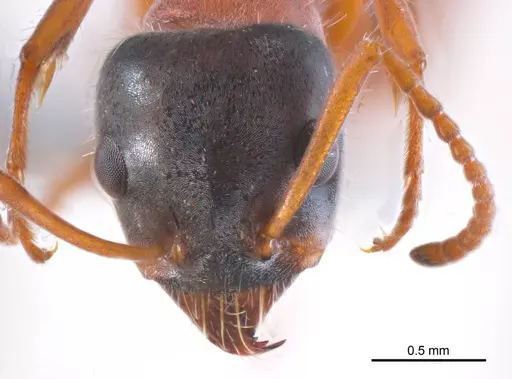
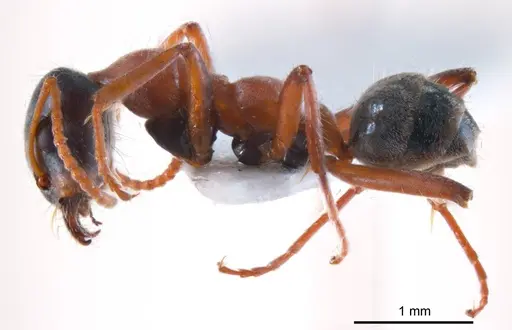
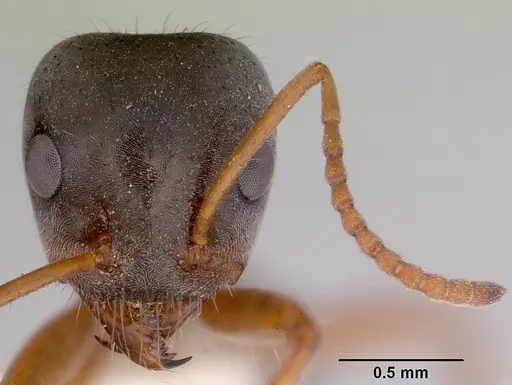
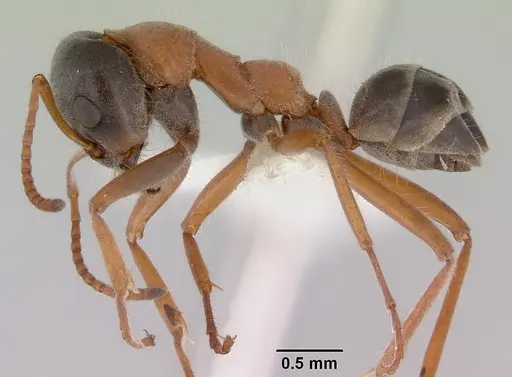
Iridomyrmex cephaloinclinus is a medium-sized Australian ant belonging to the Dolichoderinae subfamily. Workers measure 1.05-1.32mm in head width, making them relatively robust for their genus [1]. The species is easily identified by its distinctive color pattern: the entire head capsule is reddish-brown to black, while the mesosoma (the middle body section) is uniformly yellowish-red to reddish [1][2]. This ant occurs in widely separated sites across Western Australia and Queensland, though populations remain morphologically uniform throughout their range [2]. What makes this species particularly interesting is its foraging behavior, unlike most dolichoderine ants that recruit nestmates to food sources, I. cephaloinclinus appears to be a solitary forager, hunting and feeding alone [1][2].
Quick Summary
- Difficulty: Medium
- Origin & Habitat: Northern arid zone of Australia, including Western Australia and Queensland [3][1]. Found on Barrow Island in Western Australia [4]. Inhabits arid to semi-arid environments.
- Colony Type: Colony structure is not well documented in available research. Based on typical Iridomyrmex patterns, likely monogyne (single queen) colonies.
- Size & Growth:
- Queen: Not documented in available research, queen measurements unavailable
- Worker: 1.05-1.32mm head width,1.11-1.35mm head length [1][2]
- Colony: Unknown, no colony size data available in research
- Growth: Unknown, no development timing data available
- Development: Unknown, no direct development data available for this species (Development timeline has not been studied. Related Iridomyrmex species in Australia typically develop in 4-8 weeks at warm temperatures.)
- Antkeeping:
- Temperature: Keep at 24-30°C. As an Australian arid-zone species, they prefer warm conditions. A heating cable on one side of the nest can create a suitable gradient.
- Humidity: Low to moderate. This is an arid-zone species, keep substrate relatively dry, similar to their natural habitat in northern Australia. Provide a water tube for drinking but avoid excessive moisture.
- Diapause: Likely minimal or no true diapause. Australian arid-zone ants typically reduce activity during extreme heat rather than cold. Room temperature overwintering is likely sufficient.
- Nesting: Y-tong (AAC) nests work well for medium-sized ants. Plaster or acrylic nests are also suitable. Provide a dry outworld area for foraging.
- Behavior: This species is relatively calm and not particularly aggressive. Workers are moderate foragers that search for food individually rather than recruiting nestmates, an unusual trait among dolichoderines [1]. They are not known to be escape artists but use standard barrier methods. Their moderate size means basic escape prevention is adequate.
- Common Issues: limited availability, this species is not commonly kept in the antkeeping hobby, no development data means keepers must experiment with temperature and feeding schedules, solitary foraging means food discovery may be slower than colony-recruiting species, Australian species may have specific import restrictions in some regions, humidity preferences are not well documented, start dry and adjust based on colony behavior
Natural History and Distribution
Iridomyrmex cephaloinclinus is endemic to Australia, with confirmed collections from Western Australia and Queensland [1][2]. The species occurs throughout the northern arid zone, making it adapted to hot, dry conditions [3]. It has been recorded on Barrow Island off the Western Australian coast, where it was successfully DNA-barcoded as part of biodiversity surveys [5][4]. The species belongs to the I. rufoinclinus species complex, a group distinguished primarily by their color patterns [1]. Unlike many dolichoderine ants that use chemical recruitment to coordinate foraging, this species appears to be a solitary forager, workers hunt and feed independently rather than leading nestmates to food [1][2]. This behavioral trait is unusual within the subfamily and makes this species particularly interesting for antkeepers who want to observe individual foraging behavior.
Identification and Appearance
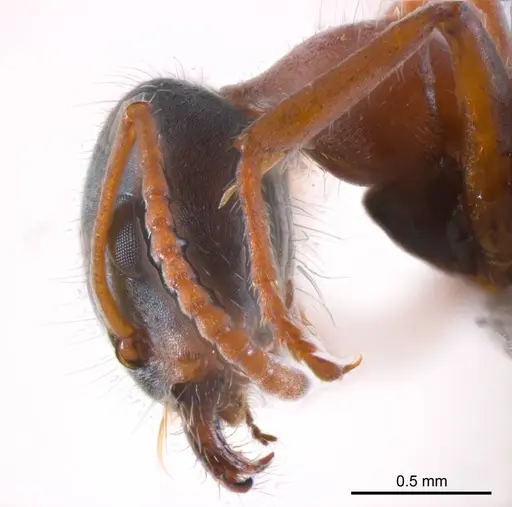
Workers of Iridomyrmex cephaloinclinus are relatively large for the genus, with head widths between 1.05-1.32mm and head lengths of 1.11-1.35mm [1]. The most distinctive feature is the color pattern: the entire head capsule is reddish-brown to black, while the mesosoma (thorax) is uniformly yellowish-red to reddish [1][2]. This contrast between the dark head and reddish body makes them relatively easy to identify among Australian Iridomyrmex. The petiolar node is thick and strongly inclined forward, which is characteristic of the genus when viewed in profile [6]. Erect setae (bristles) are present on the head, mesosoma, and first gastral segment, giving them a somewhat fuzzy appearance [2]. The frontal carinae (the ridges between the antennae) are strongly concave, another useful identification feature.
Housing and Nest Setup
For housing Iridomyrmex cephaloinclinus, a Y-tong (acrylic) nest works well for this medium-sized species. The chambers should be appropriately scaled, not too large or too small for workers that are roughly 1-1.3mm in size. Plaster nests are also suitable and help maintain stable humidity. Because this is an arid-zone species, keep the nest relatively dry, avoid the damp conditions preferred by tropical rainforest ants. Provide a water tube in the outworld for drinking. For the outworld, use a simple setup with a foraging area where you can offer food. Standard escape prevention (fluon on rim edges) is adequate since they are not particularly small or known escape artists. The colony can start in a test tube setup and be moved to a formicarium once established.
Feeding and Diet
Iridomyrmex cephaloinclinus likely has a typical dolichoderine diet. In the wild, most Iridomyrmex species feed on honeydew from sap-sucking insects, nectar from plants, and small insects they can catch. For captive care, offer sugar water or honey as a constant energy source. For protein, provide small insects like fruit flies, small crickets, or mealworm pieces. Their solitary foraging behavior [1] means you may not see the dramatic recruitment trails common in other ants, workers will discover food individually and consume it on their own. Feed protein 2-3 times per week and keep sugar water available at all times. Remove uneaten prey after 24-48 hours to prevent mold.
Temperature and Seasonal Care
As a species from Australia's northern arid zone, Iridomyrmex cephaloinclinus prefers warm temperatures. Keep the nest area at 24-30°C for optimal activity and, presumably, brood development. You can use a heating cable on one side of the nest to create a temperature gradient, allowing workers to choose their preferred zone. Place the heating on top of the nest, not underneath, to avoid excessive drying. Unlike temperate species, they likely do not require a true hibernation period. During Australian winter (our summer), room temperature is probably sufficient. The key is avoiding cold, if temperatures drop significantly below room temperature, consider mild heating. Their arid-zone origin means they are more tolerant of dry conditions than many ants, so do not over-humidify the nest. [3]
Behavior in Captivity
The most notable behavioral trait of this species is solitary foraging, workers search for food independently rather than recruiting nestmates through chemical trails [1]. This differs dramatically from species like Iridomyrmex purpureus (the meat ant) which form massive recruitment trails. For antkeepers, this means you may observe fewer dramatic food discoveries, but individual workers can be watched as they explore and hunt. The species is not particularly aggressive and typically goes about its business calmly. Workers are moderately active and will explore the outworld regularly. Expect to see individual workers rather than groups, this is normal behavior for this species, not a sign of colony decline.
Frequently Asked Questions
How long does it take for Iridomyrmex cephaloinclinus to produce first workers?
The development timeline has not been documented for this species. Based on related Australian Iridomyrmex species, expect 4-8 weeks from egg to worker at optimal warm temperatures (around 26-28°C).
What do Iridomyrmex cephaloinclinus ants eat?
Like most Iridomyrmex species, they likely accept sugar sources (honey, sugar water) and small insects. Offer protein prey like fruit flies or small crickets 2-3 times weekly, with sugar water available constantly.
Can I keep multiple queens together?
Colony structure is not well documented for this species. Based on typical Iridomyrmex patterns, they likely form single-queen colonies. Combining unrelated queens is not recommended without specific evidence they can found colonies pleometrotically.
What temperature do they need?
Keep them warm at 24-30°C. As an arid-zone Australian species, they prefer temperatures on the warmer end of this range.
Do they need hibernation?
Likely no true hibernation required. As an arid-zone species from northern Australia, they may reduce activity during cooler periods but probably do not need a cold diapause like temperate species.
Are they good for beginners?
This species is rated Medium difficulty. They are not commonly available in the antkeeping hobby, and limited specific care data exists. They may be challenging to acquire but are otherwise relatively straightforward to keep, just provide warmth, dry conditions, and standard ant food.
How big do colonies get?
Colony size is not documented in available research. Typical Iridomyrmex colonies can reach several thousand workers, but specific data for this species is unavailable.
Why do my ants forage alone instead of in groups?
This is normal behavior for Iridomyrmex cephaloinclinus. Unlike most dolichoderines that recruit nestmates to food, this species is documented as a solitary forager, workers hunt and feed independently [1].
What humidity level do they need?
Keep relatively dry, this is an arid-zone species from northern Australia. Avoid the damp conditions preferred by rainforest ants. A water tube in the outworld provides drinking water.
References

This caresheet is licensed under CC BY-SA 4.0 .
ANTWEB1008639
View on AntWeb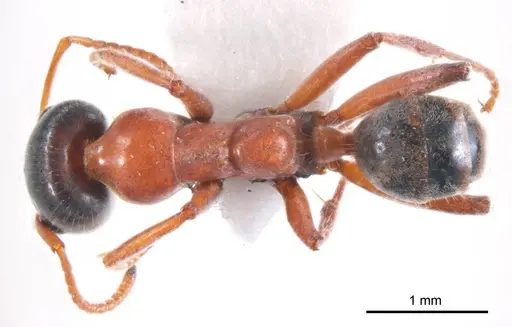
CASENT0172059
View on AntWeb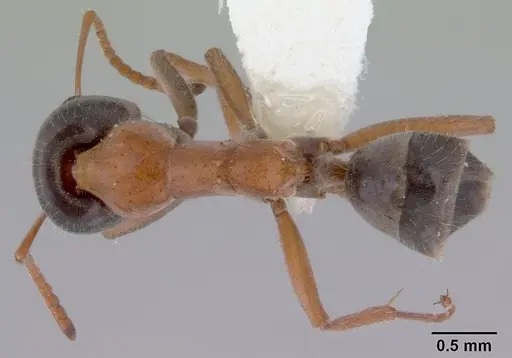
Literature
Loading...Loading products...