

Hypoponera fatiga
- Scientific Name
- Hypoponera fatiga
- Tribe
- Ponerini
- Subfamily
- Ponerinae
- Author
- Bolton & Fisher, 2011
- Distribution
- Found in 1 countries
Hypoponera fatiga Overview
Hypoponera fatiga is an ant species of the genus Hypoponera. It is primarily documented in 1 countries , including Uganda. Detailed taxonomic data and occurrence records can be further explored via authoritative databases such as AntWeb or the Global Biodiversity Information Facility (GBIF).
Hypoponera fatiga
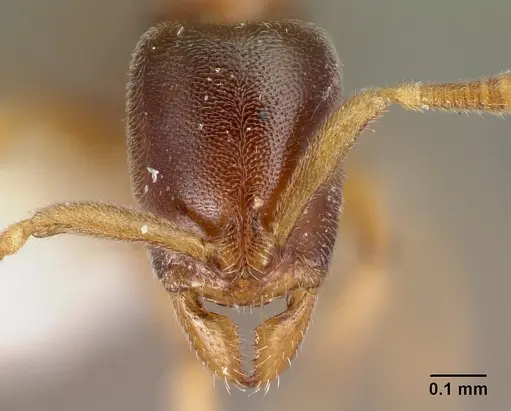
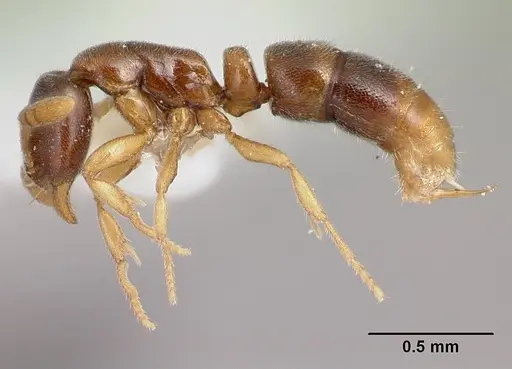
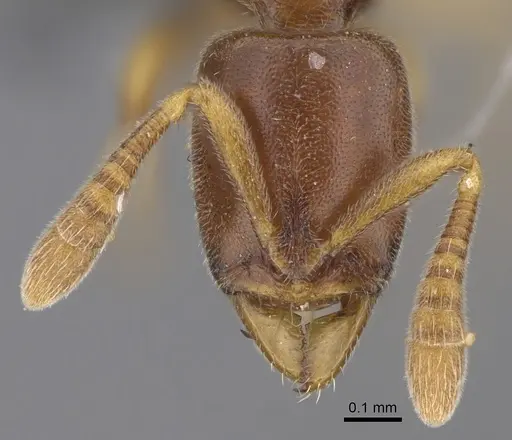
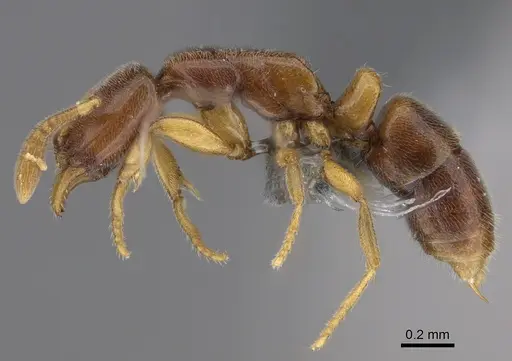
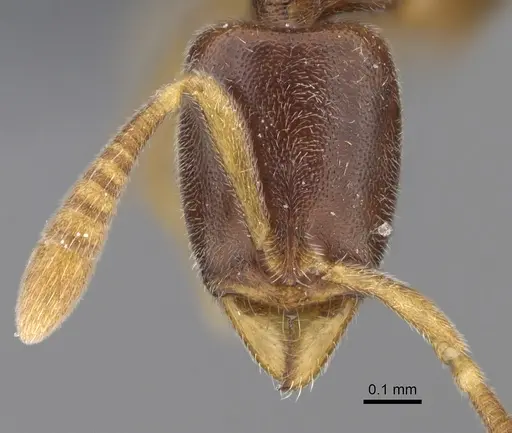
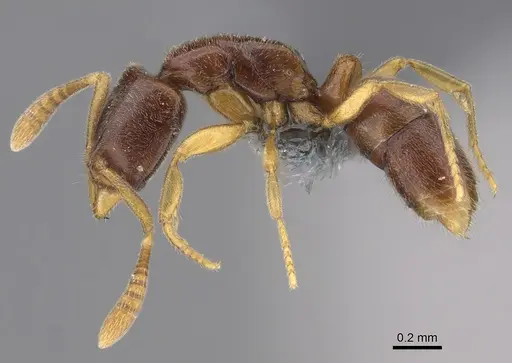
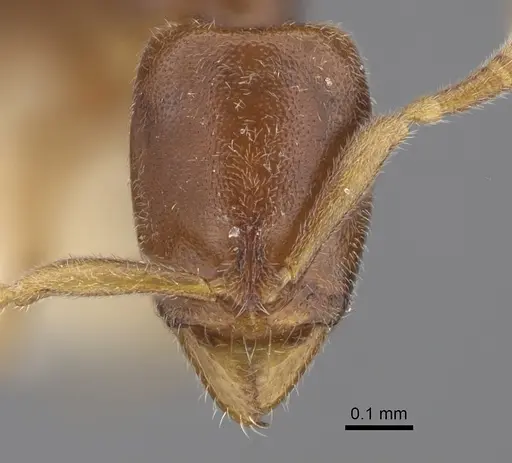
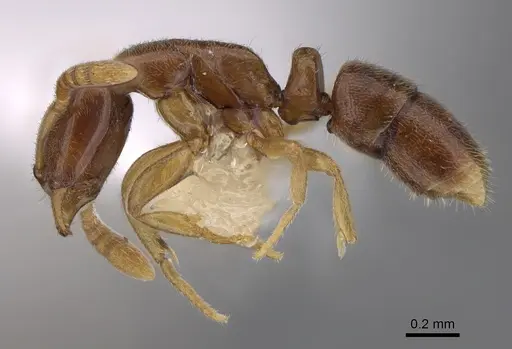
Hypoponera fatiga is a minute brown ant that lives in the leaf litter of West African rainforests. Workers are extremely small, with heads only 0.36-0.40 mm wide and bodies approximately 2-3 mm long, making them one of the tiniest ants in the genus [1]. They are completely blind, lacking eyes entirely, and navigate their dark world using antennae touch and chemical trails [1]. The species is known from scattered forest floor samples across Ghana, Kenya, Uganda, Tanzania, and the Central African Republic, suggesting a wide distribution throughout the Afrotropical forest zone [1][2].
Despite their wide range, almost nothing is known about their biology. Museum collections include workers and wingless (dealate) queens extracted from rotting leaf litter, but no studies have observed living colonies, nesting behavior, or feeding habits [1]. They appear to be cryptic specialists of the humid forest floor, spending their lives in darkness beneath fallen leaves and rotting vegetation.
Quick Summary
- Difficulty: Expert
- Origin & Habitat: West and Central African rainforests (Ghana, Central African Republic, Uganda, Kenya, Tanzania), leaf litter and soil layers [1]
- Colony Type: Unknown, dealate (wingless) queens documented but colony structure unconfirmed [1]
- Size & Growth:
- Queen: Unknown, likely 3-4 mm (estimated from dealate specimens) [1]
- Worker: Approximately 2-3 mm total length (head width 0.36-0.40 mm) [1]
- Colony: Unknown, likely under 50 workers based on typical Hypoponera patterns
- Growth: Unknown, likely slow
- Development: Unknown, estimated 8-12 weeks based on small Ponerinae patterns (Development time is unstudied, estimate assumes tropical temperatures around 25°C)
- Antkeeping:
- Temperature: Warm and stable, approximately 24-26°C, typical for West African rainforest floor [1]
- Humidity: High humidity required, maintain damp nest material similar to leaf litter conditions, roughly 70-80%
- Diapause: No, tropical species with no winter rest period required
- Nesting: Naturalistic soil and leaf litter setups, tight-fitting containers with excellent escape prevention
- Behavior: Cryptic and slow-moving, completely blind (no eyes), non-aggressive, high escape risk due to minute size [1]
- Common Issues: escape prevention is critical, they can squeeze through gaps smaller than 0.5 mm., desiccation kills quickly, they require consistently damp leaf litter conditions., unknown dietary needs make feeding difficult, they may refuse standard ant foods., tiny size makes observation and care challenging even for experienced keepers.
Natural History and Identification
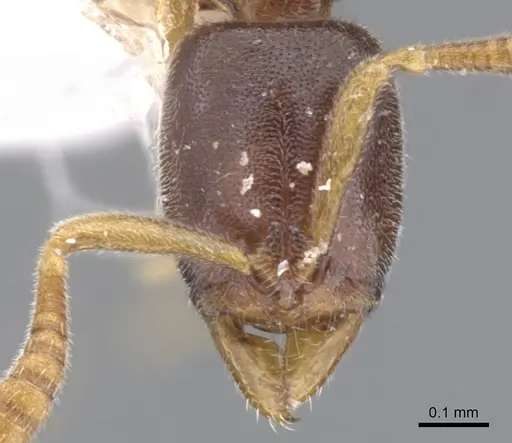
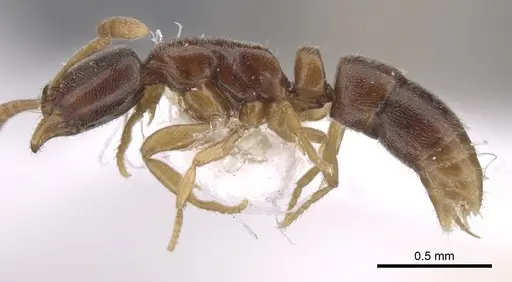
Hypoponera fatiga workers are light brown to brown in color and lack eyes entirely, making them completely blind [1]. Their heads measure just 0.36-0.40 mm across with head lengths of 0.46-0.53 mm, indicating total body lengths around 2-3 mm [1]. The waist segment (petiole) is slender and moderately high, with a distinct node shape that helps distinguish them from similar species [1].
These ants inhabit the leaf litter layer, the decaying leaves and organic matter covering the forest floor, across West and Central African rainforests [1]. Collection records span from Ghana to Kenya and Tanzania, suggesting they occupy the continuous forest belt of the Afrotropical region [1]. All specimens come from forest floor samples, indicating they spend their entire lives in this cryptic habitat.
The biology of living colonies remains completely unstudied. Museum specimens include dealate queens, queens that have shed their wings, but researchers have never observed nest founding, colony structure, or behavioral interactions in the wild [1]. This lack of data makes them one of the most challenging ants to keep in captivity.
Housing and Escape Prevention
Because of their extremely small size, escape prevention must be perfect. Workers can squeeze through gaps smaller than 0.5 mm, so standard formicariums with removable lids or sliding glass are unsuitable. You must use containers with tight-fitting seals, fine mesh ventilation (under 0.3 mm), and Fluon or talcum powder barriers applied carefully to all surfaces.
Naturalistic setups work best for these leaf litter specialists. Create a substrate mix of forest soil, decaying leaves, and small pieces of rotting wood to simulate their natural habitat. Keep the nest material damp but not waterlogged, it should feel like a wrung-out sponge. Avoid tall, open spaces, instead provide narrow cracks between leaf layers or small chambers under flat stones.
Test tubes can work for founding chambers if the opening is sealed with cotton very tightly, but the small diameter makes observation difficult. Many keepers prefer small plastic containers with snap-tight lids for better visibility, though condensation can become an issue in sealed containers. [1]
Temperature and Humidity
As a tropical rainforest species, Hypoponera fatiga requires warm, stable temperatures year-round. Aim for 24-26°C with minimal fluctuation. You can achieve this with a heating cable placed on one side of the nest to create a gentle gradient, allowing the ants to choose their preferred spot. Avoid temperatures below 20°C or above 30°C.
Humidity must remain high at all times. In their natural leaf litter habitat, moisture levels stay consistently high even during dry seasons [1]. Keep the nest material damp throughout, never let it dry out. You can maintain humidity by periodically misting the substrate with distilled water or using a water reservoir with a cotton wick, but ensure ventilation prevents mold growth while retaining moisture.
These ants do not require hibernation (diapause). As a tropical species, they remain active throughout the year. Cooling them for winter rest will likely kill the colony.
Feeding and Diet
The natural diet of Hypoponera fatiga is completely unknown. Based on related Hypoponera species, they are likely predators of tiny soil organisms such as springtails, mites, and minute insect larvae. They may also scavenge dead insects, though this is unconfirmed.
In captivity, you should experiment with very small live prey. Springtails (Collembola) are the most likely accepted food source given the ants' size and habitat. You can also try offering tiny insect fragments, fruit fly larvae, or minute soil mites. Place food directly on the substrate surface since these blind ants forage by touch and chemical cues rather than vision.
Sugar sources such as honey water or sugar water may or may not be accepted, offer small drops occasionally but do not rely on them as a staple. Because their dietary needs are unstudied, be prepared to try multiple food types and remove uneaten items promptly to prevent mold in the humid environment. [1]
Behavior and Temperament
Hypoponera fatiga are cryptic ants that spend most of their time hidden in leaf litter and soil. They move slowly and deliberately, using their antennae to feel their way through the darkness since they completely lack eyes [1]. You will rarely see them exposed on the surface, instead, they tunnel just under the substrate surface or within decaying leaves.
These ants are not aggressive and pose no sting risk to humans. Even if they could sting, their minute size makes them physically incapable of penetrating human skin. They are solitary hunters or small-group foragers rather than mass recruiters.
Activity patterns are unknown, but as blind leaf litter dwellers, they likely forage continuously in darkness rather than following day-night cycles. Keep their enclosure in dim light or darkness to reduce stress, as bright light may harm these light-sensitive, eyeless ants.
Frequently Asked Questions
Can I keep Hypoponera fatiga in a test tube?
You can attempt test tube founding, but it is risky due to their tiny size. The cotton plug must be packed extremely tightly to prevent escapes, and the narrow glass makes observation difficult. Small sealed containers with naturalistic substrate often work better for these minute ants.
How long until Hypoponera fatiga gets first workers?
The egg-to-worker timeline is completely unknown for this species. Based on related small Ponerinae ants, development likely takes 8-12 weeks at 25°C, but this is only an estimate. No studies have documented their brood development.
What do Hypoponera fatiga eat?
Their natural diet is unstudied. They likely prey on tiny soil organisms like springtails and mites. In captivity, offer live springtails, tiny insect fragments, and minute prey items. Acceptance of sugar water is unconfirmed.
Do Hypoponera fatiga need heat?
Yes, they require warm stable temperatures around 24-26°C year-round. As a tropical African species, they cannot tolerate cold and do not need hibernation.
Are Hypoponera fatiga good for beginners?
No, these are expert-level ants only. Their extremely small size makes escapes likely, their dietary needs are unknown, and almost no captive breeding information exists. Beginners should start with larger, well-studied species like Lasius niger or Tetramorium species.
How big do Hypoponera fatiga colonies get?
Colony size is unknown. Based on related leaf-litter Hypoponera species, they likely remain small, possibly under 50 workers. They are not mass-colony builders like some other ant genera.
Can I keep multiple Hypoponera fatiga queens together?
Combining multiple queens is not recommended. Whether this species accepts multiple queens in one nest is completely unstudied. Most Hypoponera are single-queen colonies, and attempting to combine queens risks fighting and colony failure.
Why are my Hypoponera fatiga dying?
Common causes include desiccation (they need very humid conditions), escapes (they can squeeze through tiny gaps), or starvation (they may not accept standard ant foods like honey or large insects). Ensure the substrate stays damp and offer tiny live prey like springtails.
References

This caresheet is licensed under CC BY-SA 4.0 .
CASENT0226549
View on AntWeb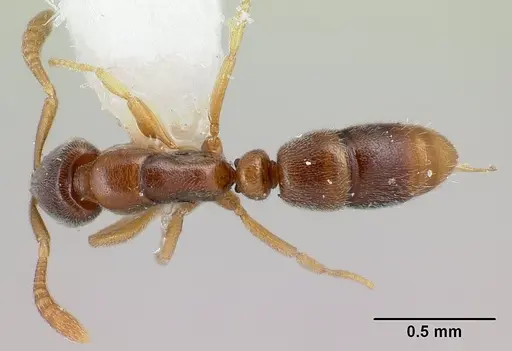
CASENT0356457
View on AntWeb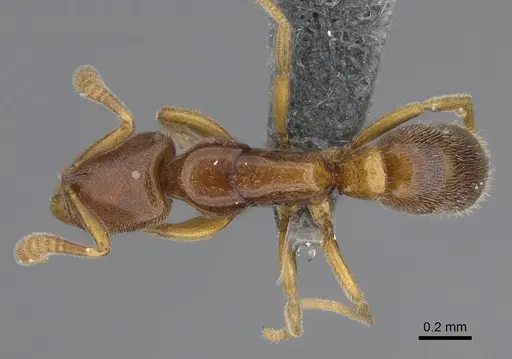
CASENT0356532
View on AntWeb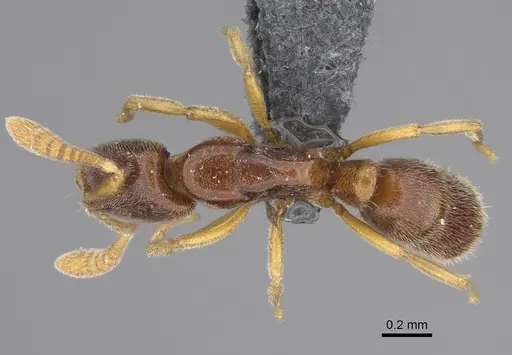
CASENT0417324
View on AntWeb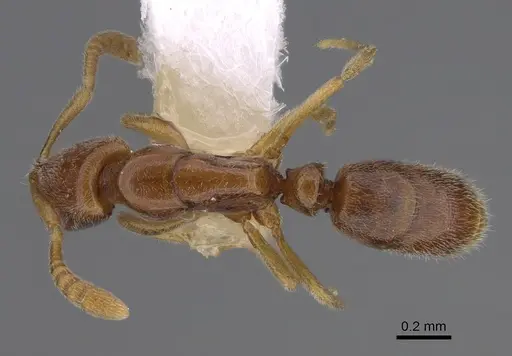
CASENT0902552
View on AntWeb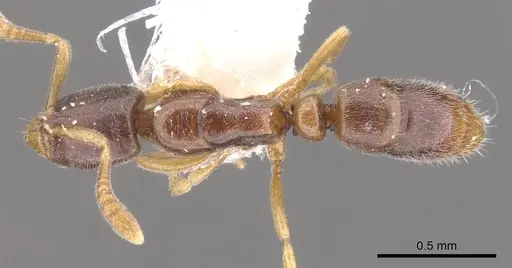
Literature
Loading...Loading products...