

Hylomyrma lopesi
- Scientific Name
- Hylomyrma lopesi
- Tribe
- Pogonomyrmecini
- Subfamily
- Myrmicinae
- Author
- Ulysséa, 2021
- Distribution
- Found in 1 countries
Hylomyrma lopesi Overview
Hylomyrma lopesi is an ant species of the genus Hylomyrma. It is primarily documented in 1 countries , including Brazil. Detailed taxonomic data and occurrence records can be further explored via authoritative databases such as AntWeb or the Global Biodiversity Information Facility (GBIF).
Hylomyrma lopesi
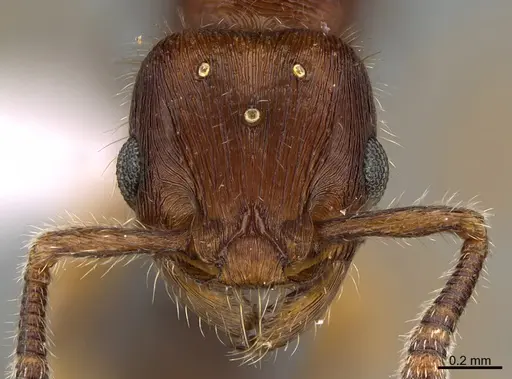
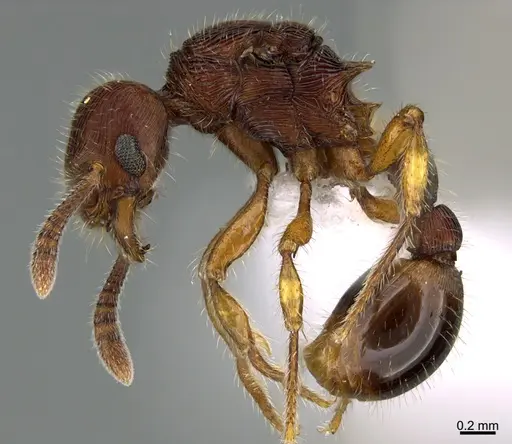
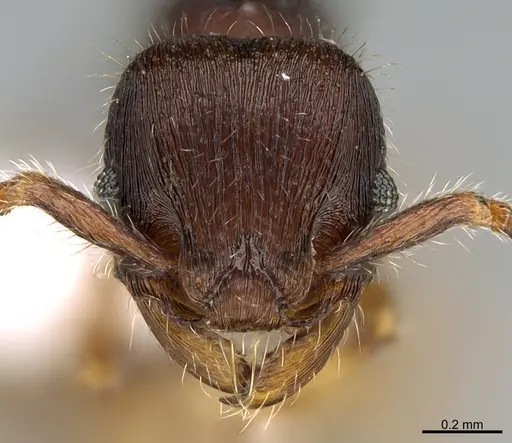
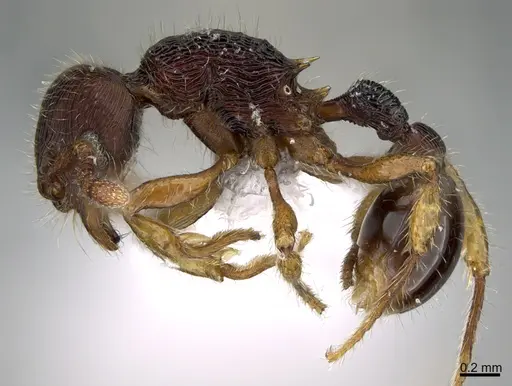
Hylomyrma lopesi is a small Neotropical ant species native to Brazil, measuring 4.21-4.53mm for workers and 4.71-4.80mm for queens [1]. The workers have a distinctive appearance with regular longitudinal striaae (grooves) on their head and mesosoma, a discontinuous dorsal margin on the petiole, and branched setae (hair-like structures) of two types, thin hairs with 2-3 short branches and thicker flattened hairs with several branches [1]. Their eyes are reniform (kidney-shaped) with 12-14 ommatidia [1]. This species is widely distributed across Brazil, found in the Cerrado (Brazilian savanna), Caatinga (dry forest), Atlantic Forest, and Amazon regions [1][2]. The species was only described in 2021,so biological information is extremely limited, what makes this species particularly interesting is the documented presence of intercastes (specimens with mixed worker-queen traits) and possibly ergatoids (wingless replacement queens), suggesting complex social flexibility [1][2].
Quick Summary
- Difficulty: Unknown, insufficient data for reliable assessment
- Origin & Habitat: Brazil, found across north, central-west, northeast, and southeast regions in Cerrado savanna, Caatinga dry forest, Atlantic Forest, and Amazon habitats [1][2]
- Colony Type: Colony structure is unconfirmed. The species shows significant phenotypic plasticity with 14 intercaste specimens documented, and possibly ergatoids (wingless queens) present, suggesting potential for replacement reproductives [1][2]. Further research needed to confirm whether colonies are single-queen or multi-queen.
- Size & Growth:
- Queen: 4.71-4.80 mm [1]
- Worker: 4.21-4.53 mm [1]
- Colony: Unknown, no colony size data available
- Growth: Unknown, no development timing data available
- Development: Unknown, no direct measurements available. Based on typical Myrmicinae patterns from related genera, estimate 6-10 weeks at optimal tropical temperatures. (No published development data exists for this species. Estimates based on genus-level patterns for small Myrmicinae ants from tropical regions.)
- Antkeeping:
- Temperature: Likely 22-28°C based on Brazilian tropical habitat preferences. Start in the mid-range and observe colony activity. Avoid temperatures below 20°C or above 32°C.
- Humidity: Likely requires moderate to high humidity (60-80%) given leaf-litter nesting habits. Keep substrate consistently moist but not waterlogged. Provide a gradient with slightly drier areas for escape.
- Diapause: Unlikely, tropical species from Brazil with no evidence of hibernation requirements. Maintain stable temperatures year-round.
- Nesting: In nature, they nest in leaf-litter, fallen logs, rotten wood, and natural cavities in superficial soil layers [2]. For captivity, a naturalistic setup with moist substrate (soil/peat mix) or a Y-tong/plaster nest with good humidity retention would be appropriate. Avoid dry conditions.
- Behavior: Behavior is unstudied. Based on genus patterns and collection methods (mostly Winkler extractor samples from leaf-litter), they are likely cryptic, surface-active ants that forage in the leaf-litter layer. Escape risk is moderate, their small size (4-5mm) means standard escape prevention measures should be used, but they are not extremely tiny like some Myrmicinae. Temperament is unknown but related Hylomyrma species are generally non-aggressive.
- Common Issues: no biological data makes care requirements uncertain, keepers must experiment and observe, colonies may be slow-growing given limited data and tropical origin, humidity requirements are inferred, not confirmed, too dry conditions may cause colony decline, no confirmed diet information, unknown what foods they will accept, escape prevention needed due to small worker size (4-5mm)
Species Discovery and Taxonomy
Hylomyrma lopesi was only recently described in 2021 by Mônica Antunes Ulysséa and Carlos Roberto Brandão as part of a comprehensive taxonomic revision of the genus Hylomyrma [1]. The species was named in honor of Dr. Benedito Cortês Lopes, the researcher's first ant professor and Zoology/Entomology professor at UFSC (Federal University of Santa Catarina) [1]. The type locality is in Maranhão state, Brazil, specifically in the municipality of Estreito at Fazenda Itaueiras, where specimens were collected using Winkler extractors from leaf-litter in January 2005 [1]. The species can be distinguished from similar species like Hylomyrma balzani, H. reitteri, and H. margaridae by its distinctive striation patterns, the shape of its reniform eyes, and the discontinuous dorsal margin of the petiole [1].
Distribution and Habitat
This species has a broad distribution across Brazil, documented in north, central-west, northeast, and southeast regions [1]. It occurs in multiple Brazilian biomes including the Cerrado (tropical savanna), Caatinga (dry forest), Atlantic Forest, and Amazon regions [1][2]. Most specimens have been collected using Winkler extractors from leaf-litter samples, which indicates they nest in the leaf-litter layer, under fallen logs, in rotten wood, or in natural cavities within superficial soil layers [2]. They are rarely collected in pitfall traps or with attractant baits like honey or sardine, suggesting they are cryptic and not highly active on the surface [1][2]. This collection method preference makes them a challenging species to study in the wild.
Morphology and Identification
Workers measure 4.21-4.53mm in total length, making them small but not tiny ants [1]. They have a shiny integument with distinctive striation patterns: regular longitudinal striae on the head that diverge toward the posterior margin, regular longitudinal striae on the mesosoma with distinguishable interspaces, and transverse striae on the ventral surface of the petiolar node [1]. The dorsal margin of the petiole is discontinuous, and the subpostpetiolar process is striate [1]. One of their most distinctive features is the presence of two types of branched setae: thin hairs with 2-3 short branches, and thicker hairs that are flattened in their final half with several branches [1]. Queens are slightly larger at 4.71-4.80mm and have larger eyes with 14 ommatidia compared to the workers' 12 [1]. The species shows considerable variation across its range, with some specimens from Bahia showing differences in striation direction on the mesosoma lateral surfaces [1].
Social Structure and Intercastes
One of the most interesting aspects of Hylomyrma lopesi is the documented presence of 14 intercaste specimens, these are individuals with mixed morphological traits between workers and winged queens [1]. These intercastes show significant phenotypic plasticity with various combinations of queen-like traits including the presence of ocelli (simple eyes), strongly convex mesosoma, and various suture patterns on the mesosoma [1]. The documentation of specimens with more queen-like traits suggests the possibility of ergatoids (wingless replacement queens) in this species [1][2]. Ergatoids are wingless true queens that can serve as replacement reproductives if the primary queen dies, which would give colonies significant social flexibility. However, the exact colony structure (single-queen vs multi-queen) and whether ergatoids actually function as replacement reproductives in this species has not been studied and remains unknown.
Housing and Nesting in Captivity
Since this species nests in leaf-litter, fallen logs, rotten wood, and superficial soil cavities in the wild, a naturalistic setup would likely be most appropriate for captivity [2]. A container filled with a moist soil/peat mixture with pieces of rotting wood or leaf-litter on top would mimic their natural environment. Alternatively, a Y-tong (acrylic) or plaster nest with good humidity retention could work, provided humidity is maintained in the 60-80% range. The key requirement appears to be maintaining consistent moisture without waterlogging, these are forest-floor ants that need damp conditions. Avoid completely dry nests or very wet standing water. A small water reservoir connected to the nest area can help maintain humidity through evaporation. Given their small size (4-5mm), standard escape prevention with tight-fitting lids and barrier tape on edges is recommended.
Feeding and Diet
The diet of Hylomyrma lopesi has not been documented in scientific literature. Based on their small size and leaf-litter habitat, they likely forage for small invertebrates (like springtails, mites, and tiny insects) and may tend aphids for honeydew, similar to other small Myrmicinae ants. In captivity, you should offer a variety of foods including small live prey (fruit flies, pinhead crickets, springtails), protein sources (small pieces of mealworm, cricket, or other insects), and sugar sources (honey water, sugar water). Start with small amounts and observe what the colony accepts. Remove uneaten food after 24-48 hours to prevent mold. Given the lack of specific dietary data, experimentation will be needed to determine their preferences.
Temperature and Seasonal Care
As a tropical species from Brazil, Hylomyrma lopesi likely requires warm temperatures year-round with no hibernation or diapause period [1]. Based on their distribution across multiple Brazilian biomes (Cerrado, Caatinga, Atlantic Forest, Amazon), aim for temperatures in the 22-28°C range. Avoid temperatures below 20°C or above 32°C. A heating cable or mat on one side of the nest can create a temperature gradient, allowing the ants to self-regulate. Since they are found in multiple climate zones across Brazil, they may tolerate some temperature variation, but stable conditions are generally safer. No specific data exists on their cold tolerance or heat tolerance, so err on the side of moderate, stable temperatures. There is no evidence they require a winter rest period.
Frequently Asked Questions
How long does it take for Hylomyrma lopesi to raise first workers?
The egg-to-worker development time is unknown, no scientific data exists for this species. Based on typical Myrmicinae patterns for small tropical ants, estimate 6-10 weeks at optimal temperatures (around 24-26°C). Actual timing may vary and can only be confirmed through captive observation.
What do Hylomyrma lopesi ants eat?
Their diet has not been scientifically documented. Based on their small size and leaf-litter habitat, they likely eat small invertebrates (springtails, mites, tiny insects) and may collect honeydew. In captivity, offer small live prey, protein sources like mealworms or crickets, and sugar water or honey water. Experiment to see what your colony accepts.
Are Hylomyrma lopesi good for beginners?
This species cannot be recommended for beginners due to the complete lack of biological and husbandry data. Since no established care protocols exist, keeping this species requires significant experimentation and the ability to adapt based on colony response. If you are experienced with less-studied species and enjoy the challenge of discovering care requirements through observation, this could be a rewarding species to attempt.
What temperature should I keep Hylomyrma lopesi at?
Temperature requirements are not confirmed. Based on their Brazilian tropical distribution, aim for 22-28°C. Start around 24-26°C and observe colony behavior, if workers cluster consistently in warmer or cooler areas, adjust accordingly. Avoid temperatures below 20°C or above 32°C.
Do Hylomyrma lopesi need hibernation?
No, as a tropical species from Brazil, there is no evidence they require hibernation or diapause. Maintain stable warm temperatures year-round. This is not a temperate species that needs a winter rest period.
Can I keep multiple Hylomyrma lopesi queens together?
Colony structure is unconfirmed. The presence of intercastes and possibly ergatoids suggests social flexibility, but whether multiple queens can found a colony together or coexist in established colonies is unknown. Do not attempt combining unrelated foundresses without data, this could result in aggression and colony loss.
What humidity level do Hylomyrma lopesi need?
Humidity requirements are inferred from their leaf-litter nesting habitat. Aim for 60-80% humidity, keep the substrate consistently moist but not waterlogged. Provide a gradient with slightly drier areas available. Avoid both completely dry conditions and standing water.
How big do Hylomyrma lopesi colonies get?
Maximum colony size is unknown, no colony size data has been published. Based on related species and their small worker size, colonies likely reach several hundred workers at most, but this is purely speculative.
When will Hylomyrma lopesi have nuptial flights?
Nuptial flight timing is completely unknown. As a newly described species (2021), no research exists on their reproductive biology or when mating flights occur. If you keep a colony to maturity, observe for winged reproductives appearing, which would indicate the colony is ready to reproduce.
What type of nest is best for Hylomyrma lopesi?
A naturalistic setup with moist substrate (soil/peat mix) and pieces of rotting wood or leaf-litter mimics their natural leaf-litter nesting habitat. Alternatively, a Y-tong or plaster nest with good humidity retention can work. The key is maintaining consistent moisture without drying out.
Why is my Hylomyrma lopesi colony declining?
Without established care data, colony decline can occur for many reasons. Common issues likely include: temperatures outside their tolerance range (below 20°C or above 32°C), humidity that is too dry or too wet, insufficient or inappropriate food, and stress from excessive disturbance. Review all parameters and make gradual adjustments while observing colony response.
References

This caresheet is licensed under CC BY-SA 4.0 .
CASENT0923623
View on AntWeb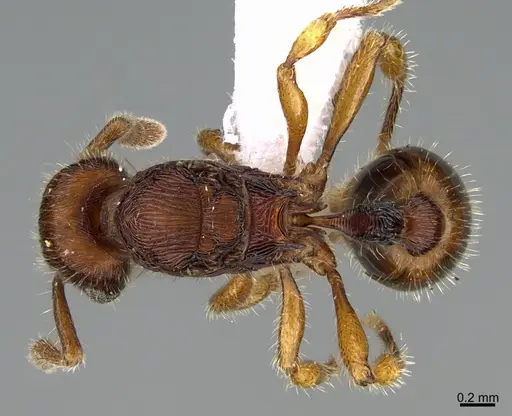
CASENT0923637
View on AntWeb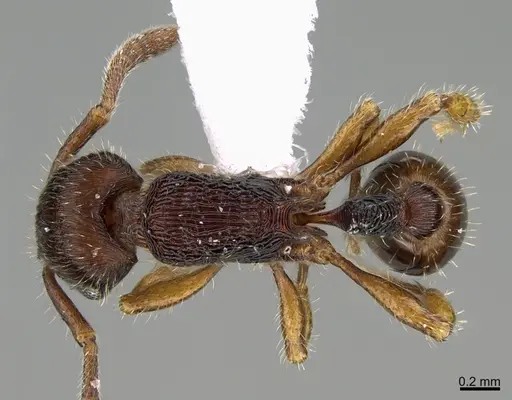
Literature
Loading...Loading products...