

Formicoxenus chamberlini
- Scientific Name
- Formicoxenus chamberlini
- Tribe
- Crematogastrini
- Subfamily
- Myrmicinae
- Author
- Wheeler, 1904
- Distribution
- Found in 1 countries
Formicoxenus chamberlini Overview
Formicoxenus chamberlini is an ant species of the genus Formicoxenus. It is primarily documented in 1 countries , including United States of America. Detailed taxonomic data and occurrence records can be further explored via authoritative databases such as AntWeb or the Global Biodiversity Information Facility (GBIF).
Formicoxenus chamberlini
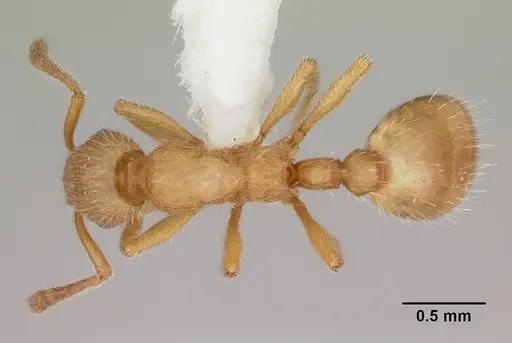
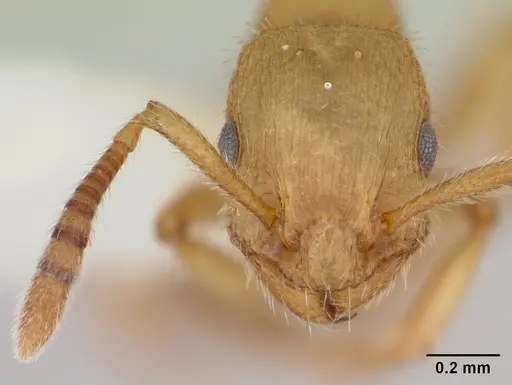
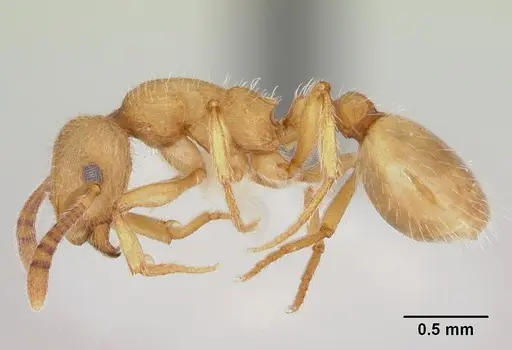
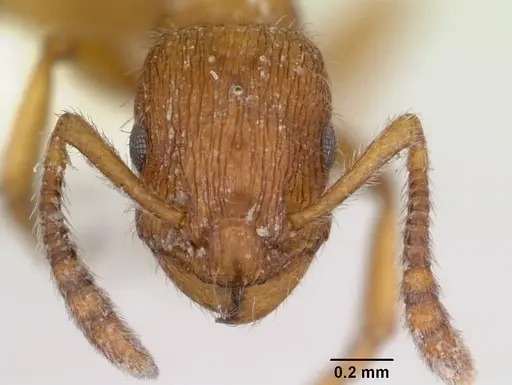
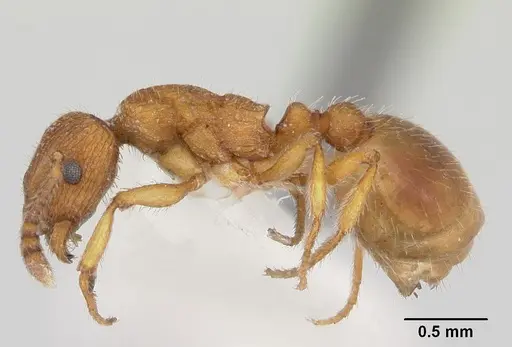
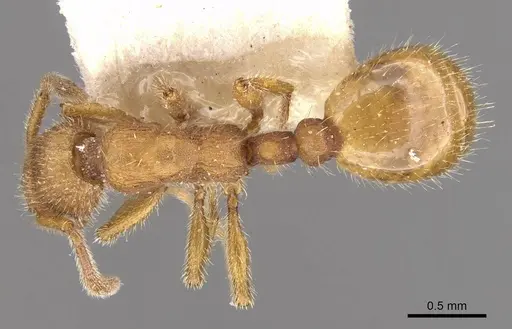
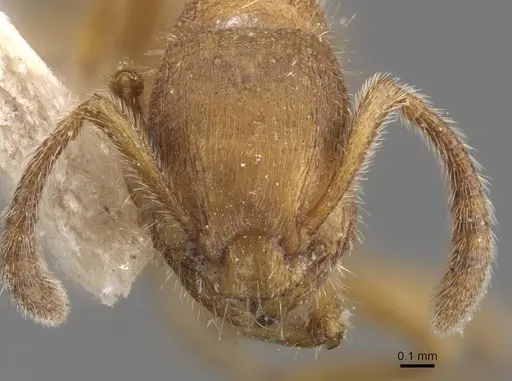
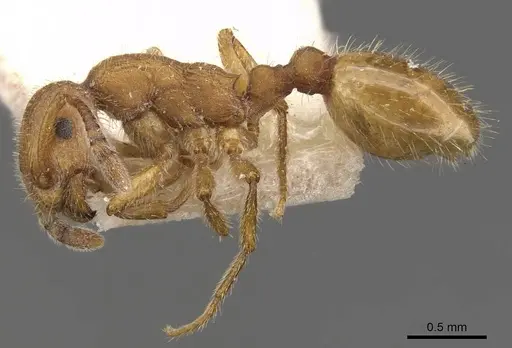
Formicoxenus chamberlini is a tiny myrmecophilous ant native to the western United States, particularly Utah and Oregon. Workers measure just 3-3.25mm and are a rich ferruginous red color throughout, with the gaster and legs slightly paler than the head and thorax. These ants are distinguished by their small size, short epinotal spines, and dense coarse hairs covering the body. The species was originally described as Formicoxenus chamberlini before being reclassified to Formicoxenus [1][2].
This ant is remarkable for its symbiotic relationship with host ants of the genus Manica (specifically Manica invidia/mutica). Formicoxenus chamberlini lives in xenobiosis, maintaining its own independent nest within the host colony's territory, but freely associating with the host ants. The Formicoxenus nest is typically located in a chamber about 8 inches below the surface, surrounded by the host's galleries. This is one of the few North American ants exhibiting this type of inquiline relationship [1][2].
Quick Summary
- Difficulty: Expert
- Origin & Habitat: Western United States, specifically Utah (near Salt Lake City) and Oregon. Found in warm, dry regions with argillaceous (clay-rich) soil, often in flood-plains of the Jordan River. Nests are typically in loose soil, sometimes containing alkali, and often found in open areas including foot-paths [2][3].
- Colony Type: Myrmecophilous inquiline, maintains independent colony within host ant (Manica) nest galleries. Unusual reproductive system with multiple forms: ergatomorphs (wingless reproductive workers) and intermorphes equally common (49.2% each), while winged gynomorph queens are very rare (1.6%). Males are intermediate, apterous, and weakly ergatoid [1].
- Queen: Socially parasitic
- Special: Gamergates
- Size & Growth:
- Queen: 3.25mm [2]
- Worker: 3-3.25mm [2]
- Colony: Small colonies, likely under 100 workers based on related Formicoxenus species and the fact they maintain separate nests within host colonies [1][3]
- Growth: Unknown, likely slow to moderate given small colony size
- Development: Unconfirmed, no direct development data available for this species (Development timeline has not been studied. Related Formicoxenus species suggest 6-10 weeks at optimal temperature, but this is an estimate.)
- Antkeeping:
- Temperature: Keep around 20-24°C based on warm, dry habitat preferences. Room temperature is likely suitable [1][2]
- Humidity: Moderate, they inhabit soil chambers in dry to moderately damp conditions. Keep substrate lightly moist but not wet [1]
- Diapause: Likely requires winter rest period, Manica hosts overwinter in Utah's cold winters. Reduce temperature to 10-15°C for 3-4 months during winter [1][2]
- Nesting: This species cannot be kept without its host ant (Manica). Requires a naturalistic setup with both the Formicoxenus colony and a healthy Manica invidia or Manica invidia colony. The Formicoxenus nest should be connected to the host nest, allowing the ants to interact naturally. A split setup works best, one section for Manica host, another for Formicoxenus, with tubing between them [1][3].
- Behavior: Generally peaceful and non-aggressive. These tiny ants are highly social with their host Manica workers, often following them into and out of the nest. They are not aggressive and lack significant defensive capabilities. Escape risk is moderate, their small size means they can squeeze through small gaps, but they are not particularly active escape artists. They are primarily surface-active within the nest complex [1][2].
- Common Issues: host colony loss, without a healthy Manica host colony, the Formicoxenus colony will likely fail to thrive, difficulty finding host ants, Manica invidia/mutica colonies are required and may be difficult to source legally, colony establishment failure, myrmecophilous ants often struggle to establish in captivity without proper host association, small colony size, colonies remain small, making them less impressive display ants, specialized requirements, this is not a beginner species and requires expert-level antkeeping knowledge
The Myrmecophilous Lifestyle
Formicoxenus chamberlini represents a fascinating case of xenobiosis, a form of symbiosis where one species lives in close association with another without being truly parasitic. Unlike slave-making ants that raid other colonies, or social parasites that exploit host workers, Formicoxenus maintains its own independent colony within the host ant's territory. The Formicoxenus workers and queen live in their own chambers, but these chambers are surrounded by the host's galleries, allowing free movement between the two species [1][3].
This relationship appears to be commensal rather than parasitic, the Formicoxenus benefit from the host's protected nest environment and possibly food scraps, while the host neither significantly benefits nor suffers. Wheeler noted that Formicoxenus 'consort freely with the host ants' and have their 'own independent nest in the midst of the Manica formicary.' The host ants do not attack or otherwise interfere with their guests [2].
For antkeepers, this means you cannot successfully keep F. chamberlini without also keeping a healthy colony of their host species (Manica invidia or Manica invidia). The two colonies must be connected in a way that allows interaction, but also allows the Formicoxenus to maintain their separate colony structure [1].
Housing and Host Requirements
Keeping Formicoxenus chamberlini is an expert-level challenge that requires maintaining two ant colonies simultaneously, the host Manica colony and the Formicoxenus colony. You will need a split naturalistic or formicarium setup where both colonies can thrive while maintaining their separate identities [1][3].
The setup should include: a section for the Manica host colony (they nest in soil with chambers about 8 inches deep), connected via tubing to a separate section where the Formicoxenus can establish their own nest. The substrate should be clay-rich and slightly damp but not waterlogged. Both colonies need access to protein foods and sugar sources [2].
Finding the host ant may be the biggest challenge, Manica invidia/mutica is not a common species in the antkeeping hobby. You would need to locate a legal source or collect from the wild in Utah (where permitted). Never release these ants outside their native range, and never introduce them to areas where Manica does not naturally occur [2].
Reproductive Biology
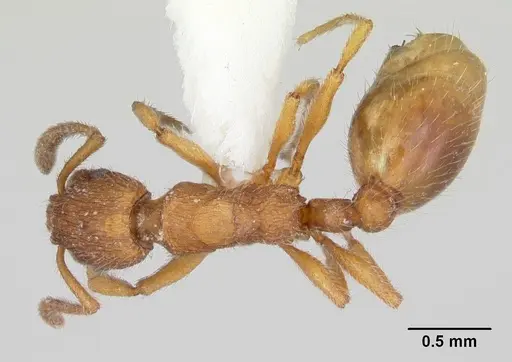
Formicoxenus chamberlini has one of the most unusual reproductive systems among North American ants. Rather than relying on typical winged queens, this species primarily reproduces through ergatomorphs, wingless females that develop from workers and can reproduce without mating (though they may mate with the weakly ergatoid males). Studies show that ergatomorphs and intermorphes each make up about 49.2% of reproductive forms, while fully winged gynomorph queens are extremely rare at only 1.6% [1].
The ergatomorphs have reduced reproductive organs, typically only 2 ovarioles compared to the 6 found in typical queens, and they lack a seminal receptacle. This means they rely primarily on asexual reproduction or may be semi-claustral. Males are also unusual, they are intermediate, apterous (wingless), and weakly ergatoid [1].
This reproductive system means colony growth is slow, and the colony will remain small. The lack of typical nuptial flights (since winged queens are rare) also affects how you might eventually propagate the colony [1].
Feeding and Care
Both the Formicoxenus and their Manica host need regular feeding. Feed the Manica colony standard ant fare, protein sources like mealworms, crickets, or other insects, plus sugar water or honey. The Formicoxenus will likely scavenge from the host's food and may also forage independently [2].
Because this is a myrmecophilous species, they are not aggressive predators. Their small size limits what prey they can tackle. They likely benefit from the same diet as their hosts, small insects and honeydew [1][2].
Keep the setup at room temperature (around 20-24°C) with moderate humidity. The natural habitat in Utah experiences cold winters, so both colonies will benefit from a winter dormancy period where temperatures are reduced to 10-15°C for several months [1][2].
Legal and Ethical Considerations
Formicoxenus chamberlini has a very limited natural distribution, only confirmed from Utah and Oregon in the United States. This species is listed as Vulnerable on the IUCN Red List, indicating population concerns [2].
If you collect from the wild, do so only where legally permitted and in sustainable numbers. Never release Formicoxenus chamberlini outside their native range, they are specialized to their host ant and would not establish elsewhere. More importantly, introducing them to areas where Manica does not naturally occur would fail anyway [2].
Due to their specialized requirements and the need for a host colony, this species is not recommended for most antkeepers. It represents a fascinating natural history subject but requires expert-level knowledge of ant husbandry and the specific biology of myrmecophilous relationships [1].
Frequently Asked Questions
Can I keep Formicoxenus chamberlini without a host ant colony?
No. Formicoxenus chamberlini is a myrmecophilous ant that requires a host colony of Manica invidia or Manica invidia to survive. Without the host ant, the colony will fail. This is not optional, it is a fundamental requirement of the species [1][3].
How difficult is Formicoxenus chamberlini to keep?
This is an expert-level species. You need to maintain two colonies simultaneously (the host and the Formicoxenus), source the rare Manica host ant, and provide the specific conditions both species need. Most antkeepers should not attempt this species [1].
What do Formicoxenus chamberlini eat?
They likely scavenge from their host's food and forage for small insects. Feed them small protein sources like fruit flies, pinhead crickets, or small mealworm pieces, plus sugar water or honey. The host Manica colony will need regular protein and sugar as well [1][2].
How big do Formicoxenus chamberlini colonies get?
Colonies remain small, likely under 100 workers. This is typical for myrmecophilous ants that live in close association with hosts. The reproductive system (primarily ergatomorphs rather than winged queens) also limits growth potential [1].
Do Formicoxenus chamberlini ants sting?
At 3-3.25mm, these ants are too small to sting humans effectively. They are not considered dangerous and are quite peaceful [2].
Where does Formicoxenus chamberlini live naturally?
They are found only in the western United States, primarily Utah (near Salt Lake City) and Oregon. They live in warm, dry regions with clay-rich soil in the nests of their host ant Manica invidia/mutica [1][2].
Do Formicoxenus chamberlini need hibernation?
Yes, likely. Since their Manica host overwinters in Utah's cold winters, both colonies should experience a winter rest period. Reduce temperatures to 10-15°C for 3-4 months during winter [1][2].
Can I breed Formicoxenus chamberlini?
Breeding this species is extremely challenging. They reproduce primarily through ergatomorphs (wingless reproductive workers) rather than typical winged queens. The unusual reproductive system makes propagation difficult even for experts [1].
Is Formicoxenus chamberlini endangered?
Yes, they are listed as Vulnerable on the IUCN Red List. Their range is limited and they depend entirely on their host ant, making them vulnerable to habitat changes [2].
References

This caresheet is licensed under CC BY-SA 4.0 .
Literature
Loading...Loading products...