

Formica xerophila
- Scientific Name
- Formica xerophila
- Tribe
- Formicini
- Subfamily
- Formicinae
- Author
- Smith, 1939
- Distribution
- Found in 2 countries
Formica xerophila Overview
Formica xerophila is an ant species of the genus Formica. It is primarily documented in 2 countries , including Mexico, United States of America. Detailed taxonomic data and occurrence records can be further explored via authoritative databases such as AntWeb or the Global Biodiversity Information Facility (GBIF).
Formica xerophila
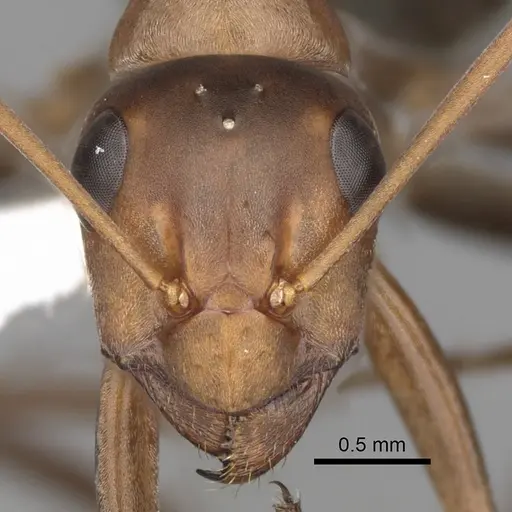
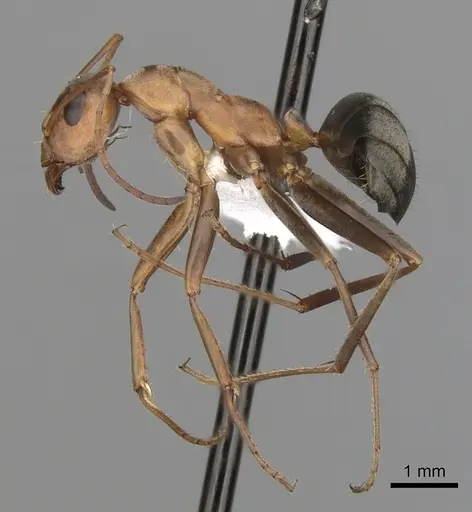
Formica xerophila is a medium-sized ant native to the western United States and northern Mexico. Workers measure 4.5-6.5mm and are pale brown with a slightly darker gaster. They have a distinctive thick petiole with a blunt apex when viewed from the side. This species belongs to the fusca group of Formica ants and is known for its unique behavioral strategy: workers forage individually on the ground but work together in groups of 4-5 to defend and tend aphid patches on trees. They nest in soil, either under stones or in exposed nests topped with soil craters, and are found across arid and semi-arid habitats from California to New Mexico at elevations between 4,200-6,500 feet [1][2].
What makes F. xerophila fascinating is their sophisticated context-dependent aggression. These ants can assess their group's numerical strength and adjust their behavior accordingly, they become more aggressive when part of a large group defending valuable resources like aphid colonies on trees, but will retreat from conflicts when they feel isolated. They also recognize neighboring ant colonies and treat strangers as bigger threats than familiar neighbors. This flexibility allows them to coexist with more dominant ant species like Formica integroides through a dominance-discovery trade-off [3][1].
Quick Summary
- Difficulty: Medium
- Origin & Habitat: Western United States (Washington, California, Nevada, Utah, Arizona, New Mexico) and northern Mexico. Found in arid to semi-arid habitats including creosote scrub, Joshua tree woodland, blackbrush scrub, and pinyon-juniper woodland between 2,900-6,500 feet elevation [2].
- Colony Type: Polydomous, colonies nest in multiple connected locations. Colony structure appears to be single-queen based on typical Formica patterns, though this is not directly documented for this species.
- Colony: Monogyne
- Founding: Claustral
- Size & Growth:
- Queen: Unknown, estimated 8-10mm based on related Formica species
- Worker: 4.5-6.5mm [1]
- Colony: Unknown, likely several hundred workers based on related fusca group species
- Growth: Moderate, estimated based on temperate Formica development
- Development: Estimated 8-12 weeks at optimal temperature based on related Formica species (Development time is estimated from genus-level data since species-specific development has not been studied. Expect slower growth than tropical species.)
- Antkeeping:
- Temperature: Keep around 20-24°C. They tolerate a range from roughly 18-28°C given their natural elevation range from desert to pine forest. Provide a temperature gradient so ants can self-regulate.
- Humidity: Low to moderate, these are arid-adapted ants. Keep nest substrate moderately moist but allow it to dry between waterings. Avoid overly damp conditions that would promote mold.
- Diapause: Yes, as a temperate species from high elevations, they require a winter rest period. Reduce temperature to 10-15°C for 3-4 months during winter.
- Nesting: Soil-nesting species. Works well with naturalistic setups using soil or sand substrate, or Y-tong/plaster nests with compact chambers. Provide enough depth for workers to create tunnels. Accepts both covered chambers and partially exposed nesting areas.
- Behavior: Workers are monomorphic (all the same size) and measure 4.5-6.5mm. They show fascinating context-dependent aggression: more aggressive when defending aphid colonies on trees in groups, but more timid and likely to retreat when foraging alone on the ground. They can assess their numerical strength and discriminate between stranger and neighbor ant colonies. Generally submissive to larger Formica species like F. integroides. They use long-term trail networks for foraging and are polydomous, meaning they maintain multiple connected nest sites. Escape risk is moderate, standard barrier precautions are sufficient [1][4].
- Common Issues: polydomous nesting means they may need more space or multiple connected nest areas, colonies may struggle in captivity if kept with more aggressive ant species due to their submissive nature, winter diapause is essential, skipping hibernation can weaken or kill colonies, slow growth compared to tropical species may frustrate beginners, wild-caught colonies may have parasites that cause issues in captivity
Housing and Nest Setup
Formica xerophila is a soil-nesting species that does well in naturalistic setups with a soil or sand mixture as substrate. You can use test tubes for founding colonies, but expect to move them to a larger setup as the colony grows. A naturalistic formicarium with compact chambers works well, these ants create their own tunnels. Because they are polydomous (maintain multiple connected nests), consider providing multiple nesting areas connected by tubes or allowing them to expand through a larger substrate area. The nest should have some depth (at least 3-4 inches) for tunnel building. Keep the substrate moderately moist but not waterlogged, these ants come from arid habitats and are adapted to drier conditions than many Formica species. [2][4]
Feeding and Diet
In the wild, F. xerophila workers forage individually on the ground for small prey and dead arthropods, while working in groups to tend and defend aphid colonies on trees. They also collect honeydew from aphids. In captivity, offer a varied diet: protein sources like small crickets, mealworms, or other small insects 2-3 times per week, and sugar sources like honey water or sugar water constantly. Since they tend aphids in the wild, they likely accept honeydew but you can offer diluted honey as a substitute. Remove uneaten prey after 24-48 hours to prevent mold. Workers are monomorphic at 4.5-6.5mm, so offer prey items appropriately sized, small crickets, fruit flies, or small mealworm pieces work well [1][4].
Temperature and Seasonal Care
Keep your colony at room temperature (20-24°C) with a slight gradient if possible. These ants naturally occur across a wide elevation range (2,900-6,500 feet), so they can handle some temperature variation. A heating cable on one side of the nest can create a gradient, but is not strictly necessary if your room stays in the 18-28°C range. More importantly, F. xerophila requires a winter diapause. Reduce temperatures to 10-15°C for 3-4 months during winter (roughly November-February in the Northern Hemisphere). This rest period is essential for colony health, skipping hibernation can weaken or kill the colony over time. Do not feed during the diapause period and minimize disturbance. [2]
Behavior and Colony Dynamics
This species shows fascinating behavioral complexity. Workers forage individually on the ground but form teams of 4-5 to defend valuable aphid resources on trees. They can assess their group's numerical strength, when they feel part of a large group, they become more aggressive and persistent, when isolated, they are more timid and likely to retreat. They also recognize neighboring ant colonies and treat strangers as greater threats than familiar neighbors. This context-sensitive aggression allows them to coexist with more dominant species like Formica integroides. In captivity, you may observe similar behavior if you provide multiple feeding stations, some workers may defend rich food sources while others forage independently. They are not aggressive toward keepers and rarely bite [1][3].
Polydomous Nesting
F. xerophila is polydomous, meaning colonies maintain multiple connected nest sites rather than a single nest. This is important for antkeepers to understand because it affects housing needs. In captivity, you can simulate this by providing multiple nest areas connected by tubes, or by using a larger naturalistic setup where ants can expand naturally. The natural nesting behavior includes both covered nests (under stones or logs) and exposed nests with characteristic craters 7-22cm in diameter. Provide your colony with options, some covered nesting space and some area for potential crater-building if using a naturalistic setup [4][2].
Frequently Asked Questions
How long does it take for Formica xerophila to produce first workers?
Estimated 8-12 weeks from egg to worker at optimal temperature (around 20-24°C). This is slower than many tropical ants because F. xerophila is a temperate species adapted to seasonal development. The first workers (nanitics) will be smaller than mature workers.
Can I keep multiple queens together?
Not recommended. While F. xerophila is polydomous (has multiple nest sites), this refers to connected nests within a single colony, not multiple founding queens. Combining unrelated queens has not been documented for this species and would likely result in fighting.
What temperature do Formica xerophila need?
Keep them at 20-24°C with a slight gradient if possible. They tolerate 18-28°C but more importantly need a winter diapause at 10-15°C for 3-4 months. Room temperature is usually suitable for the active season.
Are Formica xerophila good for beginners?
Medium difficulty. They are more challenging than some beginner species because they require winter diapause and have specific behavioral needs. However, they are not overly aggressive and their soil-nesting requirements are straightforward. Expect slower growth than tropical ants.
Why do my Formica xerophila retreat from food?
This is normal behavior. F. xerophila is generally submissive to more dominant ant species and will retreat from conflicts. When foraging individually on the ground, they are programmed to avoid costly fights. However, when defending resources in groups, they can be quite aggressive. Provide multiple feeding stations so timid foragers can find food without confronting aggressive competitors.
Do Formica xerophila need hibernation?
Yes, absolutely. As a temperate species from high elevations in the western US, they require a winter rest period. Reduce temperature to 10-15°C for 3-4 months during winter. Skipping diapause can weaken or kill the colony over time.
How big do Formica xerophila colonies get?
Colony size is not well documented, but based on related fusca group species, colonies likely reach several hundred workers. They are polydomous so they may spread across multiple connected nesting areas as they grow.
When should I move my colony to a formicarium?
Move from test tubes to a larger setup (naturalistic or Y-tong) when the colony reaches around 50-100 workers or when the test tube becomes cramped. Since they are polydomous, provide options for multiple connected nesting areas.
References

This caresheet is licensed under CC BY-SA 4.0 .
CASENT0005379
View on AntWeb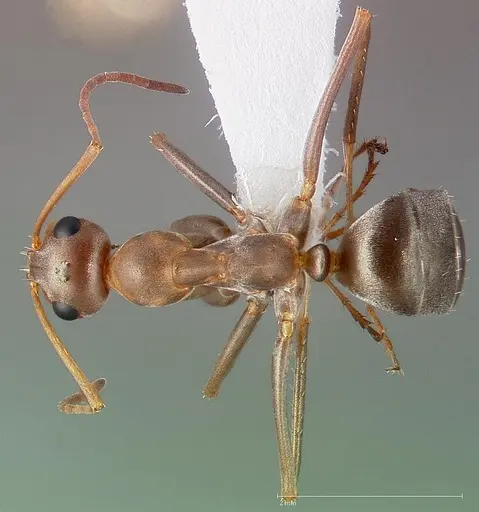
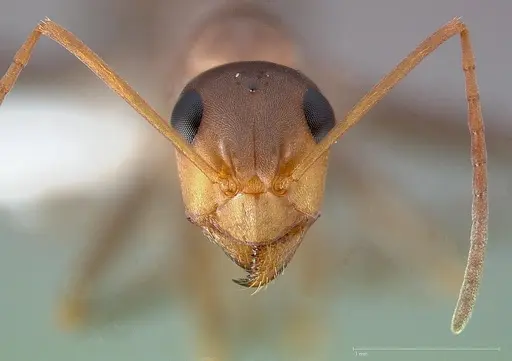
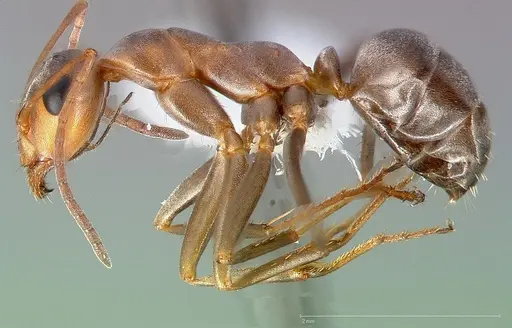
CASENT0280371
View on AntWeb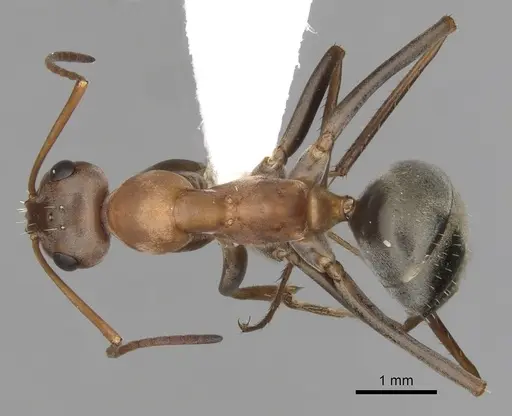
Literature
Loading...Loading products...