

Formica talbotae
- Scientific Name
- Formica talbotae
- Tribe
- Formicini
- Subfamily
- Formicinae
- Author
- Wilson, 1977
- Distribution
- Found in 1 countries
Formica talbotae Overview
Formica talbotae is an ant species of the genus Formica. It is primarily documented in 1 countries , including United States of America. Detailed taxonomic data and occurrence records can be further explored via authoritative databases such as AntWeb or the Global Biodiversity Information Facility (GBIF).
Formica talbotae
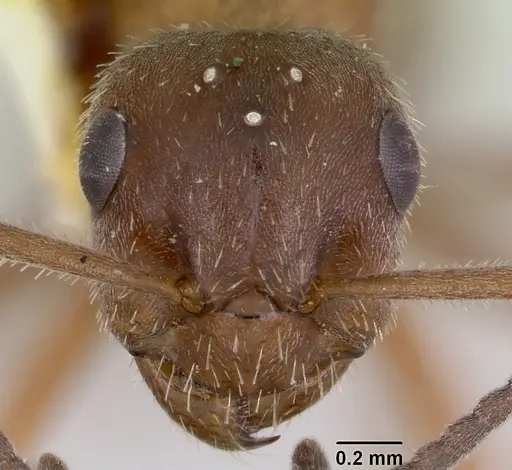
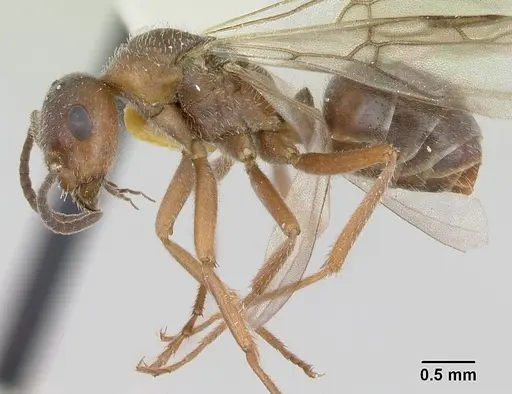
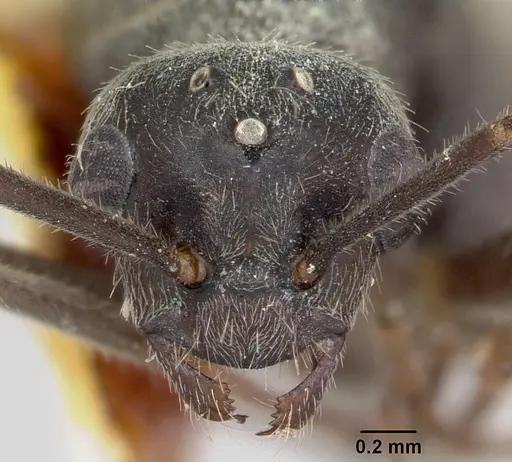
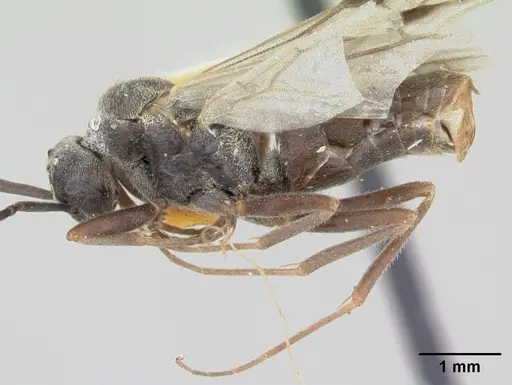
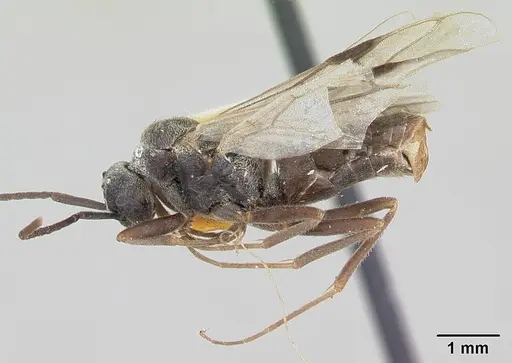
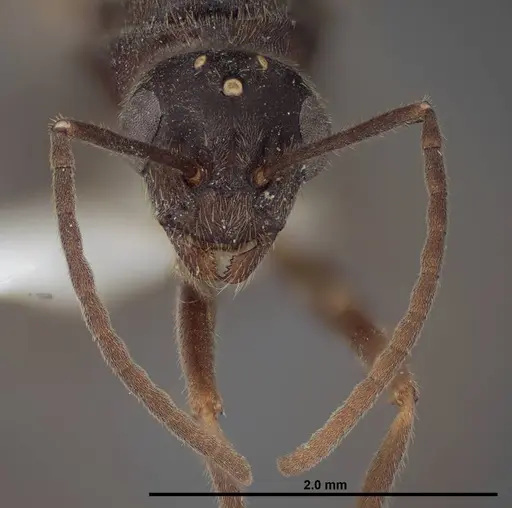
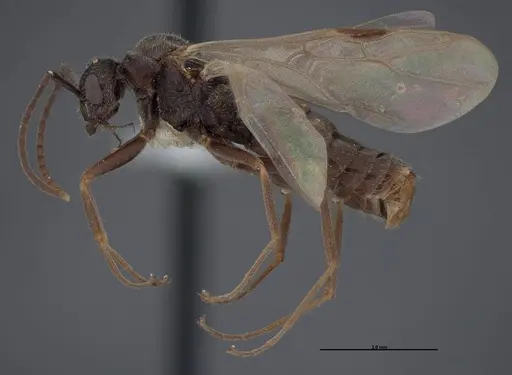
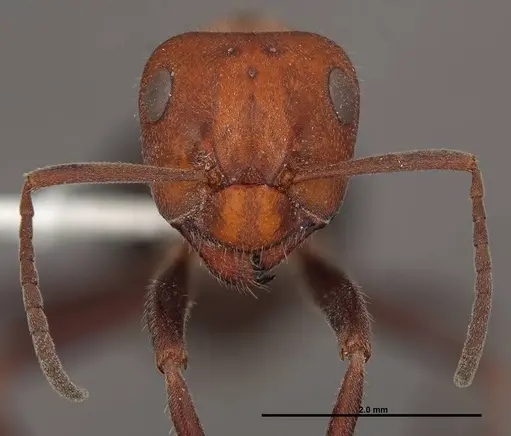
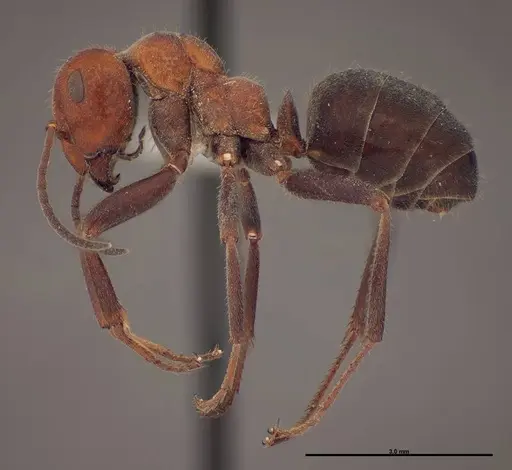
Formica talbotae is one of the most unusual ants in North America, it is the only confirmed workerless social parasite in the entire genus Formica. These tiny ants have completely lost the worker caste and live permanently inside nests of their host species, Formica obscuripes (the prairie mound-builder ant). Queens are miniature, measuring about half the size of a host major worker, with medium yellowish-brown coloration and abundant erect hairs on the body [1]. This species is found exclusively in the United States, particularly in open prairie habitats with sandy, well-drained sloping fields in Michigan, Iowa, and North Dakota [2].
What makes F. talbotae remarkable is its specialized lifestyle, it has evolved to inhabit queenless host colonies that have lost their reproductive queen. The parasite queens cannot found their own colonies and instead integrate into host nests, where the host workers care for their brood as if it were their own. This species represents an extreme example of social parasitism in ants, having secondarily lost its worker caste entirely [3].
Quick Summary
- Difficulty: Expert
- Origin & Habitat: United States, Michigan, Iowa, and North Dakota. Found in open prairie habitats with sandy, well-drained sloping fields [2][1].
- Colony Type: Workerless permanent social parasite (inquiline). Lives exclusively in queenless host colonies of Formica obscuripes. Cannot form independent colonies, requires host workers to survive. The only confirmed workerless inquiline in the genus Formica [3][1].
- Queen: Socially parasitic
- Size & Growth:
- Queen: Very small, approximately half the size of the largest host major worker [2]. Signal: estimated from host comparison.
- Worker: Workerless, this species has completely lost the worker caste [3].
- Colony: Colony produces 2600-2800 alates per season with approximately 42% being females [1]. Signal: estimated from flight observation data.
- Growth: Cannot be assessed, species has no workers. Signal: not applicable.
- Development: Not applicable, this is a workerless species. No worker brood is ever produced [1]. (Only sexual brood (males and females) is produced. Host workers care for parasite brood as if it were their own [1].)
- Antkeeping:
- Temperature: Flight season occurs when temperatures rise above 22°C. Keep host colony warm, around 22-26°C for optimal activity [2]. Signal: inferred from flight temperature data.
- Humidity: Found in sandy, well-drained prairie habitats. Keep nest substrate moderately dry to slightly moist, avoiding excessive dampness [2]. Signal: inferred from natural habitat.
- Diapause: Likely requires winter dormancy similar to host species. Host F. obscuripes overwinters in Michigan, expect 3-4 months of cold period around 5-10°C [1]. Signal: inferred from host species and northern range.
- Nesting: In nature, lives in host nests within the thatch mounds built by F. obscuripes and in surrounding soil chambers. In captivity, must be kept with a healthy host colony. A naturalistic setup with a host colony in a formicarium is required [1]. Signal: inferred from natural history.
- Behavior: Extremely docile and passive, this species has no workers and cannot defend itself. Queens are fully integrated into host colonies and produce only sexuals (males and females). The host workers show no aggression toward the parasite queens and will tend their brood. Escape risk is minimal since queens are relatively large compared to typical Formica but cannot survive outside host colonies. The parasite appears to specialize on declining host colonies that have lost their queen [3].
- Common Issues: This species cannot survive without a host colony, keeping F. talbotae without F. obscuripes or a compatible Formica host will result in death within days., Finding a host colony is extremely difficult, F. obscuripes is required, and the parasite is only found in queenless host nests., This is not a species you can establish from a founding queen, you must acquire a mixed colony or introduce queens to an established queenless host colony., The species is rare in the wild and protected in some areas, do not collect from the wild., Without workers, the colony cannot forage or expand, it is entirely dependent on host workers for all activities.
Understanding Workerless Social Parasites
Formica talbotae represents one of the most extreme forms of social parasitism known in ants. Unlike typical ants that have a queen, workers, and brood, this species has completely lost the worker caste. The queens are miniature and cannot found colonies on their own, they must find an existing host colony to invade and live permanently within it [3]. This is called inquiline parasitism, meaning 'tenant' in Latin. The parasite queens are accepted by host workers because they have evolved to mimic the chemical signature of the host colony. Remarkably, host workers will care for parasite brood as if it were their own, tending the larvae and pupae alongside their host's brood [1]. This species is the only confirmed workerless inquiline in the entire genus Formica, which contains over 300 species worldwide.
The Host Relationship
F. talbotae specifically targets Formica obscuripes, the prairie mound-builder ant, as its host. This is a distant relative, they shared a common ancestor approximately 12 million years ago, which is why the relationship follows the 'loose' interpretation of Emery's rule (congeners but not sister lineages) [3]. The parasite specifically colonizes queenless host nests, colonies where the original queen has died or been lost. This suggests F. talbotae specializes on declining host colonies. In the wild, researchers found the parasite exclusively in queenless host colonies, and the host colonies were typically smaller than average [1][3]. This specialization may be an adaptation to reduce aggression from host workers, as queenless colonies may be more accepting of intruders.
Housing Requirements
Keeping F. talbotae is among the most challenging antkeeping endeavors possible. You cannot keep this species alone, it requires a living host colony of F. obscuripes or a very closely related Formica species. The host colony must be queenless (or you must remove the host queen) for the parasite to integrate successfully. The setup should be a naturalistic formicarium that can accommodate both species. The nest should have the thatch-like structure that F. obscuripes builds, with chambers in both the thatch and surrounding soil [1]. Temperature should be maintained around 22-26°C, and humidity should be moderate, sandy and well-drained. This species is absolutely not suitable for beginners and should only be attempted by experienced antkeepers with access to both the parasite and a compatible host colony.
Reproduction and Nuptial Flights
Unlike typical ants, F. talbotae produces only sexuals, males and new queens. No workers are ever produced. The flight season is exceptionally long, extending from mid-June to late September, with flights occurring on every favorable morning during this period [1]. Flights take place when temperatures rise above 22°C (approximately 69-83°F), when the light is brightening, and when there is no appreciable wind, typically in the morning hours. Researchers estimated that a single colony could produce between 2600 and 2800 alates in a season, with approximately 42% being females (new queens) [1]. After mating, the new queens must find a queenless host colony to invade, without a host, they cannot survive.
Legal and Ethical Considerations
Formica talbotae is listed as Vulnerable on the IUCN Red List, indicating it is at risk of extinction. It has a limited distribution in the United States and is considered rare. Additionally, it may be protected under state wildlife regulations in Michigan and other states where it is found. Before attempting to keep this species, research local regulations regarding collection and possession. Because it is a workerless parasite requiring a specific host, captive breeding is extremely difficult. If you encounter this species in the wild, observe and appreciate it in its natural habitat rather than collecting it. Never release captive colonies into the wild, they cannot survive without a host and could potentially spread diseases to wild populations. [2]
Frequently Asked Questions
Can I keep Formica talbotae in a test tube like other ants?
No. Formica talbotae is a workerless social parasite that cannot survive without a host colony. Keeping a queen in a test tube without host workers will result in death. You must keep this species with a living host colony of Formica obscuripes or a closely related Formica species.
How do I start a colony of Formica talbotae?
You cannot start a colony from a founding queen like typical ants. Instead, you must either find a mixed colony in the wild (which is rare and may be illegal) or introduce parasite queens to an established queenless host colony. The host colony must be queenless for the introduction to succeed. This is an expert-level procedure that requires significant experience with antkeeping.
Do Formica talbotae ants have workers?
No. Formica talbotae is unique in the genus Formica as it is the only confirmed workerless species. The worker caste has been completely lost through evolution. Only the queen caste (and males) exist, the colony produces only sexuals, not workers.
What do Formica talbotae eat?
The parasite queens are fed by host workers through trophallaxis (mouth-to-mouth food sharing). They do not forage or hunt. In captivity, you would feed the host colony a typical Formica diet: sugar water, honey, and protein sources like insects. The host workers will share food with the parasite queens.
Are Formica talbotae good for beginners?
No. This species is absolutely not suitable for beginners. It is one of the most difficult ants to keep because it requires a specific host species (Formica obscuripes) that must be queenless for the parasite to integrate. The species is also rare, potentially protected, and requires expert-level knowledge of social parasitism. This is an advanced species for experienced antkeepers only.
How long do Formica talbotae queens live?
The exact lifespan is unknown, but as permanent parasites living within host colonies, they likely live for many years, similar to typical Formica queens. They are protected within the host nest and do not face the dangers of founding queens. The long flight season (mid-June to late September) suggests they produce new queens annually over multiple years.
What is the host ant for Formica talbotae?
The primary host is Formica obscuripes, also known as the prairie mound-builder ant. This is a common prairie ant that builds characteristic mounds of thatch in open grasslands. F. talbotae is a distant relative of this host, having shared a common ancestor approximately 12 million years ago.
Why does Formica talbotae only live in queenless host colonies?
Research shows this species specifically targets queenless host colonies. This is likely an adaptation to reduce aggression from host workers. When a host colony loses its queen, the workers may be more accepting of intruders because the colony is already in decline. The parasite appears to specialize on these declining colonies rather than attacking healthy, queen-right colonies.
References

This caresheet is licensed under CC BY-SA 4.0 .
CASENT0103454
View on AntWeb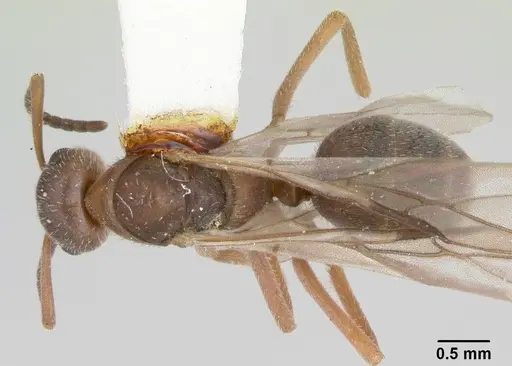
CASENT0103455
View on AntWeb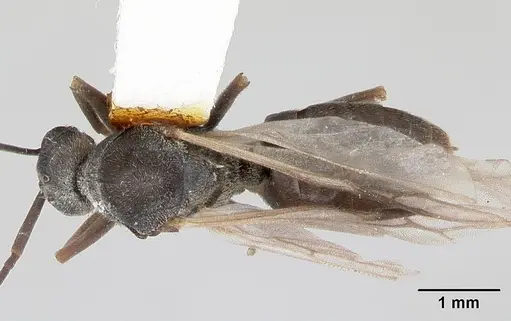
FMNHINS0000083070
View on AntWeb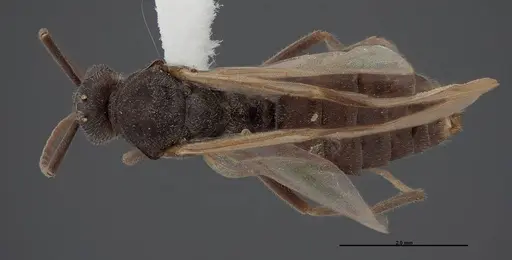
FMNHINS0000083071
View on AntWeb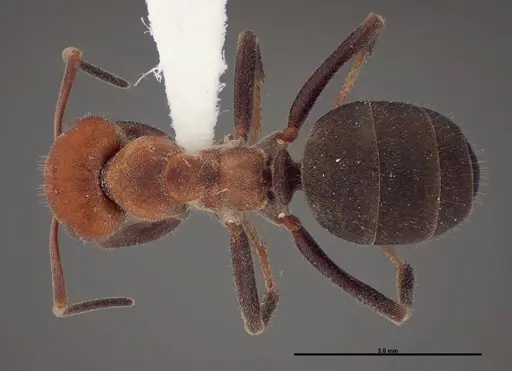
Literature
Loading...Loading products...