

Euponera ivolo
- Scientific Name
- Euponera ivolo
- Tribe
- Ponerini
- Subfamily
- Ponerinae
- Author
- Rakotonirina & Fisher, 2013
- Distribution
- Found in 1 countries
Euponera ivolo Overview
Euponera ivolo is an ant species of the genus Euponera. It is primarily documented in 1 countries , including Madagascar. Detailed taxonomic data and occurrence records can be further explored via authoritative databases such as AntWeb or the Global Biodiversity Information Facility (GBIF).
Euponera ivolo
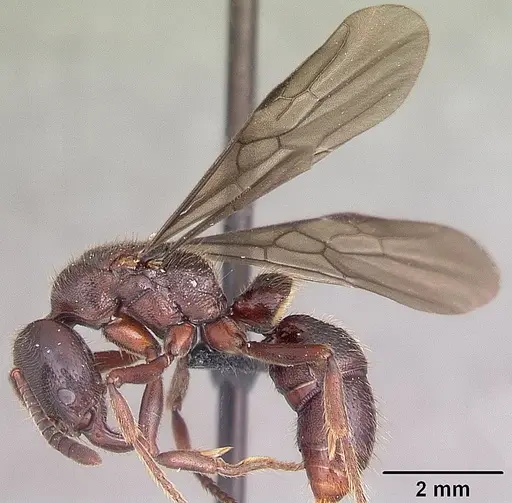
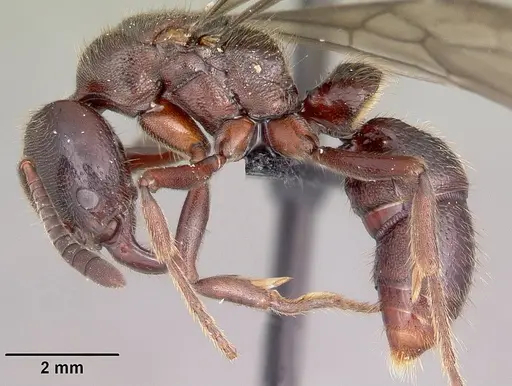
Euponera ivolo is a medium-sized ponerine ant known from a single alate queen collected in central eastern Madagascar. The queen measures 1.88mm in head width and 2.86mm in mesosoma length, with a reddish-brown coloration and distinctive golden pilosity. The most remarkable aspect of this species is that it is known from only a single specimen, the type queen was found foraging on the forest floor of a high elevation montane rainforest at 1070m elevation near Torotorofotsy. This makes it one of the most poorly known ant species in Madagascar, with no workers, no colonies, and no captive records ever documented [1][2].
Quick Summary
- Difficulty: Expert, this species has never been kept in captivity and is known only from a single queen specimen
- Origin & Habitat: Torotorofotsy in central eastern Madagascar,1070m elevation, montane rainforest marsh edge [1][2]
- Colony Type: Unknown, only a single alate queen has ever been documented. No workers or established colonies have been observed [1][2].
- Size & Growth:
- Queen: 1.88mm head width,2.86mm mesosoma length [2]
- Worker: Unknown, worker caste has never been described
- Colony: Unknown, no colony data exists
- Growth: Unknown
- Development: Unknown, development has never been studied (No development data exists for this species. Related Ponerinae species typically take 2-4 months from egg to worker at optimal temperatures, but this is purely speculative for E. ivolo.)
- Antkeeping:
- Temperature: Inferred from habitat: likely prefers cooler temperatures typical of high elevation Madagascar (roughly 18-22°C). No direct data exists.
- Humidity: Inferred from montane rainforest marsh edge habitat: likely requires high humidity (70-85%). No direct data exists.
- Diapause: Unknown, no seasonal data has been collected
- Nesting: Unknown, no natural nesting observations exist. Related species in the Euponera sikorae group typically nest in soil or rotting wood.
- Behavior: Unknown, the only known specimen was a foraging queen with no behavioral observations recorded. Ponerine ants are typically predatory and may have painful stings, but this is unconfirmed for E. ivolo specifically.
- Common Issues: species is virtually unknown in captivity, no established husbandry guidelines exist, only a single specimen has ever been collected, making identification and verification extremely difficult, no workers have ever been described, so comparison with established species is impossible, risk of misidentification when obtaining stock, only the queen caste is known, extremely high difficulty due to complete lack of biological data
Species Overview and Identification
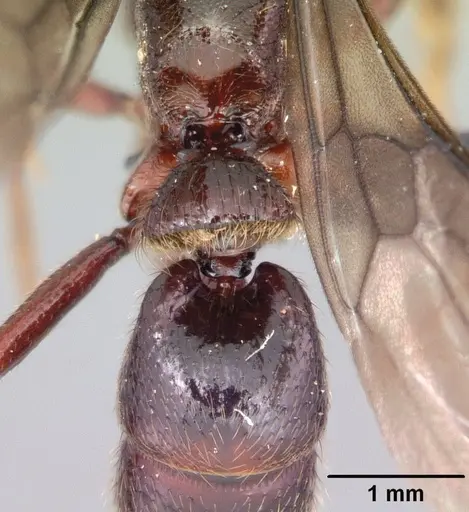
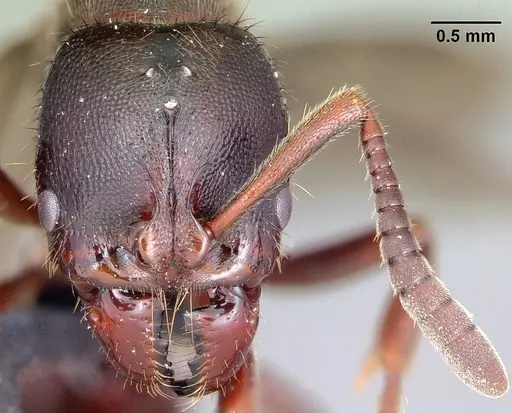
Euponera ivolo is an extremely rare ant species endemic to Madagascar, belonging to the Euponera sikorae species-group. The species was originally described as Euponera ivolo in 2013 by Rakotonirina and Fisher before being transferred to the genus Euponera in 2014. What makes this species extraordinary is that it is known from only a single specimen, an alate (winged) queen collected while foraging on the forest floor. The queen can be identified by a distinctive combination of features: a wide, straight anterior clypeal margin with a slight median notch, smooth and shiny lateral surfaces of the head and petiolar node, and abundant golden pilosity on the posterior surface of the petiolar node. The anterior face of the first gastral segment forms a shallow cavity, which is a distinguishing characteristic of this species [1][2].
Distribution and Habitat
Euponera ivolo is known only from the type locality at Torotorofotsy in central eastern Madagascar, at an elevation of approximately 1070 meters. The single known specimen was collected from the marsh edge of a montane rainforest, which is a cool, damp, high-elevation environment. This habitat type suggests the species may prefer cooler temperatures and high humidity consistent with Madagascar's central highland rainforests. However, with only one specimen collected, it is impossible to determine the true range or habitat preferences of this species. It may be extremely localized, or it may simply be rare and infrequently collected [1][2].
Current State of Knowledge
This is one of the least known ant species in the world from a husbandry perspective. The scientific literature contains only morphological descriptions of a single queen, there are no studies on workers, colonies, behavior, development, diet, or any aspect of captive care. The species has never been observed in captivity, and no established husbandry guidelines exist. This represents a fundamental gap in antkeeping knowledge that cannot be filled without first locating and studying living colonies. Any attempt to keep this species would be entirely experimental and would require extensive trial-and-error to determine basic requirements [1][2].
Related Species as a Guide
While Euponera ivolo specifically has no documented care requirements, it belongs to the Euponera sikorae species-group, which contains other Madagascar ponerine ants. Members of this group are typically medium-sized predatory ants that nest in soil or rotting wood in forest habitats. Related ponerine species generally prefer warm, humid conditions with temperatures in the 22-28°C range and high substrate moisture. However, given that E. ivolo was collected at 1070m elevation in a montane rainforest, it may prefer cooler conditions than typical lowland Madagascar ants. These inferences are speculative and should be treated as such [1][2].
Frequently Asked Questions
Can I keep Euponera ivolo ants in captivity?
It is extremely unlikely that Euponera ivolo is available in the antkeeping hobby. This species is known from a single queen collected in 2004 and has never been documented in captivity. No stock exists in commercial ant farms or among hobbyists, and the species has never been kept successfully.
What do Euponera ivolo ants eat?
Unknown, no feeding observations have ever been recorded for this species. As a member of the subfamily Ponerinae, it likely is predatory like other ponerine ants, but this is entirely speculative.
How long does it take for Euponera ivolo eggs to develop into workers?
Unknown, no development data exists for this species. Even the worker caste has never been described, so no timeline can be established.
What temperature should I keep Euponera ivolo at?
No specific temperature requirements have been documented. Based on the high elevation montane rainforest habitat (1070m), the species likely prefers cooler temperatures than typical lowland Madagascar ants, possibly in the 18-22°C range. However, this is entirely inferred and unconfirmed.
Is Euponera ivolo a good species for beginners?
No, this species is completely unsuitable for any antkeeper. It is virtually unknown in captivity, has never been kept successfully, and no husbandry guidelines exist. Even expert antkeepers would have no reference for caring for this species.
How big do Euponera ivolo colonies get?
Unknown, no colony data exists. Only a single queen has ever been documented, and the worker caste has never been described or observed.
Does Euponera ivolo need hibernation or diapause?
Unknown, no seasonal data has been collected. The high elevation habitat may experience cooler temperatures seasonally, but this has not been studied.
Can I keep multiple Euponera ivolo queens together?
Unknown, colony structure has never been documented. With only a single known specimen, there is no data on whether this species is monogyne (single queen) or polygyne (multiple queens).
Where can I obtain Euponera ivolo ants?
This species is essentially unavailable in the antkeeping hobby. It is known only from a single specimen collected in 2004 and has never been documented in captivity or commercial trade.
References

This caresheet is licensed under CC BY-SA 4.0 .
CASENT0050330
View on AntWeb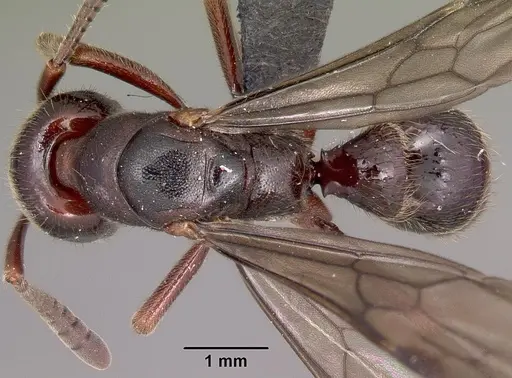
Literature
Loading...Loading products...