

Euponera agnivo
- Scientific Name
- Euponera agnivo
- Tribe
- Ponerini
- Subfamily
- Ponerinae
- Author
- Rakotonirina & Fisher, 2013
- Distribution
- Found in 1 countries
Euponera agnivo Overview
Euponera agnivo is an ant species of the genus Euponera. It is primarily documented in 1 countries , including Madagascar. Detailed taxonomic data and occurrence records can be further explored via authoritative databases such as AntWeb or the Global Biodiversity Information Facility (GBIF).
Euponera agnivo
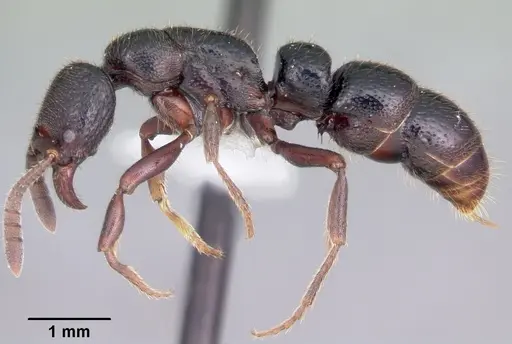
Euponera agnivo is a small to medium-sized ponerine ant endemic to the rainforests of eastern Madagascar. Workers measure approximately 5-6mm in total length with a distinctive black body showing a bluish reflection and brownish appendages. This species is easily recognized by its broadly convex clypeal margin and a unique shallow depression on the front of the first gastral segment that fits the shape of the petiolar node. Only known from worker caste specimens collected through leaf litter sampling in mid-elevation rainforest areas, this species remains poorly studied with no documented queen or reproductive biology. The genus Euponera contains several Madagascar endemics, and E. agnivo represents one of the more recently described species in the Euponera sikorae species group [1][2].
Quick Summary
- Difficulty: Unknown, likely Medium to Hard
- Origin & Habitat: Endemic to mid-elevation rainforests of eastern Madagascar, found in two protected areas: PN Mantadia in the central east and PN Andohahela in the southern region. They inhabit leaf litter in humid forest environments at elevations around 500-530 meters [1][2][3].
- Colony Type: Colony structure is unconfirmed. Only worker caste has been documented, no queens or males have been described in scientific literature. Based on related Ponerinae, expect single-queen colonies but this requires confirmation [1].
- Size & Growth:
- Queen: Undescribed, queen size unknown [1]
- Worker: Workers are approximately 5-6mm total length, head width 1.14-1.15mm, head length 1.36-1.40mm, mesosoma length 1.96-2.04mm [2]
- Colony: Unknown, only isolated workers have been collected [1]
- Growth: Unknown, no colony development data exists
- Development: Unconfirmed, no direct observations of colony development (Development timeline has not been studied. Related Ponerinae species typically require 6-10 weeks from egg to worker at tropical temperatures.)
- Antkeeping:
- Temperature: Inferred from Madagascar rainforest habitat: aim for 22-28°C with a gentle gradient. Avoid temperatures below 20°C or above 32°C. Room temperature within this range is acceptable, otherwise use a heating cable on one side of the nest [3].
- Humidity: Inferred from rainforest leaf litter habitat: keep substrate consistently moist but not waterlogged. Provide a humidity gradient with a moist nesting area and slightly drier areas for the ants to self-regulate. Target 70-85% relative humidity in the nest area [3].
- Diapause: Unlikely, as a tropical species from Madagascar, they probably do not require true hibernation. However, seasonal rainfall patterns may cause reduced activity during dry season months [3].
- Nesting: Inferred from collection method: they nest in leaf litter and soil in humid forest floors. In captivity, a naturalistic setup with moist substrate (like a mix of soil and coco fiber) works well, or a Y-tong/plaster nest with moisture chambers. Provide tight-fitting lids as escape prevention, though they are not extremely small [1].
- Behavior: Behavior is poorly documented. As a Ponerinae ant, they are likely predatory on small invertebrates and may have a stinger for defense. Workers are moderately sized and should be manageable for escape prevention with standard barriers. Their large eyes suggest active foraging, possibly during the day. No documented aggression toward humans or particularly defensive behavior has been recorded, but treat them as potentially capable of stinging [1][2].
- Common Issues: lack of documented care information makes this a high-risk species for beginners, no confirmed diet preferences, likely predatory on small invertebrates but specific prey acceptance is unknown, colony structure unconfirmed means you may not know if your setup matches their natural social structure, tropical humidity requirements can be challenging to maintain consistently, only worker caste known, finding a queen for captive breeding may be impossible
Species Identification and Distinction
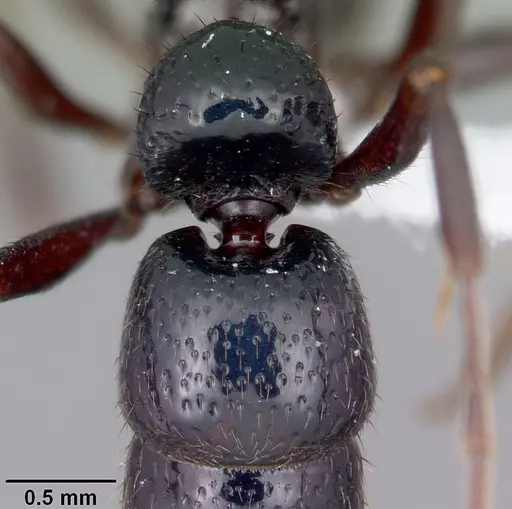
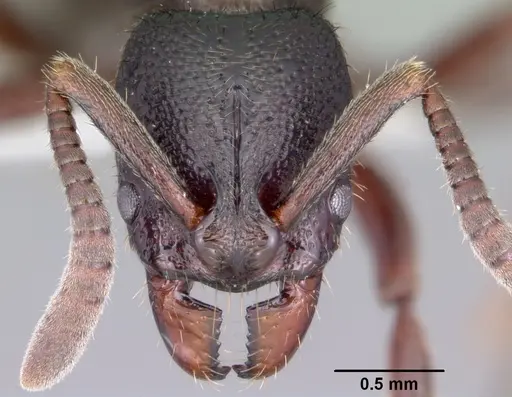
Euponera agnivo can be identified by several distinctive morphological features. The anteromedian margin of the clypeus (the plate above the mandibles) is broadly convex, meaning it curves outward in the center. The posterolateral margins of the propodeum (the rear section of the mesosoma) and the petiolar node are smooth, lacking the sharp teeth or tubercles that many related species possess. Most uniquely, the anterior surface of the first gastral segment has a shallow concave impression that matches the shape of the petiolar node, this likely helps create a more seamless connection between the petiole and gaster. Workers are black with a bluish metallic reflection, and the appendages plus the tip of the gaster are brownish in color. The eyes are notably large, with the maximum diameter nearly matching the greatest width of the antennal scape [2][1].
Natural History and Collection
This species is known only from the worker caste, with no queens or males described in scientific literature. Workers have been collected primarily through sifted leaf litter sampling in humid rainforest environments. The type locality is Andriantantely in eastern Madagascar at approximately 530 meters elevation. Additional specimens come from Mantadia in the central east and Andohahela in the southern region of the island. The species appears to be a cryptic leaf-litter dweller, living in the humid microhabitats within the forest floor litter layer. Only isolated workers have been found, suggesting either small colony sizes or dispersed nesting habits typical of many Ponerinae [1][2].
Inferred Care Requirements
Since no captive husbandry information exists for this species, care recommendations must be inferred from its natural habitat and related species. Euponera agnivo comes from mid-elevation rainforests in eastern Madagascar, a tropical environment with high humidity and warm temperatures year-round. They should be kept at temperatures between 22-28°C with humidity around 70-85%. As a Ponerinae ant, they are likely predatory, so their diet should consist primarily of small live prey such as fruit flies, pinhead crickets, or other tiny arthropods. A naturalistic setup with moist substrate mimics their natural leaf-litter habitat. Given their small size (around 5-6mm), standard escape prevention measures should be sufficient, but ensure enclosures are well-sealed. No diapause is expected given their tropical origin, though they may show reduced activity during Madagascar's dry season [3].
Related Species and Taxonomy
Euponera agnivo was originally described as Euponera agnivo in 2013 by Rakotonirina and Fisher before being transferred to the genus Euponera by Schmidt and Shattuck in 2014. It belongs to the Euponera sikorae species group, which contains several Madagascar endemic Ponerinae. The genus Euponera contains approximately 30 described species, primarily from the Afrotropical and Malagasy regions. This species shows no significant morphological variation despite the considerable geographic distance between collection sites in southern and central eastern Madagascar, suggesting either high dispersal ability or that these populations remain connected through suitable habitat corridors [1][2].
Frequently Asked Questions
How do I keep Euponera agnivo ants?
Since this species has never been kept in captivity before, there is no established care protocol. Based on its Madagascar rainforest origin, provide temperatures of 22-28°C, humidity around 70-85%, and a naturalistic setup with moist substrate. Feed small live prey like fruit flies or tiny crickets. This is an advanced species recommended only for experienced antkeepers willing to experiment.
What do Euponera agnivo ants eat?
Diet is unconfirmed but inferred from related Ponerinae: they are likely predatory on small invertebrates. Offer small live prey such as fruit flies, springtails, pinhead crickets, or other tiny arthropods. Sugar sources may be accepted but should not be the primary food. Start with live prey and observe acceptance.
Where is Euponera agnivo found in the wild?
This species is endemic to eastern Madagascar. It has been collected in mid-elevation rainforests in two protected areas: PN Mantadia in the central east and PN Andohahela in the southern region, at elevations around 500-530 meters [1].
How big do Euponera agnivo colonies get?
Colony size is unknown. Only isolated workers have been collected, and no established colonies have been studied. Related Ponerinae species often have colonies of several dozen to a few hundred workers.
Does Euponera agnivo need hibernation?
No hibernation is expected. As a tropical species from Madagascar, they experience year-round warm temperatures. You may observe reduced activity during dry season months, but no formal diapause period is required.
What does Euponera agnivo look like?
Workers are approximately 5-6mm total length, black with a bluish metallic reflection. The appendages and gaster tip are brown. They have large eyes and a distinctive shallow depression on the front of the first gastral segment that fits the petiolar node [2].
Can beginners keep Euponera agnivo?
No, this species is not recommended for beginners. There is no documented captive care information, no described queen, and no established protocols. Only the worker caste is known, meaning you cannot obtain a founding queen. This is an advanced species for experienced antkeepers interested in working with poorly studied species.
Do Euponera agnivo ants sting?
Stinging ability is unconfirmed but likely. Most Ponerinae ants have functional stingers, though the sting may be mild due to their small size. Handle with care and observe any defensive response.
How long does it take for Euponera agnivo to develop from egg to worker?
Development timeline is unconfirmed. No colony development has been documented. Related Ponerinae species from tropical regions typically require 6-10 weeks from egg to worker at optimal temperatures.
What is the best nest type for Euponera agnivo?
A naturalistic setup with moist substrate (soil and coco fiber mix) best mimics their leaf-litter habitat. A Y-tong or plaster nest with moisture chambers also works. Ensure the nest maintains high humidity without becoming waterlogged.
References

This caresheet is licensed under CC BY-SA 4.0 .
CASENT0317589
View on AntWeb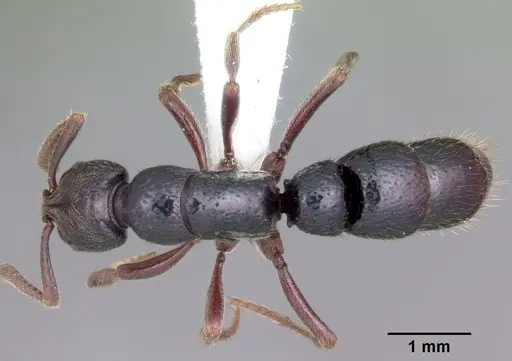
Literature
Loading...Loading products...