

Emeryopone melaina
- Scientific Name
- Emeryopone melaina
- Tribe
- Ponerini
- Subfamily
- Ponerinae
- Author
- Xu, 1998
- Distribution
- Found in 1 countries
Emeryopone melaina Overview
Emeryopone melaina is an ant species of the genus Emeryopone. It is primarily documented in 1 countries , including China. Detailed taxonomic data and occurrence records can be further explored via authoritative databases such as AntWeb or the Global Biodiversity Information Facility (GBIF).
Emeryopone melaina
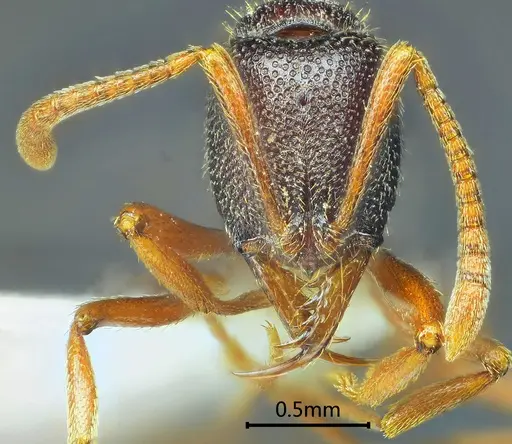
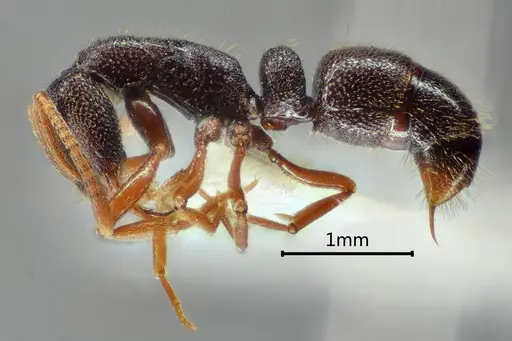
Emeryopone melaina is a rare ponerine ant species described from Yunnan Province, China. Workers measure around 4.9mm with a distinctive black body and reddish-brown mandibles, antennae, legs, and gaster tip. The most striking feature is the deeply concave occipital margin (back of the head) visible in full face view, along with long narrow mandibles bearing five teeth. The petiolar node is thick and rectangular, and like other Ponerinae, they possess a well-developed stinger. This species belongs to the Ponerinae subfamily, which includes ants known for their potent stings. The genus Emeryopone contains only a few described species, making this an unusual and rarely kept species in the antkeeping hobby [1].
Quick Summary
- Difficulty: Expert
- Origin & Habitat: Emeryopone melaina is endemic to Yunnan Province, China, specifically found in the Xishuangbanna region at elevations around 960 meters. It inhabits montane rain forest fragments in primary and secondary forest environments. This species has not been found in human-modified habitats like rubber plantations, indicating it requires intact forest ecosystems [2][3].
- Colony Type: Colony structure is unconfirmed. Only two specimens (one worker holotype and one dealate queen paratype) have ever been collected, leaving all aspects of their social biology unknown.
- Size & Growth:
- Queen: 5.1mm (dealate queen) [1]
- Worker: 4.9mm (workers) [1]
- Colony: Unknown, only two specimens have ever been collected [1]
- Growth: Unknown
- Development: Unknown, no breeding or development data exists for this species (Development timeline is unconfirmed. Based on typical Ponerinae patterns, expect 6-10 weeks from egg to worker at optimal temperature, but this is purely an estimate.)
- Antkeeping:
- Temperature: Based on its Yunnan origin (tropical/subtropical southwest China), aim for warm conditions around 24-28°C. Provide a temperature gradient so ants can self-regulate.
- Humidity: Native to montane rain forest fragments, so they likely prefer humid conditions. Keep nest substrate consistently moist but not waterlogged, think damp forest floor conditions.
- Diapause: Unknown, no data on overwintering requirements. Yunnan has mild winters, so a reduced activity period during cooler months may be appropriate.
- Nesting: No data exists on natural nesting preferences. Based on related Ponerinae and the single collection at 960m elevation in forest, they likely nest in soil or rotting wood in shaded, humid microhabitats. A naturalistic setup with moist substrate or a Y-tong/plaster nest works as a starting point.
- Behavior: Behavior is completely unstudied. As a Ponerine ant, they likely have a functional stinger and may be defensive when disturbed. Foraging style is unknown, some Ponerinae are solitary hunters while others use recruitment. Escape risk is moderate given their ~5mm size, but standard barrier methods should suffice. No observations exist on aggression levels, activity patterns, or interaction with conspecifics.
- Common Issues: this species has never been kept in captivity, no husbandry information exists, only two specimens have ever been collected, making wild colonies essentially unavailable, no information on founding behavior, colony growth, or queen biology, humidity and temperature requirements are inferred, not confirmed, risk of inadvertently keeping wrong species if collected, proper identification is challenging
Species Overview and Rarity
Emeryopone melaina is one of the rarest ants in the world to keep, and arguably one of the least studied. The entire scientific knowledge base consists of just two specimens collected in 1997 from a single location in Yunnan Province, China. The holotype is a single worker, and the paratype is a single dealate (wingless, mated) queen. No other specimens have ever been documented in the scientific literature. This makes it essentially impossible to obtain wild colonies, and no captive breeding programs exist. The species was described by Xu Zhenghui in 1998,and subsequent surveys in the region have not reported additional findings [1][2].
Distribution and Habitat
This species is known only from the type locality in Xishuangbanna, Yunnan Province, China, at approximately 960 meters elevation. Xishuangbanna is famous for its tropical montane rain forests, though the specific collection site was in montane forest fragments. Research shows this species occupies both primary and secondary forest regions but is absent from rubber plantations, indicating strict habitat requirements for intact forest ecosystems. The region experiences a tropical climate with distinct wet and dry seasons. The elevation of 960m suggests it may prefer cooler, more shaded conditions than true lowland tropical species [3][2].
Identification and Morphology
Workers of Emeryopone melaina are approximately 4.9mm in total length, making them medium-sized ants. The most distinctive identification features are: body color is black (unlike the related E. buttelreepeni which is reddish), the occipital margin (back of head) is deeply concave when viewed from above, and the subpetiolar process lacks the small tooth found in related species. The mandibles are long and narrow with five distinct teeth. The petiolar node is thick and rectangular in profile. A well-developed stinger is present, as expected in Ponerinae. Queens are slightly larger at 5.1mm and have three ocelli and larger eyes, but otherwise similar to workers. The species can be distinguished from congeners by the combination of black coloration and the deeply indented head margin [1].
Keeping This Species - Practical Considerations
We must be completely honest: there is no established husbandry for this species. No antkeeper has documented success keeping Emeryopone melaina, and no care guides exist. The species has essentially never been collected since the type specimens in 1997,meaning wild colonies are not available and no one has attempted captive breeding. If you somehow obtained a specimen, you would be pioneering all aspects of its care through pure experimentation. Any advice given here would be speculative guesses based on related Ponerinae ants. For these reasons, we cannot recommend this species to any keeper, not because it's necessarily difficult, but because no foundation of knowledge exists to build upon. Related Ponerinae species typically prefer humid, warm conditions and may be predatory, but applying this to E. melaina would be conjecture [1].
Related Species and Taxonomic Position
Emeryopone melaina belongs to the subfamily Ponerinae, tribe Ponerini. The genus Emeryopone contains only a few described species, all from Asia. The most similar described species is Emeryopone buttelreepeni, from which E. melaina can be distinguished by its black coloration (versus reddish in E. buttelreepeni) and the deeply concave occipital margin. Ponerine ants as a group are known for their potent stings, complex social structures, and often predatory lifestyles. However, the biology of most Ponerine genera remains poorly studied, and Emeryopone is particularly obscure. The genus name honors ant taxonomy pioneer Carlo Emery [1].
Frequently Asked Questions
Can I keep Emeryopone melaina as an antkeeper?
No. This species has essentially never been collected since its description in 1998,and only two specimens exist in museum collections. Wild colonies are not available, and no captive breeding programs exist. There is no established husbandry information, you would be pioneering all care aspects from scratch with no guidance possible.
How big do Emeryopone melaina colonies get?
Unknown. Only two specimens (one worker, one queen) have ever been collected. Maximum colony size is completely unstudied and may never be documented.
What do Emeryopone melaina ants eat?
Unconfirmed. As a Ponerine ant, they likely have a stinger and may be predatory like many related species, potentially hunting small invertebrates. However, no feeding observations exist for this species.
What temperature do Emeryopone melaina need?
Unknown but inferred. Based on their Yunnan origin in montane forest at 960m elevation, they likely prefer warm but not extreme conditions, roughly 24-28°C as a starting point with a gradient for self-regulation.
Do they need hibernation or diapause?
Unknown. No data exists on seasonal biology. The Xishuangbanna region has mild winters, so any dormancy period would likely be brief or mild if present.
How long does it take for eggs to develop into workers?
Unknown. No breeding or development data exists for this species. Typical Ponerinae development takes 6-10 weeks at optimal temperature, but this is a pure estimate with no species-specific data.
Are they good for beginners?
No. This species is not recommended for any keeper, beginner or expert. There is no care information, specimens are not available, and keeping them would be purely experimental with zero foundation of knowledge.
Can I keep multiple queens together?
Unknown. Only a single dealate queen has ever been collected, providing no data on colony founding or social structure. No information exists on whether they are single-queen or multi-queen species.
Where can I get Emeryopone melaina?
You cannot. This is one of the rarest ant species in existence, only two specimens have been collected since 1997,and no additional specimens have been documented. The species is essentially unavailable to antkeepers and may even be extinct in the wild.
References

This caresheet is licensed under CC BY-SA 4.0 .
ANTWEB1060502
View on AntWeb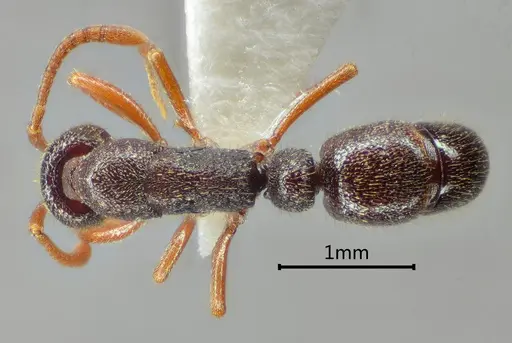
Literature
Loading...Loading products...