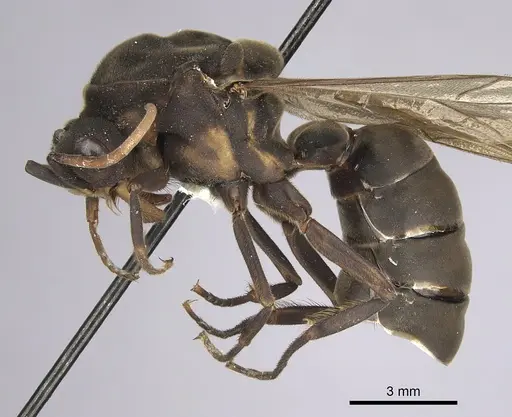
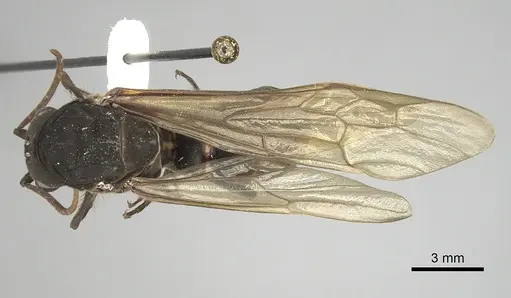
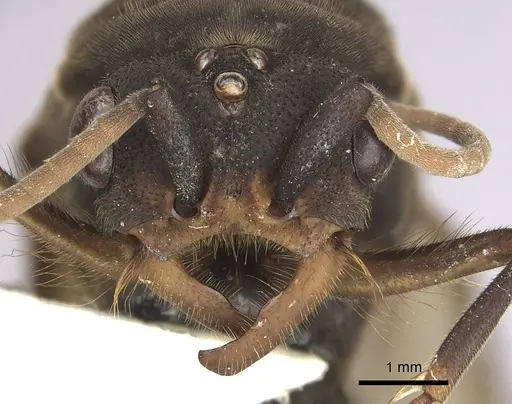
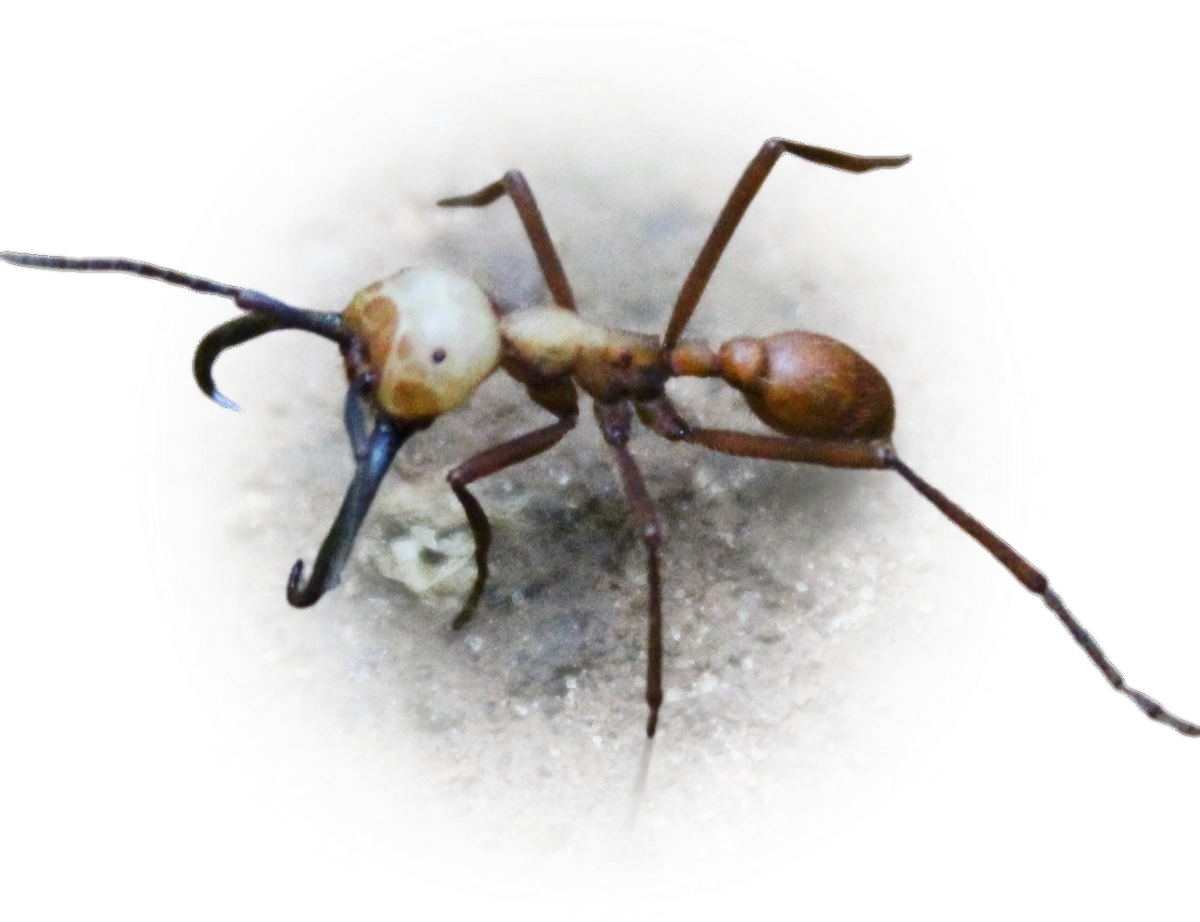
Eciton jansoni - "Janson's Army Ant"
Eciton jansoni is a fascinating New World army ant species, part of the aggressive Eciton genus, well-known for their nomadic lifestyle and impressive group foraging. Unlike many ant species, they don't build permanent nests. Instead, they form temporary living nests, called 'bivouacs', made from their own bodies. They exhibit a distinct 'army ant syndrome' which includes obligate collective foraging and a nomadic lifestyle. Their workers display strong polymorphism, meaning they have different physical forms and sizes, each specialized for particular tasks within the colony. While not as extensively studied as Eciton burchellii, E. jansoni shares many of the characteristic behaviors of its genus, making it a powerful keystone predator in its native habitat.
- Difficulty: Expert
- Origin & Habitat: Neotropical Region (Colombia, Costa Rica, Ecuador, Nicaragua, Panama) in Heavily forested, humid lowland regions, under fallen trees, between buttresses of large trees, empty soil cavities such as abandoned mammal burrows..
- Colony Type: Monogyne (single queen), colony fission (new colonies formed when an existing large colony divides, with a new queen taking a portion of workers) founding.
- Size & Growth:
- Queen: Not specified
- Worker: 3-12mm
- Colony: Supercolony (hundreds of thousands to millions, estimates for Eciton burchellii range from 100,000 to 2 million individuals, Eciton jansoni is also a large colony species). Fast (due to high queen egg-laying capacity during statary phase) growth.
- Antkeeping:
- Temperature: Requires warm, stable tropical temperatures, generally 24-29°C (75-84°F). Fluctuations should be minimized..
- Humidity: High humidity is crucial, ideally 80-90% or higher, mimicking their rainforest habitat..
- Diapause: Not required. Not specified at Not specified.
- Nesting: As nomadic army ants, they do not build permanent nests. They form temporary living nests called 'bivouacs' from their own bodies. In captivity, a large, secure outworld for foraging and a flexible, humid space that allows for bivouac formation and easy relocation (emigration) would be essential. Substrate would be less important for the bivouac itself, but the foraging area would need appropriate substrate..
- Behavior: High (towards prey and anything perceived as a threat) aggressiveness.
- Common Issues: Lack of sufficient prey, Inability to replicate nomadic cycle, Stress from inadequate space/environment for bivouac formation, Humidity and temperature control challenges, Waste accumulation from massive colony, Escape risk (due to nomadic nature and large numbers).
Keeping Eciton jansoni is an extremely challenging endeavor, primarily due to their unique nomadic lifestyle and immense colony size. Unlike typical ant colonies that reside in a fixed nest, Eciton jansoni colonies are constantly on the move, forming temporary 'bivouacs' out of their own bodies to house the queen and brood. This necessitates a highly specialized setup that can accommodate daily emigrations, providing a dynamic environment where they can form these living nests and frequently relocate, often covering significant distances in the wild. Simulating this natural behavior in an artificial setup requires advanced knowledge and resources.
Their diet is almost exclusively carnivorous, consisting of a wide range of arthropods, and even small vertebrates in the wild. Providing sufficient and varied live prey for a colony of hundreds of thousands to millions of ants is a monumental task. The sheer volume of food required daily during their nomadic phase, when larvae are rapidly developing and need constant nutrition, would be incredibly difficult to meet in a captive setting. This constant need for fresh prey is a major driver of their nomadic behavior in nature.
Eciton jansoni colonies operate on a distinct bi-phasic cycle: a 'statary' phase and a 'nomadic' phase. During the statary phase, which lasts approximately three weeks, the colony remains in one location, and the queen lays a massive number of eggs (up to 80,000 in a week for the genus). The nomadic phase, lasting about two weeks, sees the colony move almost nightly, driven by the emergence of new larvae that require extensive foraging. Successfully mimicking these precise environmental and physiological triggers to maintain the health and natural cycle of the colony in captivity would demand an unparalleled level of expertise and dedication.
The aggressive nature and powerful bite of Eciton soldiers (majors), with their large mandibles, pose a significant handling risk. While not typically venomous to humans in a highly dangerous way, their bites are painful and designed for subduing large prey. Any interaction with the colony would require extreme caution and specialized protective measures. Their foraging swarms are highly organized and can be overwhelming, a behavior that would need careful containment in a captive setup.
The ecological role of Eciton species as keystone predators in their natural rainforest habitats cannot be overstated. They significantly influence the biodiversity of their communities by preying on a vast array of other arthropods and even small vertebrates, flushing out prey that many other species, including birds, then capitalize on. Replicating the intricate ecological balance and providing the sheer biomass of prey they consume naturally is practically impossible in antkeeping, making long-term captive care exceptionally challenging and ethically questionable due to their specialized needs.
Frequently Asked Questions
Are Eciton jansoni good beginner ants?
Absolutely not. Eciton jansoni, like all army ants, are incredibly difficult to keep due to their nomadic lifestyle, massive colony sizes, and specific dietary needs. They are strictly for expert ant keepers with extensive resources and experience. Successfully maintaining an 'army ant colony' requires a deep understanding of their unique 'bi-phasic life cycle' and the ability to replicate a rainforest environment, making them unsuitable for novices.
How do Eciton jansoni make a nest if they don't build one?
These incredible 'army ants' create temporary 'bivouacs' using their own bodies! Workers link together with their legs and claws, forming a living structure that protects the queen and her 'brood' (eggs, larvae, and pupae) in the center. This 'bivouac' is disassembled nightly during their 'nomadic phase' as the entire 'colony' moves to a new location.
What do Eciton jansoni eat?
Eciton jansoni are voracious predators. Their diet in the wild primarily consists of other 'arthropods' like insects, spiders, and scorpions. They are known to raid nests of other ant species and wasps for their 'brood'. During their foraging 'swarms', they can even overwhelm and consume small vertebrates like frogs, lizards, and birds. Providing this consistent and varied diet in captivity is a huge challenge.
How big do Eciton jansoni colonies get?
Colonies of Eciton species, including Eciton jansoni, can grow to immense sizes, often reaching hundreds of thousands to over a million individuals. Some well-studied species like Eciton burchellii can have up to 2 million workers! This 'supercolony' size presents significant challenges for containment and feeding in a captive 'formicarium'.
Do Eciton jansoni sting or bite?
Yes, Eciton jansoni workers, especially the 'soldier' caste, possess powerful mandibles capable of delivering a painful bite. While their sting is not typically considered deadly to humans, their aggressive nature and large numbers make them a species to handle with extreme caution. These 'majors' are specialized for defense and subduing prey.
What is the nomadic and statary cycle?
Eciton colonies cycle between two main phases: the 'statary phase' and the 'nomadic phase'. The statary phase, lasting about three weeks, is when the 'queen' lays a massive number of eggs, and the colony stays in one 'bivouac' location. The nomadic phase, lasting roughly two weeks, is triggered by the hatching 'larvae' that need constant feeding, prompting the entire 'colony' to move to a new 'bivouac' site nearly every night, following extensive 'foraging' raids.
Can I keep Eciton jansoni in a standard ant farm?
Absolutely not. A standard 'ant farm' is entirely inadequate for Eciton jansoni. Their 'nomadic' lifestyle means they constantly need to move and form 'bivouacs', requiring vast, adaptable enclosures. The sheer 'colony size' and their aggressive 'foraging' behaviors demand specialized, escape-proof 'outworlds' and a design that facilitates their migratory patterns. This is far beyond what typical 'antkeeping' setups offer.
Are Eciton jansoni queens winged?
Unlike the winged male 'alates', Eciton jansoni queens are 'dichthadiiform', meaning they are wingless. They are physically adapted for egg-laying and are carried by the workers during colony emigrations. You won't see them flying during a 'nuptial flight' like many other ant species.
How do Eciton jansoni find their prey?
Eciton jansoni workers primarily rely on touch and 'pheromones' to navigate and hunt, as their vision is limited. They lay down chemical trails from the tips of their abdomens, guiding thousands of 'workers' during their impressive 'swarm raids'. When prey is encountered, alarm 'pheromones' are released, calling more 'soldiers' and 'workers' to the scene to overwhelm the target.
What is the caste system like in Eciton jansoni?
Eciton jansoni exhibits a highly polymorphic 'caste system' among its 'workers'. Beyond the fertile 'queen' and male 'drones', there are 'minor workers' (minims) who tend to the 'brood', 'media' and 'submajors' of intermediate size who perform various tasks including carrying food, and large 'soldier' ants (majors) with formidable mandibles for defense and subduing large prey. Each 'caste' has a specialized role within the 'colony'.
Why are Eciton army ants important in their ecosystem?
Eciton 'army ants' are considered 'keystone species' in 'Neotropical forests'. Their massive 'foraging' raids significantly impact 'arthropod communities', regulating populations of many insect species. Hundreds of other animal species, especially 'antbirds', rely on these 'hordes' to flush out prey, making the 'army ants' crucial for maintaining forest biodiversity.
How do new Eciton jansoni colonies form?
New Eciton jansoni colonies form through a process called 'colony fission'. When an existing 'colony' grows very large, it produces a 'sexual brood' which includes new 'queens' and 'males'. The parent 'colony' then divides into two 'daughter colonies', each headed by a queen (either the old queen or a new one), taking a significant portion of the 'workers' with them.
Are there any parasites or associates with Eciton jansoni?
Yes, Eciton colonies, including species like Eciton jansoni, have an astonishing array of associated organisms, from mites to birds, that depend on them. These 'myrmecophiles' can include ant-mimicking beetles, specialized flies, and even certain butterflies that feed on bird droppings near army ant raids. This intricate web of relationships highlights their ecological importance.