

Echinopla mezgeri
- Scientific Name
- Echinopla mezgeri
- Tribe
- Camponotini
- Subfamily
- Formicinae
- Author
- Zettel & Laciny, 2015
- Distribution
- Found in 0 countries
Echinopla mezgeri Overview
Echinopla mezgeri is an ant species of the genus Echinopla. It is primarily documented in 0 countries . Detailed taxonomic data and occurrence records can be further explored via authoritative databases such as AntWeb or the Global Biodiversity Information Facility (GBIF).
Echinopla mezgeri
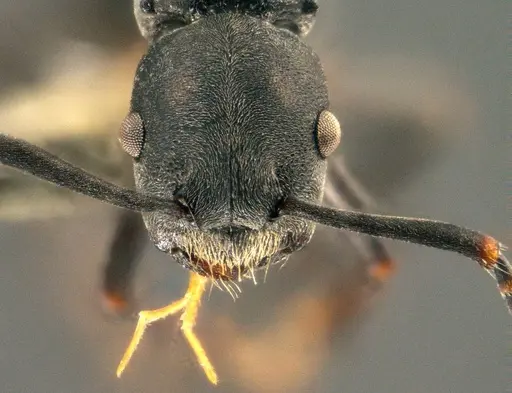
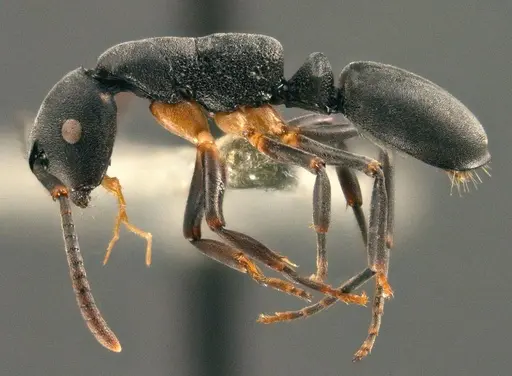
Echinopla mezgeri is a slender, relatively small ant measuring 5.3mm in total length [1]. Workers have a distinctive appearance with a dull black body, almost lacking the long standing setae typical of many ants, but covered in dense fine pubescence that gives them a matte finish [1]. The species is part of the Echinopla mezgeri group and was described from Sabah, Borneo in 2015 [1]. The mesosoma is unusually elongated compared to other Echinopla species, and the petiolar node is stocky without teeth [1]. This ant has several unique features including a palp formula of 5,3 (most Echinopla have 6,4), and the antennal fossae are largely covered by frontal carinae [2]. The legs are black with yellow coxae and trochanters, and the abdominal apex is testaceous (pale yellowish) [1]. Nothing is known about the biology of this species in the wild [3].
Quick Summary
- Difficulty: Unknown, likely Expert
- Origin & Habitat: Borneo, specifically Sabah, Malaysia (Danum Valley). Found in tropical rainforest habitat [1][2].
- Colony Type: Unknown. Only worker caste has been described. Colony structure (single queen vs multiple queens) has not been documented [3].
- Size & Growth:
- Queen: Unknown, queen caste not described [3]
- Worker: 5.3mm total length [1]
- Colony: Unknown, no colony data available
- Growth: Unknown
- Development: Unconfirmed, no development data exists for this species (Based on related Formicinae (Camponotus genus), expect 6-10 weeks at optimal temperature, but this is an estimate)
- Antkeeping:
- Temperature: Unknown, no thermal studies exist. Based on Borneo rainforest habitat, likely needs warm, stable conditions in the low-to-mid 20s°C range. Start around 24-26°C and observe colony activity.
- Humidity: Unknown, no humidity data. Borneo rainforest suggests high humidity needs (60-80%). Keep nest substrate consistently moist but not waterlogged.
- Diapause: Unknown, no seasonal data. As a tropical species from Borneo, diapause may not be required, but this is unconfirmed.
- Nesting: Unknown natural nesting preferences. The elongated mesosoma and fine body sculpture suggest they may nest in rotting wood or similar protected microhabitats in rainforest. In captivity, a Y-tong or plaster nest with moderate humidity would be a reasonable starting point.
- Behavior: Behavior is unstudied. Based on genus-level patterns, they are likely moderately active foragers. Escape prevention should be adequate for their 5mm size, standard test tube or formicarium barriers should work, but monitor for escapes. No information on sting potency exists, but given their size, any sting would likely be mild.
- Common Issues: biology completely unknown, no care protocols established for this species, queen caste not described, wild colonies cannot be located for study, no information on founding behavior, unknown if claustral or semi-claustral, no diet information, unknown what they eat in captivity, risk of keeping unknown species without established protocols
Species Identification and Description
Echinopla mezgeri is a distinctive species within its genus, measuring 5.3mm in total worker length [1]. The worker has a slender body with an unusually elongated mesosoma (about twice as long as the pronotal width) [1]. The head is notably longer than wide with a cephalic index of 86,and the compound eyes are small and positioned at mid-length of the head [2]. One of the most distinctive features is the palp formula of 5,3,which differs from other Echinopla species that typically have 6,4 [1]. The body lacks the long standing setae found in most ant species, instead having dense, very short appressed pubescence that gives the ant a dull, matte appearance [1]. The trunk is dull black without metallic shimmer, while the abdominal apex is testaceous (pale yellowish), and the legs are black with yellow coxae and trochanters [1]. The species belongs to the Echinopla mezgeri group and is similar to Echinopla mistura, though their close relationship remains uncertain [4].
Distribution and Habitat
Echinopla mezgeri is known only from Borneo, specifically from Sabah in Malaysian Borneo [1][2]. The type specimen was collected from Danum Valley in Sabah, a well-known tropical rainforest area [1]. The species has also been recorded from other parts of Borneo and Peninsular Malaysia [5]. As a tropical rainforest species, it likely inhabits the forest floor or understory layer, though its exact microhabitat preferences are unknown. The fine body sculpture and elongated mesosoma suggest it may be adapted to specific ecological niches within the rainforest ecosystem.
Current State of Knowledge
It must be stated clearly that absolutely nothing is known about the biology of Echinopla mezgeri [3]. This includes colony structure, founding behavior, diet, development, nuptial flight timing, and all other aspects of its natural history. Only the worker caste has been described, and queens, males, and brood stages remain unknown [3]. This makes keeping Echinopla mezgeri extremely challenging, as there are no established care protocols. Any successful husbandry would represent new knowledge for the species. Keepers attempting to maintain this species should be prepared for experimental care and detailed observation記録 (record-keeping) to contribute to our understanding.
Care Recommendations (Experimental)
Since no biological data exists for this species, care recommendations must be based on inference from related ants and general antkeeping principles. Echinopla belongs to the Formicinae subfamily, which includes genera like Camponotus that are typically claustral founders (queen seals herself in and lives off stored fat) [3]. Based on its Borneo rainforest origin, provide warm temperatures (around 24-26°C) and high humidity (60-80%). Use a nest that maintains moisture well, such as a plaster or Y-tong setup. For feeding, start with sugar water and small protein sources like fruit flies or small mealworms, observing acceptance. Given the complete lack of species-specific data, treat all care as experimental and adjust based on colony response.
Challenges for Keepers
Echinopla mezgeri presents extreme challenges for antkeepers. The most significant is that no wild colonies have ever been located for study, only a handful of workers have ever been collected and described [1]. This means there are no established protocols, no known queen morphology, and no information on how this species founds colonies or what they eat. Additionally, the species is only known from a very limited geographic area (Borneo), making collection difficult or impossible. For these reasons, Echinopla mezgeri is suitable only for expert antkeepers who are prepared to document their observations carefully and potentially discover new aspects of this species' biology through careful experimentation.
Frequently Asked Questions
Is Echinopla mezgeri available for purchase?
Extremely unlikely. This species is only known from a few worker specimens collected in Borneo, and no colonies have ever been documented. It is not available in the antkeeping hobby.
How do I care for Echinopla mezgeri?
No established care protocol exists because nothing is known about this species' biology. If you somehow obtain a colony, experimental care based on related Formicinae would involve warm temperatures (24-26°C), high humidity (60-80%), and a moist nest setup. Start with sugar water and small live prey, and observe acceptance.
What does Echinopla mezgeri eat?
Unknown, no dietary studies exist. Based on related Formicinae, they likely consume nectar/honeydew and small insects, but this is entirely speculative.
How big do Echinopla mezgeri colonies get?
Unknown, colony size has never been documented. Only individual workers have been collected and described.
Do Echinopla mezgeri queens have wings?
Unknown, the queen caste has never been described. We do not know if queens are winged (alates) or if ergatoid (wingless) queens exist.
Does Echinopla mezgeri need hibernation?
Unknown, no seasonal data exists. As a tropical species from Borneo, hibernation is likely not required, but this is unconfirmed.
Are Echinopla mezgeri ants aggressive?
Unknown, behavior has not been studied. Based on genus-level patterns, they are likely not particularly aggressive, but this is speculative.
Can I keep multiple Echinopla mezgeri queens together?
Unknown, colony structure has not been documented. We do not know if this species is single-queen (monogyne) or multi-queen (polygyne).
What is the egg to worker development time?
Unconfirmed, no development data exists for this species. Based on related Formicinae, expect 6-10 weeks at optimal temperature, but this is a rough estimate.
Is Echinopla mezgeri good for beginners?
No. This species is absolutely not suitable for beginners, or anyone except expert antkeepers willing to work with completely unknown biology. There are no established care protocols.
References

This caresheet is licensed under CC BY-SA 4.0 .
CASENT0914949
View on AntWeb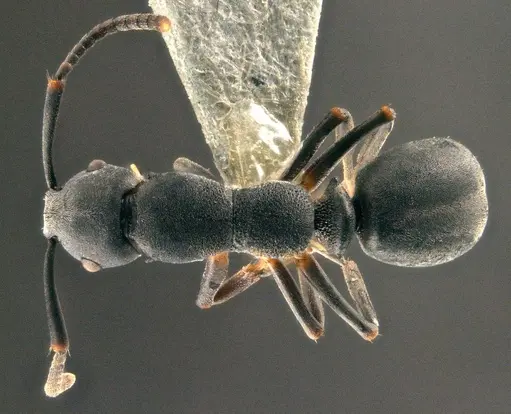
Literature
Loading...Loading products...