

Echinopla mistura
- Scientific Name
- Echinopla mistura
- Tribe
- Camponotini
- Subfamily
- Formicinae
- Author
- Smith, 1860
- Distribution
- Found in 0 countries
Echinopla mistura Overview
Echinopla mistura is an ant species of the genus Echinopla. It is primarily documented in 0 countries . Detailed taxonomic data and occurrence records can be further explored via authoritative databases such as AntWeb or the Global Biodiversity Information Facility (GBIF).
Echinopla mistura
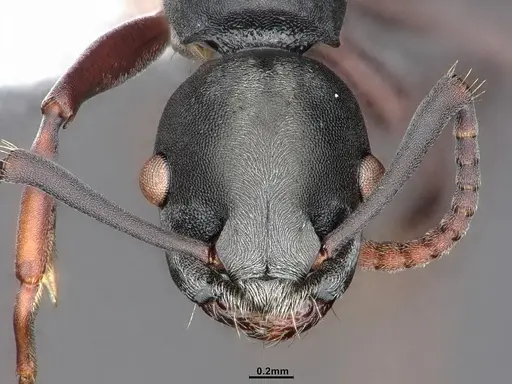
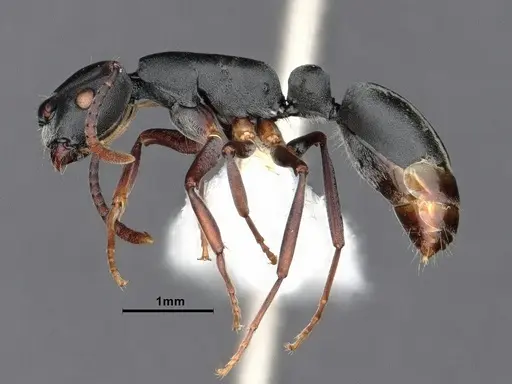
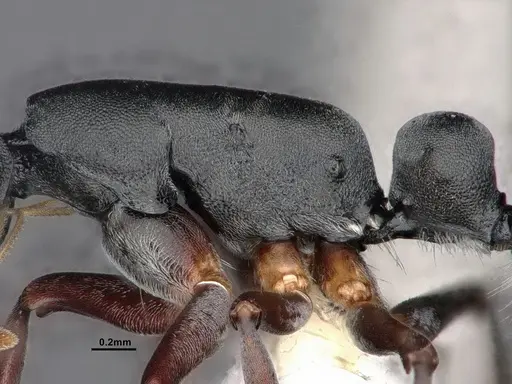
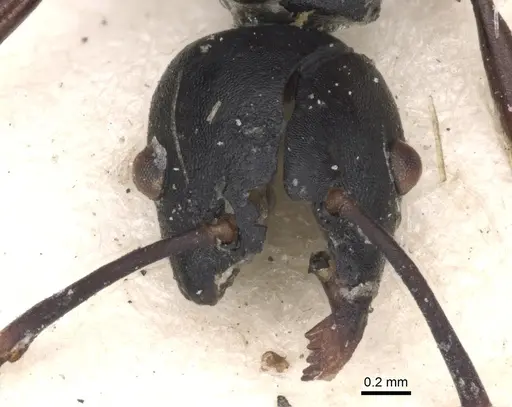
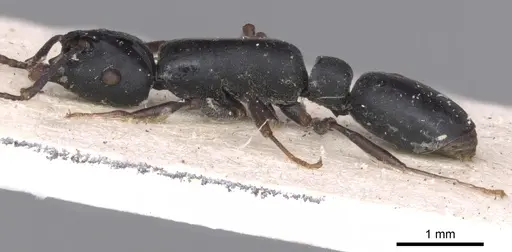
Echinopla mistura is a small ant species native to the Moluccas islands of Indonesia. Workers measure approximately 4mm and are nearly black with a smooth, almost hairless body surface. Their most distinctive features are very prominent eyes positioned at midlength of the head, and a uniquely cubic-shaped petiole (the waist segment) without any spines or teeth. The antennae have reddish-yellow coloration on the apical half, and leg joints show similar reddish tints. This species is the sole member of the Echinopla mistura group, characterized by an elongated mesosoma and extremely fine body sculpture. They inhabit tropical forests of the Moluccan islands where they likely nest in rotting wood or under bark.
Quick Summary
- Difficulty: Unknown, limited data available
- Origin & Habitat: Moluccas islands (Indonesia), specifically Bacan Island. Tropical forest environment [1][2][3].
- Colony Type: Unknown, colony structure has not been documented in scientific literature
- Size & Growth:
- Queen:{.size-link} Unconfirmed, no documented queen measurements
- Worker:{.size-link} Approximately 4mm (based on historical measurement of 2 lines) [1]
- Colony: Unknown, no colony size data available
- Growth: Unknown
- Development: Unconfirmed, no development data exists for this species (Development timeline is unknown. This is a tropical species, so development may be faster than temperate ants, but specific timelines are unconfirmed.)
- Antkeeping:
- Temperature: Likely 24-28°C based on tropical Moluccas origin, start in this range and observe colony activity
- Humidity: Likely requires high humidity typical of tropical forest ants, provide moisture through damp substrate
- Diapause: Unlikely, tropical species from consistent climate
- Nesting: Likely arboreal or semi-arboreal, related species often nest in rotting wood or under bark. Consider Y-tong (AAC) or plaster nests with some wood material.
- Behavior: Behavior is not documented in scientific literature. Based on genus typical patterns within Formicinae, they likely exhibit moderate foraging activity. Their small size and smooth body suggest they may be agile climbers. Escape prevention is important given their small size. As Formicinae ants, they lack a functional sting and instead use formic acid spray combined with biting for defense.
- Common Issues: limited data means care requirements are largely inferred, observe your colony closely for signs of stress, tropical species may be sensitive to temperature drops, avoid cold drafts, small size requires fine mesh barriers to prevent escapes, no documented diet preferences, start with sugar water and small live prey, colony growth may be slow given limited data on their development
Appearance and Identification
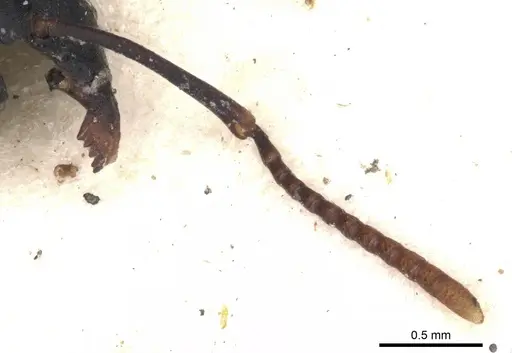
Echinopla mistura workers are small ants measuring approximately 4mm. Their most distinctive feature is the nearly black, smooth body that appears almost hairless on the dorsal surface. The head has very prominent eyes positioned at midlength, and the antennae are nearly as long as the thorax with the apical half showing a reddish-yellow coloration. The mesosoma is elongated with a straight dorsal profile lacking any sutures or grooves. The petiole is uniquely cubic in shape, without spines or teeth that many other ant species possess. The legs show reddish tints at the joints, particularly at the tips of the coxae, trochanters, and base of the femora. This species is the only member of the Echinopla mistura group, making identification relatively straightforward within its range. [1]
Distribution and Habitat
Echinopla mistura is endemic to the Moluccas islands of Indonesia, with the type locality on Bacan Island (historically spelled Bachian). The Moluccas are a tropical archipelago known for dense rainforests and high humidity. This species was originally described in 1860 by Frederick Smith from specimens collected by Alfred Russel Wallace during his explorations of the Malay Archipelago. The original description placed it in the genus Mesoxena, and it was later transferred to Echinopla. The species has been recorded from multiple islands in the Moluccan region, indicating a distribution centered on these tropical islands. [1][2][3]
Housing and Nesting
Due to the lack of specific nesting data for this species, housing recommendations must be inferred from what is known about related Echinopla species and their tropical forest habitat. Echinopla species are typically arboreal or semi-arboreal, often nesting in rotting wood, under bark, or in hollow plant stems. For captive care, a Y-tong (AAC) nest or plaster nest with some wood material would be a reasonable starting point. Given their Moluccan origin, they likely require higher humidity than typical temperate ants. Keep the nest substrate consistently moist but not waterlogged, and provide a water tube for drinking. Their small size means escape prevention must be excellent, use fine mesh on any ventilation openings.
Feeding and Diet
The diet of Echinopla mistura has not been documented in scientific literature. As members of the subfamily Formicinae, they likely have typical ant dietary preferences: honeydew from aphids and scale insects, and small insects for protein. For captive feeding, start with a sugar water or honey solution as a constant carbohydrate source, and offer small live prey such as fruit flies, pinhead crickets, or mealworms. Since this is a small species, prey items should be appropriately sized. Observe your colony to determine their preferences and adjust feeding accordingly. Remove any uneaten prey after 24-48 hours to prevent mold issues.
Temperature and Seasonal Care
As a tropical species from the Moluccas islands, Echinopla mistura likely requires warm, stable temperatures in the range of 24-28°C. The Moluccas maintain a consistent tropical climate year-round with high humidity. Unlike temperate ant species, this species likely does not require a diapause period. Maintain stable temperatures avoiding cold drafts or air conditioning vents that might drop the temperature suddenly. A heating cable on one side of the nest can create a gentle temperature gradient if your room temperature falls below 24°C. Monitor your colony for activity levels, if workers seem sluggish, the temperature may be too low. [3]
Behavior and Temperament
Specific behavioral observations for Echinopla mistura are not documented in scientific literature. Based on the genus position within Formicinae (tribe Camponotini), they likely exhibit typical ant behaviors: moderate foraging activity, colony defense, and communication through chemical pheromones. The prominent eyes suggest they may rely more on visual cues than some other ant species, but this is unconfirmed. They are likely docile compared to more aggressive genera. Their small size and smooth body suggest they are agile climbers, so ensure any outworld setup has smooth barriers to prevent escapes. As Formicinae ants, they lack a functional stinger and instead use formic acid spray from their acidopore combined with biting for defense. [1]
Frequently Asked Questions
How long does it take for Echinopla mistura to develop from egg to worker?
The development timeline for Echinopla mistura has not been documented in scientific literature. This is a tropical species, so development may be faster than temperate ants, but specific timelines are unconfirmed. You will need to observe your own colony to establish their actual development time.
What is the best nest type for Echinopla mistura?
The best nest type is not confirmed through research, but based on typical Echinopla nesting habits (arboreal in rotting wood), a Y-tong (AAC) nest or plaster nest with some wood material would be appropriate. The nest should maintain high humidity and provide darkness for the colony. Start with a test tube setup for newly caught colonies and transition to a more elaborate nest as the colony grows.
What temperature should I keep Echinopla mistura at?
Based on their tropical origin in the Moluccas islands, aim for temperatures between 24-28°C. This is a starting point, observe your colony's activity levels and adjust accordingly. If workers cluster near the warm side, increase slightly. If they avoid heated areas, reduce temperature. Avoid sudden temperature drops and cold drafts.
How big do Echinopla mistura colonies get?
The maximum colony size for Echinopla mistura is unknown, no scientific data exists on colony size for this species. Your colony's growth will depend on proper care and feeding.
Can I keep multiple Echinopla mistura queens together?
Whether Echinopla mistura can form multi-queen colonies has not been documented. The colony structure (monogyne vs polygyne) is unknown for this species. Without data, it is not recommended to combine unrelated queens, as they may fight. If you catch a founding queen, keep her alone until her first workers emerge.
What do Echinopla mistura eat?
The specific diet of Echinopla mistura is not documented. As Formicinae ants, they likely accept sugar sources (honey, sugar water) and small live prey (fruit flies, small crickets, mealworms). Start with sugar water as a constant food source and offer appropriately-sized live prey 2-3 times per week. Remove uneaten food promptly.
Is Echinopla mistura a good species for beginners?
Due to the lack of documented care information, Echinopla mistura is not recommended for beginners. The care requirements are largely inferred from related species and tropical ant general knowledge. If you are experienced with tropical ant species and comfortable with uncertainty in care protocols, this could be an interesting species to attempt. Beginners should start with better-documented species.
Does Echinopla mistura need hibernation or diapause?
Echinopla mistura likely does not require hibernation or diapause. As a tropical species from the Moluccas islands, they evolved in a consistent warm, humid climate without seasonal temperature swings. Maintaining stable warm conditions year-round is likely appropriate for this species.
Report an Issue
The current care sheet is based fully on literature. See inconsistencies, or something that's incorrect? Please , it will be resolved after review from an admin. Contributing to the blogs tab also helps providing information, to make us be able to further improve the caresheets. Thank you for your support!
References

This caresheet is licensed under CC BY-SA 4.0 .
CASENT0884106
View on AntWeb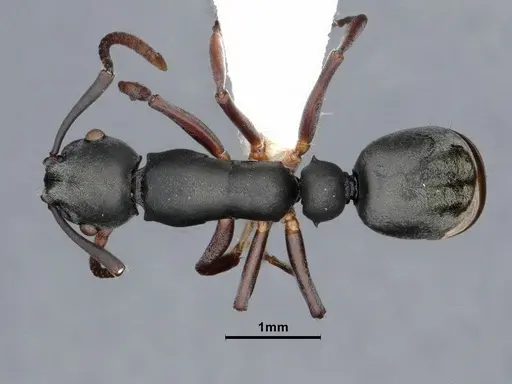
CASENT0901885
View on AntWeb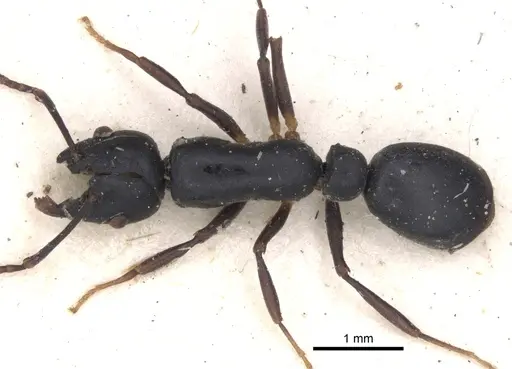
Literature
Loading...Loading products...