

Dorylus vishnui
- Scientific Name
- Dorylus vishnui
- Subfamily
- Dorylinae
- Author
- Wheeler, 1913
- Distribution
- Found in 1 countries
Dorylus vishnui Overview
Dorylus vishnui is an ant species of the genus Dorylus. It is primarily documented in 1 countries , including Thailand. Detailed taxonomic data and occurrence records can be further explored via authoritative databases such as AntWeb or the Global Biodiversity Information Facility (GBIF).
Dorylus vishnui
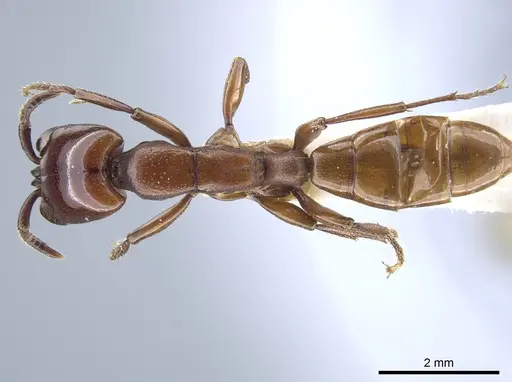
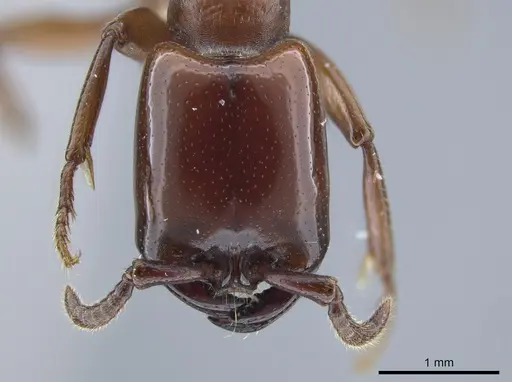
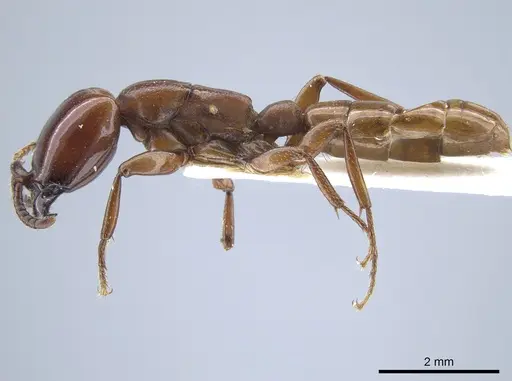
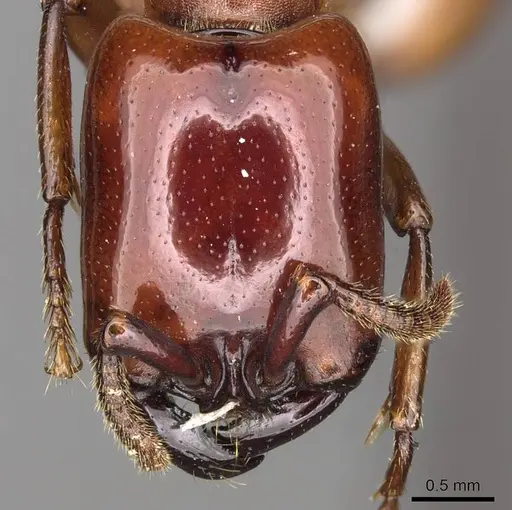
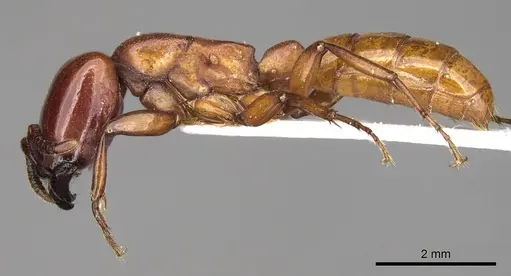
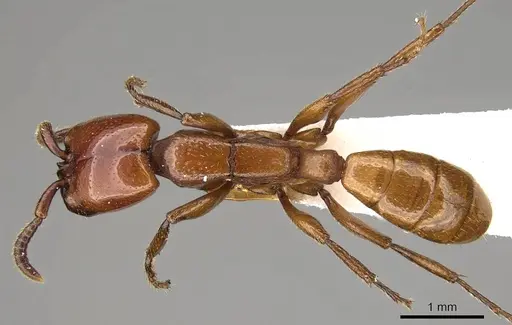
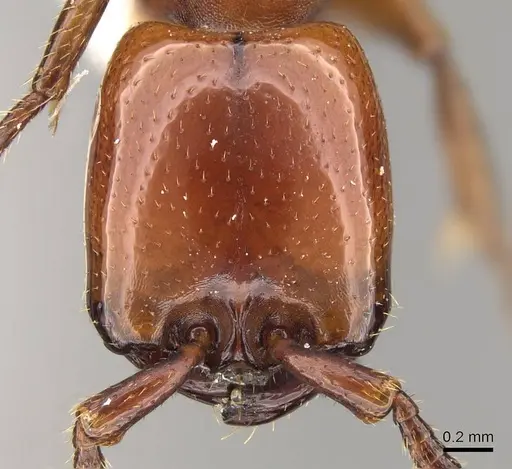
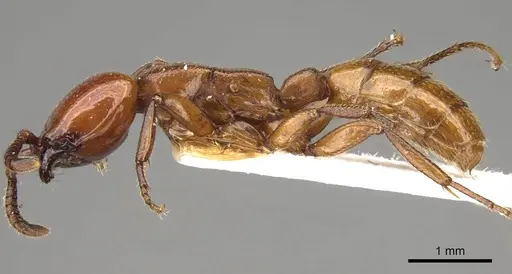
Dorylus vishnui is a small army ant species native to Southeast Asia, found across Myanmar, Thailand, and southern China. Workers are tiny at just 2-5mm total length, with a uniform yellowish-brown coloration [1]. This species shows remarkable size variation among workers, the smallest workers have only 8 antennal segments while the largest have 9,with significant differences in head shape and body proportions [1]. As an army ant, they belong to the Dorylus orientalis-group and exhibit the classic army ant behavior of coordinated raiding parties to capture prey [2].
What makes Dorylus vishnui interesting is its position as a potentially relict species, researchers suggest it may represent an early invasion of army ant ancestors into Asia, making it evolutionarily significant [1]. Army ants are famous for their nomadic lifestyle, constantly moving and establishing temporary bivouacs rather than maintaining permanent nests.
Quick Summary
- Difficulty: Hard
- Origin & Habitat: Native to the Indomalaya region (Myanmar, Thailand) and extends into the Palaearctic (southern China). Found in tropical and subtropical forests, typically in lowland rainforest areas [3][1].
- Colony Type: Army ant colony structure, colonies are nomadic with no permanent nest. Queen temporarily parasitizes host Dorylus colonies during colony foundation (typical Dorylus behavior).
- Colony: Polygyne
- Queen: Socially parasitic, Temporary parasitic
- Size & Growth:
- Queen: Estimated 12-15mm based on genus patterns, army ant queens are significantly larger than workers
- Worker: 2-5mm total length (head width variation 0.68-1.55mm) [1]
- Colony: Estimated 100,000-200,000 workers based on typical Dorylus colony sizes
- Growth: Fast, army ant colonies grow rapidly once established
- Development: Estimated 3-5 weeks at optimal temperature based on genus patterns (Army ant development is typically fast, exact timeline for this species unconfirmed)
- Antkeeping:
- Temperature: Keep at 24-28°C, army ants are tropical and need warmth. A heating cable on one side of the outworld creates a gradient [2].
- Humidity: High humidity (70-80%), they naturally inhabit humid tropical forests. Keep the outworld substrate moist but not waterlogged.
- Diapause: No, being a tropical species, they do not require hibernation. Maintain consistent warm temperatures year-round.
- Nesting: Army ants do not need traditional nests. Provide a dark retreat area (like a inverted flower pot or dark container) where the colony can form their bivouac. The key is open foraging space for raiding behavior.
- Behavior: Army ants are highly active predators that organize coordinated raids. Workers are small but numerous, moving in columns to capture prey items ranging from small insects to larger arthropods [2]. They are not aggressive toward humans but will defend their colony vigorously. Escape prevention is critical, their small size and active foraging mean they will readily explore any gap. They do not sting but may bite. Unlike many ants, they do not collect honeydew or tend aphids, they are obligate predators.
- Common Issues: colonies often fail because keepers don't provide sufficient foraging space for raiding behavior, without a constant supply of live prey, colonies starve quickly, they cannot survive on sugar water alone, tropical humidity requirements are easily neglected, leading to desiccation and colony collapse, their nomadic nature means they will constantly move their bivouac location within the enclosure, small worker size makes escape prevention challenging, even tiny gaps will result in escapes
Housing and Enclosure Setup
Dorylus vishnui requires a specialized setup quite different from typical ant keeping. Army ants do not live in traditional nests, they form temporary bivouacs (living structures made of their own bodies). Your setup should include a dark retreat area (an inverted flower pot, dark plastic container, or custom bivouac chamber) where the colony can cluster, connected to a spacious foraging area. The foraging area must be large enough to accommodate their raiding parties. Use a deep substrate (at least 5cm) that holds moisture well, coconut fiber or a soil/sand mix works well. Escape prevention is critical: apply Fluon or similar barrier to all enclosure edges, as their small size allows them to squeeze through remarkably tiny gaps. A test tube setup alone is completely unsuitable for this species. [2]
Feeding and Nutrition
Army ants are obligate predators and cannot survive without a constant supply of live prey. Their natural diet consists of insects and other arthropods captured during raids [2]. You must provide a variety of live prey items regularly: small crickets, mealworms, fruit flies, and other small invertebrates. Feed multiple times per week, with prey quantities matching the colony size, larger colonies need more frequent feedings. Remove uneaten prey after 24 hours to prevent mold. Army ants do not typically accept sugar water or honey as primary nutrition, though some keepers report occasional acceptance. The key is variety and freshness of live prey. A well-fed army ant colony will show constant activity with raiding columns active day and night.
Temperature and Climate Control
Being a tropical species from Southeast Asia, Dorylus vishnui requires warm temperatures year-round. Maintain the enclosure at 24-28°C consistently, temperatures below 22°C can slow activity and below 20°C may be fatal. Use a heating cable or mat on one side of the enclosure to create a temperature gradient, allowing the ants to choose their preferred warmth level. Place the heating element on top of the enclosure, not underneath, to prevent moisture loss from the substrate. Monitor temperatures with a reliable thermometer. Unlike temperate species, these ants do not benefit from seasonal temperature drops, maintain consistent warmth throughout the year. Room temperature alone is often insufficient unless your home is already in the mid-to-high 20s°C.
Understanding Army Ant Behavior
Dorylus vishnui exhibits classic army ant behavior that differs dramatically from most ant species. Unlike species with permanent nests, army ants are nomadic, they periodically relocate their entire colony in search of new hunting grounds. The colony forms a living bivouac that can appear as a writhing mass of thousands of workers clustered together. They organize raiding parties that sweep across the foraging area in search of prey [2]. This species shows significant worker polymorphism, major workers (soldiers) are larger with specialized head shapes, while minor workers handle most foraging and brood care. Understanding this nomadic, predatory lifestyle is essential for successful keeping. Do not attempt to confine them to a small space or traditional formicarium, they need room to roam and raid.
Colony Establishment and Growth
Starting a Dorylus vishnui colony from scratch is extremely difficult. In the wild, new colonies form when a mated queen temporarily parasitizes an established Dorylus colony, she enters the host nest, kills or displaces the resident queen, and uses the host workers to raise her first brood [1]. This social parasitism means wild colonies are not easily divisible. Most available colonies are wild-caught mature colonies. Once established, colonies can grow massive, typical Dorylus colonies reach 100,000 to 200,000 workers. Growth is fast when well-fed, with development from egg to worker taking only a few weeks under optimal conditions. The colony will expand its raiding range as it grows, becoming more active and visible.
Frequently Asked Questions
Can I keep Dorylus vishnui in a test tube setup?
No, test tube setups are completely unsuitable for army ants. They need open foraging space for raiding behavior and a dark area for their bivouac. A standard formicarium also won't work. You need a custom setup with a spacious outworld and a retreat area.
How often should I feed Dorylus vishnui?
Feed them multiple times per week with live prey. Unlike other ants that can go days without food, army ants need constant protein. Feed prey items that match the colony size, more workers means more frequent feeding. Remove uneaten prey after 24 hours.
How long does it take for first workers to appear?
Exact timeline for this species is unconfirmed, but army ant development is typically fast, estimated 3-5 weeks from egg to worker at optimal temperature. Well-established wild-caught colonies will already have workers.
Are Dorylus vishnui good for beginners?
No, this species is not recommended for beginners. Army ants have specialized requirements: constant live prey, high humidity, warm temperatures, spacious enclosures, and excellent escape prevention. They are advanced-level species.
Do Dorylus vishnui need hibernation?
No, as a tropical species from Southeast Asia, they do not require hibernation. Maintain consistent warm temperatures (24-28°C) year-round. Temperature drops below 20°C can be harmful.
Why is my army ant colony dying?
Common causes include: insufficient live prey (they cannot survive on sugar), low humidity causing desiccation, temperatures below 22°C, too-small enclosure preventing normal raiding behavior, or escape-related losses. Army ants are demanding and require precise conditions.
Can I keep multiple queens together?
Yes, army ants naturally have polygyne colonies with multiple reproductive queens. Wild colonies typically contain several queens. However, combining unrelated foundress queens is not recommended as their natural colony foundation involves parasitism.
When should I move them to a formicarium?
Army ants should never be moved to a traditional formicarium. They need open foraging space, not enclosed chambers. Provide a custom setup with a dark retreat area connected to a spacious foraging outworld.
How big do Dorylus vishnui colonies get?
Based on typical Dorylus patterns, established colonies can reach 100,000 to 200,000 workers. This is one of the most populous ant types. A mature colony will produce constant raiding activity.
References

This caresheet is licensed under CC BY-SA 4.0 .
Literature
Loading...Loading products...