

Dorylus titan
- Scientific Name
- Dorylus titan
- Subfamily
- Dorylinae
- Author
- Santschi, 1923
- Distribution
- Found in 2 countries
Dorylus titan Overview
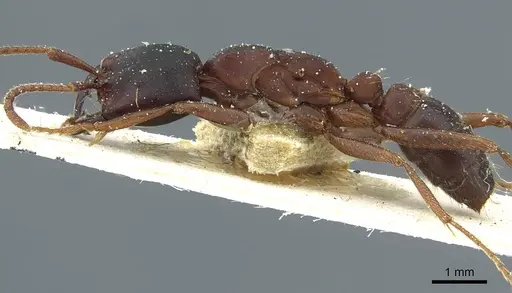
Dorylus titan is an ant species of the genus Dorylus. It is primarily documented in 2 countries , including Congo, Democratic Republic of the, Cameroon. Detailed taxonomic data and occurrence records can be further explored via authoritative databases such as AntWeb or the Global Biodiversity Information Facility (GBIF).
Dorylus titan
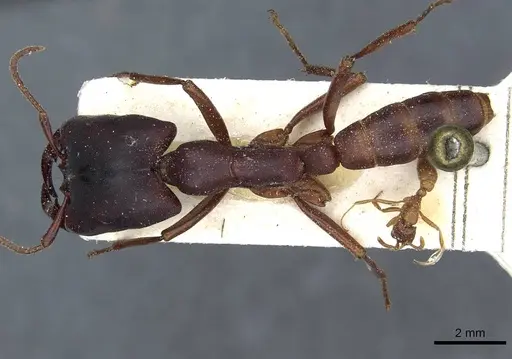
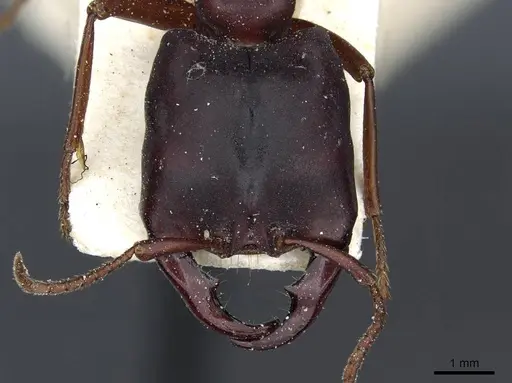
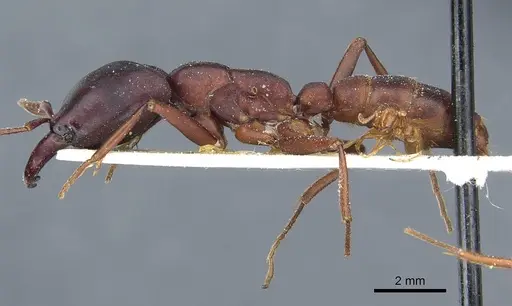
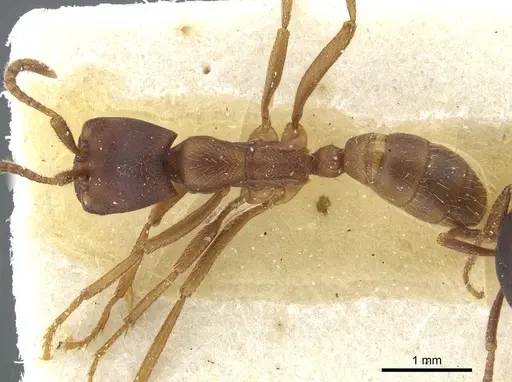
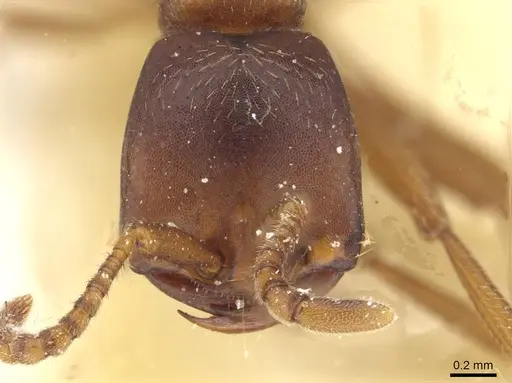
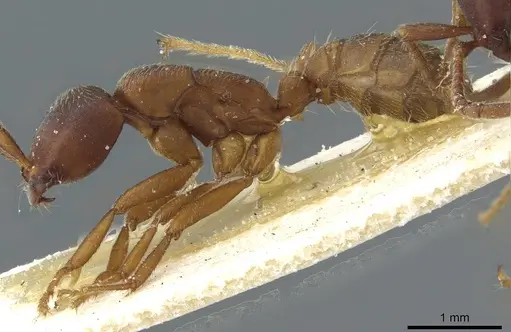
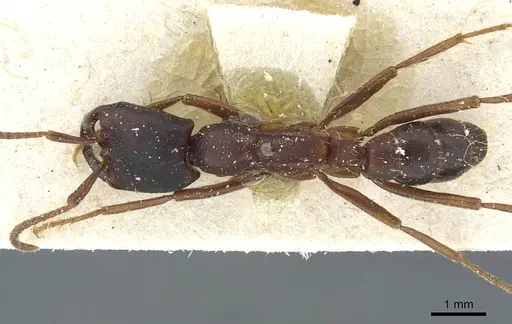
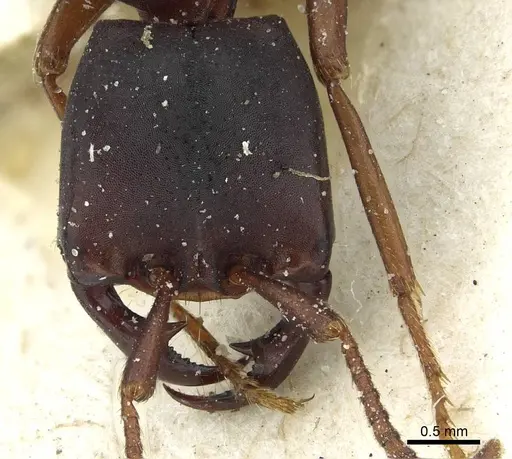
Dorylus titan is a large army ant species from the Dorylinae subfamily, found in the rainforests of Central Africa. Workers are polymorphic, ranging from small minors to large soldiers with powerful mandibles. The species is known from the Democratic Republic of Congo and Guinea, where it lives in massive nomadic colonies that constantly move through the forest floor, raiding other ant colonies and arthropods for food [1]. As with all army ants, D. titan forms colonies with multiple queens and exhibits the characteristic Dorylus behavior of regular colony migration, making them one of the most visually impressive but challenging ants to keep.
Quick Summary
- Difficulty: Expert
- Origin & Habitat: Democratic Republic of Congo and Guinea in Central Africa. In the wild, these ants live in tropical rainforest environments, forming large nomadic colonies that move through the forest floor [1].
- Colony Type: Polygyne (multiple queens), army ant colonies typically contain many reproductive queens that work together to maintain massive worker populations.
- Colony: Polygyne
- Founding: Claustral
- Size & Growth:
- Queen: Large (estimated 25-35mm based on genus patterns), army ant queens are among the largest ants in the world
- Worker: Polymorphic: 3-20mm+ (minors to major soldiers)
- Colony: Extremely large, can reach hundreds of thousands of workers in mature colonies
- Growth: Fast, army ant colonies grow rapidly when well-fed
- Development: Estimated 4-6 weeks at tropical temperatures (25-28°C) based on genus patterns for Dorylus (Development is fast compared to many ants, army ants have evolved rapid brood development to support their nomadic lifestyle)
- Antkeeping:
- Temperature: Keep at 24-28°C (tropical range). A heating cable on one side of the outworld creates a gradient. Army ants are active hunters and benefit from warm conditions that match their natural tropical habitat.
- Humidity: High humidity (70-85%). These forest-floor ants need moist substrate conditions. Keep the outworld substrate damp but not waterlogged.
- Diapause: No, being tropical, they do not require hibernation. Maintain consistent temperatures year-round.
- Nesting: Non-nesting in the traditional sense, army ants are nomadic. In captivity, provide a large outworld with multiple connected formicaria or test tube setups that can be rotated. They need space to form bivouacs and should be able to relocate within the enclosure.
- Behavior: Extremely aggressive and predatory. Dorylus titan is a raiding army ant, they hunt in columns and overwhelm prey colonies. Workers have powerful mandibles and can deliver painful bites. They are not suitable for beginners due to their specialized care requirements, large space needs, and constant feeding demands. Escape prevention is critical, they will exploit any gap and are highly motivated to explore. They are primarily nocturnal or crepuscular in the wild, but active around the clock in captivity under artificial conditions.
- Common Issues: Colony collapse from insufficient feeding, army ants need constant live prey and can starve quickly, Space constraints, large colonies require extensive outworlds and multiple feeding stations, Escape prevention failures, determined explorers that find any weakness in barriers, Stress from constant relocation, moving them too often can cause queen loss and colony decline, Incompatible with most ant species, cannot be housed near other ant colonies as they will raid them
Housing and Space Requirements
Dorylus titan is not a typical ant to keep. Army ants are nomadic by nature and do not maintain a permanent nest. In captivity, you need to provide a large outworld (at least 60x40cm minimum for a growing colony) with multiple formicaria or test tube clusters that can serve as temporary bivouacs. The setup should allow the colony to relocate between areas. Use a deep substrate layer (at least 5cm) to allow them to form chambers and tunnels. Multiple feeding stations spread throughout the outworld are essential, army ants forage in columns and need easy access to prey at various locations. Cover all ventilation with fine mesh, these ants will find and exploit any gap larger than about 0.5mm.
Feeding and Nutrition
Dorylus titan is an obligate predator and will not survive on sugar alone. You must provide constant access to live prey, this is non-negotiable. Suitable prey includes: crickets, mealworms, roaches, and other insects appropriate to worker size. For smaller workers, offer fruit flies, springtails, and other small arthropods. For major soldiers, provide larger prey items they can tackle. Feed daily or every other day, removing uneaten prey after 24 hours to prevent mold. Some colonies may accept pre-killed prey if moved with forceps, but live prey is always preferred. The colony should have access to a constant protein source, a starving army ant colony can collapse within days.
Temperature and Seasonal Care
As a tropical species from Central Africa, Dorylus titan requires warm, stable temperatures year-round. Maintain 24-28°C in the outworld, with a slight gradient allowing the ants to choose their preferred zone. Use a heating cable or mat under one section of the outworld, placed on top of the material (not underneath where it could dry out the substrate from below). Avoid temperature drops below 22°C, prolonged cool periods can slow brood development and weaken the colony. There is no diapause requirement for this species. Monitor humidity closely, the substrate should remain damp but never saturated. Mist or add water to one area at a time, allowing the colony to move away from overly wet zones.
Colony Structure and Behavior
Dorylus titan colonies are led by multiple queens (polygyne) working in concert. The colony produces new queens and males during certain seasons, these nuptial flights are not well-documented for this specific species but typically occur during wet seasons in the wild. Workers are highly polymorphic: minor workers handle most foraging and brood care, while major soldiers (sometimes called soldiers or majors) have enlarged heads and powerful mandibles used for defense and tackling large prey. The colony moves in raiding columns, overwhelming prey colonies through sheer numbers. In captivity, you will observe this column formation as workers stream between feeding sites and nest areas. The colony will establish bivouacs in dark, humid areas of the outworld, provide them with multiple dark retreats to choose from.
Handling and Safety
Dorylus titan workers have powerful mandibles and will bite defensively. While not medically significant for healthy adults, the bite can be painful and may break skin. Major soldiers can deliver a more significant pinch. When working with the colony, use gentle, slow movements and avoid disturbing the bivouac area directly. If you need to move the colony or access certain areas, do so during active foraging periods when the colony is spread out. Always use excellent escape prevention, once scattered, these ants are extremely difficult to contain. Fluon applied to barrier edges works well, but you must also ensure all lid seams and ventilation holes are secure. Consider working in a contained space (like a large tub) when accessing the setup.
Frequently Asked Questions
Is Dorylus titan good for beginners?
No. Dorylus titan is an expert-level species. They require constant live prey, very large enclosures, and specialized care that most beginners cannot provide. They are also extremely difficult to acquire and maintain. Start with easier species like Lasius niger, Camponotus, or Messor before considering army ants.
How often should I feed Dorylus titan?
Feed daily or every other day. Army ants cannot store food and will starve without constant protein. Provide prey at multiple stations throughout the outworld. Remove uneaten prey after 24 hours to prevent mold, but aim to have prey available at all times.
Can I keep multiple queens together in one colony?
Yes, Dorylus titan is naturally polygyne (multiple queens). In fact, you should not attempt to separate queens as army ant colonies depend on having multiple reproductive queens to maintain their massive worker populations.
How long does it take for the first workers to appear?
Based on genus patterns, expect first workers (nanitics) approximately 4-6 weeks after the queen lays eggs, at optimal tropical temperatures (25-28°C). Army ant development is relatively fast compared to many ant species.
What size enclosure do I need for Dorylus titan?
You need a large outworld, at minimum 60x40cm for a growing colony, but larger is always better. Army ants are nomadic and need space to form bivouacs and move between areas. The enclosure should have deep substrate (5cm+) and multiple potential nest sites.
Do Dorylus titan need hibernation?
No, as a tropical species from Central Africa, they do not require hibernation. Maintain consistent warm temperatures (24-28°C) year-round. Temperature drops below 22°C for extended periods can be harmful.
Why is my Dorylus titan colony dying?
The most common causes are: starvation (not enough live prey), insufficient humidity, temperatures too low, or stress from too-frequent relocation. Army ants are demanding and require precise conditions. Review all parameters and ensure you are providing daily live prey in sufficient quantities.
When should I move Dorylus titan to a formicarium?
Army ants do not use traditional formicaria well. Instead, provide a large outworld with multiple test tube setups, acrylic chambers, or naturalistic areas they can use as bivouacs. They prefer to form their own temporary nests within the outworld rather than in commercial formicaria.
References

This caresheet is licensed under CC BY-SA 4.0 .
Literature
Loading...Loading products...