

Dorylus striatidens
- Scientific Name
- Dorylus striatidens
- Subfamily
- Dorylinae
- Author
- Santschi, 1910
- Distribution
- Found in 2 countries
Dorylus striatidens Overview
Dorylus striatidens is an ant species of the genus Dorylus. It is primarily documented in 2 countries , including Senegal, Zambia. Detailed taxonomic data and occurrence records can be further explored via authoritative databases such as AntWeb or the Global Biodiversity Information Facility (GBIF).
Dorylus striatidens
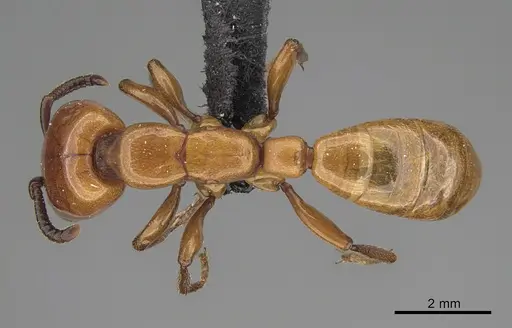
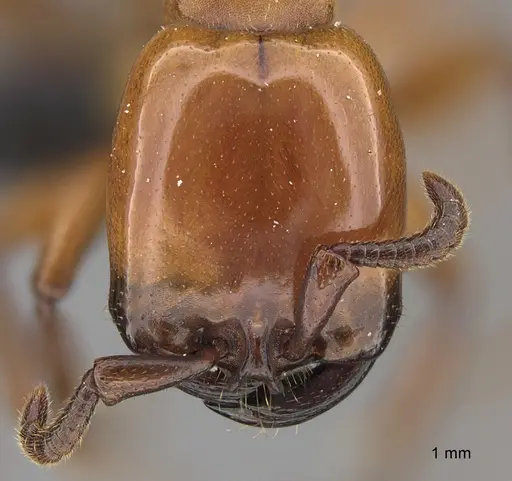
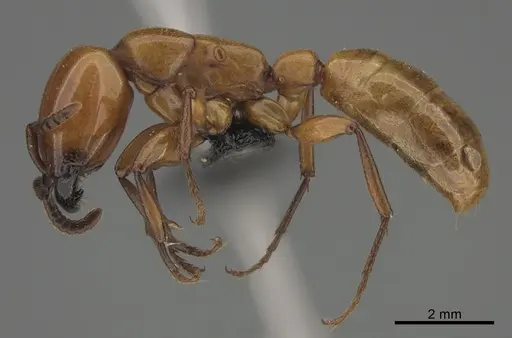
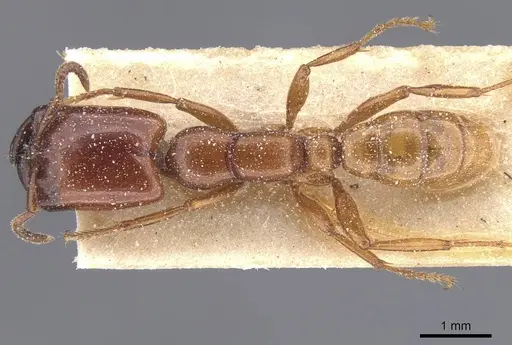
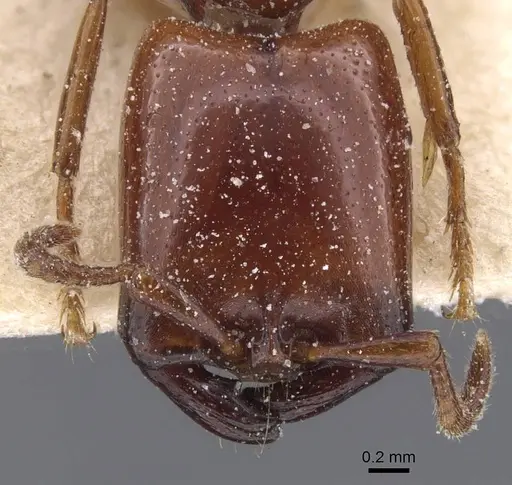
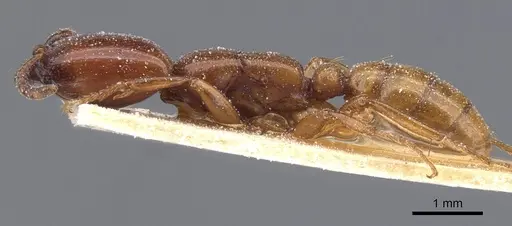
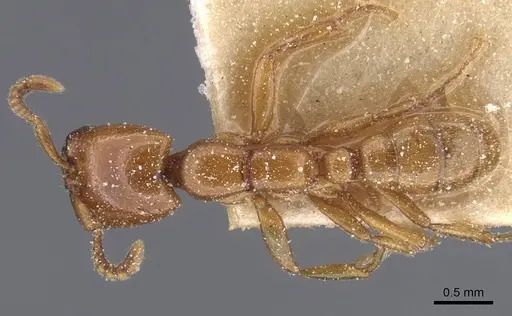
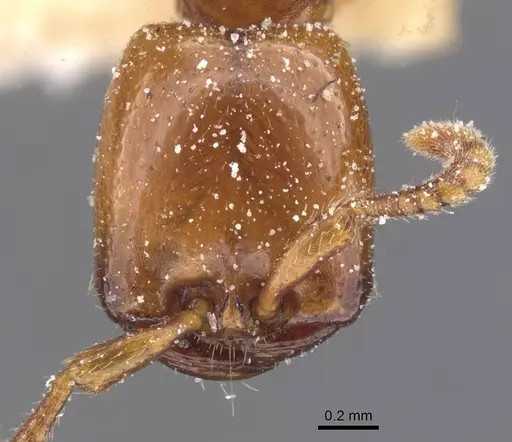
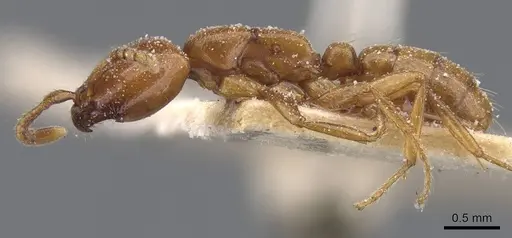
Dorylus striatidens is a small army ant species from the Afrotropical region, found across Senegal, Ethiopia, and Zambia [1]. Workers measure 3.5-6.6mm and are characterized by their elongated head with parallel sides,11 antennal articles, and distinctly striated mandibles that give them a shinier appearance compared to close relatives like D. affinis [2]. The species was first described by Santschi in 1910 from specimens collected in Casamance, Senegal [3].
As a Dorylus species, these are army ants, highly predatory insects that form large colonies and conduct organized raids on other ant colonies and small invertebrates. They represent a challenging but fascinating group for advanced antkeepers who want to observe unique raiding behaviors not seen in typical pet ants.
Quick Summary
- Difficulty: Expert
- Origin & Habitat: Afrotropical region, found in Senegal (Casamance, Dakar), Ethiopia, and Zambia [1]. In their natural range, they inhabit savanna and forest edge habitats where they can conduct raiding expeditions.
- Colony Type: Colony structure is typical of Dorylus army ants, single queen (monogyne) colonies with large worker populations. The genus is known for having one permanently mated queen and massive colonies that can contain thousands of workers.
- Colony: Monogyne
- Size & Growth:
- Queen: Likely large (15-20mm+) based on typical Dorylus queen size, direct measurements for this species unavailable
- Worker: 3.5-6.6mm [2]
- Colony: Likely thousands of workers based on genus patterns, Dorylus colonies are known for their massive size
- Growth: Fast, army ant colonies grow rapidly when well-fed
- Development: Unknown for this specific species, Dorylus development is typically 4-8 weeks at optimal temperature based on genus patterns (Direct development data unavailable for D. striatidens. Army ants generally develop quickly compared to many ant species.)
- Antkeeping:
- Temperature: Keep at 24-28°C, army ants are tropical and need warm conditions. A heating gradient allows thermoregulation.
- Humidity: Moderate to high humidity (60-80%). Army ants prefer humid environments but the nest area should not be waterlogged.
- Diapause: Likely minimal or no true diapause, Dorylus are tropical army ants that remain active year-round. However, slight reduction in activity during cooler months may occur.
- Nesting: This is the most challenging aspect. Army ants do not build permanent nests, they bivouac (form temporary nests from their own bodies). In captivity, they need a large outworld with minimal nest structure, or a formicarium with very large chambers connected to a spacious foraging area. They will not use typical enclosed nests.
- Behavior: Dorylus striatidens is a predatory army ant with highly organized raiding behavior. Workers are aggressive hunters that raid other ant colonies and insect nests. They are nocturnal or crepuscular, with raiding parties emerging at night. The species has a potent sting for its size, army ant workers can deliver painful stings as a defense mechanism. Escape prevention is critical, these ants are excellent climbers and will readily escape from poorly sealed setups. Their small worker size (3.5-6.6mm) means they can squeeze through standard barrier gaps.
- Common Issues: Army ants are extremely difficult to keep in captivity, they require massive amounts of prey and will not thrive in typical ant enclosures, No permanent nesting behavior, they bivouac and may stress in conventional formicariums, Colony collapse is common when prey supply is inadequate, they need constant protein, Escape prevention is critical due to their small size and climbing ability, Tropical species may struggle with temperature drops, maintain warm conditions year-round, Not suitable for beginners, requires expert-level commitment to prey husbandry and space
Understanding Army Ants
Dorylus striatidens belongs to the army ant tribe Dorylini, a group of ants famous for their predatory raiding behavior. Unlike most ants that forage individually or in small groups, army ants conduct massive coordinated raids where thousands of workers swarm across the landscape, overwhelming prey colonies. This raiding behavior is what makes them so fascinating to observe but also what makes them so challenging to keep.
Army ants differ fundamentally from typical pet ants in their biology. They do not maintain permanent nests, instead, they form bivouacs, temporary structures made from the bodies of thousands of workers clinging together. The queen is permanently mated and produces eggs continuously, leading to massive colony growth. Colonies can reach tens of thousands of workers in the wild.
The genus Dorylus is found exclusively in the Afrotropical region (Africa and parts of Asia), with D. striatidens specifically distributed across Senegal, Ethiopia, and Zambia. These are tropical ants that require warm, humid conditions and constant access to prey. [1][2]
Housing and Enclosure Setup
Housing Dorylus striatidens is fundamentally different from keeping typical ants. They will not use conventional nests, army ants need open spaces to form their bivouac and conduct raids. The ideal setup includes a very large foraging area (at least 30x30cm or larger) connected to a small, dark retreat area where the bivouac can form.
The enclosure should have smooth, escape-proof walls. Because workers are only 3.5-6.6mm and excellent climbers, standard barrier methods may not suffice. Fluon applied to barrier edges and a secure lid are essential. The substrate should be minimal, a thin layer of soil or sand that can be easily cleaned, as army ants produce significant waste.
Lighting should be indirect or dim, army ants are nocturnal and prefer dark conditions. The setup should allow you to observe raids without disturbing the colony. Some keepers use red film over observation lights to view nocturnal activity without disrupting the ants.
Feeding and Nutrition
Dorylus striatidens is a strict predator, they do not eat seeds, fruits, or honeydew. In the wild, their diet consists almost entirely of other insects, particularly other ant species and small invertebrates. In captivity, you must provide live prey constantly.
Suitable prey includes: other ant colonies (including their own species if available), mealworms, waxworms, small crickets, fruit flies, and any small insects you can culture or collect. The colony will need substantial amounts of prey, a large Dorylus colony can consume thousands of insects per week. Prey should be offered daily, and the colony should never run out of available food.
Feeding behavior is spectacular to observe. Workers will swarm over prey items, stinging and subduing them, then dismembering and carrying pieces back to the bivouac. The raid columns moving across the foraging area are one of the most impressive sights in ant keeping.
Temperature and Humidity Requirements
As a tropical species from the Afrotropical region, Dorylus striatidens requires warm conditions. Maintain temperatures between 24-28°C (75-82°F) throughout the year. A slight temperature gradient allows the colony to regulate, they will move between warmer and cooler areas as needed.
Heating can be provided via a heating cable or mat placed under one end of the enclosure, but ensure the temperature never exceeds 30°C. Use a reliable thermometer to monitor conditions. Room temperature may be insufficient in cooler climates.
Humidity should be maintained at 60-80%. This can be achieved by misting the enclosure regularly and providing a water dish. However, avoid creating standing water or waterlogged substrate, as this can lead to mold and bacterial issues. The retreat area should be slightly more humid than the foraging area.
Colony Behavior and Observation
The most compelling reason to keep Dorylus striatidens is to observe their unique raiding behavior. Unlike typical ants that send foragers to discover food, army ants conduct organized raids with multiple columns moving in formation. Workers leave the bivouac in large numbers, search systematically, and when they encounter a prey colony, overwhelm it through sheer numbers.
Raids typically occur at night or during dim light conditions. You may notice increased activity in the evening hours as the colony prepares for a raid. The raid column can contain thousands of workers moving in coordinated fashion, this is one of the most impressive displays in the ant keeping hobby.
The colony will form a bivouac in the darkest, most humid corner of the enclosure. This bivouac is dynamic, it may move location periodically. The queen remains inside the bivouac mass, and workers continuously tend to her.
Frequently Asked Questions
Can I keep Dorylus striatidens in a test tube?
No. Dorylus striatidens cannot be kept in test tubes or conventional formicariums. They are army ants that do not build nests, they form bivouacs (temporary nests made from their own bodies). You need a large, open enclosure with minimal nesting structure. This is not a species for beginners who are used to keeping typical ants in test tubes.
How often should I feed Dorylus striatidens?
You should offer prey daily, and the colony should never run out of available food. Army ants have massive appetites and can consume thousands of insects per week. A feeding schedule of offering prey items (mealworms, crickets, other insects) multiple times per day is ideal. Remove uneaten prey after 24 hours to prevent mold.
How long does it take for eggs to develop into workers?
The exact egg-to-worker development time for Dorylus striatidens has not been documented. Based on typical Dorylus and army ant patterns, development likely takes 4-8 weeks at optimal temperature (24-28°C). Army ants generally develop faster than many other ant species.
Are Dorylus striatidens good for beginners?
No. Dorylus striatidens is an expert-level species that requires specialized care. They need massive amounts of live prey, large enclosures, escape-proof housing, and constant attention. Most antkeepers should start with easier species like Lasius niger, Camponotus, or Messor before attempting army ants.
Do Dorylus striatidens need hibernation?
No. Dorylus striatidens is a tropical species from the Afrotropical region and does not require hibernation. They should be kept at warm temperatures (24-28°C) year-round. Maintaining stable, warm conditions is essential for their health.
Why is my Dorylus striatidens colony dying?
The most common causes of colony death include: inadequate prey supply (starvation), temperatures too low, improper humidity, escape, or stress from inappropriate housing. Army ants have high metabolic demands and will decline rapidly without proper care. Ensure constant prey availability, proper temperature and humidity, and escape-proof enclosure.
Can I keep multiple queens together?
No. Dorylus colonies are typically monogyne (single queen). While some Dorylus species may have temporary multi-queen founding, established colonies have one permanently reproductive queen. Attempting to introduce additional queens will result in fighting.
What size enclosure do Dorylus striatidens need?
They need a very large enclosure, at minimum 30x30cm of floor space, though larger is better. The foraging area should be spacious enough for raid columns to form and move. A small dark retreat area (like a small box or hide) allows bivouac formation. The bigger the better for army ants.
References

This caresheet is licensed under CC BY-SA 4.0 .
Literature
Loading...Loading products...