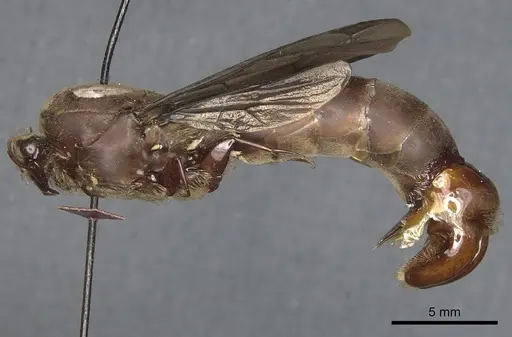
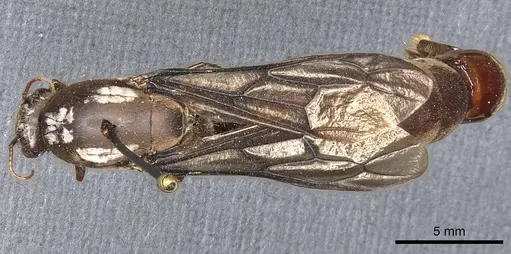
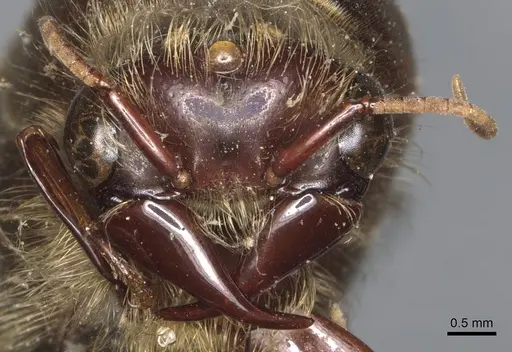
Dorylus moestus - "Driver Ant"
Dorylus moestus is a species of army ant, commonly known as a driver ant or siafu, found primarily in parts of Central and West Africa. These ants are known for their massive colonies and unique foraging behavior, where they form impressive columns and swarms to overpower prey. They are characterized by their polymorphic worker caste, including large-headed soldiers with powerful mandibles. Unlike many New World army ants, Dorylus species are more generalist predators, with a significant part of their diet consisting of earthworms and various arthropods. All Dorylus ants are blind and rely on pheromones for communication.
- Difficulty: Expert
- Origin & Habitat: Africa (Democratic Republic of Congo, Guinea, Ivory Coast, Kenya, Liberia, Congo) in Rainforests, grasslands, and scrublands, often forming temporary subterranean nests or bivouacs under tree root systems..
- Colony Type: Monogyne (single queen), but with colony fission for new colony establishment., colony fission (queen assisted by workers to new site) founding.
- Size & Growth:
- Queen: 40-63mm
- Worker: 3.2-13mm
- Colony: Supercolony (millions to over 20 million workers). Fast, with a high egg-laying capacity (3-4 million eggs per month for some Dorylus queens). growth.
- Antkeeping:
- Temperature: Driver ants are tropical species, preferring warm conditions. Specific temperature ranges for Dorylus moestus are not widely documented for antkeeping, but other Dorylus species thrive in environments where mean maximum temperatures can be around 23.3°C and mean minimum temperatures around 16.4°C..
- Humidity: High humidity is crucial, mimicking their natural rainforest and humid grassland environments. Given their subterranean and temporary bivouac habits, consistent moisture in their nesting medium is vital..
- Diapause: Not required. Not specified at Not specified.
- Nesting: As army ants, Dorylus moestus do not maintain permanent nests. They form temporary subterranean bivouacs or utilize pre-existing cavities, which they will excavate further. In a captive setting, this means they require a large, constantly moist substrate that allows for extensive tunneling and migration. Traditional formicaria are generally unsuitable..
- Behavior: High (towards handler, food, or other ants) aggressiveness.
- Common Issues: Colony containment breaches, Inadequate space, Insufficient food supply, Maintaining proper temperature and humidity across vast setup, Stress from confinement, Lack of natural foraging opportunities, Risk of bites (powerful jaws of soldiers).
Keeping Dorylus moestus in a captive antkeeping setup is exceptionally challenging and generally not recommended for hobbyists. Their sheer colony size, nomadic lifestyle, and aggressive predatory nature make containing and providing adequate care extremely difficult. These ants are blind, relying entirely on pheromones for communication and hunting. Replicating their natural environment and fulfilling their immense dietary needs would require specialized facilities far beyond typical antkeeping setups.
Dorylus moestus colonies exhibit a fascinating polymorphic worker caste, with workers ranging significantly in size from small minors to massive soldiers. The large soldiers play a crucial role in defense and dismembering larger prey with their powerful, scissor-like mandibles. This division of labor, where larger workers are often found closer to the brood and in more exposed areas of trails, is a key aspect of their success as apex predators in their natural habitat. Observing this caste specialization in a controlled environment is nearly impossible due to their inherent need for vast foraging territories.
Unlike many New World army ants that have distinct nomadic and statary phases, Dorylus colonies, including D. moestus, do not exhibit pronounced, synchronized nomadic and statary phases. Their brood production is not synchronized, and colonies move at irregular intervals. This constant, unpredictable movement makes them highly unsuitable for static ant farms or typical formicaria. Their queens, being dichthadiiform and wingless with reduced tarsal segments, are often physically assisted by workers during these colony emigrations.
Reproduction in Dorylus moestus occurs via colony fission, where a mature colony produces virgin queens, and roughly half the worker force departs with an old, fertilized queen to establish a new colony, while the other half remains with the virgin queens. The queen's immense egg-laying capacity is a defining feature, allowing for rapid colony growth. Successfully managing such a reproductive strategy and the resulting massive population increase in captivity is a logistical nightmare for most antkeepers.
Frequently Asked Questions
Can I keep Dorylus moestus as a pet?
Honestly, keeping Dorylus moestus as a pet is extraordinarily difficult and generally discouraged for the average ant hobbyist. Their immense colony size, nomadic nature, and specific care requirements are nearly impossible to meet in a home setup, making them an expert-level, or more accurately, a research-level species. They truly need a dedicated, large-scale facility to even begin to thrive.
What do Dorylus moestus eat?
These driver ants are generalist predators with a voracious appetite. In the wild, their diet consists largely of earthworms, various insects, other arthropods, and even small, incapacitated vertebrates. For successful antkeeping, if one were to attempt it, a consistent and massive supply of live insect prey would be essential.
Are Dorylus moestus dangerous?
Yes, their bites are notoriously painful due to their powerful, scissor-like mandibles, especially those of the large soldier caste. While they are capable of stinging, they rarely do, preferring to rely on their strong jaws. In some parts of Africa, their bite is even used as a traditional suture! Handle with extreme caution, or, more realistically, don't handle them at all.
How big do Dorylus moestus colonies get?
Their colonies are truly massive, often numbering in the millions, with some estimates reaching over 20 million individuals. This 'supercolony' status is what makes them such formidable predators in their natural habitats and incredibly difficult to house in captivity.
Where do Dorylus moestus live?
You'll find these incredible driver ants primarily across Central and East Africa, extending into West Africa, in diverse environments like lush rainforests, open grasslands, and dense scrublands. They are constantly on the move, establishing temporary underground nests (bivouacs) or utilizing existing cavities within the soil or under tree roots.
Do Dorylus moestus have a queen?
Absolutely! Like most ant species, Dorylus moestus colonies are headed by a single queen (monogyne). These queens are incredibly large, often the biggest ants on Earth, and are responsible for laying millions of eggs throughout their lifetime, fueling the colony's explosive growth.
How do Dorylus moestus reproduce?
Instead of a nuptial flight, Dorylus moestus colonies reproduce through a process called colony fission. When a colony reaches a certain size and maturity, it produces new virgin queens. Then, roughly half of the existing worker force will leave with a fertilized queen to establish a brand-new colony, a truly spectacular event!
Are Dorylus moestus blind?
Yes, Dorylus moestus, like all Dorylus species, are blind. They don't have eyes and navigate their world and communicate entirely through complex chemical signals (pheromones), which is how they coordinate their massive foraging raids.
Do driver ants sting?
While Dorylus ants do possess a sting, they very rarely use it. Their primary defense and offensive weapon are their incredibly powerful, shearing mandibles, which they use to bite and hold on with impressive strength.
What is the biggest challenge in keeping Dorylus moestus?
The biggest hurdle by far is their nomadic lifestyle and sheer colony size. Traditional ant setups are simply too small. They require vast, escape-proof enclosures with constantly moist, deep substrate to allow for their characteristic tunneling and frequent migrations. Their insatiable appetite also means providing an enormous, consistent food source is a significant challenge.