

Dorylus conradti
- Scientific Name
- Dorylus conradti
- Subfamily
- Dorylinae
- Author
- Emery, 1895
- Distribution
- Found in 3 countries
Dorylus conradti Overview
Dorylus conradti is an ant species of the genus Dorylus. It is primarily documented in 3 countries , including Kenya, Togo, Uganda. Detailed taxonomic data and occurrence records can be further explored via authoritative databases such as AntWeb or the Global Biodiversity Information Facility (GBIF).
Dorylus conradti
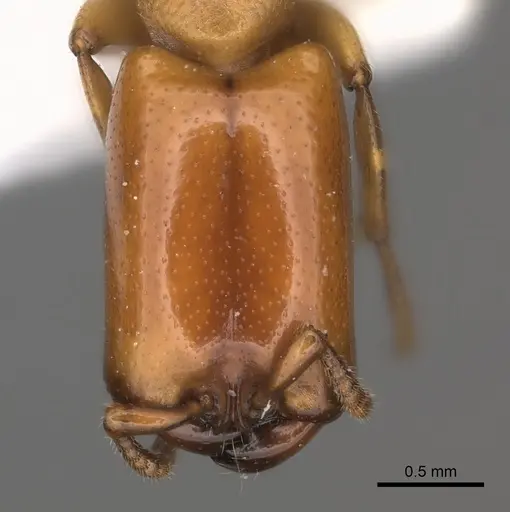
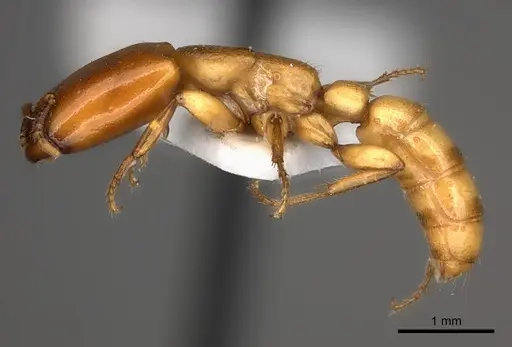
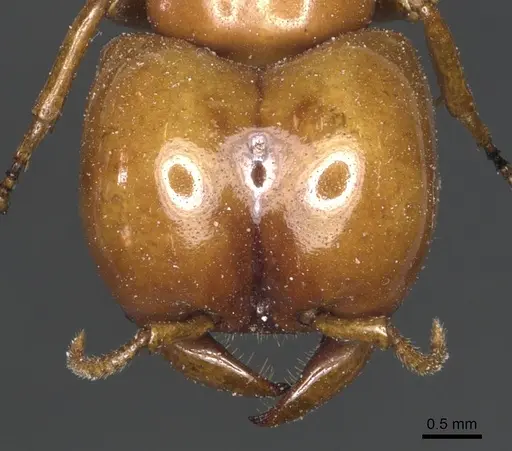
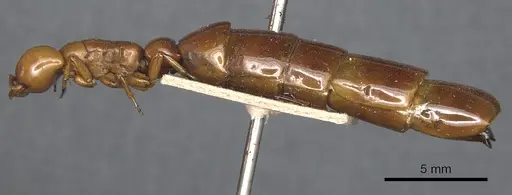
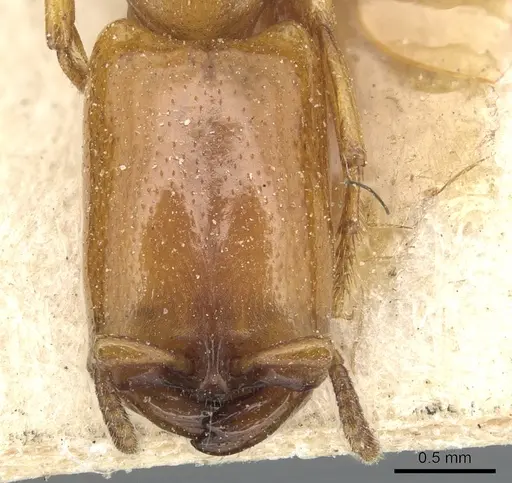
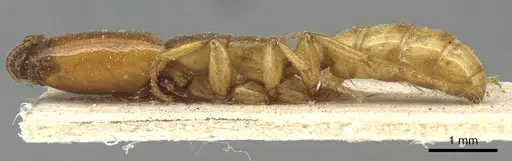
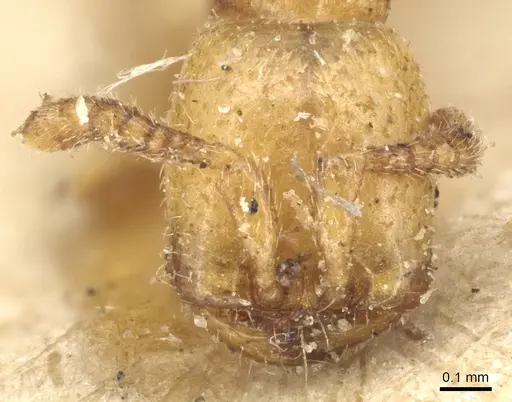
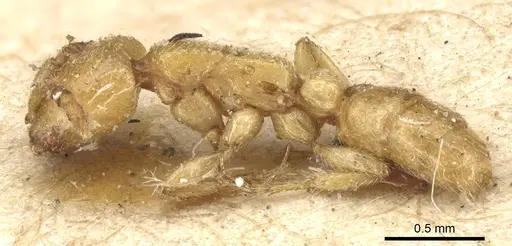
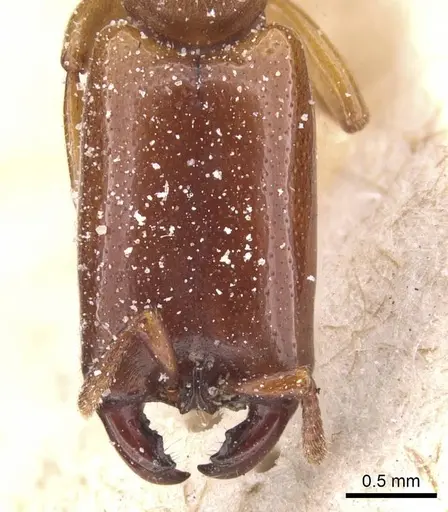
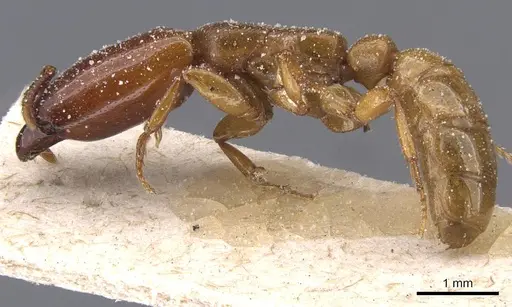
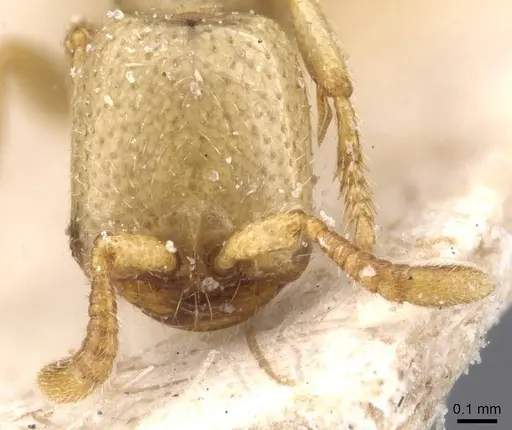
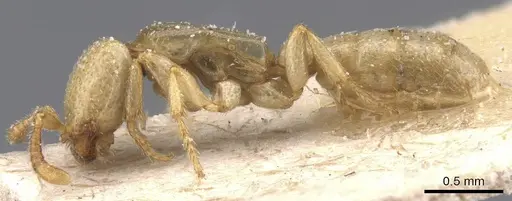
Dorylus conradti is a species of army ant found across Central and East Africa, from the Democratic Republic of Congo to Kenya and Togo [1]. Workers are small at 2.5-6.5mm, with a distinctive clay-yellow coloration and reddish-brown head, while queens are remarkably large at 20-23mm and completely wingless with no eyes, an unusual trait among army ants [1]. This species belongs to the Dorylus orientalis-group and is a classic army ant, forming massive colonies that conduct coordinated mass raids on other ant colonies and arthropods for food.
What makes Dorylus conradti particularly fascinating is its queen's reproductive capacity, queens can lay up to 100,000 eggs per day and contain more than a thousand ovarioles in their abdomen [2]. Unlike many army ant queens that have wings during nuptial flights, this species produces wingless (apterous) queens that likely mate underground or near the nest. The colony structure is polygyne (multiple queens), with colonies capable of reaching enormous sizes numbering in the hundreds of thousands of individuals.
Quick Summary
- Difficulty: Expert
- Origin & Habitat: Tropical Africa, found in Democratic Republic of Congo, Ivory Coast, Kenya, Togo, and Uganda. Inhabits forest floor environments where they conduct massive raids [1][3].
- Colony Type: Polygyne (multiple queens) army ant colony. Colonies contain multiple reproductive queens and can grow to hundreds of thousands of workers [2].
- Colony: Polygyne
- Size & Growth:
- Queen: 20-23 mm [1]
- Worker: 2.5-6.5 mm [1]
- Colony: Extremely large, hundreds of thousands of workers typical for established colonies [2]
- Growth: Very fast, queens can lay up to 100,000 eggs per day [2]
- Development: Development is extremely rapid due to high egg-laying rates, but exact timeline unconfirmed for this species (Based on typical Dorylus patterns, development likely completes in 3-5 weeks at optimal temperature, but massive brood batches mean continuous worker emergence)
- Antkeeping:
- Temperature: Tropical species requiring warm conditions, aim for 24-28°C with stable humidity. Army ants are highly sensitive to temperature drops and will become sluggish below 22°C.
- Humidity: Requires high humidity (70-85%) typical of African forest floor. Keep substrate consistently moist but not waterlogged.
- Diapause: No true diapause, being a tropical species, they remain active year-round. However, colony activity may slow during dry seasons in their native range.
- Nesting: Army ants do not maintain permanent nests. In the wild, they form bivouacs (temporary nests) from their own bodies. In captivity, they need a large outworld with minimal nest structure, essentially a foraging arena where they can form temporary clusters. Test tubes and formicaria are completely unsuitable for this species.
- Behavior: Extremely aggressive foragers using mass recruitment. Workers are polymorphic (varying sizes) and all participate in raids. They are highly active day and night, conducting raids that can span meters. Queens are completely blind with no eyes [1]. Escape prevention is critical despite their small worker size, they are prolific climbers and will exploit any gap. They are capable of delivering painful bites, though this species is not considered medically significant.
- Common Issues: Massive colony size makes them impractical for most keepers, colonies can reach hundreds of thousands of workers, Require constant movement and space, cannot be kept in standard formicaria, Extremely difficult to feed, require constant large quantities of prey insects, Queens are wingless, making propagation through nuptial flights nearly impossible in captivity, Temperature sensitive, cold temperatures cause colony decline and death, Very aggressive and will attack anything that moves, handling is difficult, No permanent nesting structure, they need to be allowed to form bivouac clusters
Why This Species Is Expert-Only
Dorylus conradti and other army ants represent the absolute pinnacle of antkeeping difficulty. These are not pets in any traditional sense, they are a force of nature that must be managed, not enjoyed like typical ant colonies. The fundamental challenge is scale: a single colony can contain hundreds of thousands of workers, each requiring food. Unlike typical ants where you feed a colony a few times per week, army ants need constant feeding, multiple large prey items daily to sustain their massive brood and worker population. The queen's capacity to lay up to 100,000 eggs per day means the colony's food demands never decrease [2]. Beyond feeding, they need enormous amounts of space to conduct their characteristic mass raids. Standard formicaria are completely useless, you need to provide a large outworld where they can form bivouac clusters and organize raiding parties. Most antkeepers who attempt army ants quickly realize the logistical impossibility of meeting their needs and must dismantle the colony.
Housing and Colony Setup
Army ants cannot be housed in traditional ant keeping setups. Test tubes, Y-tong nests, and formicaria are completely unsuitable. Instead, you must create a large foraging arena (essentially a plastic storage box or custom-built enclosure) with smooth walls to prevent climbing escape, minimal decoration, and easy access for feeding. The colony will form a living bivouac, a cluster of ants hanging from the ceiling or gathered in a corner. You should provide multiple feeding stations throughout the arena. The key is allowing the ants to behave naturally: they will constantly move, reorganize, and conduct raids. Some keepers provide a dark retreat area (like an overturned flower pot) where the bivouac can form. Ventilation is critical to prevent mold, but avoid strong airflow that dries them out. The setup should allow you to observe and feed without disturbing the colony excessively.
Feeding and Nutrition
Dorylus conradti is a predatory army ant, they are not scavengers or seed eaters. Their entire colony structure revolves around conducting mass raids to capture prey. In captivity, you must provide a constant supply of live prey insects. Suitable prey includes: crickets, mealworms, roaches, and other insects appropriate to the worker size (2.5-6.5mm workers can tackle prey their own size or larger through swarm attack). The feeding demands are extreme, an established colony may consume hundreds of insects per week. Prey should be offered alive so the ants can conduct their natural hunting behaviors. Dead prey is often ignored. Some keepers report success with freshly killed insects, but live prey is far superior. You should scatter prey throughout the foraging arena to simulate the scattered nature of natural raids. Sugar sources are generally not accepted or needed, army ants are obligate predators.
Temperature and Environmental Control
Being a tropical African species, Dorylus conradti requires warm, stable temperatures. The ideal range is 24-28°C, with 26°C being optimal. Temperature below 22°C will cause the colony to become sluggish and can lead to decline. Above 32°C risks desiccation and stress. Use a thermostat-controlled heating mat under one portion of the foraging arena to create a temperature gradient, the ants will self-regulate by moving to warmer or cooler areas. However, because they form bivouacs in retreat areas, you may need to heat the entire enclosure more uniformly. Humidity should be maintained at 70-85%, typical of African forest floor conditions. Light misting of the substrate can help maintain humidity, but avoid creating standing water. The combination of high humidity and warm temperatures makes mold a constant threat, clean the enclosure regularly and ensure adequate ventilation.
Colony Behavior and Raiding Dynamics
The most spectacular aspect of army ant behavior is the mass raid. Unlike typical ants that send foragers to discover food, Dorylus conradti conducts coordinated swarming raids where thousands of workers fan out in a broad front, overwhelming prey colonies and capturing arthropods. These raids can extend meters from the bivouac. In your enclosure, you will observe this behavior, workers organizing into columns that fan out into search patterns. The raid front moves through the enclosure, investigating every corner for potential prey. This behavior is what makes army ants fascinating to observe but extremely challenging to keep. The colony is essentially in constant motion, with workers cycling between raiding, nursing brood, and maintaining the queen. Multiple queens in the colony means egg production is continuous and massive. Workers of different sizes (polymorphism) perform different roles, larger workers may serve as soldiers defending the raid front, while smaller workers handle brood transport and prey retrieval.
Propagation and Colony Acquisition
Acquiring and establishing a Dorylus conradti colony is extraordinarily difficult. Wild colonies cannot simply be collected, they are too large and the queens are wingless (apterous), meaning they do not conduct nuptial flights that would allow easy colony initiation [1]. Unlike many ant species where you can catch a queen and start from scratch, army ant colonies must be acquired as established fragments or not at all. Even if you obtain a colony fragment, the absence of a functional queen means the colony will eventually die out. The polygyne nature of this species means multiple queens must be present for long-term colony survival. These factors combined make Dorylus conradti essentially impossible to start from a single queen, you must obtain an existing colony with multiple functional queens. This is rarely available in the antkeeping hobby and represents a major barrier to keeping this species.
Frequently Asked Questions
Can I keep Dorylus conradti in a test tube or formicarium?
No. Standard ant keeping setups are completely unsuitable for army ants. They need a large foraging arena where they can form bivouac clusters and conduct raids. Test tubes, Y-tongs, and formicaria will be destroyed or abandoned. You need essentially an entire room or large plastic container.
How difficult is Dorylus conradti to keep?
This is an expert-only species, likely the most difficult ant to keep in captivity. The combination of massive colony size, constant feeding requirements, need for space, temperature sensitivity, and near-impossible propagation makes it suitable only for very experienced keepers with significant resources.
How fast do Dorylus conradti colonies grow?
Extremely fast. Queens can lay up to 100,000 eggs per day, meaning colonies can grow from hundreds to hundreds of thousands of workers in a matter of months under optimal conditions [2]. This rapid growth is what makes feeding so challenging.
What do Dorylus conradti eat?
They are obligate predators. Feed live prey insects like crickets, mealworms, roaches, and other arthropods. They do not accept sugar water or seeds. The colony needs constant access to prey, hundreds of insects per week for established colonies.
Can I start a Dorylus conradti colony from a queen?
No. Queens are wingless (apterous) and do not conduct nuptial flights [1]. Propagation requires obtaining an existing colony fragment with multiple functional queens. Starting from a single queen is essentially impossible with this species.
Do Dorylus conradti need hibernation?
No. As a tropical species, they do not require hibernation or diapause. They remain active year-round, though colony activity may fluctuate with seasonal changes in their native habitat.
How big do Dorylus conradti colonies get?
Extremely large, hundreds of thousands of workers in mature colonies. This is one of the largest ant colony sizes possible. A well-established colony can contain over a million workers.
Are Dorylus conradti good for beginners?
Absolutely not. This species is among the most difficult ants to keep and is completely unsuitable for beginners. Even experienced antkeepers struggle with army ants. Start with easier species like Lasius, Camponotus, or Messor.
Why do Dorylus conradti queens have no eyes?
The queens are completely blind with no functional eyes, only small pits mark their position [1]. This is an adaptation to their subterranean lifestyle. Unlike many ants with winged queens that need vision for nuptial flights, these wingless queens likely mate underground or near the nest entrance, making vision unnecessary.
How do army ants form colonies - do they have permanent nests?
No. Army ants are nomadic, they do not have permanent nests. In the wild, they form temporary bivouacs (living nests made of themselves) that they abandon every few days to move to new raiding grounds. In captivity, you must accommodate this behavior by allowing them to reorganize freely in their enclosure.
References

This caresheet is licensed under CC BY-SA 4.0 .
CASENT0217155
View on AntWeb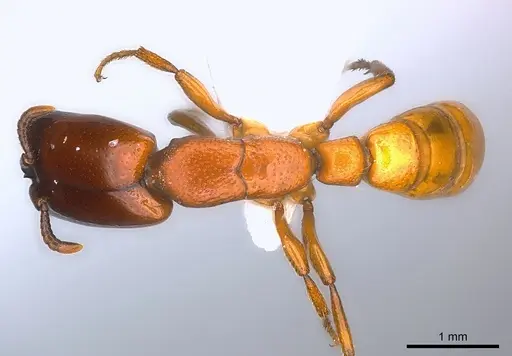
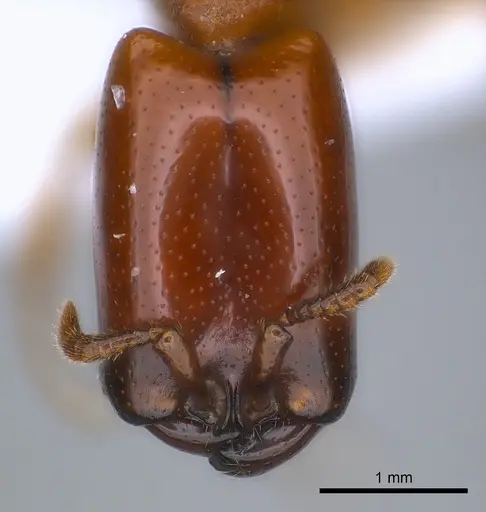
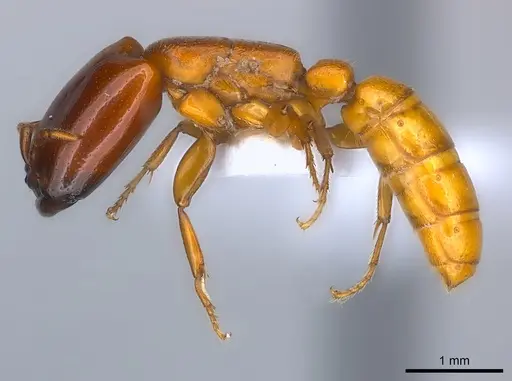
CASENT0217464
View on AntWeb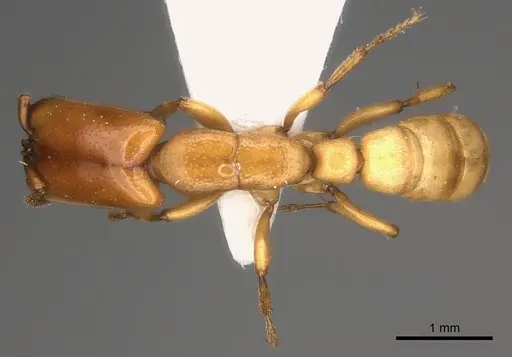
CASENT0903712
View on AntWeb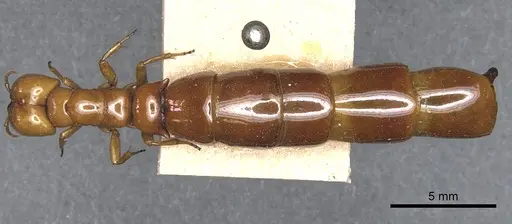
CASENT0903713
View on AntWeb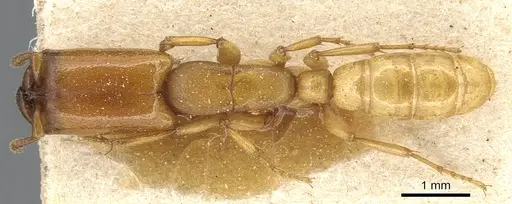
CASENT0903714
View on AntWeb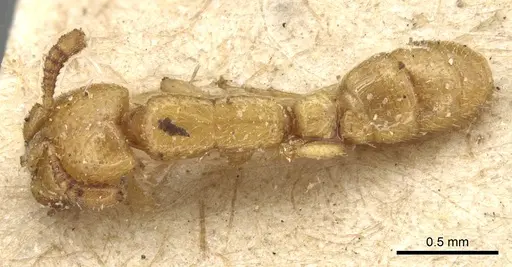
CASENT0911279
View on AntWeb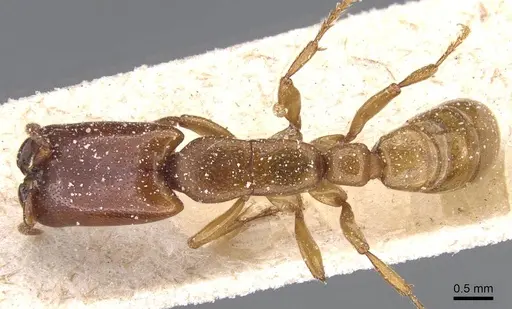
CASENT0911280
View on AntWeb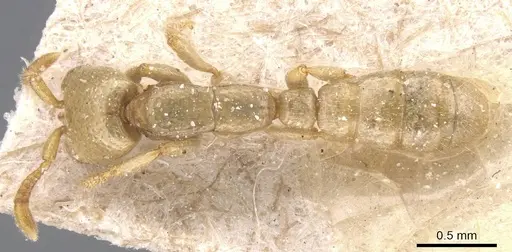
Literature
Loading...Loading products...