

Dolichoderus angusticornis
- Scientific Name
- Dolichoderus angusticornis
- Tribe
- Dolichoderini
- Subfamily
- Dolichoderinae
- Author
- Clark, 1930
- Distribution
- Found in 1 countries
Dolichoderus angusticornis Overview
Dolichoderus angusticornis is an ant species of the genus Dolichoderus. It is primarily documented in 1 countries , including Australia. Detailed taxonomic data and occurrence records can be further explored via authoritative databases such as AntWeb or the Global Biodiversity Information Facility (GBIF).
Dolichoderus angusticornis
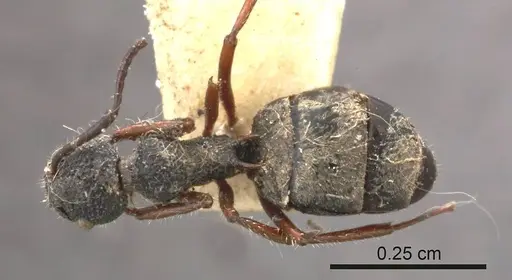
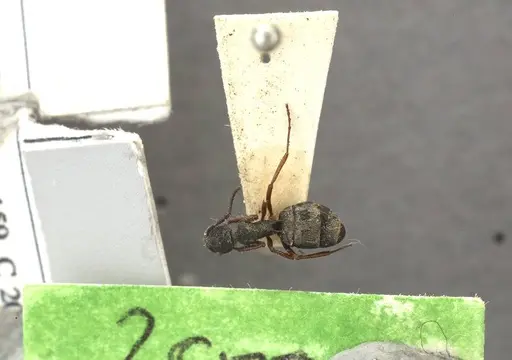
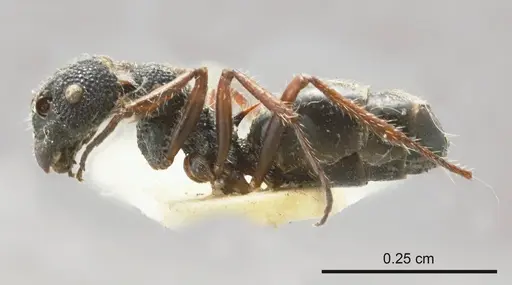
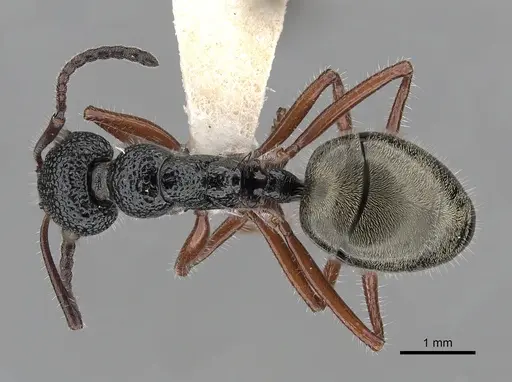
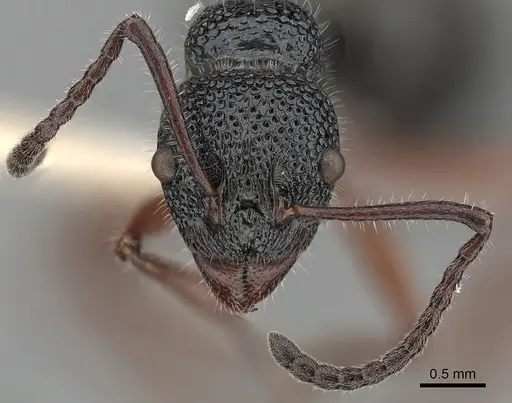
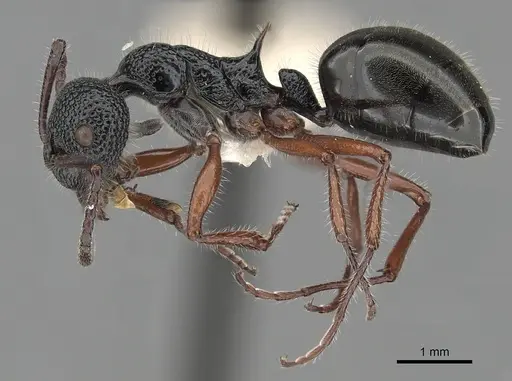
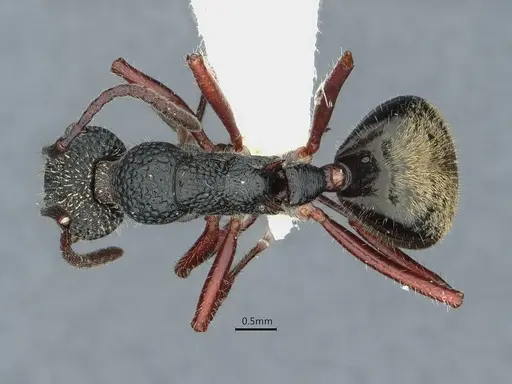
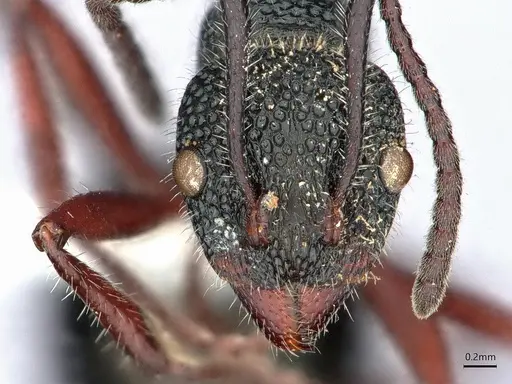
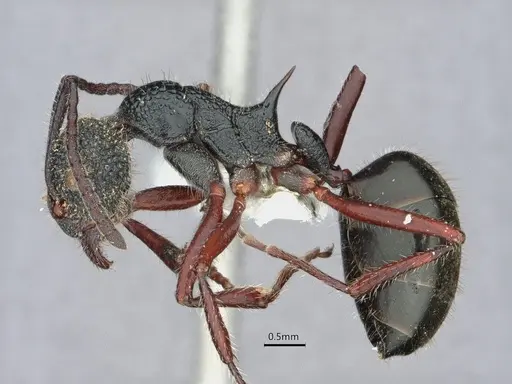
Dolichoderus angusticornis is a medium-sized ant native to southern Australia. Workers measure around 1.2-1.3mm in head width and have a distinctive appearance: they are black with brownish-red legs and the tips of their propodeal spines. Their body is covered in long, erect yellow hairs, giving them a somewhat fuzzy appearance. The most striking feature is their long propodeal spines that point upward at an angle greater than 60°, these spines help distinguish them from other Australian Dolichoderus species [1].
This species belongs to the Dolichoderus scabridus group and is found across dry scrub heathland in southern Western Australia and South Australia. Workers are generalist scavengers that forage both day and night, often traveling in columns along the ground or up into low vegetation and trees. They tend aphids and other Hemiptera for honeydew, making them part of the local ecosystem that includes these honeydew-producing insects [2]. All Australian Dolichoderus species are endemic to Australia, meaning this species is found nowhere else in the world [2].
Quick Summary
- Difficulty: Medium
- Origin & Habitat: Native to southern Australia, specifically southern Western Australia and South Australia. Found in dry scrub heath environments and drier areas in the eastern and southern wheatbelt [3][1].
- Colony Type: Colony structure is unconfirmed. Based on typical Dolichoderus patterns, likely single-queen colonies, but this requires verification.
- Size & Growth:
- Queen: Estimated 6-8mm based on genus patterns, direct measurements not available
- Worker: 1.2-1.3mm head width [1]
- Colony: Estimated moderate-sized colonies (several hundred workers) based on genus patterns, direct measurements not available
- Growth: Moderate, based on typical Dolichoderus development
- Development: Estimated 6-10 weeks at optimal temperature based on related Dolichoderus species (Direct development data unavailable for this species, estimates based on genus-level patterns)
- Antkeeping:
- Temperature: Keep at 22-26°C. They come from temperate to semi-arid regions of southern Australia, so room temperature is likely suitable. A slight gradient allows workers to self-regulate.
- Humidity: Low to moderate. These ants inhabit dry scrub heathland, so keep the nest substrate relatively dry with only occasional misting. Allow the substrate to dry between water additions.
- Diapause: Likely required. Southern Australian species typically need a winter rest period. Reduce temperature to 10-15°C for 2-3 months during winter.
- Nesting: In nature, they nest in soil under rocks or in rotten wood [2]. Y-tong (AAC) nests or plaster nests work well. Avoid overly humid conditions, these are dry-adapted ants.
- Behavior: Workers are active foragers that search for food both day and night. They are generalist scavengers and will accept various foods, including sugar sources and protein. They form foraging columns and can climb vegetation. Escape prevention should be moderate, they are not tiny ants but can still escape through small gaps. They are not aggressive but will defend the nest if threatened. They tend aphids for honeydew in the wild, so sugar water or honey is likely accepted.
- Common Issues: dry habitat requirements, they will not thrive in humid setups typical for tropical ants, winter diapause is likely required but specific duration is unknown, colony structure unconfirmed, may have specific queen requirements, limited availability in the antkeeping hobby means less established care knowledge, foraging activity is high, ensure secure enclosure to prevent escapes during outworld exploration
Natural History and Identification
Dolichoderus angusticornis is a distinctive ant species found only in southern Australia. The workers are medium-sized ants with a black body, brownish-red legs, and brownish-red tips to their propodeal spines. Their most recognizable feature is the pair of long, slender spines on the propodeum (the rear portion of the thorax) that point upward at angles greater than 60°, these spines can appear almost vertical in side view. The body is covered in long, erect yellow hairs, giving them a somewhat fuzzy or hairy appearance [1].
In the wild, these ants inhabit dry scrub heathland and the drier portions of the wheatbelt in southern Western Australia and South Australia. They are generalist scavengers that forage both during the day and at night, often moving in columns along the ground or climbing through low vegetation and trees. They play a role in the ecosystem by tending aphids and other Hemiptera (sap-sucking insects) to collect honeydew, a sugary substance these insects produce [2].
All Australian Dolichoderus species are endemic to Australia, meaning they are found nowhere else on Earth. This makes D. angusticornis a particularly interesting species for antkeepers who want to keep native Australian ants [2].
Nest Preferences and Housing
In their natural habitat, Dolichoderus angusticornis nests in soil, typically under rocks or in rotten wood [2]. This tells us they prefer enclosed, dark spaces that mimic underground chambers. For captive care, Y-tong (AAC) nests or plaster nests work well, both provide the dark, enclosed chambers these ants prefer.
Because they come from dry scrub heathland, they need relatively dry conditions compared to many other ant species. Avoid setups that maintain high humidity. The nest substrate should be allowed to dry between water additions. A small water reservoir for humidity is sufficient, you do not need to keep the nest constantly moist.
When setting up the outworld, include some climbing structures since these ants naturally forage up vegetation. A simple test tube setup works for founding colonies, but be prepared to move them to a proper formicarium as the colony grows. The key is providing a dry, stable environment with secure barriers, these ants are active foragers and will explore any gaps in their enclosure.
Feeding and Diet
Based on their natural history, Dolichoderus angusticornis workers are generalist scavengers that both forage for protein and collect honeydew from aphids and other Hemiptera [2]. In captivity, you should offer a varied diet:
Protein sources: Offer small insects like fruit flies, small crickets, or mealworms. Since workers are around 1.2-1.3mm, prey items should be appropriately sized. Cut prey into manageable pieces if needed.
Sugar sources: These ants will likely accept sugar water, honey, or sugar syrup. The honeydew-seeking behavior observed in the wild suggests they have a sweet tooth. Offer sugar water regularly, especially for established colonies.
Feeding schedule: Offer protein 2-3 times per week, removing any uneaten prey after 24-48 hours. Keep sugar water available at all times, replacing it every few days to prevent fermentation.
These ants are active foragers, so ensure food is accessible in the outworld. They may form foraging columns to collect food, so place offerings where they can easily find and retrieve it.
Temperature and Seasonal Care
Dolichoderus angusticornis comes from southern Australia, a region with distinct seasons and temperate to semi-arid conditions. This suggests they prefer moderate temperatures rather than the warm, tropical conditions many ant species need.
Optimal temperature range: Aim for 22-26°C. This is comfortably within typical room temperature range for many keepers. If your room is cooler, a heating cable on one side of the nest can create a gentle gradient. Place the heating on top of the nest, not underneath, to avoid excessive drying.
Winter care: Southern Australian species experience winter and likely require a diapause (winter rest) period. During winter, reduce temperatures to 10-15°C for 2-3 months. This mimics their natural seasonal cycle and helps maintain colony health. Reduce feeding during this period as activity slows.
Avoid keeping them too warm or too humid, these are dry-adapted ants that will not thrive in the tropical setups suitable for rainforest species. Monitor colony behavior: if workers are consistently clustering near the heated area, increase temperature slightly, if they avoid it, reduce heat.
Behavior and Colony Dynamics
Dolichoderus angusticornis workers are notably active and forage both day and night, this is unusual as most ant species are either diurnal or nocturnal, not both. They move in characteristic columns, traveling along the ground or climbing through vegetation to search for food [2].
In terms of temperament, these ants are not particularly aggressive but will defend their nest if threatened. They lack a sting, though some Dolichoderus species can spray formic acid as a defense, this is not dangerous to humans but can be irritating.
Foraging behavior: Workers will readily explore their outworld in search of food. This means you need good escape prevention, check that all connections between nest and outworld are secure. While not tiny, they are small enough to slip through small gaps.
Colony development: Based on typical Dolichoderus patterns, expect moderate growth. The queen lays eggs, which develop through larval stages before emerging as workers. The first workers (nanitics) will be smaller than mature workers but will immediately begin helping with colony tasks.
Because colony structure is not well-documented for this specific species, observe your colony for signs of stress or unusual behavior. Healthy colonies should have consistent worker activity and brood development.
Frequently Asked Questions
How long does it take for Dolichoderus angusticornis to produce first workers?
Direct data is not available for this species, but based on typical Dolichoderus development, expect 6-10 weeks from egg to first worker at optimal temperature (22-26°C). This timeline can vary depending on temperature and colony health.
What temperature do Dolichoderus angusticornis ants need?
Keep them at 22-26°C. They come from temperate southern Australia, so typical room temperature is often suitable. A slight temperature gradient allows workers to regulate their own conditions.
Do Dolichoderus angusticornis ants need hibernation?
Likely yes. Southern Australian species experience winter and likely need a 2-3 month diapause period at 10-15°C during winter months. This helps maintain natural seasonal rhythms.
What do Dolichoderus angusticornis ants eat?
They are generalist scavengers. Offer protein (small insects like fruit flies or mealworms) 2-3 times per week and keep sugar water or honey available at all times. They naturally tend aphids for honeydew in the wild.
Are Dolichoderus angusticornis good for beginners?
They are rated as medium difficulty. They have specific humidity requirements (dry conditions) and likely need winter diapause. If you have experience with other Dolichoderus species or Australian ants, this is a manageable species. Complete beginners may find the dry-habitat requirement and diapause needs challenging.
How big do Dolichoderus angusticornis colonies get?
Exact colony size is not documented, but based on related species, expect several hundred workers at maturity. Growth rate is moderate, colonies develop steadily but not rapidly.
Can I keep multiple Dolichoderus angusticornis queens together?
Colony structure is unconfirmed for this species. Based on typical Dolichoderus patterns, they likely form single-queen colonies. Do not combine unrelated foundress queens unless you observe them accepting each other, this has not been documented for this species.
What type of nest should I use for Dolichoderus angusticornis?
Y-tong (AAC) nests or plaster nests work well. They nest in soil under rocks or in rotten wood in the wild, so enclosed chambers with some soil-like material are appropriate. Keep conditions dry, avoid the humid setups needed for tropical species.
Why is my Dolichoderus angusticornis colony dying?
Common causes include: too much humidity (they need dry conditions), incorrect temperature (too cold or too hot), lack of winter diapause, or poor nutrition. Check that the nest is not too humid and that you are providing varied protein and sugar foods. Also ensure they can access water.
References

This caresheet is licensed under CC BY-SA 4.0 .
Literature
Loading...Loading products...