

Discothyrea remingtoni
- Scientific Name
- Discothyrea remingtoni
- Tribe
- Proceratiini
- Subfamily
- Proceratiinae
- Author
- Brown, 1948
- Distribution
- Found in 1 countries
Discothyrea remingtoni Overview
Discothyrea remingtoni is an ant species of the genus Discothyrea. It is primarily documented in 1 countries , including New Caledonia. Detailed taxonomic data and occurrence records can be further explored via authoritative databases such as AntWeb or the Global Biodiversity Information Facility (GBIF).
Discothyrea remingtoni
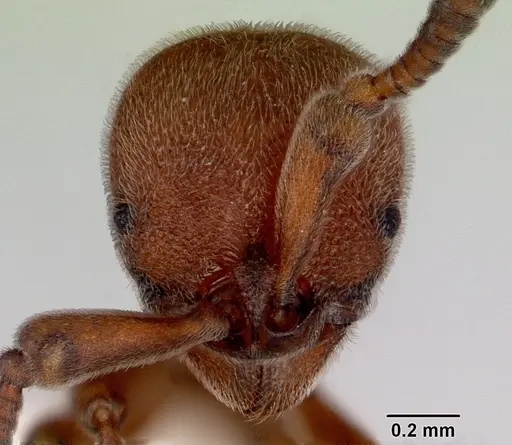
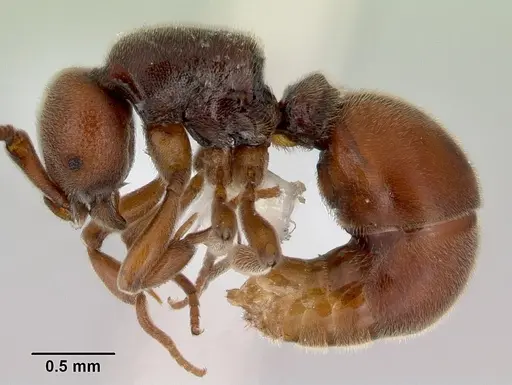
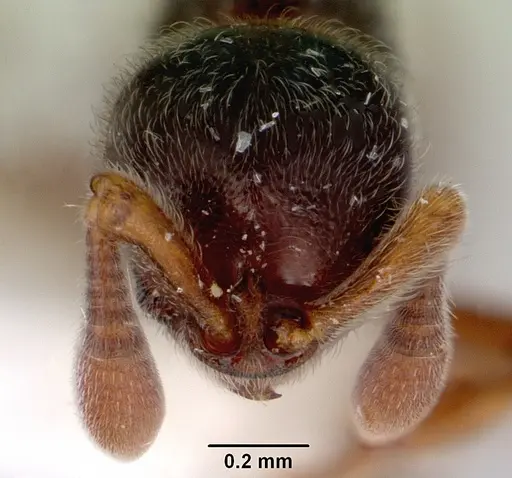
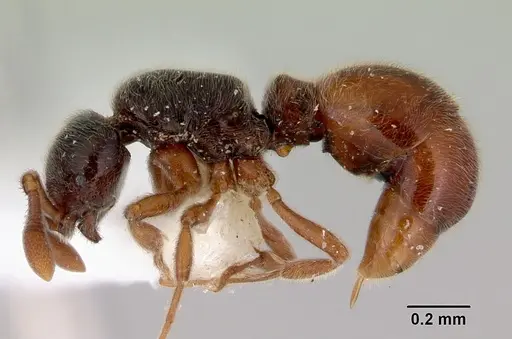
Discothyrea remingtoni is an extremely rare tiny ant species endemic to the rainforests of New Caledonia. Workers measure just 2.6mm in total length, making them among the smaller ants in the Proceratiinae subfamily. They have a distinctive appearance with a ferrugineous yellow head, rich mahogany-red thorax, and a uniquely disc-shaped petiole divided by a transverse sulcus. Their antennae feature an exceptionally large final segment, and their eyes are slightly larger than typical for the genus. This species is known only from a handful of specimens collected over decades, making it one of the rarest ants in the hobby.
Quick Summary
- Difficulty: Expert
- Origin & Habitat: Endemic to New Caledonia, found exclusively in rainforest leaf litter at elevations around 700 meters [1][2].
- Colony Type: Colony structure is unconfirmed, only workers have ever been collected, with no queens or reproductive specimens documented [1].
- Size & Growth:
- Queen: Unknown, no queens have been described [1]
- Worker: 2.6mm total length (head 0.80mm, thorax 0.73mm, petiole 0.19mm, gaster 1.24mm) [1]
- Colony: Unknown, only a few workers have ever been collected [1]
- Growth: Unknown
- Development: Unknown (No development data exists for this species due to its extreme rarity)
- Antkeeping:
- Temperature: Unconfirmed, likely requires warm, stable conditions typical of New Caledonian rainforest species. Start around 22-26°C and monitor colony activity.
- Humidity: Likely requires high humidity matching its rainforest leaf litter habitat. Keep substrate consistently moist but not waterlogged.
- Diapause: Unknown, New Caledonia has a mild tropical climate with minimal temperature variation, so true hibernation may not be necessary.
- Nesting: In nature they live in rainforest leaf litter, suggesting they prefer tight, humid spaces. A small test tube setup or Y-tong nest with fine chambers would likely work best. Avoid large, open spaces.
- Behavior: Behavior is unstudied due to the species rarity. Based on genus typical behavior, they are likely docile and non-aggressive. Their tiny size means escape prevention must be excellent, they can squeeze through extremely small gaps. Do not assume they cannot sting despite small size, Proceratiinae ants have functional stingers.
- Common Issues: extreme rarity means virtually no captive colonies exist, this species is essentially unavailable to hobbyists, no breeding stock exists in captivity since only wild specimens have ever been collected, escape prevention is critical due to their tiny 2.6mm size, no care information exists, keepers would be pioneering all aspects of husbandry, wild-caught colonies may not survive transfer due to stress and unknown requirements
Rarity and Collection History
Discothyrea remingtoni is one of the rarest ant species in the world, known only from a handful of specimens collected over several decades. The holotype worker was collected in 1945 by C.L. Remington from rocky humus in La Foa, New Caledonia. Additional specimens were found in 1984 by G. Monteith and D. Cook in rainforest litter on Mt. Rembai at 700 meters elevation. This species has never been established in captivity, and no queens or reproductive specimens have ever been documented. The extreme rarity makes this species essentially unavailable to antkeepers and of primarily academic interest. [1]
Identification and Distinguishing Features
This species can be identified by its unique combination of features: the disc-shaped petiole with a transverse sulcus dividing it into anterior and posterior rims, the exceptionally large final antennal segment, and its distinctive coloration with a mahogany-red thorax contrasting against the yellow head and gaster. The nearest similar species is Discothyrea antarctica, which is smaller at 2mm and yellow throughout, with a differently shaped petiole. Both D. globa and D. clavicornis are much smaller and have opaque integument. The eyes are slightly larger than typical for the genus, containing 12-18 ommatidia. [1]
Natural Habitat
This species is endemic to the rainforests of New Caledonia, a Pacific island with tropical humid forest ecosystems. Specimens have been collected from leaf litter at elevations around 700 meters, suggesting they prefer the cool, humid microclimate of the forest floor. New Caledonia has a warm, humid tropical climate year-round with minimal seasonal temperature variation. The rainforest leaf litter habitat suggests they require high humidity and likely prey on other tiny arthropods found in decomposing organic matter. [1][2]
Why This Species Is Not Recommended for Keepers
Discothyrea remingtoni should not be sought after by antkeepers for several critical reasons. First, no captive colonies exist, the species is known only from a handful of wild specimens collected over 80 years. Second, no one has ever documented a queen, so captive breeding would be impossible without discovering a mated queen in the wild. Third, even if a queen were found, we have no information about their founding behavior, temperature requirements, or diet. Attempting to keep this species would essentially be experimental guesswork with near-zero chance of success. For these reasons, this species remains a collector's curiosity rather than a viable captive species. [1]
Frequently Asked Questions
Can I keep Discothyrea remingtoni ants?
No, this species is essentially unavailable to antkeepers. Only a few workers have ever been collected in the wild, and no queens have ever been documented. There are no captive breeding colonies in existence.
How big do Discothyrea remingtoni colonies get?
Unknown, only a handful of workers have ever been collected, so colony size in the wild is unstudied.
What do Discothyrea remingtoni eat?
Unconfirmed. Based on genus typical behavior, they likely prey on tiny arthropods in rainforest leaf litter, but no specific diet studies exist for this species.
Do Discothyrea remingtoni ants sting?
Likely yes, Proceratiinae ants have functional stingers, though their small size may make stings ineffective against humans.
Where is Discothyrea remingtoni found?
This species is endemic to New Caledonia, specifically found in rainforest leaf litter at around 700 meters elevation on Mt. Rembai and near La Foa.
How long do Discothyrea remingtoni workers live?
Unknown, no lifespan studies exist for this extremely rare species.
Do Discothyrea remingtoni need hibernation?
Unlikely, New Caledonia has a mild tropical climate with minimal seasonal temperature variation. They probably remain active year-round.
Are Discothyrea remingtoni good for beginners?
No. This species is not available in the hobby, and even if it were, the complete lack of care information would make it unsuitable for any keeper.
Can I find Discothyrea remingtoni queens to start a colony?
No queens have ever been documented for this species, only workers have been collected. Finding a queen would be a significant scientific discovery.
What makes Discothyrea remingtoni unique?
This is one of the rarest ant species in the world, known from only a handful of specimens collected over 80 years. It has unique identification features including a disc-shaped petiole and exceptionally large final antennal segment.
References

This caresheet is licensed under CC BY-SA 4.0 .
CASENT0172102
View on AntWeb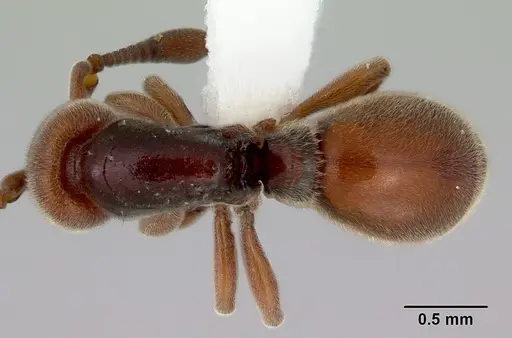
CASENT0172103
View on AntWeb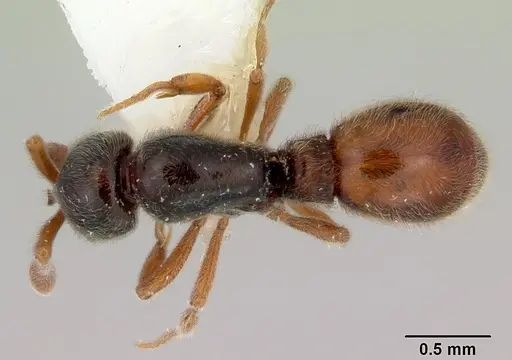
Literature
Loading...Loading products...