

Crematogaster polita
- Scientific Name
- Crematogaster polita
- Tribe
- Crematogastrini
- Subfamily
- Myrmicinae
- Author
- Smith, 1865
- Distribution
- Found in 1 countries
Crematogaster polita Overview
Crematogaster polita is an ant species of the genus Crematogaster. It is primarily documented in 1 countries , including Papua New Guinea. Detailed taxonomic data and occurrence records can be further explored via authoritative databases such as AntWeb or the Global Biodiversity Information Facility (GBIF).
Crematogaster polita
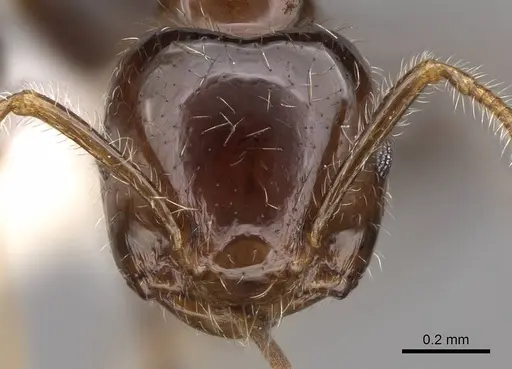
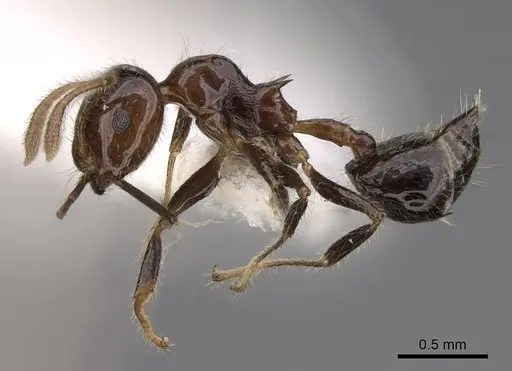
Crematogaster polita is a small arboreal ant native to the lowland rainforests of New Guinea and surrounding islands. Workers are typically 3-4mm with a distinctive polished appearance and heart-shaped abdomen (the genus hallmark). This species belongs to the Crematogaster irritabilis group and builds characteristic carton nests, papery structures made from chewed plant fibers, high in tree canopies [1].
What makes C. polita remarkable is its dominance in primary forest ecosystems. Studies in Papua New Guinea show this species is one of the most common arboreal ants, nesting in roughly 25% of surveyed trees and foraging on 64% of trees [2][3]. They maintain large biomass in forest canopies by farming symbiotic scale insects (Coccoidea) for honeydew, effectively monopolizing extrafloral nectaries and scale insect colonies across their territory [1]. This farming behavior makes them highly territorial and aggressive toward competitors.
Quick Summary
- Difficulty: Medium
- Origin & Habitat: New Guinea and surrounding islands in the Australasian region. This is a lowland tropical forest species, research shows nest abundance drops to zero above 200m elevation, making it a strict lowland specialist [4]. They are arboreal, nesting in tree canopies and building carton nests on tree trunks [1].
- Colony Type: Colony structure is not directly documented in available research. Based on typical Crematogaster behavior and the observed dominance patterns, this species likely forms single-queen colonies with large worker populations. The presence of multiple queens has not been documented for this specific species.
- Size & Growth:
- Queen: Not directly measured in available literature. Based on genus patterns for Crematogaster, queens are likely 6-8mm. Further research needed for exact measurements.
- Worker: Approximately 3-4mm based on genus descriptions [3][1].
- Colony: Colonies can be very large, they are the most abundant ant species in primary forest surveys with 12,528 foragers recorded in a single study [3]. Nest in 96 trees in one survey area [5].
- Growth: Moderate, based on typical Crematogaster development patterns.
- Development: Estimated 6-8 weeks at optimal tropical temperatures (25-28°C) based on genus-level data for similar Crematogaster species. Direct measurements for this species are not available. (Development likely follows typical Myrmicinae patterns. Tropical species generally develop faster than temperate relatives.)
- Antkeeping:
- Temperature: Keep at 24-28°C. This is a strict lowland tropical species that disappears above 200m elevation in the wild [4], so they need consistently warm conditions. Avoid temperatures below 22°C.
- Humidity: High humidity is essential, they come from tropical rainforest canopies where humidity is constantly high (70-90%). Keep nest substrate moist but not waterlogged. Provide a water source nearby.
- Diapause: No. As a strict lowland tropical species from near-equatorial New Guinea, they do not experience cold winters or require hibernation. Maintain year-round warm conditions.
- Nesting: Arboreal specialists. In captivity, they need vertical or elevated nest setups that mimic tree canopy conditions. Y-tong (AAC) nests work well, or naturalistic setups with cork or wood that allows carton nest construction. They prefer enclosed dark spaces positioned above ground level.
- Behavior: Crematogaster polita is a dominant, territorial species known for aggressive resource defense. Workers are active foragers that recruit heavily to food sources. They have the classic Crematogaster defense, they raise their abdomen as a warning and can emit a foul-smelling secretion from their anal gland when threatened. Escape risk is moderate, they are small but not particularly prone to escaping if given proper enclosures. They farm scale insects in captivity if provided the opportunity, which is fascinating to observe but can be managed.
- Common Issues: high humidity requirements can lead to mold if ventilation is poor, tropical temperature needs mean room temperature is often too cold without heating, dominant behavior can make them aggressive toward other ant species if housed in mixed setups, large colony size requires significant space, starting in a small setup then moving can stress the colony, carton nest building behavior may damage soft nest materials in captivity
Natural History and Distribution
Crematogaster polita is endemic to New Guinea and surrounding islands in the Australasian region. It is a strict lowland species, studies show they are abundant at 200m elevation but completely absent above 900m [4]. This makes them one of the most habitat-specific ants in the region. In primary rainforests, they are the dominant arboreal species, nesting in roughly one-quarter of all trees surveyed and foraging across nearly two-thirds of the forest canopy [2][3]. Their success comes from their ability to build large carton nests and farm scale insects for honeydew, giving them a reliable food source beyond just foraging [1]. They are known to coexist with other Crematogaster species like C. vitrea in parabiosis, meaning they share nesting spaces without aggressive conflict [6].
Nest Preferences and Housing
In the wild, C. polita builds carton nests, papery structures made from chewed plant fibers and secretions, attached to tree trunks in the canopy [1]. They rarely occupy natural cavities like bamboos [6]. For captive care, this translates to needing vertical, enclosed nest spaces that mimic tree hollows. Y-tong (AAC) nests work well, as do cork or wooden formicariums. The nest should be positioned above ground level if possible, these are true arboreal ants. Provide some fibrous or wood-based materials if you want to observe their natural carton-building behavior. Good ventilation is crucial to prevent mold while maintaining high humidity.
Feeding and Diet
In the wild, C. polita is a generalist forager but heavily relies on honeydew from farmed scale insects (Coccoidea) [1]. They also monopolize extrafloral nectaries on trees and scavenge or hunt small invertebrates. In captivity, offer a varied diet: sugar water or honey as a constant energy source, small live prey like fruit flies or pinhead crickets for protein, and occasional fruits or seeds. Their farming instinct means they may tend to any scale insects or aphids you provide, which can be fascinating to watch. Remove uneaten protein within 24 hours to prevent mold in the humid setup.
Temperature and Seasonal Care
This species has strict temperature requirements reflecting its lowland tropical origin. Research shows they are absent above 200m elevation in the wild [4], meaning they have not adapted to any temperature variation. Keep the nest at 24-28°C year-round. Room temperature is often insufficient, use a heating cable or mat on one side of the nest to maintain warmth, but avoid direct heat that could dry out the nest. No hibernation or diapause is needed, maintain consistent tropical conditions throughout the year. A slight temperature gradient allows workers to regulate their own exposure to heat.
Behavior and Defense
Crematogaster polita is a dominant, aggressive species in its ecosystem. Workers are active day and night, recruiting heavily to food sources and defending them vigorously. Their signature defense is the gaster flag, they raise their heart-shaped abdomen over their head as a warning display. If provoked further, they emit a foul-smelling secretion from their anal gland that deters predators and rival ants. In mixed ant setups, their dominant nature means they may outcompete or attack other species. They are not particularly prone to escaping if given secure enclosures, but their small size means standard barrier methods should still be used. [3][1][6]
Frequently Asked Questions
Can I keep Crematogaster polita in a test tube?
Test tubes can work for founding colonies, but this species is arboreal and prefers elevated nests. Once the colony reaches 20+ workers, transition to a Y-tong or cork nest that allows for their natural carton-building behavior and provides vertical space.
How long does it take for the first workers to emerge?
Based on typical Crematogaster development, expect first workers (nanitics) around 6-8 weeks after the queen lays eggs, at optimal temperatures of 25-28°C. Development time has not been directly measured for this species.
Do Crematogaster polita ants sting?
They do not have a painful sting like some ants. Their primary defense is raising their abdomen as a warning and emitting a foul-smelling secretion. They are not considered dangerous to humans.
Are Crematogaster polita good for beginners?
This species is rated as medium difficulty. While fascinating to watch due to their arboreal behavior and farming instincts, their strict temperature and humidity requirements make them better suited for keepers with some experience maintaining tropical species.
Can I keep multiple queens together?
Combining unrelated queens of this species has not been documented. Based on typical Crematogaster behavior, it is not recommended as queens will likely fight. Single-queen colonies are the standard approach.
What do Crematogaster polita eat?
They are generalists. Offer sugar water or honey constantly, protein sources like small insects 2-3 times weekly, and occasional fruits. They will also farm scale insects or aphids if provided, which is natural behavior for this species.
Do they need hibernation?
No. As a strict lowland tropical species from near-equatorial New Guinea, they do not experience winter and require no hibernation. Maintain warm temperatures year-round.
Why are my Crematogaster polita dying?
The most common causes are: temperatures below 22°C (they are strict lowland tropicals), low humidity causing desiccation, or mold from poor ventilation combined with overwatering. Check that your heating maintains 24-28°C and that humidity is high but the nest has adequate air flow.
References

This caresheet is licensed under CC BY-SA 4.0 .
CASENT0922667
View on AntWeb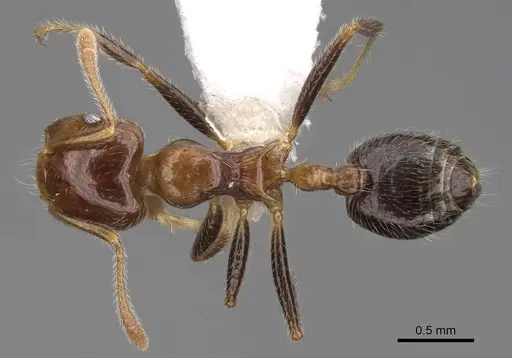
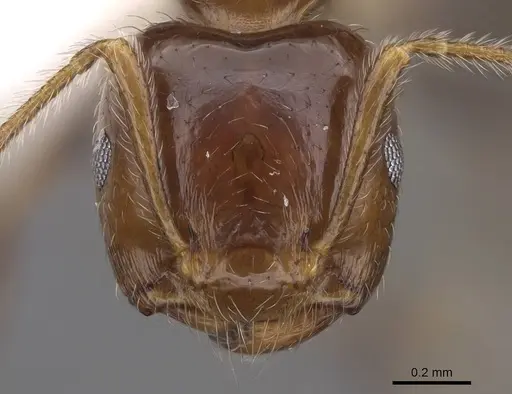
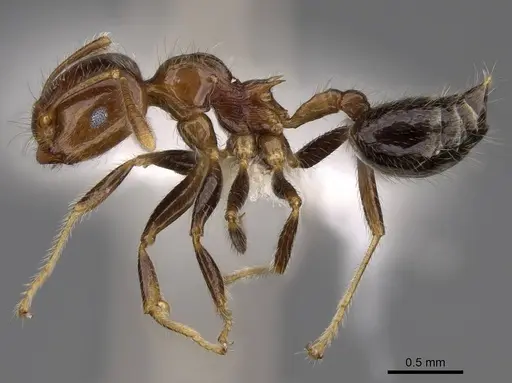
CASENT0922668
View on AntWeb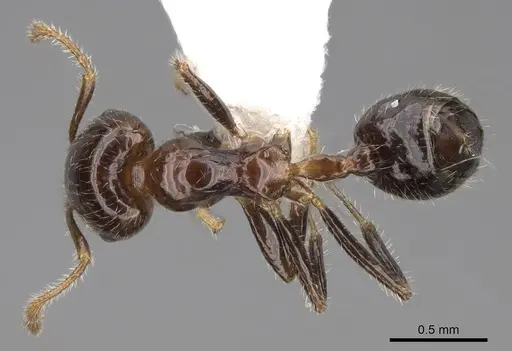
Literature
Loading...Loading products...