

Crematogaster myops
- Scientific Name
- Crematogaster myops
- Subgenus
- Orthocrema
- Tribe
- Crematogastrini
- Subfamily
- Myrmicinae
- Author
- Forel, 1911
- Distribution
- Found in 2 countries
Crematogaster myops Overview
Crematogaster myops is an ant species of the genus Crematogaster. It is primarily documented in 2 countries , including Malaysia, Singapore. Detailed taxonomic data and occurrence records can be further explored via authoritative databases such as AntWeb or the Global Biodiversity Information Facility (GBIF).
Crematogaster myops
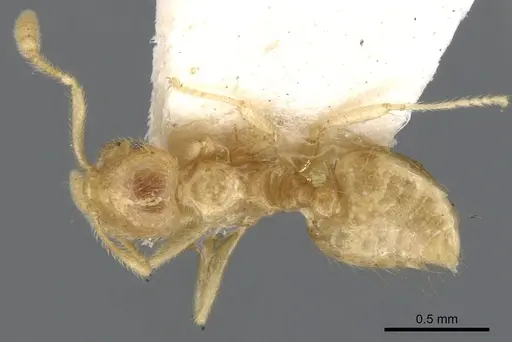
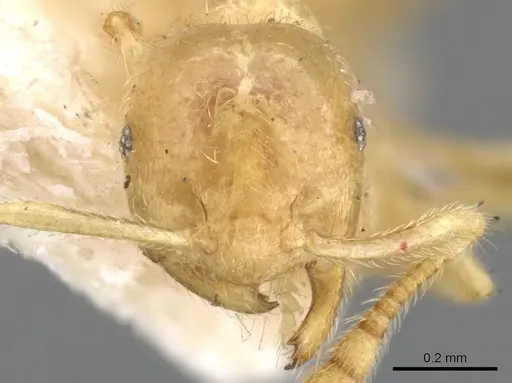
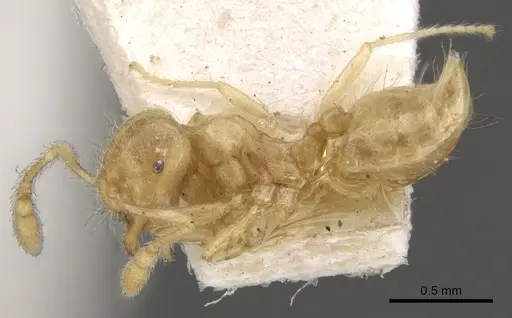
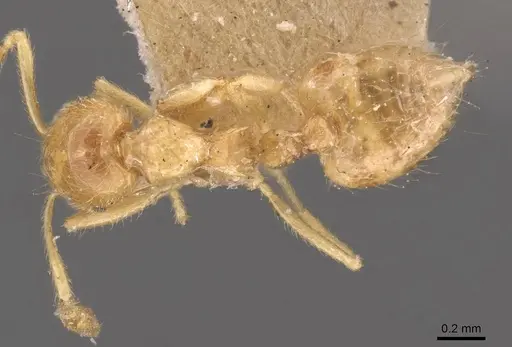
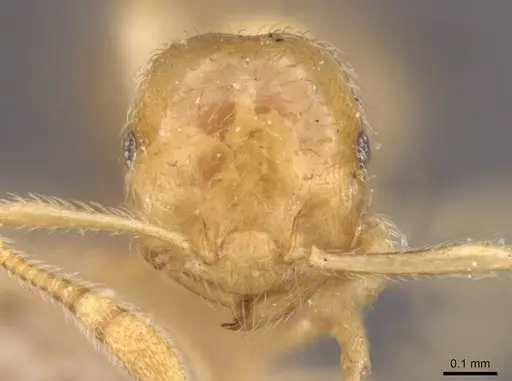
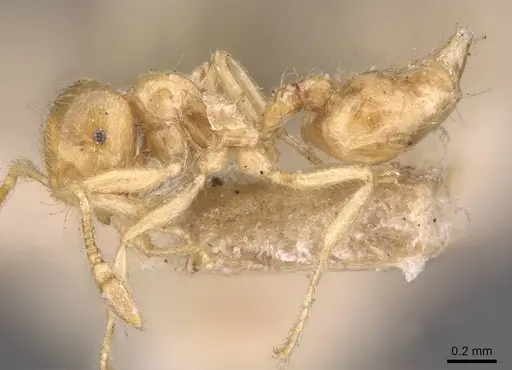
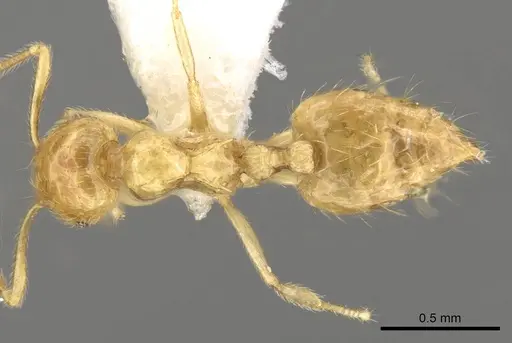
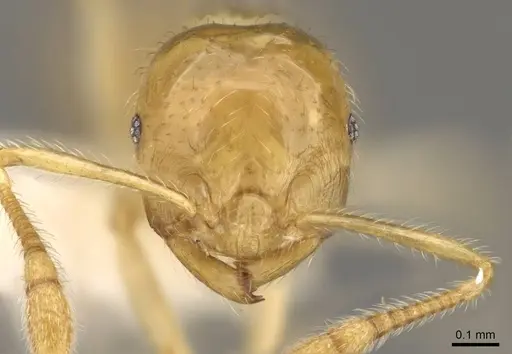
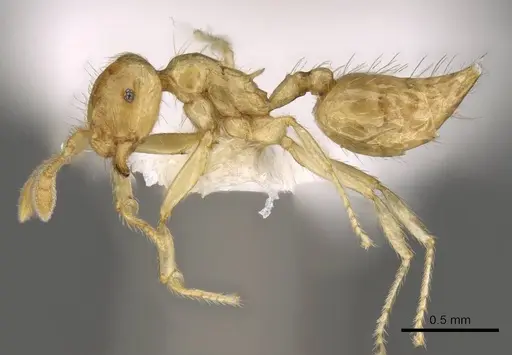
Crematogaster myops is a tiny yellow ant belonging to the Crematogaster quadriruga group, native to the forests of Southeast Asia. Workers measure just 0.44-0.48mm in head width, making them one of the smaller Crematogaster species. The most distinctive feature is their dramatically reduced compound eyes containing only about 6 ommatidia, this is unusual among ants and gives them a somewhat blind appearance. Their body is yellow throughout with smooth, shiny integument. They nest in soil in developed forest habitats across Malaysia, Singapore, and Indonesia [1].
What makes C. myops particularly interesting is its highly reduced eyes, a rare trait among ants that suggests it may be adapted to subterranean life. As a member of the Orthocrema subgenus, these ants are part of a group known for soil-nesting habits. They likely form moderate-sized colonies typical of the genus, though exact colony sizes have not been documented.
Quick Summary
- Difficulty: Medium
- Origin & Habitat: Southeast Asia, Malaysia (Peninsula and Borneo), Singapore, and Indonesia (Sumatra). Inhabits developed forests and nests in soil [1].
- Colony Type: Colony structure is unconfirmed. Most Crematogaster species are monogyne (single queen), though some can be polygyne. Further research needed.
- Founding: Claustral
- Size & Growth:
- Queen: Undocumented in available sources. Based on genus patterns, likely 4-6mm.
- Worker: 0.44-0.48mm head width,0.45-0.52mm head length [1].
- Colony: Unknown. Based on similar Crematogaster species, likely several hundred workers.
- Growth: Moderate, estimated based on genus patterns.
- Development: 6-8 weeks estimated based on related Crematogaster species at tropical temperatures. (Development timeline is inferred from genus patterns, not directly studied for this species.)
- Antkeeping:
- Temperature: Keep warm at 24-28°C. Being a tropical Southeast Asian species, they need consistent warmth. A heating cable on one side of the nest creates a suitable gradient [1].
- Humidity: High humidity is essential, these are forest floor ants that nest in soil. Keep the nest substrate consistently moist but not waterlogged. Aim for 70-80% relative humidity with damp substrate.
- Diapause: Unlikely to require diapause. As a tropical species, they probably remain active year-round with stable conditions.
- Nesting: Soil-nesting species. In captivity, a naturalistic setup with moist substrate (like a dirt-filled formicarium or Y-tong with soil chamber) works well. They prefer tight, humid chambers scaled to their tiny size.
- Behavior: These ants are small and relatively docile. They likely forage in the soil layer and may come to sugar baits. Their reduced eyes suggest they rely less on visual cues and more on chemical communication. Escape prevention should be excellent given their tiny size, they can squeeze through remarkably small gaps. They have a functional stinger but it's too small to penetrate human skin effectively.
- Common Issues: tiny size means escapes are likely without fine mesh barriers, high humidity requirements can lead to mold if ventilation is poor, reduced eyes may affect their foraging, ensure food is accessible, soil nesting requires careful moisture balance to prevent flooding or drying out, limited information means colony establishment may require experimentation
Nest Preferences and Housing
Crematogaster myops is a soil-nesting species that naturally excavates chambers in forest floor substrate. In captivity, provide a naturalistic setup with moist soil or a Y-tong style nest with a soil chamber. The chambers should be small and tight-fitting given their tiny size, these ants feel secure in snug spaces. Avoid tall, open areas that would make them feel exposed. A layer of damp soil about 1-2cm deep works well, with the nest placed in a dark area to mimic their subterranean preferences. Some keepers successfullly use test tube setups with soil cotton, though this requires careful moisture monitoring. [1]
Feeding and Diet
Like most Crematogaster species, these ants are likely omnivorous with a preference for sugary substances. Offer sugar water, honey, or diluted maple syrup as a constant energy source. For protein, provide small insects like fruit flies, pinhead crickets, or mealworm pieces. Being such tiny ants, prey items should be appropriately sized, springtails or fruit flies work well. They may also tend aphids for honeydew if present. Feed protein 2-3 times per week and keep sugar sources available at all times. Remove uneaten prey after 24 hours to prevent mold.
Temperature and Seasonal Care
As a tropical species from Southeast Asia, Crematogaster myops needs warm conditions year-round. Maintain temperatures between 24-28°C with minimal fluctuation. A small heating cable or heat mat on one side of the nest creates a temperature gradient allowing the ants to self-regulate. Place the heating on top of the nest to warm the chamber without drying it out too quickly. Room temperature in most homes may be too cool, monitor with a thermometer. Unlike temperate species, they do not require a winter diapause period. Keep them away from air conditioning vents and drafts that could cause temperature drops. [1]
Humidity Management
High humidity is critical for this species, they naturally inhabit damp forest floor environments. Keep the nest substrate consistently moist but never waterlogged. The soil should feel damp to the touch, with some condensation visible on the sides of the nest. However, avoid standing water which can drown colonies. Good ventilation helps prevent mold while maintaining humidity, small holes or mesh-covered gaps work better than sealed enclosures. Check moisture levels every few days and add water drops as needed rather than on a fixed schedule. A hygrometer near the nest can help monitor humidity levels. [1]
Behavior and Observation
The most fascinating aspect of Crematogaster myops is their dramatically reduced eyes, workers have only about 6 ommatidia compared to the hundreds typical of most ants [1][2]. This suggests they are adapted to low-light or subterranean conditions and rely heavily on chemical and tactile cues rather than vision. They are likely less active on the surface and more focused on underground foraging. Workers are small and yellow, moving with the characteristic Crematogaster habit of raising their abdomen when disturbed. They are not aggressive and will flee rather than attack. Observation is best done with a magnifying glass given their tiny size.
Colony Establishment
Starting a colony requires a founding queen. If you obtain a mated queen, she will likely seal herself in a small chamber (claustral founding) and lay eggs without leaving to forage. Provide a small container with moist soil and keep her warm and undisturbed. She will use stored fat reserves to sustain herself and her first brood. The first workers (nanitics) will be smaller than mature workers but should emerge within 6-8 weeks under warm conditions. Once workers arrive, you can begin offering small food items. Colony growth is typically moderate, expect several dozen workers within the first year with good care.
Frequently Asked Questions
How long does it take for Crematogaster myops to produce first workers?
Based on related Crematogaster species, expect 6-8 weeks from egg to first worker at optimal temperatures (24-28°C). This timeline is estimated as specific development data for C. myops is not available.
What do Crematogaster myops ants eat?
They are omnivorous. Offer sugar water, honey, or maple syrup constantly for energy, and protein sources like fruit flies, small crickets, or mealworms 2-3 times per week. Their small size means prey should be appropriately sized.
Do Crematogaster myops ants sting?
They have a stinger but it's too small to effectively penetrate human skin. They are not considered dangerous to keepers.
What temperature do Crematogaster myops need?
Keep them warm at 24-28°C. This tropical species does not tolerate cool temperatures and does not require winter diapause.
Are Crematogaster myops good for beginners?
They are rated as medium difficulty. Their small size and high humidity needs require some experience, but they are not aggressive and don't have complex requirements. The main challenge is their tiny size requiring excellent escape prevention.
How big do Crematogaster myops colonies get?
Colony size is not documented, but based on related species, they likely reach several hundred workers. Growth is moderate.
What makes Crematogaster myops unique?
They have dramatically reduced compound eyes with only about 6 ommatidia, one of the smallest eye counts known in ants. This is a rare trait that suggests adaptation to subterranean life.
Where is Crematogaster myops found in the wild?
They live in Southeast Asia: Malaysia (Peninsula and Borneo), Singapore, and Indonesia (Sumatra). They nest in soil in developed forests.
Can I keep Crematogaster myops in a test tube?
Yes, test tubes can work but require careful moisture management. A naturalistic setup with soil chambers is often better for this soil-nesting species. If using test tubes, use cotton and water reservoirs appropriately sized.
Do Crematogaster myops need hibernation?
No. As a tropical species, they do not require diapause or hibernation. Keep them at warm temperatures year-round.
References

This caresheet is licensed under CC BY-SA 4.0 .
Literature
Loading...Loading products...