

Crematogaster quadriruga
- Scientific Name
- Crematogaster quadriruga
- Subgenus
- Orthocrema
- Tribe
- Crematogastrini
- Subfamily
- Myrmicinae
- Author
- Forel, 1911
- Distribution
- Found in 2 countries
Crematogaster quadriruga Overview
Crematogaster quadriruga is an ant species of the genus Crematogaster. It is primarily documented in 2 countries , including Singapore, Thailand. Detailed taxonomic data and occurrence records can be further explored via authoritative databases such as AntWeb or the Global Biodiversity Information Facility (GBIF).
Crematogaster quadriruga
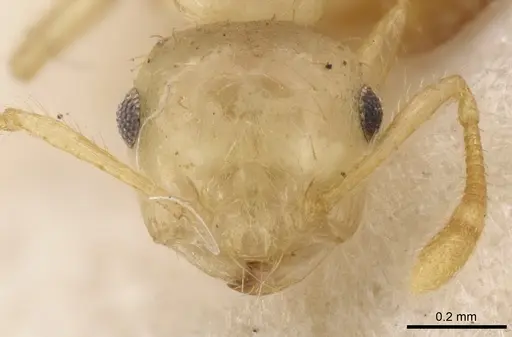
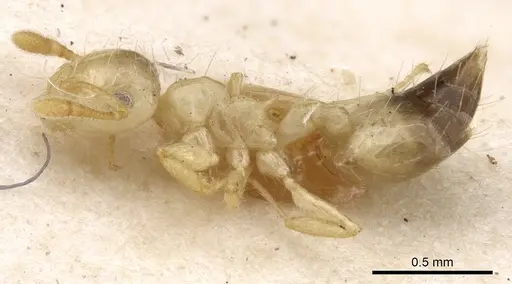
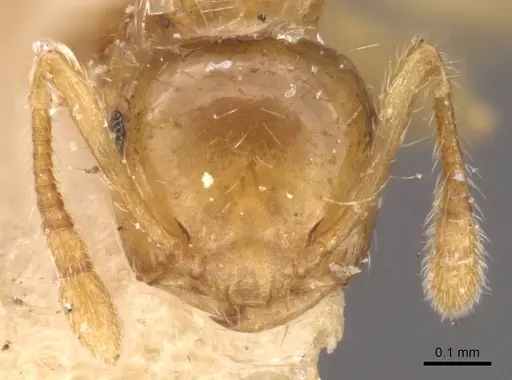
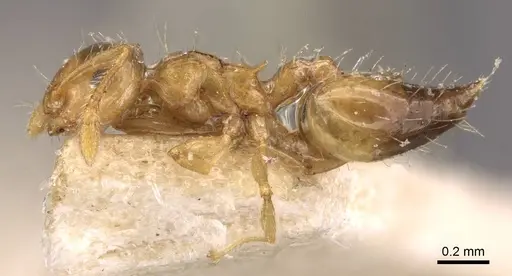
Crematogaster quadriruga is a tiny twig-nesting ant belonging to the subgenus Orthocrema. Workers measure just 0.46-0.50mm, making them one of the smaller ant species you'll encounter [1]. They have a distinctive bicolored appearance with a yellow head, mesosoma, petiole, postpetiole and first gastral segment, while the remaining gaster is brown [1]. Their propodeal spiracles are small and set apart from the metapleural gland bulla, and the petiole has subparallel sides when viewed from above [1].
This species inhabits disturbed to developed forests across Southeast Asia, where they nest in dead twigs on trees [1]. They have been recorded in Thailand, Laos, Cambodia, Indonesia (northern Sumatra), Singapore, and recently in Macau and China's Yunnan province [1][2][3]. An interesting trait of this species is the presence of intermediate workers, larger individuals with three ocelli that bridge the gap between normal workers and queens [1].
Quick Summary
- Difficulty: Medium
- Origin & Habitat: Southeast Asia, found in Thailand, Laos, Cambodia, Indonesia (N. Sumatra), Singapore, Macau, and Yunnan province, China. Inhabits disturbed to developed forests and nests in dead twigs on trees [1][2][3].
- Colony Type: Likely monogyne (single queen colonies) based on typical Crematogaster patterns. Intermediate workers (larger individuals with ocelli) are present in established colonies [1].
- Colony: Monogyne
- Founding: Claustral
- Size & Growth:
- Queen: Estimated 5-6mm based on intermediate worker size (0.65-0.68mm) and genus patterns [1]
- Worker: 0.46-0.50mm [1]
- Colony: Estimated several hundred workers based on similar twig-nesting Crematogaster species
- Growth: Moderate, typical for small tropical Myrmicinae
- Development: Estimated 6-8 weeks at tropical temperatures (25-28°C) based on genus patterns for small Crematogaster species (Development is likely faster than temperate species due to tropical origin)
- Antkeeping:
- Temperature: Keep at 24-28°C. As a tropical species from Southeast Asia, they need warm conditions year-round. A heating cable on one side of the nest can create a gentle gradient [1].
- Humidity: Moderate to high, they come from tropical forests with decent humidity. Keep the nest substrate slightly moist but not waterlogged. Mist occasionally and provide a water tube.
- Diapause: Unlikely, being a tropical species, they probably don't require a true diapause. However, they may slow down slightly during cooler periods.
- Nesting: Twig-nesting species, they naturally nest in dead twigs on trees. In captivity, they do well in small setups like test tubes with twigs, small acrylic nests, or Y-tong nests with narrow chambers scaled to their tiny size [1].
- Behavior: These are small, active ants that will readily explore their surroundings. They are not particularly aggressive but will defend their nest if threatened. As Crematogaster, they can raise their gaster in a defensive posture. Their tiny size means they can squeeze through small gaps, excellent escape prevention is essential. They are arboreal/nesting in twigs so they may not use the substrate as much as ground-nesting species. They likely forage for honeydew and small insects.
- Common Issues: escape prevention is critical due to their very small size, use fine mesh and tight-fitting lids, twig-nesting behavior means they prefer elevated nesting sites, provide small twigs or appropriate nest chambers, tropical temperature requirements mean they cannot tolerate cool temperatures, keep warm year-round, small colony size at founding means colonies grow slowly initially, patience is needed, intermediate workers are normal in established colonies, larger workers with ocelli serve as a bridge between workers and queens
Housing and Nest Setup
Crematogaster quadriruga is a twig-nesting species, so your setup should reflect their natural arboreal lifestyle. In the wild, they nest in dead twigs attached to trees, so they prefer small, enclosed spaces that mimic these conditions. Test tubes work well for founding colonies, simply place the queen in a humid test tube with a cotton plug and let her seal herself in. For established colonies, small acrylic nests or Y-tong nests with narrow chambers scaled to their tiny 0.5mm worker size work best. You can also provide small twigs or bamboo sections as natural nesting material. Since they're arboreal, they may prefer having their nest elevated rather than sitting on the ground. An outworld with some vertical space and branches allows them to forage naturally. [1]
Feeding and Diet
Like most Crematogaster species, these ants are omnivorous with a preference for sweet liquids. In captivity, offer sugar water or honey water regularly, they'll readily accept these. They also need protein from small prey items. Due to their tiny size, their prey should be correspondingly small: fruit flies, small mealworms, pinhead crickets, or other tiny insects work well. You can also offer tiny pieces of fruit or seeds occasionally. Feed them every 2-3 days, removing any uneaten prey after 24 hours to prevent mold. A constant sugar source (honey water or sugar water on a cotton ball) is recommended between protein feedings.
Temperature and Humidity
Being a tropical species from Southeast Asia, Crematogaster quadriruga needs warm and moderately humid conditions. Keep the nest area at 24-28°C year-round, they don't tolerate cool temperatures well. A heating cable placed on one side of the nest can create a gentle temperature gradient, allowing the ants to choose their preferred spot. For humidity, aim for moderate levels (60-80%). The nest substrate should be slightly moist but never waterlogged. Mist the outworld occasionally and ensure the test tube or nest has access to a water reservoir. Good ventilation is important to prevent mold while maintaining humidity. [1]
Colony Development
This species has an interesting trait: intermediate workers. These are larger workers (0.65-0.68mm) that possess three ocelli and have a highly convex mesonotum, bridging the gap between normal workers and queens [1]. This is a normal part of their caste system and indicates a healthy, established colony. Colonies likely start with a single queen (monogyne) who seals herself in during founding (claustral behavior). The first workers (nanitics) will be smaller but will grow in size as the colony establishes. Growth rate is moderate, expect several months before you have a substantial colony. Patience is key with this small species.
Behavior and Temperament
Crematogaster quadriruga is an active but not particularly aggressive species. Workers are small and will go about their business in the outworld. Like all Crematogaster, they can raise their gaster in a defensive posture when threatened, while they may attempt to bite, their small size means they're not a significant threat to humans. Their tiny size (under 0.5mm for workers) means they're excellent escape artists. You must use excellent escape prevention: fine mesh on all openings, tight-fitting lids, and barrier gel or fluon on container edges. They're arboreal by nature, so providing some vertical space and potential climbing surfaces in the outworld will make them feel more at home. [1]
Frequently Asked Questions
How long does it take for Crematogaster quadriruga to produce first workers?
Based on typical tropical Myrmicinae development, expect first workers (nanitics) in about 6-8 weeks at optimal temperatures of 25-28°C. This is faster than temperate species due to their tropical origin.
Can I keep Crematogaster quadriruga in a test tube?
Yes, test tubes work well for this species, especially for founding colonies. Use a small test tube with a water reservoir and cotton plug. Their tiny size means you should ensure the cotton is packed tightly to prevent escapes.
What do Crematogaster quadriruga ants eat?
They're omnivorous. Offer sugar water or honey water as a constant food source, and supplement with small protein prey like fruit flies, tiny mealworms, or pinhead crickets every 2-3 days.
Do Crematogaster quadriruga ants sting?
They're too small to effectively sting humans. They may attempt to bite with their mandibles, but due to their tiny size (0.46-0.50mm workers), this is not painful or harmful.
Are Crematogaster quadriruga good for beginners?
They are rated as Medium difficulty. They're small and require warm temperatures year-round, which can be challenging. Their tiny size also makes escape prevention critical. Experienced antkeepers should have no issues, but beginners may struggle with their specific needs.
Do Crematogaster quadriruga need hibernation?
No, being a tropical Southeast Asian species, they don't require hibernation. Keep them warm year-round at 24-28°C. They may slow down slightly during cooler periods but won't enter true diapause.
How big do Crematogaster quadriruga colonies get?
Based on similar twig-nesting Crematogaster species, colonies likely reach several hundred workers. The presence of intermediate workers (larger individuals with ocelli) indicates an established colony.
Why are some workers larger than others in my colony?
This is normal for Crematogaster quadriruga! They have intermediate workers, larger individuals (0.65-0.68mm) with three ocelli that bridge the gap between normal workers and queens. This is a natural part of their caste system.
When should I move my colony to a formicarium?
Move them when the colony reaches around 30-50 workers and the test tube is becoming crowded. Since they're twig-nesting, a small acrylic nest or Y-tong with appropriately sized chambers works well.
Can I keep multiple Crematogaster quadriruga queens together?
This has not been documented for this specific species. Based on typical Crematogaster behavior, they likely form single-queen colonies. It's not recommended to combine unrelated foundresses.
References

This caresheet is licensed under CC BY-SA 4.0 .
CASENT0902116
View on AntWeb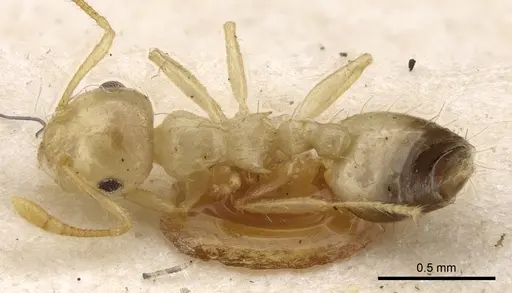
CASENT0908368
View on AntWeb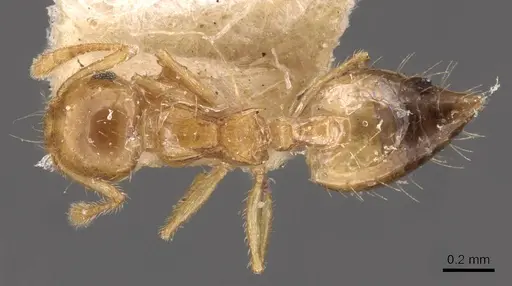
Literature
Loading...Loading products...